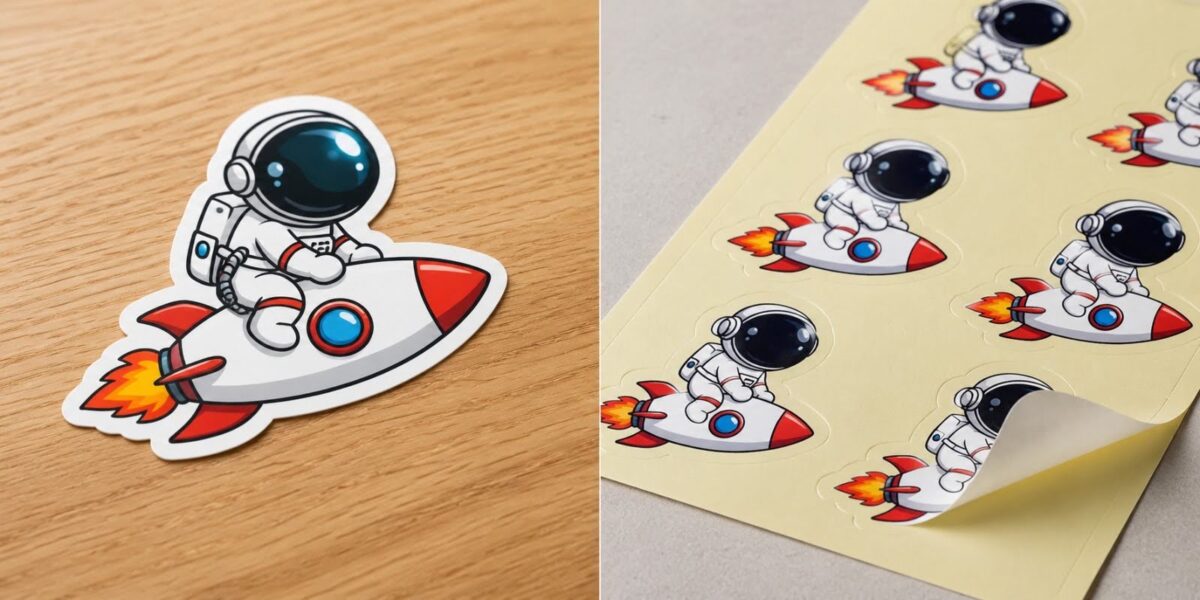
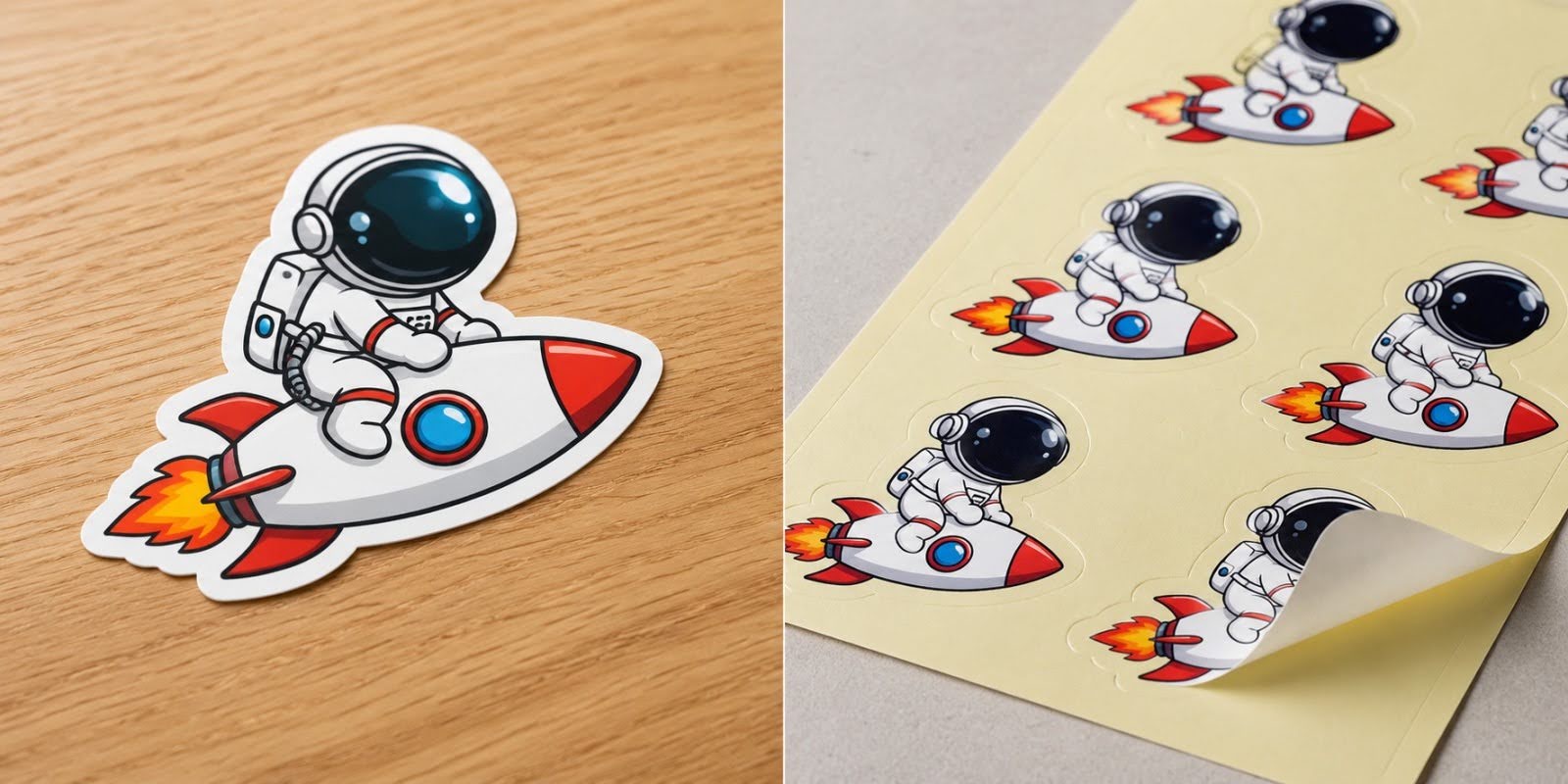
Die-Cut vs Kiss-Cut Stickers: What’s the Difference?

unnamed (13)

Die cut and kiss cut stickers can look almost identical once they are applied to a surface. The major difference lies in how they are cut and supplied before application.

Die cut stickers are typically cut through both the sticker material and its backing so the entire finished piece follows the shape of the design. Kiss cut stickers, by comparison, are cut through the sticker layer while leaving the surrounding backing liner intact.

That seemingly small production difference affects presentation, handling, application, packaging, and how multiple stickers can be supplied.

For businesses ordering custom sticker printing in Singapore, understanding these differences can help determine which format is more appropriate for product labels, promotional stickers, custom decals, packaging or sticker sheets.

Neither cutting method is inherently better. Die cut stickers can provide a distinctive standalone presentation, while kiss cut stickers can offer practical advantages where labels need to remain protected on a larger backing or where several designs need to appear on one sheet.

The right choice depends primarily on how the stickers will be distributed, stored and applied.

Definition

Die cutting and kiss cutting describe how a printed adhesive material is cut during the sticker production process.

A sticker normally contains at least:

  1. Printed face material
  2. Adhesive
  3. Release liner or backing

The cutting depth determines the finished format.

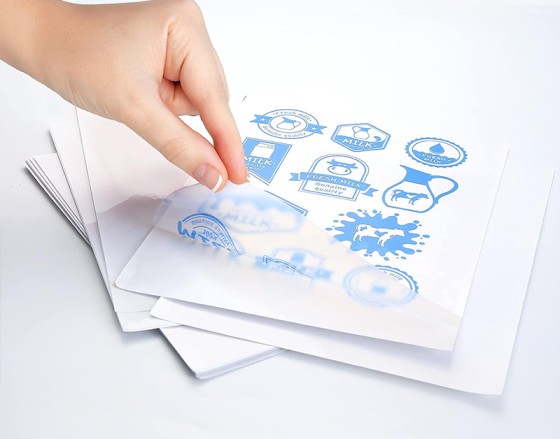
With a die-cut sticker, the cut normally passes through the sticker and backing material around the intended shape. With a kiss cut sticker, the cut passes through the adhesive sticker layer but stops before cutting completely through the backing liner.

The simplest distinction is:

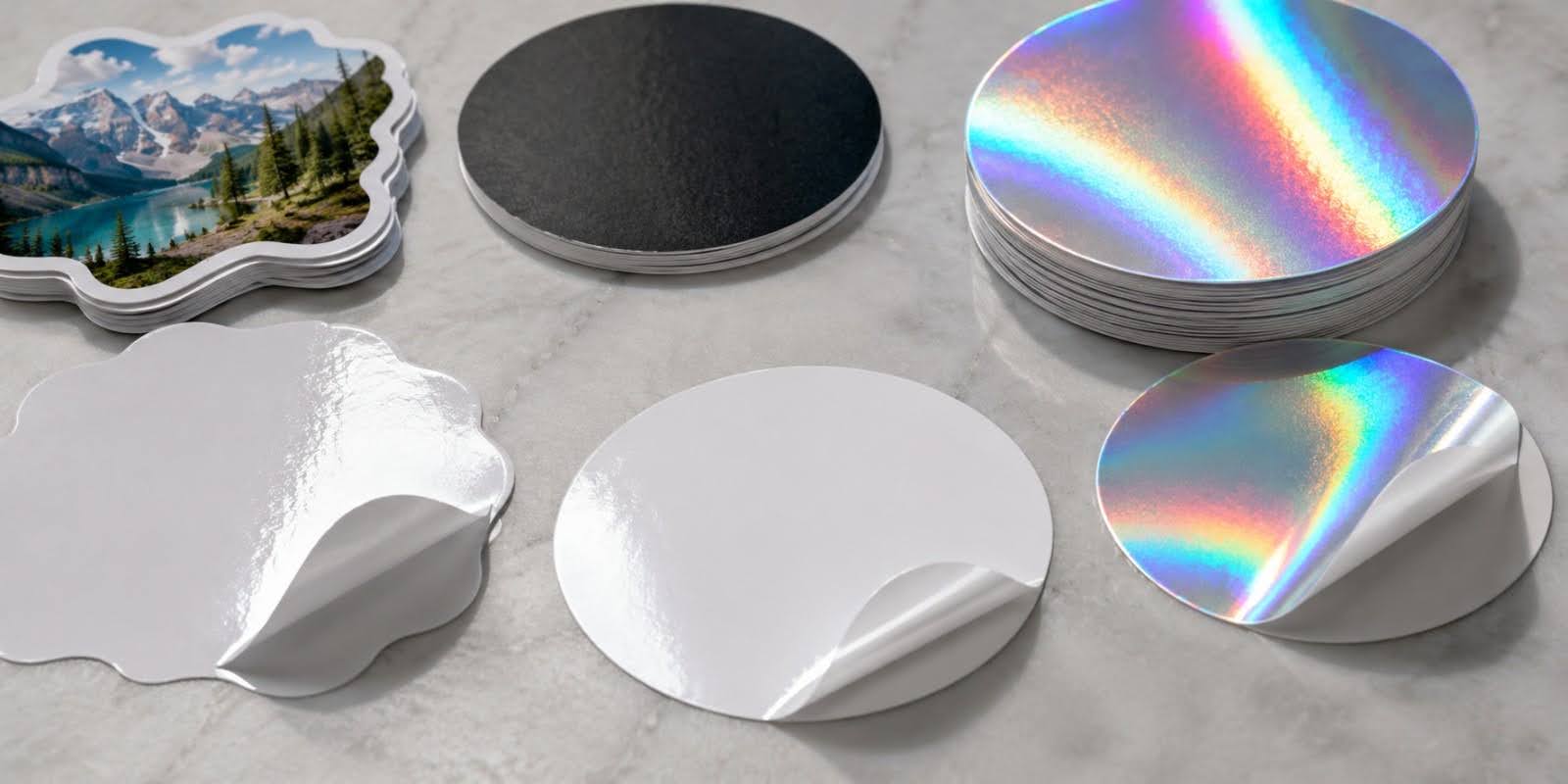
Die-cut: sticker and backing follow the custom shape.

Kiss-cut: sticker follows the custom shape while remaining on a larger backing.

Once removed from its backing and applied, either type can produce essentially the same visible sticker shape.

The difference therefore matters primarily before application.

Why Cutting Method Matters

Cutting affects several practical aspects of custom sticker printing:

  • Finished presentation
  • Ease of peeling
  • Handling
  • Storage
  • Distribution
  • Sticker-sheet production
  • Protection around complex designs
  • Packaging

A company producing promotional logo stickers for an event may prefer a different format from a manufacturer applying hundreds of product labels during packaging.

The intended workflow should therefore influence the cutting method.

Die-Cut
unnamed (14)

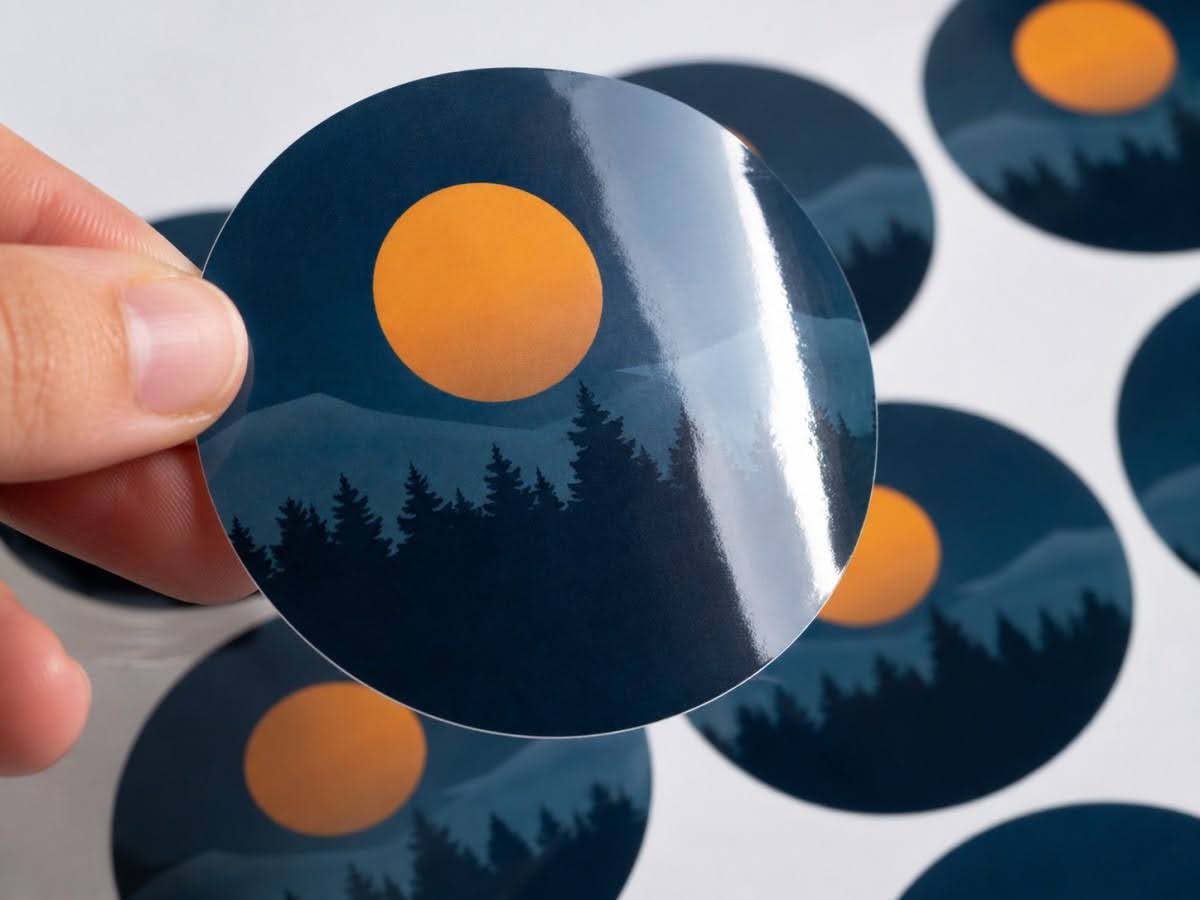
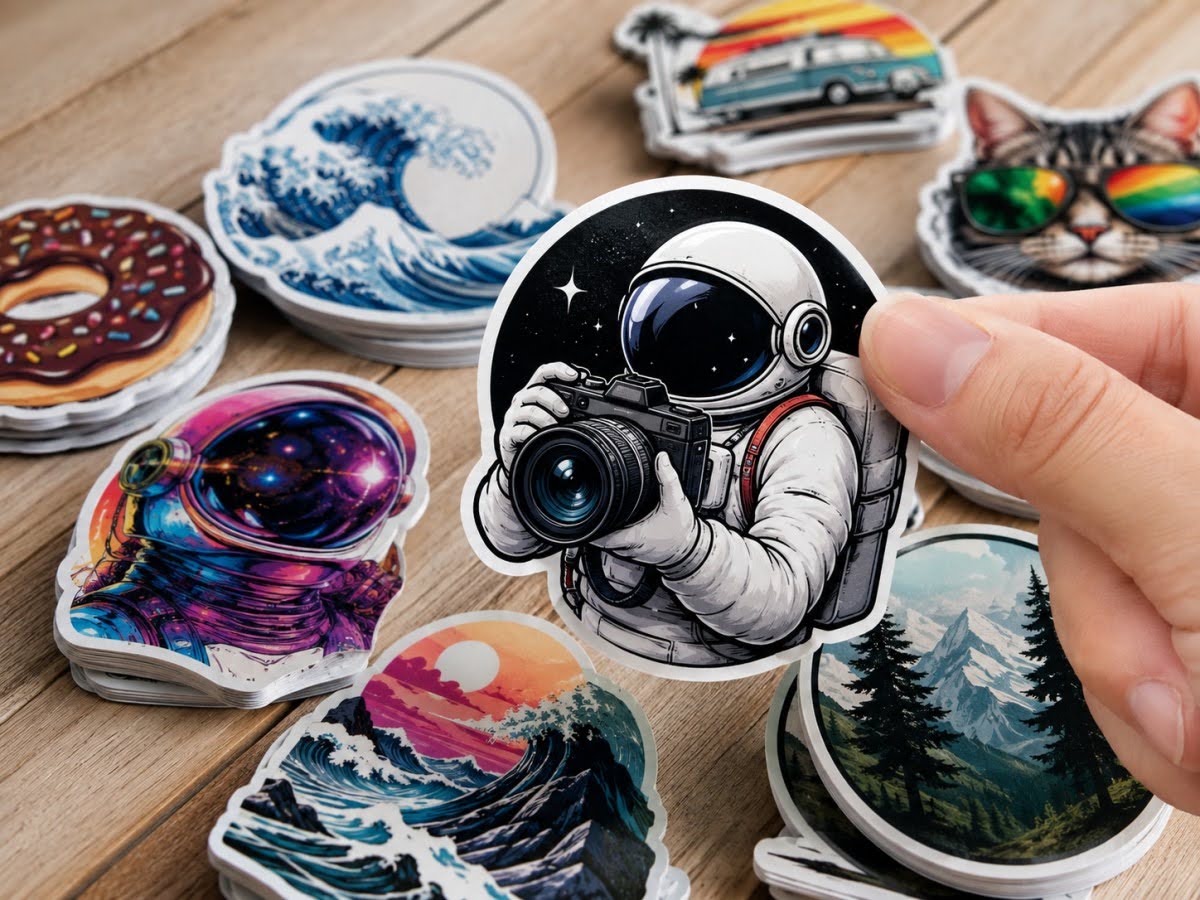
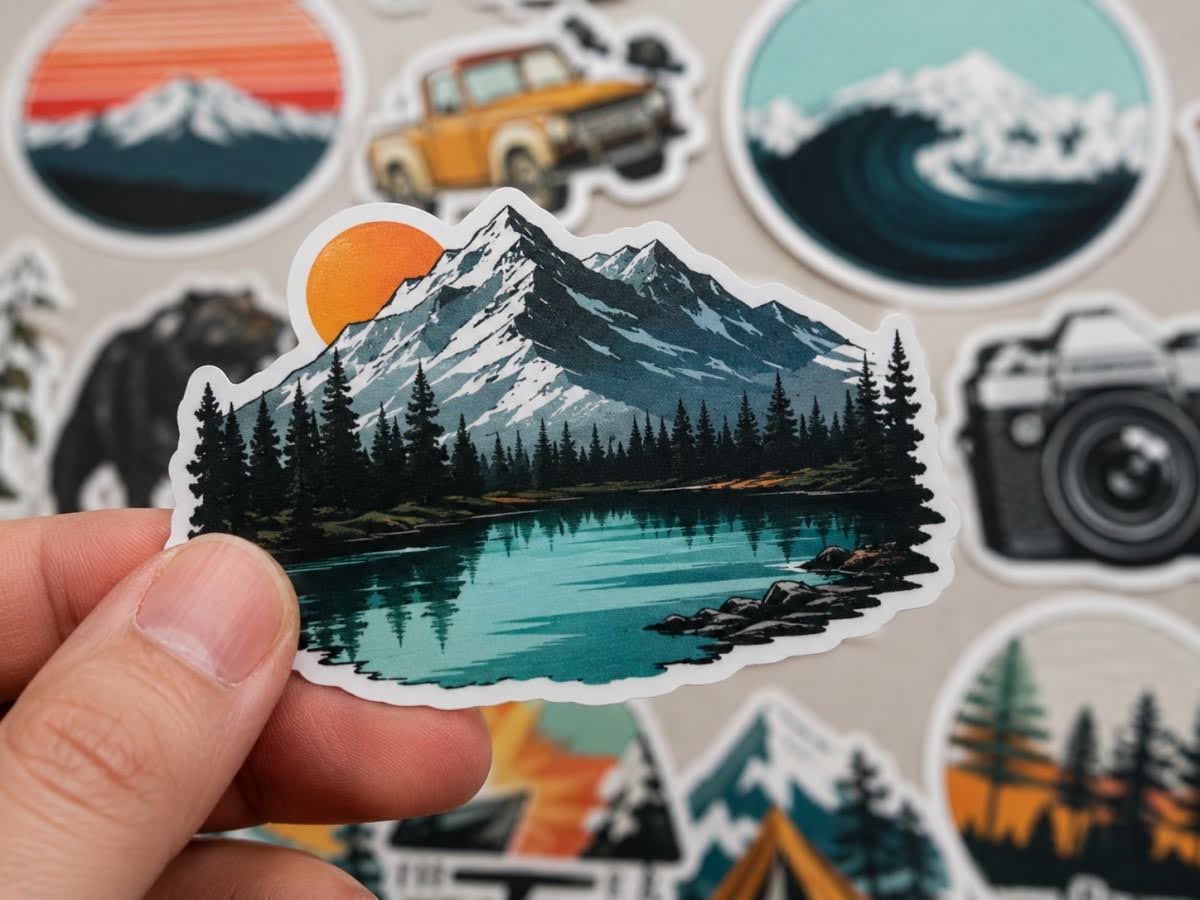
Die cut stickers are cut around the perimeter of the design so both the printed sticker material and its backing follow the final custom shape.

For example, if a company orders a sticker shaped like its circular logo, the finished sticker and release liner can both follow that circular outline.

If the logo has a more unusual silhouette, the cut can follow that custom shape within practical production tolerances.

How Die-Cut Stickers Are Produced

The general printing process involves:

  • Preparing the artwork
  • Establishing a cut path
  • Printing the design
  • Applying any required finishing
  • Cutting through the sticker and backing
  • Removing excess production material as required

Modern sticker production can use different cutting technologies depending on the quantity, material and equipment.

The defining characteristic is the final result rather than the specific cutting machine: the backing is cut to the finished sticker shape.

Visual Impact

One of the main attractions of die-cut stickers is presentation.

Because there is no large rectangular backing surrounding the design, the sticker looks like a finished standalone item before it has even been applied.

This can make die-cut stickers useful as:

  • Promotional giveaways
  • Logo stickers
  • Event merchandise
  • Branded inserts
  • Custom decals

A distinctive silhouette can also become part of the branding.

For example, a coffee brand could produce stickers following the outline of its mascot rather than placing the mascot inside a standard square.

Material Options

Die cutting can be used with different sticker materials depending on production capabilities and application requirements.

These may include:

  • Paper
  • Vinyl
  • Synthetic films
  • Selected waterproof materials

Vinyl stickers are particularly common for promotional die-cut applications because flexibility and durability can be useful when customers may apply the sticker to different surfaces.

Kiss-Cut
unnamed (15)

Kiss cutting works differently.

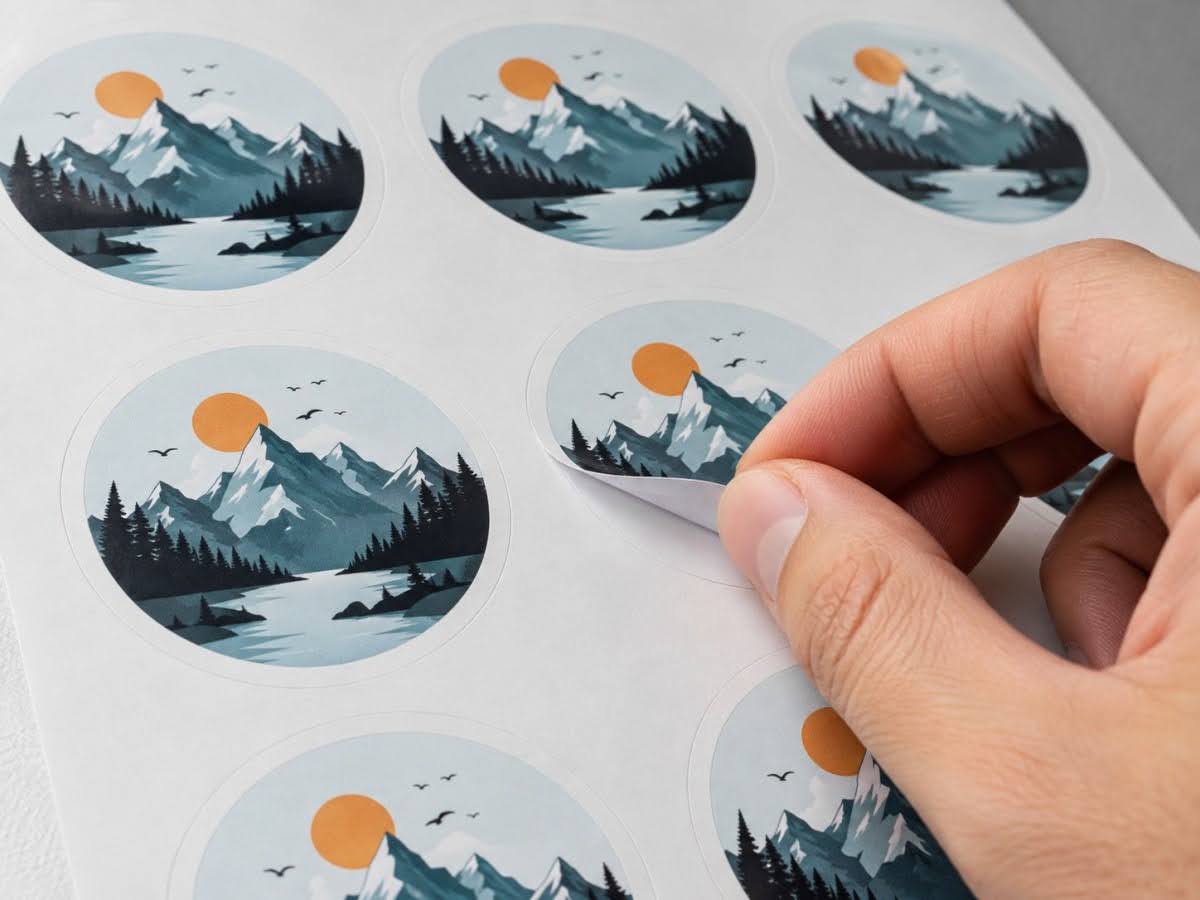
Instead of cutting completely through the entire sticker construction, the cutting process passes through the printable sticker material and adhesive while leaving the backing liner intact.

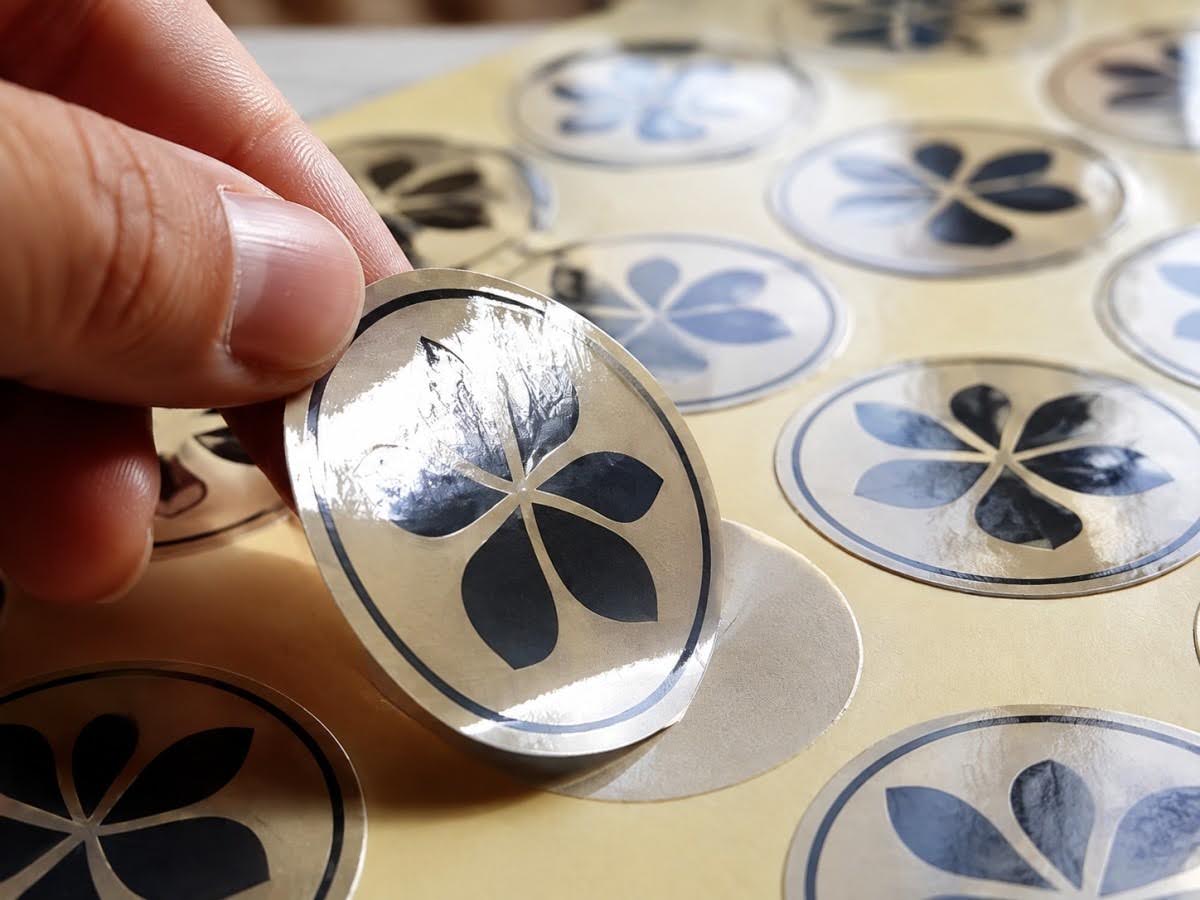
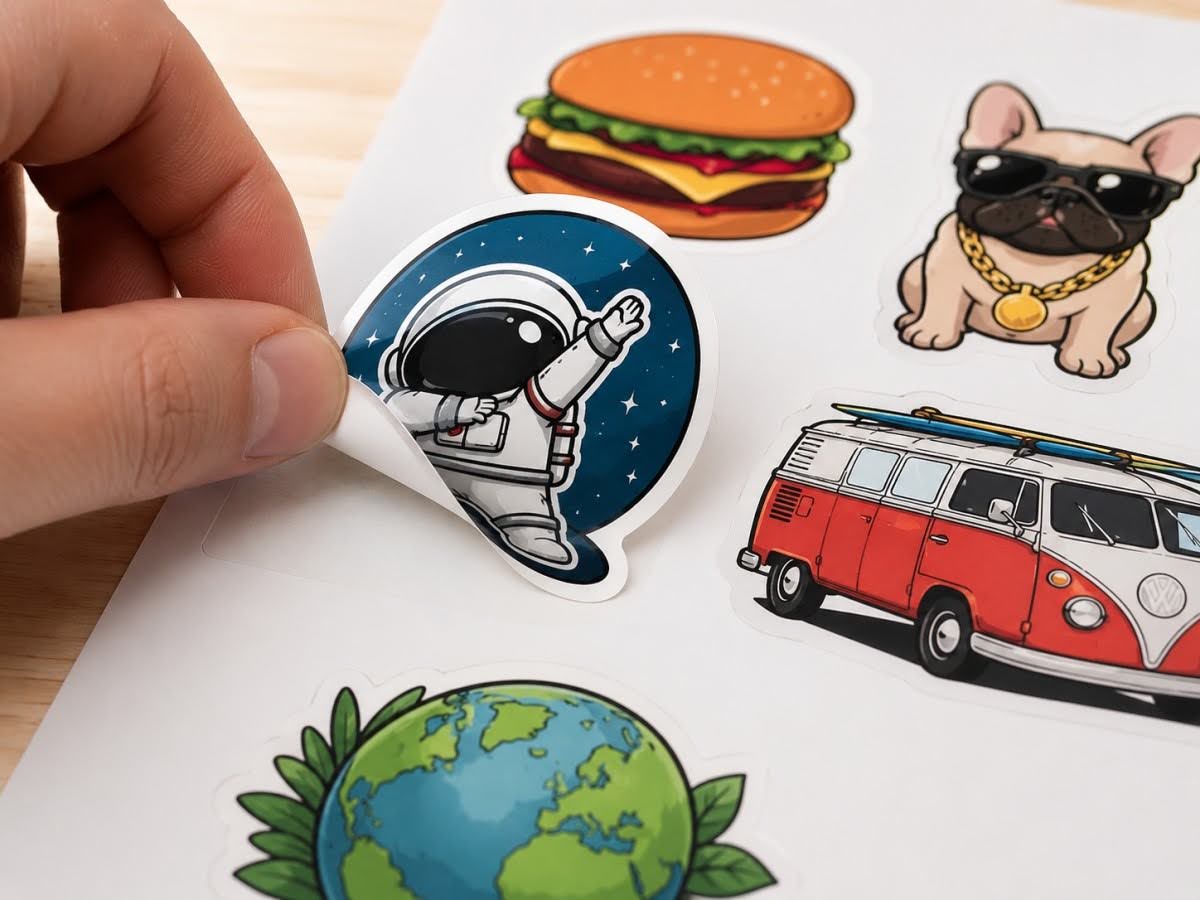
The custom-shaped sticker can then be peeled away from the larger backing.

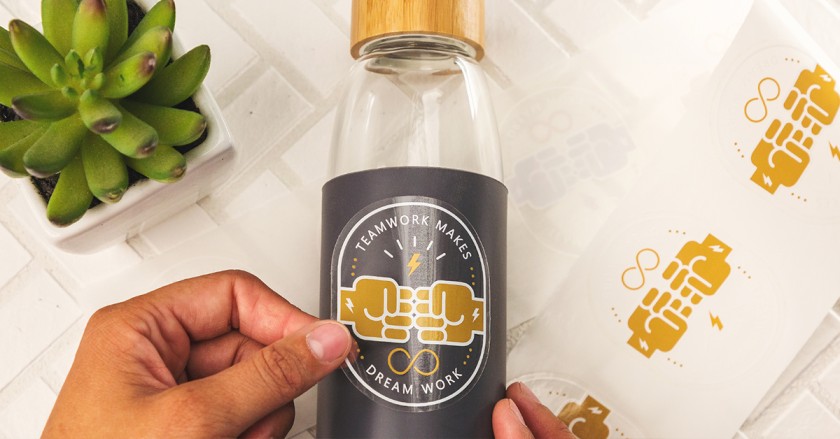
Imagine a circular logo printed in the middle of a square backing sheet. The circular line is kiss-cut through the sticker material. When the customer peels it away, only the circular sticker is removed.

The surrounding liner remains.

Why Leave the Backing Intact?

Keeping a larger backing around the sticker can provide several practical advantages.

It can make the sticker:

  • Easier to peel
  • Easier to handle
  • Better protected before use
  • Easier to organise
  • Suitable for inclusion on sticker sheets

This can be particularly useful for small or intricate stickers.

Kiss-Cut Sticker Sheets

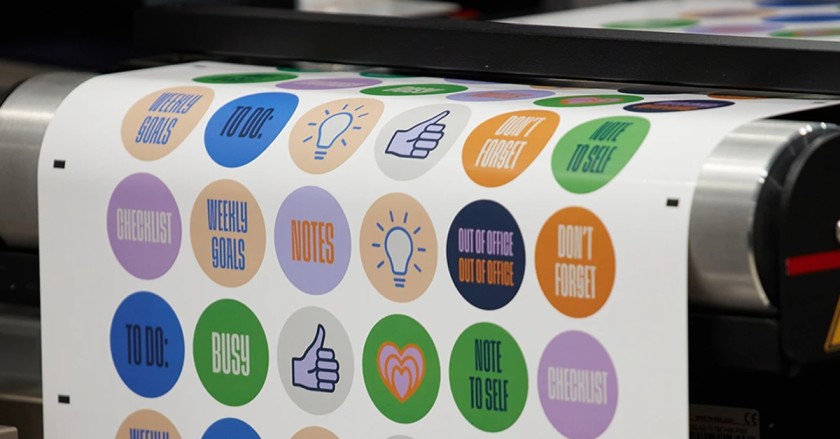
One major advantage of kiss cutting is the ability to place several separate stickers on one sheet.

For example, one A5 sticker sheet could contain:

  • Company logo
  • Product icons
  • Promotional messages
  • Decorative graphics
  • Social-media handle

Each design can have its own kiss-cut path while sharing the same backing sheet.

This makes kiss-cut stickers useful for promotional sticker packs, retail products, craft applications and branded giveaways.

Packaging and Product Labels

Kiss cutting is also widely relevant to product labelling.

Labels can remain attached to a continuous or larger liner until they are ready to be applied.

This keeps the adhesive protected and can make labels easier to organise during packaging operations.

The best supply format will depend on whether the labels are applied manually or through a more structured production process.

Advantages

Both cutting methods offer advantages. The right one depends on what happens to the sticker between printing and final application.

Advantages of Die-Cut Stickers

Strong Standalone Presentation

A die-cut sticker looks finished before application because the backing follows its shape.

This can make it especially effective as a promotional item.

Custom Branding Opportunities

The sticker’s physical outline can reinforce brand recognition.

Logos, mascots, symbols and illustrations can become recognisable sticker shapes rather than being contained within standard rectangles.

Good for Individual Distribution

Die-cut stickers can be handed out individually at:

  • Events
  • Exhibitions
  • Product launches
  • Retail counters
  • Promotional campaigns

Each piece functions as an independent branded item.

Suitable for Custom Decals

Die cutting works well for custom decals where the shape itself contributes to the visual effect.

Advantages of Kiss-Cut Stickers

Easier Peeling

The larger backing around the sticker gives users more material to hold while separating the adhesive sticker.

This can be particularly useful for small shapes.

Additional Edge Protection

Because the custom sticker remains inside a larger liner, the edges are less exposed during storage and transportation.

Multiple Stickers on One Sheet

Kiss cutting makes sticker sheets practical.

Several different designs can share one backing, creating a convenient branded set.

Efficient Organisation

Businesses handling many labels can keep them together on backing sheets rather than managing individual loose pieces.

Flexible Presentation

The surrounding backing can itself carry printed information in some production formats, potentially providing room for instructions or additional branding.

Disadvantages

The differences between die-cut and kiss-cut stickers also create limitations.

Disadvantages of Die-Cut Stickers

Peeling Can Be Less Convenient

Because the backing follows the exact shape of the sticker, there may be less excess liner available to grip.

This can make certain small or intricate designs slightly more difficult to peel.

Edges Are More Exposed

The perimeter of the sticker sits at the edge of the backing.

During transport or repeated handling, this can potentially expose the edges to more physical contact.

Complex Shapes Need Careful Planning

Very narrow points, sharp corners and highly intricate outlines can create practical production or handling issues.

Simplifying the cut path may improve the finished result.

Disadvantages of Kiss-Cut Stickers

Less Distinctive Before Application

A custom-shaped sticker may still appear as a square or rectangular piece because of the surrounding backing.

For promotional giveaways, this may have less immediate visual impact than a fully die-cut piece.

Additional Backing Material

Kiss-cut stickers can use more liner material around the finished design.

The impact depends on layout, quantity, and production method.

Sticker Sheets Need Thoughtful Layout

When several stickers share one sheet, spacing and arrangement become part of the design.

Placing too many shapes too close together can make the sheet crowded or difficult to use.

Best Use Cases

The easiest way to choose between die-cut and kiss-cut stickers is to consider what happens before the sticker reaches its final surface.

Die-Cut Stickers for Promotional Giveaways

Die-cut stickers are particularly effective when the sticker itself is the product or promotional item.

Examples include:

  • Trade-show giveaways
  • Event stickers
  • Customer freebies
  • Branded merchandise
  • Laptop decals
  • Promotional inserts

A distinctive shape makes the sticker visually recognisable before it is applied.

Die-Cut Stickers for Logo Branding

Logo stickers are another strong application.

A company can follow the silhouette of its logo rather than placing the logo inside a generic rectangle.

This creates a cleaner standalone presentation.

Die-Cut Stickers for Custom Decals

Custom decals used for decorative or promotional applications can benefit from precise shapes that follow the artwork.

Vinyl may be particularly appropriate where additional durability or flexibility is required.

Kiss-Cut Stickers for Sticker Sheets

Kiss cutting is the natural choice when several stickers need to appear on one sheet.

Sticker sheets can be used for:

  • Promotional packs
  • Children’s products
  • Retail merchandise
  • Event giveaways
  • Branded stationery
  • Decorative stickers

Different shapes can be placed together while remaining organised on one backing.

Kiss-Cut Stickers for Small Designs

Very small stickers can be easier to peel when there is additional backing material around them.

This makes kiss-cutting practical for small product labels or decorative elements.

Kiss-Cut Stickers for Product Labels

Businesses applying labels during packing or production may prefer stickers supplied on a common liner because they remain organised until application.

The ideal configuration depends on production volume and application method.

Which Is Better for Packaging Stickers?

Either can work.

If the sticker is simply being applied to packaging during fulfilment, ease of peeling and organisation may make kiss-cut formats practical.

If the sticker is being included inside the package as a branded giveaway, die cutting may provide a more attractive standalone presentation.

This illustrates why the intended use is more important than the artwork alone.

Cost Comparison
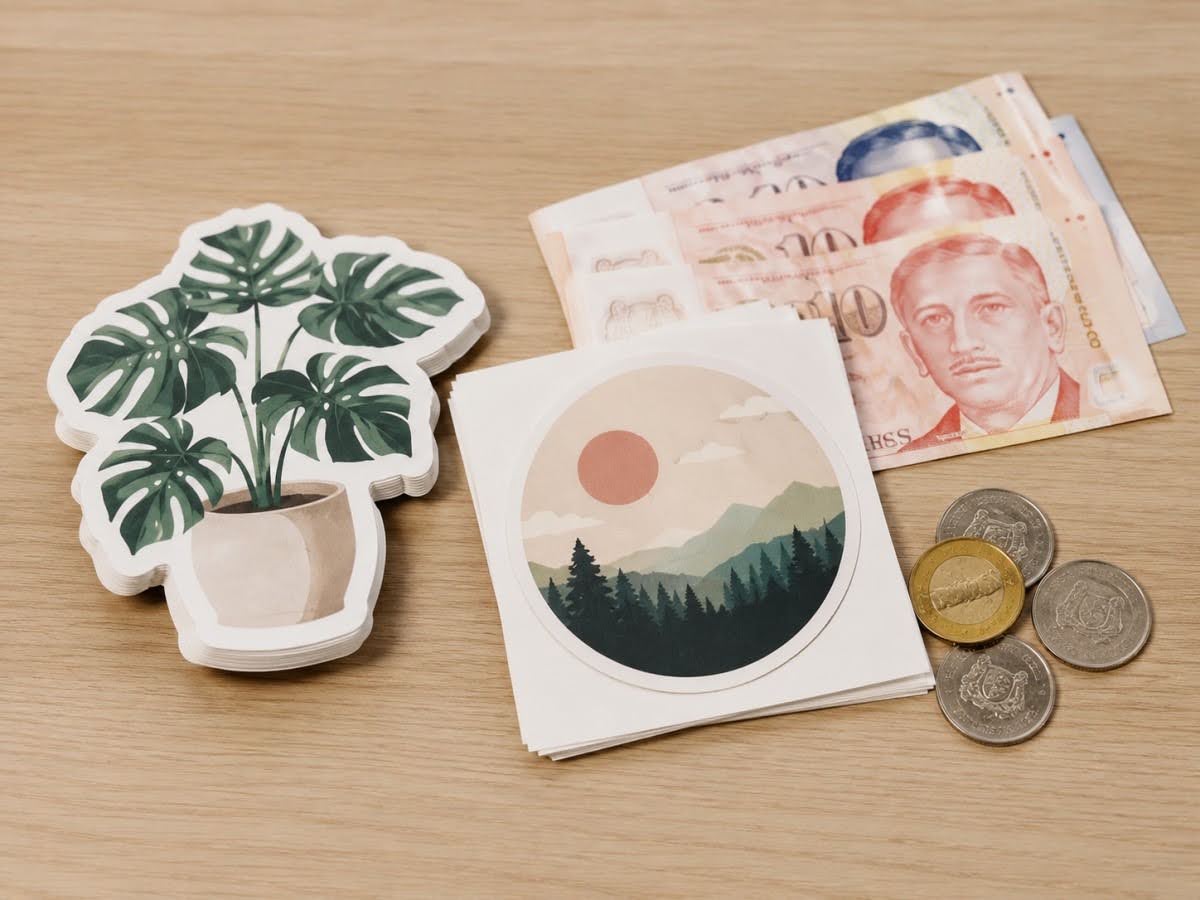
unnamed (16)

There is no universal rule that die-cut stickers always cost more than kiss-cut stickers or vice versa.

The final cost depends on the entire job specification.

Factors can include:

  • Material
  • Sticker dimensions
  • Shape complexity
  • Quantity
  • Number of designs
  • Printing method
  • Lamination
  • Finishing
  • Sheet layout
  • Cutting method
  • Production setup

Shape Complexity

A simple circle or rounded rectangle is generally easier to process than a design containing numerous tiny corners and narrow extensions.

Complexity can affect both production and usability.

Even where a complicated shape is technically possible, simplifying the outline may produce a stronger sticker.

Material Choice

Material can have a larger impact on overall price than cutting style.

For example, a standard paper sticker and a laminated outdoor-grade vinyl sticker have significantly different specifications regardless of whether they are die cut or kiss cut.

Quantity

Production quantity affects unit economics.

Businesses should therefore request quotations based on the actual:

  • Quantity
  • Material
  • Size
  • Shape
  • Finish
  • Supply format

rather than comparing die cut and kiss cut terminology alone.

Sticker Sheets vs Individual Pieces

Kiss cut sticker sheets can provide practical value when several designs need to be distributed as a set.

Die cut pieces may provide greater standalone presentation but require individual handling.

The better value depends on the business objective.

A promotional sticker given away individually has different economics from 10 labels supplied together on one sheet.

Frequently Asked Questions (FAQs)

What is the main difference between die cut and kiss cut stickers?

Die cut stickers are generally cut through both the sticker material and backing so the finished piece follows the custom shape. Kiss cut stickers are cut through the sticker layer while leaving a larger backing liner intact.

Do die cut and kiss cut stickers look different after application?

Not necessarily. Once peeled from the backing and applied, both can have the same custom shape. The primary difference is how they are supplied before application.

Which is easier to peel?

Kiss-cut stickers can be easier to peel because the surrounding backing provides additional space to grip. This can be useful for small or intricate stickers.

Are die-cut stickers good for business branding?

Yes. Their custom standalone shape makes them particularly suitable for logo stickers, promotional giveaways, branded merchandise and custom decals.

Can vinyl stickers be die-cut?

Yes. Vinyl is commonly used for custom die-cut stickers because it can provide flexibility and durability. The exact material should still be selected according to the application environment.

Can paper stickers be kiss-cut?

Yes. Paper and various synthetic sticker materials can be kiss-cut where compatible with the production process.

What are kiss-cut sticker sheets?

Sticker sheets contain multiple individually cut stickers on a shared backing. Each sticker is kiss-cut so users can peel away individual designs while the rest remain attached to the liner.

Which cutting method is better for product labels?

Kiss-cut formats can be convenient for product labels because labels remain organised on a backing until application. However, the best format depends on quantity and whether the application is manual or automated.

Which option is better for promotional stickers?

Die-cut stickers are often well suited to individual promotional giveaways because each sticker has a distinctive finished shape. Kiss cut sheets may be better when a business wants to provide several designs as one promotional set.

Are die-cut stickers waterproof?

The cutting method does not determine waterproof performance. Waterproof resistance depends on sticker material, printing, adhesive and finishing. A die-cut vinyl sticker may be water-resistant, while a die-cut paper sticker may not be.

Can die-cut stickers be laminated?

Yes. Suitable stickers can be laminated before final cutting to provide additional protection against scratches, moisture or handling.

Does a complicated die-cut shape cost more?

It can. Pricing depends on the production method and overall job specification. Complex shapes can also introduce practical issues, such as fragile points or difficulty peeling, even when they can be produced.

Can kiss-cut stickers have custom shapes?

Yes. “Kiss-cut” does not mean the sticker itself must be rectangular. The sticker can follow a custom shape while the surrounding backing remains square, rectangular or another larger format.

Which option is better for small stickers?

Kiss cutting can make small stickers easier to handle and peel because users have a larger backing around the actual sticker. However, the appropriate method depends on how the stickers will be distributed and applied.

Choosing Between Die-Cut and Kiss-Cut Stickers 

The difference between die-cut and kiss-cut stickers comes down primarily to the depth of the cut and the format in which the finished sticker is supplied.

Die-cut stickers are cut through the sticker and its backing, creating an individual piece that follows the custom shape. This can provide strong standalone presentation and makes die cutting particularly suitable for logo stickers, promotional giveaways and custom decals.

Kiss-cut stickers leave the surrounding backing intact. The sticker itself can still have virtually any practical custom shape, but the larger liner can make it easier to peel, protect the sticker edges and allow multiple designs to be arranged on a single sticker sheet.

Neither method is universally superior.

For promotional stickers intended to be handed to customers individually, die cutting may offer a stronger presentation. For product labels, small stickers or multi-design sheets, kiss cutting may provide greater convenience.

Businesses should also remember that cutting style does not determine sticker durability. Material, adhesive, printing and finishing remain separate decisions. A waterproof vinyl sticker and a basic paper sticker can both be die-cut or kiss-cut while performing very differently in real-world conditions.

The best choice is therefore the format that works most effectively from production through storage, distribution, and final application.

Make the Cut Work for Your Brand and Application

The right cutting method should make stickers easier to use while supporting the way the brand wants them to be presented. Whether that means an individually shaped promotional decal or an organised sheet of product labels depends on the application.

For businesses considering die-cut stickers, kiss-cut stickers, custom decals, or other custom sticker printing options, Printsys Pte Ltd can help determine a suitable combination of material, cutting method and finishing based on the intended use. Get in touch with Printsys today!
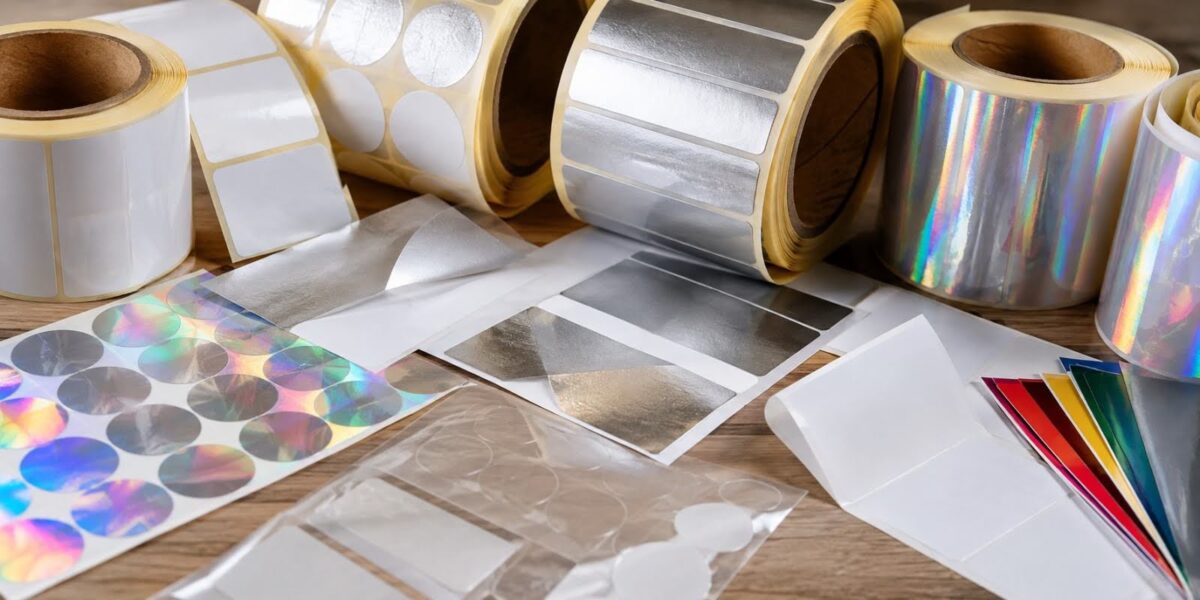
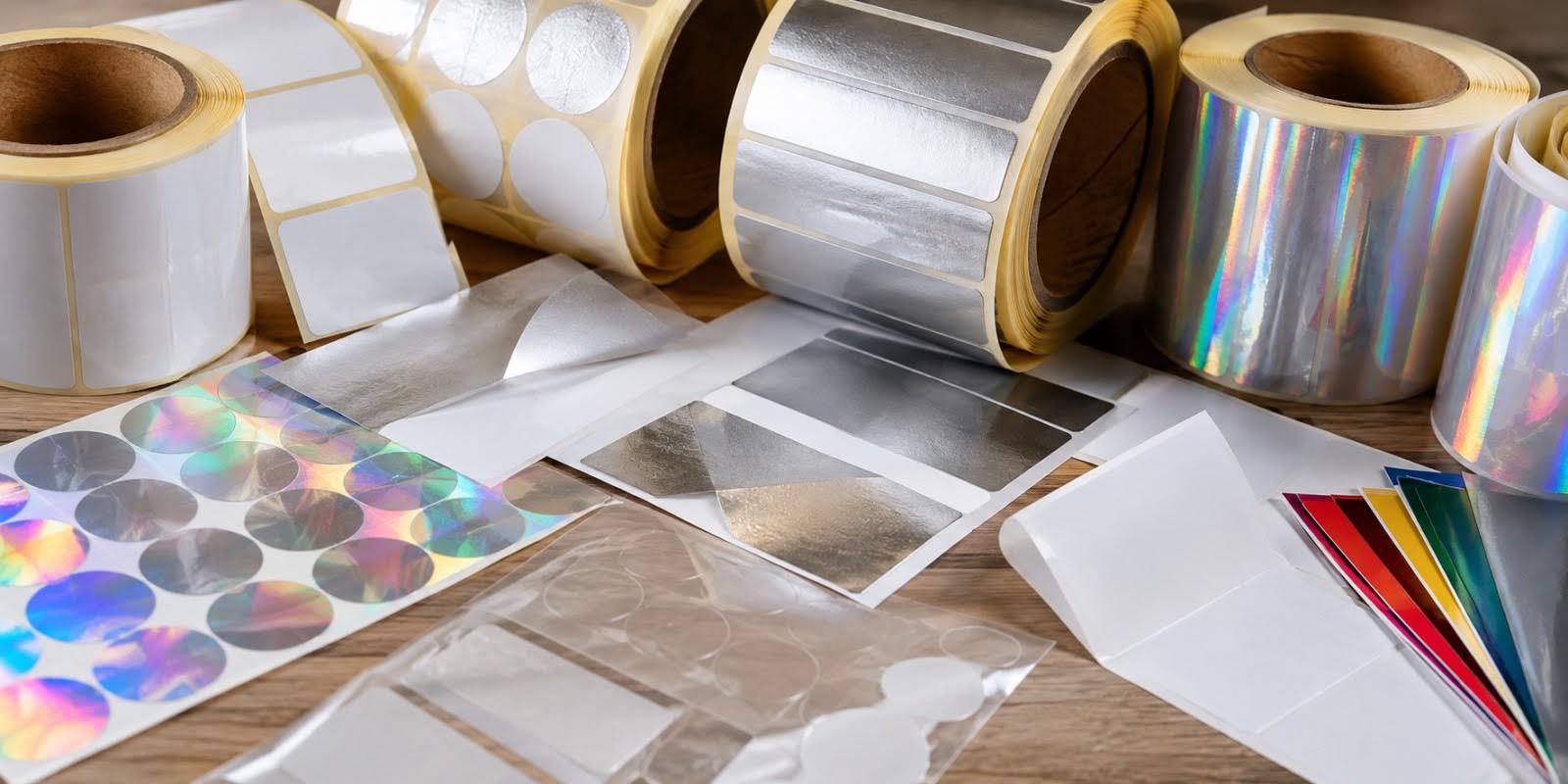
Choosing the Right Sticker Materials for Every Application

unnamed (9)

Choosing the right sticker material is one of the most important decisions in label and sticker printing. While design determines how a sticker communicates visually, the material determines whether it can perform reliably in its intended environment.

A paper label placed on a dry cardboard box has very different requirements from an industrial sticker exposed to moisture, heat and repeated handling. Similarly, a product label for a refrigerated beverage may need greater water resistance than a promotional sticker distributed at an indoor event.

This is why there is no single sticker material that is best for every application.

Businesses need to consider the application surface, environmental conditions, expected lifespan, flexibility, appearance and adhesive requirements before selecting a material. Options can include paper, kraft paper, vinyl, PVC, PET and other synthetic labels, each with different characteristics.

For businesses in Singapore, factors such as humidity, condensation and outdoor exposure can make this decision particularly important.

Understanding the differences between common sticker materials makes it easier to avoid both under-specification, where a label fails prematurely, and over-specification, where businesses pay for durability they do not actually need.

Overview

Sticker materials form the printable face of an adhesive label. This is the surface that carries the logo, product information, barcode, instructions, or other printed content.

A typical sticker construction can include:

Face material → printing → optional protective finish → adhesive → release liner

All of these components contribute to performance.

The face material, however, has a major influence on:

  • Appearance
  • Flexibility
  • Tear resistance
  • Moisture resistance
  • Temperature performance
  • Print compatibility
  • Outdoor suitability
  • Expected lifespan

This is why material selection should happen before production rather than after the artwork has already been finalised.

Material Should Follow the Application

unnamed (10)

One of the simplest ways to approach material selection is to ask where the sticker will spend most of its life.

For example:

Application Possible Starting Material
Indoor cardboard packaging Paper
Natural or rustic packaging Kraft paper
Beverage bottles Vinyl or suitable synthetic film
Cosmetic containers Vinyl, PET or synthetic film
Outdoor stickers Suitable outdoor-grade synthetic material
Equipment identification PET/polyester
Short-term promotions Paper or vinyl
Refrigerated products Moisture-resistant synthetic label

These are starting points rather than universal rules.

The final specification should account for the exact environment, surface and expected duration.

Common Materials

Understanding the characteristics of commonly available materials can help businesses narrow down their options.

Paper

Paper is one of the most familiar sticker materials.

It is commonly used for:

  • Retail labels
  • Boxes
  • Paper bags
  • Packaging seals
  • Dry product labels
  • Promotional stickers

Paper can provide strong print quality and is often practical for applications that remain indoors and dry.

It is also available in different textures and finishes, giving businesses flexibility in packaging presentation.

Its primary limitation is environmental resistance.

Ordinary paper can absorb moisture, wrinkle, tear and deteriorate when exposed to water. This generally makes it less suitable for refrigerated products, outdoor environments or labels expected to encounter repeated wet handling.

Kraft Paper

Kraft paper has a recognisable natural brown appearance that can complement brands seeking a rustic, handcrafted or environmentally influenced aesthetic.

Common applications can include:

  • Artisan products
  • Food packaging
  • Handmade goods
  • Gift packaging
  • Natural product branding

Its appearance becomes part of the design.

However, kraft paper creates specific printing considerations. Because the material itself is brown rather than white, printed colours may appear differently than they would on an opaque white label.

Fine colour matching may therefore require additional consideration.

Kraft paper also shares many of the moisture limitations associated with other paper-based labels unless specifically treated or protected.

Vinyl

Vinyl is a flexible synthetic sticker material commonly selected when greater resistance to moisture and physical wear is required.

Applications can include:

  • Bottles
  • Containers
  • Promotional decals
  • Product labels
  • Windows
  • Selected outdoor stickers

Vinyl’s flexibility can make it useful on curved surfaces because it can conform more readily than some rigid materials.

It is also commonly associated with waterproof labels because the face material does not absorb water like ordinary paper.

However, businesses should distinguish between a water-resistant vinyl material and a fully weather-resistant sticker construction.

Outdoor durability also depends on printing, adhesive, lamination and UV exposure.

PVC

PVC, or polyvinyl chloride, is a synthetic plastic material used in various printing and labelling applications.

It can offer:

  • Flexibility
  • Moisture resistance
  • Durability
  • Compatibility with selected indoor and outdoor applications

PVC and vinyl terminology can sometimes overlap commercially because vinyl materials are often based on polyvinyl chloride.

Businesses therefore should not rely solely on a material name when comparing specifications. It is more useful to ask about the actual performance characteristics of the proposed label stock.

These include thickness, flexibility, adhesive, outdoor suitability and expected service life.

PET and Polyester Labels

unnamed (11)

PET, or polyethene terephthalate, is a polyester material used where labels require greater dimensional stability and durability.

Polyester labels can be suitable for:

  • Equipment
  • Electronics
  • Asset identification
  • Machinery
  • Industrial products
  • Durable product labels

Compared with flexible vinyl, PET can provide a more dimensionally stable construction.

This may be useful where the label needs to maintain its shape under repeated handling or demanding conditions.

However, increased durability does not automatically make PET the best choice. On certain highly curved surfaces, a more flexible material may perform better.

Other Synthetic Labels

Synthetic labels can include polypropylene and other polymer-based films designed to provide characteristics that ordinary paper cannot.

Depending on the material, synthetic labels can provide:

  • Moisture resistance
  • Tear resistance
  • Flexibility
  • Chemical resistance
  • Improved durability

They are commonly used for product packaging, cosmetics, food and beverage applications, industrial identification and other environments where paper may be unsuitable.

Durability Comparison

Durability should be evaluated according to the conditions the sticker needs to withstand.

A label does not need maximum resistance to every possible environmental factor. It needs sufficient resistance to the factors it will actually encounter.

Moisture Resistance

Paper generally provides the lowest natural moisture resistance among common sticker materials.

Vinyl, PVC, PET and other synthetic films offer better starting points where exposure to water or condensation is expected.

This makes synthetic materials useful for:

  • Refrigerated beverages
  • Bathroom products
  • Outdoor labels
  • Chilled foods
  • Frequently cleaned surfaces

Lamination may add additional protection, but the base material should still suit the environment.

Tear Resistance

Paper can tear relatively easily.

Synthetic films generally offer greater resistance to tearing, although the degree varies by material and thickness.

This can matter for labels exposed to:

  • Frequent handling
  • Transport
  • Equipment use
  • Outdoor conditions

Abrasion Resistance

Industrial stickers and frequently handled product labels may experience rubbing and scratching.

In these situations, durability depends on both the face material and printed surface.

A strong PET label can still become difficult to read if the printing is easily scratched.

Protective finishing may therefore be required.

Temperature and Chemical Exposure

Some specialised applications encounter:

  • Heat
  • Cold
  • Cleaning agents
  • Oils
  • Chemicals
  • Solvents

A label described as waterproof is not automatically resistant to these conditions.

Industrial users should define the actual exposure so that material, adhesive and printing can be selected accordingly.

Comparing Common Sticker Materials

Material Moisture Resistance Tear Resistance Flexibility Typical Durability
Standard paper Low Low Moderate Short–moderate
Kraft paper Low Low Moderate Short–moderate
Vinyl High High High Moderate–high
PVC High High High Moderate–high
PET/polyester High High Moderate High
Other synthetic films Moderate–high High Varies Moderate–high

Actual performance varies according to material grade, adhesive, printing, finishing and environmental conditions.

Indoor vs Outdoor

Whether a sticker will be used indoors or outdoors significantly affects material selection.

Indoor Stickers

Indoor environments are generally more controlled.

Stickers used on:

  • Office products
  • Retail packaging
  • Boxes
  • Paper bags
  • Indoor displays

may not require strong resistance to weather or UV exposure.

Paper and kraft paper can therefore be perfectly appropriate.

Using industrial-grade PET for a temporary indoor packaging seal, for example, may add cost without providing meaningful additional value.

Indoor Environments Can Still Be Demanding

“Indoor” does not always mean “dry and protected.”

Indoor labels may still experience:

  • Refrigeration
  • High humidity
  • Frequent washing
  • Chemical cleaning
  • Abrasion
  • Heat

A label on a chilled bottle inside a supermarket has different requirements from a label on a dry box in the same building.

The actual conditions matter more than the indoor/outdoor classification alone.

Outdoor Stickers

Outdoor stickers can encounter:

  • Rain
  • Sunlight
  • UV radiation
  • Heat
  • Humidity
  • Dirt
  • Temperature changes

Synthetic materials such as suitable vinyl, PVC or polyester are generally better starting points than ordinary paper.

However, outdoor performance is determined by the complete label.

Businesses should consider:

Material + ink + adhesive + laminate + expected exposure period

A vinyl face material does not automatically guarantee long-term weather resistance.

Food Packaging

Food packaging labels require careful material selection because their environments can vary significantly.

Dry Food Packaging

unnamed (12)

Paper and kraft paper can work effectively for dry products stored under controlled conditions.

Examples include:

  • Bakery boxes
  • Snack packaging
  • Dry goods
  • Outer cartons
  • Paper bags

These applications may benefit from the appearance and cost efficiency of paper-based labels.

Refrigerated Products

Chilled food and beverage packaging can produce condensation.

A paper label may absorb this moisture, resulting in:

  • Wrinkling
  • Softening
  • Edge lifting
  • Reduced print quality

Suitable synthetic labels such as vinyl, polypropylene or PET may provide better moisture resistance.

Bottles and Jars

Material flexibility becomes important on curved packaging.

A label applied to a narrow bottle needs to conform properly without excessive tension at the edges.

Vinyl and other flexible films can be useful for this purpose.

The adhesive should also be compatible with the container material, whether it is glass or plastic.

Food Packaging Design Considerations

The label may need to display:

  • Product name
  • Ingredients
  • Storage instructions
  • Product information
  • Barcode
  • Branding

Material should support reliable printing and maintain readability throughout the intended product lifecycle.

Where labels are intended for direct or specialised food-contact applications, businesses should also confirm applicable material and regulatory requirements rather than assuming that a general packaging sticker is suitable.

Industrial Applications

Industrial stickers often have more demanding performance requirements than ordinary packaging labels.

They may be used for:

  • Machinery
  • Equipment
  • Electrical components
  • Assets
  • Tools
  • Storage systems
  • Safety identification
  • Product tracking

Why Polyester Labels Are Common in Industrial Uses

PET/polyester labels can provide strong dimensional stability and resistance to environmental wear.

Depending on the specification, they may be useful where labels need to remain readable for extended periods.

Applications can include:

  • Serial numbers
  • Equipment identification
  • Warning information
  • Asset numbers
  • Barcodes

Adhesive Materials Become Critical

The face material is only half of the equation.

Industrial surfaces may include:

  • Smooth metal
  • Powder-coated metal
  • Plastic
  • Textured surfaces
  • Painted equipment

An adhesive that works effectively on smooth glass may perform differently on a textured industrial surface.

Businesses should therefore provide information about the actual substrate when ordering industrial stickers.

Chemical and Heat Exposure

Industrial environments may expose labels to oils, cleaning agents, chemicals or elevated temperatures.

These conditions require application-specific testing.

“Waterproof” should not be interpreted as:

  • Chemical proof
  • Heat proof
  • Solvent proof
  • Oil proof

Each type of resistance needs to be evaluated separately.

Choosing the Right Material

The most reliable way to choose sticker materials is to work backwards from the application.

Step 1: Identify the Surface

Determine whether the sticker will be applied to:

  • Paper
  • Cardboard
  • Glass
  • Plastic
  • Metal
  • Painted surfaces
  • Textured surfaces

Surface energy, texture and curvature can all affect adhesion.

Step 2: Identify Environmental Exposure

Ask whether the label will encounter:

  • Water
  • Condensation
  • Sunlight
  • Heat
  • Refrigeration
  • Chemicals
  • Oil
  • Frequent cleaning

This immediately eliminates materials that cannot handle the environment.

Step 3: Determine the Required Lifespan

A sticker needed for a three-day event does not require the same construction as an equipment label intended to remain readable for several years.

Avoid paying for unnecessary durability, but also avoid specifying a material that will fail before the end of the required lifespan.

Step 4: Determine Flexibility Requirements

Curved surfaces may benefit from flexible materials such as vinyl.

Flat equipment panels may support more dimensionally stable materials such as PET.

The shape of the substrate should therefore influence material choice.

Step 5: Consider Appearance

Material is also a design decision.

For example:

  • Kraft paper can provide a natural appearance.
  • White paper creates an opaque printable background.
  • Clear synthetic film can create a no-label look.
  • Vinyl can provide smooth, durable branding.
  • PET can support a more technical appearance.

The material should complement the packaging and brand identity.

Step 6: Select the Adhesive

Consider whether the sticker needs:

  • Permanent adhesion
  • Removability
  • Repositionability
  • Specialised environmental resistance

Do not assume that all labels using the same face material use the same adhesive.

Step 7: Determine Whether Finishing Is Needed

Lamination or other protective finishing may be useful where labels experience:

  • Scratching
  • Moisture
  • Frequent handling
  • Outdoor exposure

Finishing should solve a real performance or aesthetic requirement rather than being added automatically.

Step 8: Test the Complete Sticker

Where performance is important, test the actual sticker construction on the real surface.

A practical test can reveal issues involving:

  • Adhesion
  • Edge lifting
  • Curvature
  • Condensation
  • Readability
  • Scanning
  • Surface wear

This is more reliable than selecting materials based purely on general descriptions.

Frequently Asked Questions (FAQs)

What is the most durable sticker material?

There is no single most durable option for every environment. PET/polyester, vinyl and other synthetic films can provide strong durability, but their suitability depends on moisture, chemicals, heat, abrasion, surface and adhesive requirements.

What sticker material is best for waterproof labels?

Vinyl, PET/polyester and polypropylene are common synthetic options for moisture-resistant labels. The adhesive and printing also need to be appropriate for water exposure.

Is vinyl the same as PVC?

Many vinyl sticker materials are based on PVC, which stands for polyvinyl chloride. However, commercial specifications can vary, so businesses should compare actual performance characteristics rather than relying only on the terminology.

Is PET better than vinyl?

Not universally. PET offers strong dimensional stability and can suit industrial identification, while vinyl’s flexibility can make it more appropriate for curved surfaces and other applications. The better material depends on the use case.

What is the best material for outdoor stickers?

Suitable outdoor-grade vinyl or other synthetic materials are common choices. The complete sticker should also use appropriate printing, adhesive and protective finishing for rain, UV exposure, heat and humidity.

Which sticker material is best for bottles?

Flexible moisture-resistant materials such as vinyl or polypropylene can work well for many bottles. PET may also be suitable depending on the container and application. The label should be tested for curvature, condensation and adhesive performance.

Is kraft paper suitable for product labels?

Yes, particularly for dry indoor products where its natural appearance supports the brand. It is less appropriate where significant moisture resistance is required.

Are synthetic labels waterproof?

Many synthetic materials provide strong water resistance because they do not absorb water like ordinary paper. However, waterproof performance depends on the entire label construction, including printing and adhesive.

What sticker material is suitable for industrial equipment?

PET/polyester and other durable synthetic labels are commonly considered for industrial applications. The correct specification depends on heat, chemicals, abrasion, moisture and the equipment surface.

Can paper stickers be used outdoors?

Ordinary paper is generally not ideal for prolonged outdoor exposure. Protective finishing can improve resistance, but suitable synthetic materials are usually a better starting point for weather-exposed applications.

Which sticker material is best for food packaging?

It depends on the packaging environment. Paper can suit dry outer packaging, while synthetic labels can be more appropriate for refrigerated products, bottles and packaging exposed to condensation. Application-specific requirements should also be considered.

Does a thicker sticker material always last longer?

No. Thickness is only one characteristic. Adhesive, material chemistry, printing, lamination and environmental compatibility can have a greater influence on actual performance.

How do I know whether a sticker will stick to plastic?

Different plastics have different surface characteristics. The safest approach is to identify the exact substrate and test the proposed adhesive on the actual product, particularly for demanding or long-term applications.

Choosing the Right Sticker Material for Your Application 

Choosing the right sticker material is not about finding one material that outperforms everything else. It is about matching the characteristics of the label to the conditions it will actually encounter.

Paper and kraft paper can be highly effective for dry indoor packaging, retail applications and short-term promotional use. Vinyl and PVC provide greater flexibility and moisture resistance, making them useful for bottles, product labels and selected outdoor applications. PET/polyester and other synthetic labels can provide additional dimensional stability and durability for industrial and long-term identification requirements.

The application environment ultimately determines the correct specification.

Businesses should consider the surface, moisture exposure, sunlight, temperature, chemicals, required lifespan, flexibility and visual appearance before deciding on a material. Adhesive and finishing should then be selected around those same conditions.

This application-first approach prevents two common problems: paying unnecessarily for performance the label does not need, and selecting an economical material that cannot survive the intended environment.

For businesses in Singapore, where humidity, refrigeration and outdoor exposure can introduce additional challenges, understanding these differences can make sticker printing more reliable and cost-effective.

Match the Sticker Material to What It Actually Needs to Survive

The right label starts with the environment, not the material name. Once the surface, exposure, lifespan and branding requirements are clear, businesses can choose between paper, kraft, vinyl, PET and other synthetic options with much greater confidence.

For businesses comparing sticker materials for product labels, packaging, waterproof labels or industrial stickers, Printsys Pte Ltd can help determine an appropriate material, adhesive and finishing combination for the intended application. Get in touch with Printsys today!
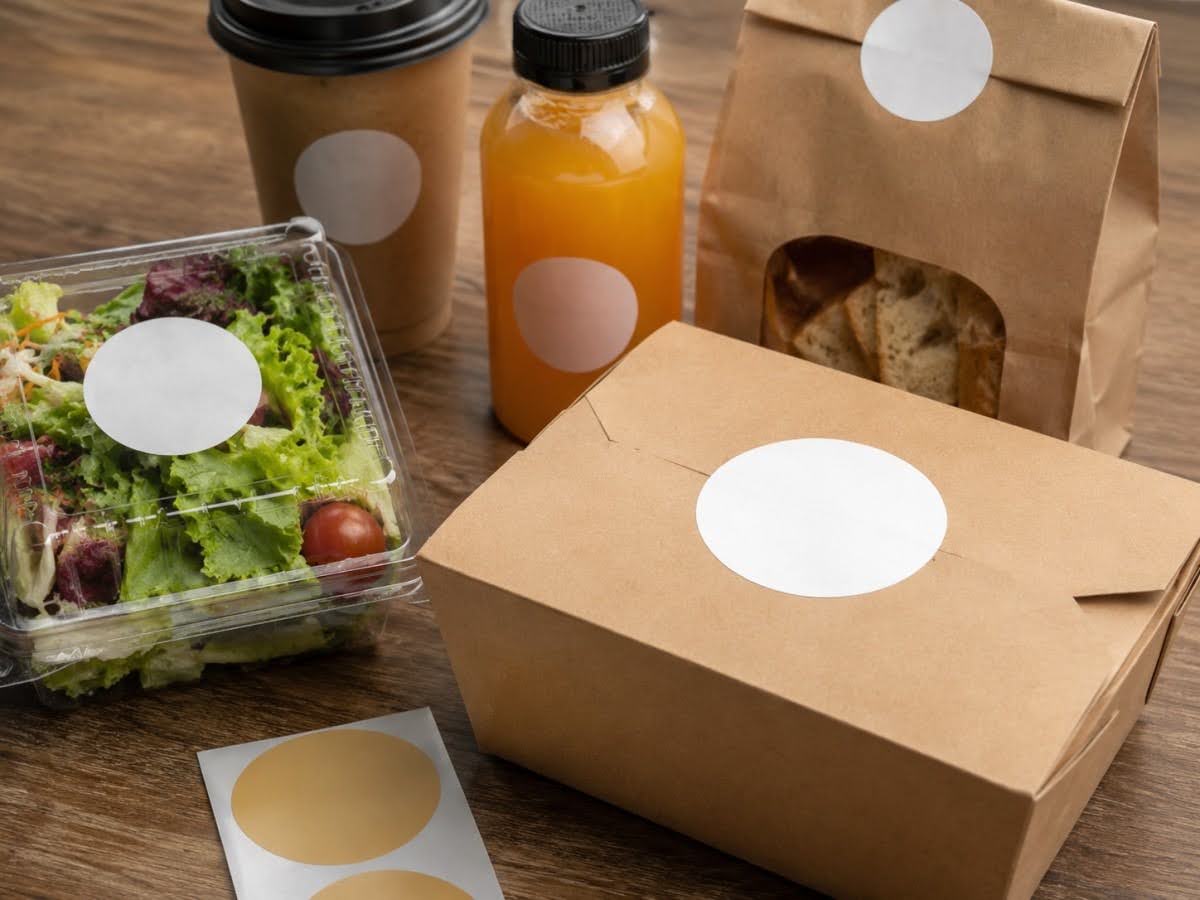
How to Design Stickers That Represent Your Brand

unnamed (7)

A sticker may occupy only a small area of a product or package, but it can communicate a surprising amount about a business. Logo, colour, typography, shape and finishing can influence whether a sticker feels professional, premium, playful, technical or inconsistent with the rest of the brand.

Effective sticker design therefore requires more than fitting a logo into a predetermined shape.

Businesses need to consider how the sticker will appear at its actual printed size, where it will be applied, what information customers need to notice first and whether the artwork can be reproduced accurately through custom sticker printing.

This is particularly important for packaging stickers and product labels. Unlike a digital graphic that can be enlarged on a screen, a printed sticker has fixed dimensions. Small text, weak contrast and excessive detail can quickly become difficult to read.

The strongest sticker designs combine brand consistency with practical print requirements. This guide explains the essential principles businesses should consider when designing stickers that accurately represent their brand and remain effective once printed.

Importance of Sticker Design

Sticker design influences both visual recognition and communication.

A branded sticker may appear on a box, bottle, bag or promotional item. In each case, customers should be able to associate it with the business without the sticker looking disconnected from the company’s wider visual identity.

Consistency is therefore important.

Brand elements commonly carried into sticker design include:

  • Logo
  • Brand colours
  • Typography
  • Graphic style
  • Tone of communication
  • Supporting icons or patterns

When these elements are used consistently, stickers become another brand touchpoint rather than an isolated piece of artwork.

Stickers Can Extend Brand Recognition

A logo sticker placed on a delivery box can make otherwise generic packaging identifiable. Product stickers can create consistency across a range of containers, while promotional stickers can carry the brand beyond the original purchase.

For smaller businesses, this flexibility can be particularly useful.

Rather than producing completely custom packaging for every product, businesses can use custom labels or packaging stickers to apply their branding to standard boxes, bottles, jars or bags.

Design Also Has a Functional Role

Not every sticker exists primarily for branding.

A product label may need to communicate:

  • Product name
  • Variant
  • Instructions
  • Ingredients
  • Barcode
  • QR code
  • Contact information
  • Warnings

Good label design creates a hierarchy so customers can quickly identify the most important information.

Trying to make every element equally prominent usually creates visual clutter.

For that reason, effective sticker design balances brand expression with practical communication.

Design Principles

unnamed (5)

Several basic design principles can make stickers easier to recognise, read and reproduce.

Establish a Clear Visual Hierarchy

Visual hierarchy determines what people notice first, second and third.

For a branded product sticker, the hierarchy might be:

  1. Brand or logo
  2. Product name
  3. Product variant
  4. Supporting information

A promotional logo sticker may need only one dominant element.

The important point is intentional prioritisation.

If the logo, headline, contact details, slogan and decorative graphics all compete for attention, none of them becomes memorable.

Keep the Design Focused

Small stickers have limited visual space.

Adding more elements does not necessarily communicate more effectively. In many cases, removing unnecessary information makes the remaining message stronger.

Simple sticker designs can also reproduce more reliably at small dimensions.

Before adding an element, ask whether it serves a clear purpose.

Use Negative Space

Negative space is the unused area surrounding design elements.

It helps prevent:

  • Crowded layouts
  • Difficult-to-read text
  • Logos appearing compressed
  • Weak visual hierarchy

A sticker does not need to fill every available millimetre with artwork.

Allowing sufficient space around the logo or product name can actually make those elements more prominent.

Design at the Actual Size

This is one of the most important principles in sticker design.

A design that looks clear when displayed at 300% magnification may become unreadable at its actual printed size.

Businesses should review artwork at approximately 100% of the intended physical dimensions.

Pay particular attention to:

  • Fine lines
  • Small text
  • QR codes
  • Barcodes
  • Detailed logos
  • Thin borders

Consider the Sticker Shape

Shape can become part of the visual identity.

Standard shapes such as circles, squares, and rectangles are versatile, but die-cut stickers allow the cut line to follow a logo, illustration, or custom outline.

A distinctive silhouette can improve recognition even before someone reads the sticker.

However, highly complicated cut paths may not always be practical. The shape should support the design rather than introduce unnecessary production complexity.

Colours

unnamed (8)

Colour is one of the strongest elements of brand recognition, but designing sticker colours requires understanding the difference between digital displays and physical printing.

Stay Consistent with Brand Colours

If a company has established brand guidelines, sticker artwork should use the approved colour values whenever possible.

Repeated colour consistency across:

  • Website
  • Packaging
  • Business cards
  • Brochures
  • Signage
  • Stickers

Helps reinforce visual recognition.

Using slightly different versions of a brand colour across different materials can make branding appear inconsistent.

Understand RGB and CMYK

Digital screens commonly display colour using RGB—red, green and blue.

Commercial printing commonly relies on CMYK—cyan, magenta, yellow and black—although specific production methods may differ.

RGB can display certain bright colours that standard CMYK printing cannot reproduce exactly.

For that reason, artwork should be prepared according to the printer’s colour requirements rather than assuming that colours displayed on a monitor will look identical after printing.

Consider the Sticker Material

Sticker colours can also appear different depending on the material.

For example:

  • White material provides an opaque background.
  • Transparent material allows the product surface to influence the design.
  • Metallic material can interact with printed colours.
  • Matte and gloss finishes can change perceived saturation and reflection.

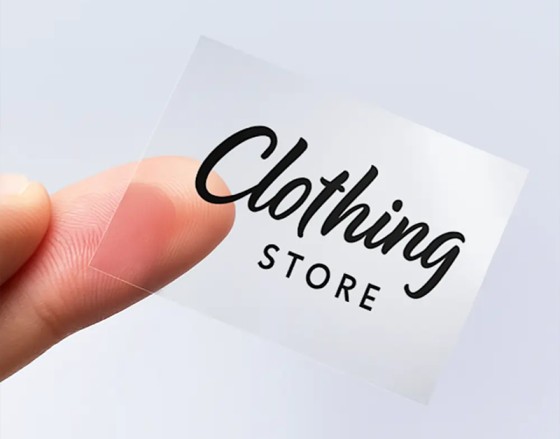
Transparent stickers require particular attention.

Colours printed directly onto clear material may appear less opaque than expected, especially when applied to dark or coloured packaging. White ink may be needed beneath selected elements to maintain visibility.

Use Contrast Strategically

Good contrast improves readability.

Dark text on a light background and light text on a dark background are common approaches, but contrast should also be evaluated after considering the actual product surface.

This is especially important for:

  • Instructions
  • Product names
  • Barcodes
  • QR codes
  • Contact information

A visually subtle design may fit the brand aesthetic but fail if customers cannot comfortably read it.

Typography

Typography can communicate personality while also determining whether information remains legible.

Choose Fonts That Match the Brand

A technology company may prefer clean geometric typography, while a handcrafted food brand may use a warmer or more traditional style.

The font should feel consistent with the rest of the brand identity.

However, brand personality should not come at the expense of readability.

Highly decorative fonts can become difficult to recognise when printed at small sizes.

Limit the Number of Fonts

Using too many typefaces can make a sticker feel visually inconsistent.

Most sticker designs can work effectively with one or two complementary typefaces.

Variations in:

  • Weight
  • Size
  • Capitalisation
  • Spacing

can create hierarchy without introducing multiple unrelated fonts.

Check Minimum Text Size

There is no universal minimum font size suitable for every printing process because readability depends on the typeface, material, printing method and viewing conditions.

Instead of relying on one number, businesses should test the artwork at actual size.

If text is difficult to read on screen at physical size, reducing it further to make more information fit is rarely the best solution.

Protect Critical Information

Important information should not sit too close to the cut edge.

Text, logos and essential graphics should remain inside the safe area specified by the printing company.

This prevents normal cutting tolerances from affecting important content.

File Preparation

A strong sticker design can still produce disappointing results if the artwork is not prepared correctly.

Artwork preparation bridges the gap between creative design and physical production.

Use Appropriate File Formats

Professional printers commonly work with print-ready PDF and vector-based formats such as AI or EPS, depending on their workflow.

Vector artwork is particularly useful for:

  • Logos
  • Icons
  • Text
  • Line graphics
  • Die-cut paths

Unlike raster images, vector graphics can generally be resized without losing sharpness.

Understand Vector vs Raster Artwork

Raster images are made from pixels.

Photographs are normally raster images and require sufficient resolution at their final printed size.

Vector artwork uses mathematically defined paths, making it particularly suitable for logos and illustrations requiring clean edges.

A common mistake is taking a small logo from a website and enlarging it for printing. The resulting artwork may look blurred or pixelated.

Whenever possible, businesses should retain original vector artwork for their brand assets.

Include Bleed

Bleed extends the artwork slightly beyond the final cut line.

If a background colour or image reaches the sticker edge, bleed helps prevent unwanted white gaps caused by normal cutting tolerances.

The exact bleed requirement should follow the printer’s artwork specifications.

Create the Correct Cut Path

Die-cut stickers require a clearly defined cutting path.

This indicates where the sticker should be cut relative to the printed artwork.

The cut path should be:

  • Smooth
  • Practical
  • Properly positioned
  • Separated from important design elements

Overly complex paths can make production more difficult without meaningfully improving the final sticker.

Prepare Print-Ready Files

Before submitting artwork, check:

  • Final dimensions
  • Colour mode
  • Resolution
  • Bleed
  • Safe margins
  • Fonts
  • Cut paths
  • Image links
  • Barcode quality

This pre-flight check can prevent avoidable revisions later in the printing process.

Common Mistakes

unnamed (6)

Sticker design mistakes are often small on screen but highly visible once hundreds or thousands of copies have been printed.

Making the Design Too Busy

A sticker does not need to contain every piece of information about the business.

Excessive text, multiple graphics and too many decorative elements can weaken the main message.

Prioritise what the customer actually needs to see.

Using Low-Resolution Logos

A logo downloaded from a website or screenshot may look acceptable on screen but reproduce poorly in print.

Use original vector artwork whenever possible.

Ignoring the Final Sticker Size

Designers sometimes work on artwork at a large zoom level and forget how small the physical sticker will be.

Always inspect a 1:1-size proof.

Using Insufficient Contrast

Brand colours that work beautifully on a website may not create enough contrast on a small printed label.

This is particularly problematic for transparent stickers placed over coloured surfaces.

Putting Text Too Close to the Edge

Critical content positioned directly against the cut line risks appearing uneven or being partially trimmed.

Use appropriate safe margins.

Forgetting About the Product Surface

A sticker design should not be finalised without considering where it will be applied.

Curved bottles, textured packaging, dark containers and transparent glass can all change the final appearance.

Overusing Special Effects

Foil, spot UV, gradients, multiple fonts and unusual shapes can all be effective individually.

Using all of them simultaneously does not automatically make a sticker more premium.

Good branding often depends on restraint.

Forgetting to Proof the Content

Spelling errors, incorrect contact details and outdated product information become expensive after mass production.

Artwork approval should include both visual and factual checking.

Printing Considerations

Sticker design and printing should be considered together from the beginning.

A design that cannot be reproduced effectively on the selected material or at the required size will need compromises later.

Match the Material to the Design

Different sticker materials create different visual and functional results.

Paper can suit:

  • Dry packaging
  • Natural aesthetics
  • Indoor labels

Vinyl can suit:

  • Durable logo stickers
  • Moisture-resistant labels
  • Curved surfaces
  • Selected outdoor applications

Transparent films can suit:

  • Glass
  • Clear bottles
  • Minimal packaging

The material should support both the artwork and the environment.

Consider Matte vs Gloss

The same design can look substantially different depending on its finish.

Gloss can:

  • Increase reflection
  • Strengthen colour vibrancy
  • Create a polished appearance

Matte can:

  • Reduce glare
  • Create a softer visual effect
  • Support understated branding

Finishing should be evaluated as part of the overall sticker design rather than added at the end without considering its effect.

Consider Lamination for Protection

Lamination can help protect printed artwork from moisture, scratching and repeated handling.

This may be useful for:

  • Product stickers
  • Packaging labels
  • Promotional decals
  • Frequently handled products

However, lamination cannot compensate for an unsuitable base material or adhesive.

Design Die Cut Stickers for Practical Production

Custom shapes can strengthen branding, but the cut should remain practical.

Very narrow points, intricate internal shapes or excessively complex outlines can make stickers harder to produce and apply.

A simpler silhouette is often more recognisable anyway.

Think About Application

A beautiful sticker that is difficult to apply consistently can create problems during packaging.

Consider:

  • Sticker size
  • Shape
  • Orientation
  • Container curvature
  • Label placement
  • Manual or machine application

Businesses ordering large quantities should consider how the labels will actually be applied during production.

Test Barcodes and QR Codes

If a sticker contains machine-readable information, testing should happen after printing and finishing.

QR codes and barcodes can be affected by:

  • Insufficient size
  • Weak contrast
  • Glossy reflection
  • Curved surfaces
  • Poor print resolution

The final sticker should be tested on the actual packaging whenever possible.

Request a Proof Where Appropriate

A proof can help businesses assess:

  • Scale
  • Text readability
  • Colour
  • Layout
  • Cutting
  • Overall presentation

For critical packaging, physical sampling can be particularly valuable because screens cannot fully reproduce material texture, transparency or finishing.

Frequently Asked Questions (FAQs)

What makes a good sticker design?

A good sticker design communicates its primary message quickly, uses clear visual hierarchy, remains readable at its actual size and reflects the brand consistently. It should also be designed around the material, surface and printing method.

Should a business sticker always include a logo?

Not necessarily, although logo stickers are useful for brand recognition. Some product labels may prioritise the product name or important information while incorporating the brand more subtly.

What is the best file format for sticker printing?

Print-ready PDF and vector formats such as AI or EPS are commonly used, depending on the printer’s requirements. Businesses should confirm the preferred file specification before submitting artwork.

Why is vector artwork better for logos?

Vector artwork can be scaled without becoming pixelated, helping logos, icons and line graphics remain sharp at different printed sizes.

Should sticker artwork use RGB or CMYK?

Artwork should follow the printing company’s colour requirements. CMYK is commonly used for commercial print preparation, while RGB is primarily associated with digital displays. Converting between them can change how certain colours appear.

How much information should go on a product sticker?

Include information necessary for branding, identification, customer understanding and any applicable product requirements. Avoid filling empty space simply because it is available. Clear hierarchy is more useful than maximum information density.

Are die cut stickers better for branding?

They can be. A custom shape can make a logo or graphic more recognisable and distinctive, but standard shapes may be more practical for some packaging applications. The shape should support the brand rather than add complexity for its own sake.

How do I design stickers for transparent packaging?

Consider how the surface behind the sticker will affect colours and readability. White ink may be useful behind selected elements where stronger opacity is required. The design should also be tested on the actual container.

What sticker finish is best for branding?

There is no single best finish. Gloss can strengthen vibrant colours, matte can create a more understated appearance, and specialty finishes can emphasise selected brand elements. The finish should complement the brand and product environment.

How can I make packaging stickers look more professional?

Use consistent brand colours, readable typography, sufficient negative space, high-quality artwork and a material and finish suited to the packaging. Professional appearance usually comes from consistency and restraint rather than adding more design effects.

How small can text be on a sticker?

There is no universal minimum that works for every font and printing process. Review the artwork at actual size and confirm production limitations with the printer. Essential information should remain comfortably readable under normal viewing conditions.

Can the same sticker design be used across different packaging sizes?

Sometimes, but simply scaling one design may make typography or proportions unsuitable. A better approach is often to create a consistent design system with adapted layouts for different packaging dimensions.

Creating Sticker Designs That Work in Print 

Effective sticker design combines branding with the realities of physical printing.

A sticker should immediately communicate what matters most while remaining consistent with the company’s broader identity. Colour, typography, spacing, shape and imagery all contribute to that goal, but each element needs to work at the sticker’s actual printed size.

Artwork preparation is equally important. Vector logos, appropriate resolution, bleed, safe margins, colour preparation and correct cut paths help ensure that the finished sticker reflects the intended design rather than exposing preventable technical problems.

Businesses should also design around the final application. A packaging sticker on a cardboard box has different requirements from a transparent label on a glass bottle or a durable vinyl sticker exposed to moisture.

The strongest designs therefore begin with three questions:

  • What does the sticker need to communicate? 
  • Where will it be applied? 
  • What should customers recognise first?

Once those questions are answered, creative decisions become much more purposeful.

For businesses in Singapore using stickers as part of product packaging, retail presentation or promotional branding, thoughtful design can turn a small printed item into a consistent and recognisable extension of the brand.

Turn Your Brand Identity Into a Sticker That Works in Print

A strong concept is only successful when it translates properly from the design file to the finished sticker. Material, size, colour preparation, cutting and finishing should all support the original branding rather than compromise it.

For businesses planning sticker design, logo stickers, packaging stickers or other custom printed labels, Printsys Pte Ltd can help turn print-ready artwork into sticker solutions suited to different branding and business applications. Get in touch with Printsys today!

Sticker Finishes Explained: Matte, Gloss, UV, and Lamination

unnamed (1)

Sticker finishes influence much more than whether a label looks shiny or matte. The finish applied after sticker printing can affect colour presentation, surface texture, resistance to scratches, moisture protection and how the label performs during regular handling.

Matte stickers can create a softer, less reflective appearance, while gloss stickers provide a brighter and more polished surface. Lamination adds a protective film over printed artwork, while UV-related finishes can be used for visual effects or additional protection depending on the specific process. Speciality options such as foil and embossing can further enhance packaging where businesses want the label to contribute to a more distinctive brand presentation.

Choosing among these sticker finishes should therefore start with the sticker’s purpose. A premium cosmetic label, refrigerated beverage sticker, promotional label and industrial identification sticker may each benefit from different finishing options.

For businesses in Singapore, environmental conditions such as humidity, condensation and frequent handling may also affect the decision. The right finish needs to balance appearance, durability, readability and cost rather than focusing on aesthetics alone.

Why Finishes Matter

Sticker finishing is generally applied after the primary printing process to alter or protect the label’s surface.

Depending on the technique, finishing can influence:

  • Surface appearance
  • Colour intensity
  • Reflection
  • Texture
  • Scratch resistance
  • Moisture resistance
  • Handling durability
  • Perceived product quality

This makes finishing both a functional and branding decision.

For example, two labels can use identical artwork and sticker material but look noticeably different when one receives gloss lamination and the other receives matte lamination.

Finishing Can Influence Brand Perception

Packaging is often one of the first physical interactions customers have with a product.

A finish can reinforce the visual positioning of the brand.

A highly polished gloss label may suit products with bright colours and energetic branding. A matte finish can support a more restrained or minimalist presentation. Foil can highlight selected premium elements, while embossing introduces physical texture.

The finish should support the overall packaging rather than compete with it.

Finishing Can Improve Protection

Some finishes also protect printed artwork from environmental and physical wear.

Depending on the specification, protection may be useful against:

  • Fingerprints
  • Light scratching
  • Moisture
  • Abrasion
  • Repeated handling
  • Sunlight

However, finishing should not be expected to solve problems caused by an unsuitable sticker material or adhesive.

A laminated paper sticker, for example, may have greater surface moisture resistance than untreated paper, but it is not automatically equivalent to a synthetic waterproof label.

Matte Finish

unnamed (2)

A matte finish produces a low-reflection surface that creates a softer and more understated appearance than gloss.

Matte stickers are commonly associated with:

  • Cosmetics
  • Skincare
  • Boutique products
  • Premium packaging
  • Minimalist branding
  • Information-heavy labels

The reduced reflection can also improve readability in environments where strong lighting would otherwise create glare.

How Matte Stickers Look

Matte finishing diffuses reflected light rather than producing a mirror-like surface.

This can make colours appear somewhat softer and create a smooth visual effect.

Matte is particularly effective when a brand wants its packaging to feel:

  • Refined
  • Minimal
  • Natural
  • Contemporary
  • Understated

It can also complement packaging materials that already have a matte or frosted appearance.

Practical Benefits of Matte Finishing

Reduced glare is one of the main functional benefits.

This can help where labels contain:

  • Detailed product information
  • Instructions
  • Small text
  • QR codes

Matte surfaces can also make fingerprints less visually obvious than highly reflective gloss surfaces.

That may be valuable for cosmetic containers, electronics, and frequently handled premium products.

Limitations of Matte Stickers

Matte is not automatically more premium or more durable.

Depending on the specific finish, colours may appear less vibrant than they do under gloss. Matte transparent labels can also reduce optical clarity and create a slightly frosted appearance.

Businesses wanting maximum transparency or strong colour saturation may therefore prefer another option.

Gloss Finish

unnamed (3)

Gloss finishing creates a smooth, reflective sticker surface.

It is commonly used where businesses want printed colours and graphics to appear bright and visually prominent.

Gloss stickers can suit:

  • Beverage labels
  • Food packaging
  • Promotional stickers
  • Retail products
  • Colourful branding
  • Product packaging

The reflective surface can help create a polished presentation, particularly when paired with glossy bottles or containers.

How Gloss Affects Colour

Gloss can make colours appear more vivid because the smooth surface reflects light differently from matte material.

This can strengthen:

  • Photographs
  • Illustrations
  • Bright brand colours
  • Promotional graphics

For brands built around vibrant visual identities, gloss can therefore be a natural choice.

Protection from Gloss Lamination

When gloss is achieved through lamination, it can provide surface protection in addition to visual enhancement.

Gloss laminated stickers can gain greater resistance to:

  • Scratches
  • Moisture
  • Frequent handling
  • Surface wear

The degree of protection depends on the laminate and complete sticker construction.

Limitations of Gloss Stickers

The biggest consideration is glare.

Strong overhead lighting or direct sunlight can reflect from the label and temporarily reduce readability from certain angles.

This may matter for stickers containing:

  • Barcodes
  • QR codes
  • Small instructions
  • Detailed information

Gloss surfaces can also make fingerprints or fine scratches more visible.

For that reason, businesses should evaluate the sticker under realistic lighting and handling conditions.

UV Finish

unnamed (4)

The term “UV finish” can refer to different processes, so businesses should clarify exactly what a printing provider is offering.

UV-related finishing may involve a coating cured using ultraviolet light, a protective treatment, or a decorative technique such as spot UV.

These processes do not all serve the same purpose.

UV Coating

UV coating is a liquid coating applied to a printed surface and cured rapidly using ultraviolet light.

Depending on the coating, it can provide:

  • Enhanced surface appearance
  • Additional protection
  • Greater resistance to handling
  • Increased gloss

It can be applied across a larger printed area or selectively depending on the production process.

Spot UV

Spot UV applies a glossy UV coating only to selected areas of a design.

For example, it may highlight:

  • A logo
  • Product name
  • Pattern
  • Graphic
  • Brand element

The contrast between a matte background and glossy spot UV can create visual and tactile differentiation.

This makes spot UV particularly useful for premium stickers and packaging where selected elements need greater emphasis.

UV Finishing vs UV Resistance

These terms should not be confused.

A sticker produced or coated using UV-curing technology is not automatically designed for prolonged outdoor sunlight.

UV resistance refers to the ability of the printed label to tolerate ultraviolet exposure without excessive fading or deterioration.

Outdoor stickers may therefore require a complete weather-resistant specification involving:

  • Suitable face material
  • Outdoor adhesive
  • UV-resistant printing
  • Protective finishing

Businesses should discuss expected outdoor exposure rather than simply request a “UV sticker.”

Lamination

Lamination involves applying a thin protective film over the printed sticker.

It is one of the most practical sticker finishes when additional protection is required.

Laminated stickers can be useful where labels encounter:

  • Moisture
  • Repeated handling
  • Scratching
  • Abrasion
  • Product contact

Lamination can also modify the visual appearance through gloss, matte or other film characteristics.

Gloss Lamination

Gloss lamination combines surface protection with a polished reflective appearance.

It is often selected for:

  • Beverage labels
  • Retail packaging
  • Promotional stickers
  • Colourful product labels

It can strengthen colour appearance while providing a physical barrier over printed artwork.

Matte Lamination

Matte lamination combines protective film with reduced reflection.

It can be useful for:

  • Cosmetics
  • Premium packaging
  • Electronics
  • Minimalist labels

The surface tends to show fewer reflections and may make fingerprints less noticeable.

Does Lamination Make Stickers Waterproof?

Lamination can improve moisture resistance, but the answer depends on the complete sticker.

Consider four components:

Material → printing → laminate → adhesive

If the base material absorbs water or the adhesive is unsuitable for wet conditions, surface lamination alone cannot guarantee waterproof performance.

For waterproof labels, businesses should generally start with a suitable moisture-resistant material and adhesive before deciding whether lamination provides useful additional protection.

When Is Lamination Worth Adding?

Lamination is particularly useful when labels:

  • Are handled frequently
  • Need greater scratch resistance
  • Encounter condensation
  • Need to retain appearance longer
  • Require additional surface protection

For a short-term indoor promotional sticker, additional lamination may provide little practical benefit.

Specialty Finishes

Matte, gloss, and lamination are not the only finishing options available. Speciality finishes can be used when labels need greater visual differentiation or a more distinctive tactile effect.

Foil Stickers

Foil can add metallic effects to selected design elements.

Common foil appearances include metallic tones such as gold or silver, although available options depend on the production method.

Foil can be used to highlight:

  • Logos
  • Product names
  • Borders
  • Decorative patterns
  • Limited-edition elements

It is often associated with premium packaging because metallic reflection immediately distinguishes selected artwork from standard printing.

However, foil is most effective when used selectively. Applying it to too many elements can weaken the visual hierarchy.

Embossing

Embossing creates a raised impression on selected areas of the printed piece, while debossing creates a recessed effect.

These techniques introduce physical texture.

They can highlight:

  • Logos
  • Symbols
  • Product names
  • Patterns

The suitability of embossing for a sticker depends on the material, construction and production process. Not every adhesive label is appropriate for this type of finishing.

Die Cutting

Although technically a cutting process rather than a surface coating, die cutting is an important finishing option for custom stickers.

It allows the final sticker to follow:

  • A logo
  • Product shape
  • Illustration
  • Custom outline

This can turn the physical shape of the sticker into part of the brand design.

Combining Speciality Finishes

Some applications can combine finishes.

For example, premium packaging might use:

Matte base + selective gloss element + custom die-cut shape

The advantage is contrast.

The risk is overdesign.

Finishes should direct attention toward important branding rather than making every part of the sticker compete for attention.

Choosing the Right Finish

The best sticker finish is the one that supports the sticker’s purpose, environment and visual requirements.

Businesses can begin by considering several factors.

1. Determine the Desired Appearance

Ask how the sticker should feel visually.

For a bright, polished presentation, gloss may be suitable.

For a restrained or minimalist look, matte may be more appropriate.

For premium emphasis, foil, embossing, or selective UV effects may be considered.

2. Consider the Product Environment

Appearance should not override practical conditions.

Determine whether the sticker will experience:

  • Moisture
  • Refrigeration
  • Sunlight
  • Heat
  • Scratching
  • Repeated handling

This helps determine whether a protective laminate or other durable finishing is necessary.

3. Consider the Base Sticker Material

Finishing should be compatible with the sticker material.

Paper, vinyl, polypropylene and polyester do not necessarily require the same finishing strategy.

For example, laminating a paper label may improve surface protection, but a synthetic label may still be more suitable where regular moisture exposure is expected.

4. Consider Readability

Finishing affects how light interacts with printed information.

Gloss can produce glare.

Matte can reduce reflection.

For labels containing significant text, businesses should evaluate readability under the actual conditions where customers will see the product.

5. Consider Barcode and QR Code Performance

Machine-readable codes require reliable contrast.

Highly reflective surfaces can sometimes affect scanning depending on lighting, angle and the scanner being used.

Businesses should test barcodes and QR codes after final finishing rather than relying only on the digital artwork.

6. Consider the Brand Positioning

Finishing can support brand perception.

For example:

Brand/Product Goal Finish to Consider
Bright, colourful retail packaging Gloss
Minimalist premium packaging Matte
Luxury product emphasis Foil
Tactile brand presentation Embossing
Selective visual contrast Spot UV
Added surface protection Lamination
Custom visual shape Die cutting


These are starting points rather than fixed rules.

A well-designed gloss label can look premium, just as a matte label can be simple and economical.

7. Consider Cost Against Functional Value

Additional finishing generally adds production steps.

Businesses should therefore ask whether the finish provides a meaningful benefit.

A premium product may justify foil or specialised finishing because packaging contributes significantly to customer perception.

A basic internal inventory label may need durability but gain little from decorative treatment.

The strongest specification is not the one containing the most finishes. It is the one where each finishing process has a clear purpose.

Frequently Asked Questions (FAQs)

What is the difference between matte and gloss stickers?

Matte stickers have a lower-reflection surface that produces a softer appearance, while gloss stickers have a shiny reflective surface that can make colours appear more vivid. The better choice depends on branding, readability and the intended application.

Is matte or gloss better for product labels?

Neither is universally better. Gloss can work well for colourful retail and beverage packaging, while matte can suit cosmetics, premium products and labels where reduced glare is desirable.

Does lamination make stickers last longer?

Lamination can help extend practical sticker life by protecting printed artwork from scratches, moisture and repeated handling. Actual lifespan still depends on the material, adhesive and environment.

Do waterproof labels need lamination?

Not necessarily. A waterproof label can use moisture-resistant synthetic material, suitable printing and appropriate adhesive without requiring lamination. Lamination may provide additional protection when the application demands it.

What is the difference between UV coating and lamination?

UV coating is a liquid surface treatment cured using ultraviolet light, while lamination places a physical film over the printed sticker. Both can affect appearance and protection, but they use different production processes.

Is UV coating the same as making a sticker UV-resistant?

No. UV-curing describes a production or coating process, whereas UV resistance describes how well a label withstands prolonged ultraviolet exposure. Outdoor stickers should be specified specifically for sunlight and weather exposure.

What is spot UV?

Spot UV applies a glossy UV coating selectively to certain design elements, such as a logo or product name. It creates contrast between coated and uncoated areas and is often used for premium visual effects.

What finish is best for waterproof stickers?

The best finish depends on the exposure. Gloss or matte lamination can add surface protection, but waterproof performance begins with the correct moisture-resistant material, printing and adhesive.

Are foil stickers suitable for premium packaging?

Yes. Foil can add metallic visual emphasis to logos, product names or decorative elements and is often used for premium packaging. It should generally be applied selectively to maintain a clear visual hierarchy.

Can stickers be embossed?

Selected sticker materials and constructions can support embossing, depending on the production process. Businesses considering embossed stickers should confirm material and design suitability with the printing provider.

What finish is best for outdoor stickers?

Outdoor stickers require more than a specific surface appearance. The complete construction should consider weather-resistant material, outdoor adhesive, UV exposure, moisture and the required service life. Protective lamination may be useful depending on the application.

Which sticker finish is best for QR codes and barcodes?

A finish that maintains strong contrast and reliable scanning is most important. Matte can reduce glare, but gloss can also work when the code is properly designed and tested under realistic lighting conditions.

Can matte and gloss effects be combined?

Yes. Selected printing and finishing processes can combine contrasting effects, such as a matte surface with spot gloss or spot UV elements. This can highlight specific branding without making the entire sticker reflective.

Choosing the Right Sticker Finish for Your Application 

Sticker finishes influence both how a label looks and how it performs throughout its intended use.

Matte finishes provide a softer, low-reflection appearance that can suit minimalist and premium packaging. Gloss finishes create a brighter, polished surface and can strengthen the visual impact of colourful artwork. UV-related processes can provide decorative or protective effects depending on the specific technique, while lamination adds a physical layer that can improve resistance to moisture, scratches and repeated handling.

Specialty options such as foil, embossing and die cutting allow businesses to take sticker design further when packaging presentation plays an important role in brand differentiation.

The most important principle is to avoid selecting a finish in isolation.

Businesses should consider the sticker material, application surface, environmental exposure, artwork, readability and required lifespan together. A beautiful finish cannot compensate for the wrong material or adhesive, while an unnecessarily complex finish can add production requirements without improving the label’s actual function.

For businesses in Singapore, moisture, humidity, condensation and handling may also influence whether additional protection is worthwhile.

When every finishing choice has a clear visual or functional purpose, custom sticker printing can deliver labels that support both brand presentation and practical performance.

Give Your Labels the Finish Their Application Deserves

The right finish can turn a standard printed label into something more durable, visually distinctive or better suited to the product environment. The key is determining whether matte, gloss, lamination, UV-related finishing or a specialty effect provides a genuine benefit for the intended application.

For businesses evaluating sticker finishes, premium stickers, laminated stickers and other custom printing options, Printsys Pte Ltd can help businesses select materials and finishing options appropriate for their packaging, branding and labelling requirements. Get in touch with Printsys today!

Waterproof Sticker Printing: Best Materials for Long-Lasting Labels

unnamed (9)

Water, humidity and condensation can quickly expose weaknesses in an unsuitable product label. A sticker that looks professional when first applied may wrinkle, peel, fade or become difficult to read after repeated contact with moisture.

Waterproof sticker printing addresses these challenges by combining moisture-resistant materials with suitable adhesives, printing methods, and protective finishes. These labels are commonly used on beverage bottles, cosmetic containers, food packaging, outdoor products, equipment, and other surfaces where ordinary paper labels may not provide sufficient durability.

In Singapore, moisture resistance can be particularly relevant because products may encounter high humidity, refrigeration, and frequent transitions between air-conditioned and warmer environments. Chilled bottles, for example, can quickly develop condensation after being removed from refrigeration.

However, simply choosing a material described as “waterproof” does not guarantee that the finished sticker will perform under every wet environment. Businesses need to consider the entire label construction, including the face material, adhesive, ink or printing technology, lamination, and application surface.

Understanding these factors makes it easier to select waterproof labels that remain functional and visually consistent throughout their intended use.

Why Waterproof Stickers Matter

Waterproof stickers matter whenever moisture could compromise the appearance, adhesion, or readability of a label.

Traditional paper labels can absorb water. Depending on the material and level of exposure, this can cause:

  • Wrinkling
  • Tearing
  • Ink deterioration
  • Edge lifting
  • Loss of readability
  • Reduced packaging presentation

For a product label, these issues can affect more than appearance.

Important information such as product names, instructions, barcodes or identification numbers may need to remain readable throughout the product lifecycle.

Water Resistance vs Waterproof Performance

“Water-resistant” and “waterproof” are often used loosely, but businesses should focus on the actual exposure the label needs to withstand.

A moisture-resistant sticker may be suitable for occasional splashes. A label on a refrigerated beverage bottle may need to tolerate repeated condensation. An outdoor sticker may encounter rain, sunlight and temperature changes over a much longer period.

These are different performance requirements.

The full sticker construction therefore matters:

Face material + printing + adhesive + finishing + application surface = real-world label performance.

A waterproof face material with the wrong adhesive can still peel. Likewise, a durable adhesive cannot protect printed artwork if the surface printing is unsuitable for repeated moisture exposure.

Why This Matters in Singapore

Singapore’s climate can make moisture an important consideration even for products that are not directly exposed to rain.

Labels may experience:

  • High humidity
  • Condensation
  • Refrigeration
  • Rain
  • Frequent temperature changes
  • Wet handling

This does not mean every sticker used in Singapore needs a waterproof specification. A dry carton stored indoors may work perfectly well with a standard paper label.

Waterproof sticker printing becomes valuable when moisture exposure is genuinely part of the product’s environment.

Materials

The material used for the face of a sticker is one of the biggest factors affecting water resistance and durability.

Synthetic materials are generally preferred for waterproof labels because they do not absorb water in the same way as ordinary paper.

Vinyl Stickers

unnamed (10)

Vinyl stickers are widely used for applications requiring flexibility and moisture resistance.

Vinyl can be particularly suitable for:

  • Bottles
  • Containers
  • Cosmetic products
  • Promotional decals
  • Outdoor stickers
  • Curved surfaces

Its flexibility can help it conform to curved packaging more effectively than some more rigid materials.

Vinyl is also naturally resistant to water, but the exact performance of the finished sticker still depends on the adhesive, printing and finishing.

For outdoor use, businesses should ensure that the vinyl grade and complete label construction are intended for weather exposure.

Polypropylene Labels

unnamed (11)

Polypropylene is another synthetic material commonly used for product and packaging labels.

It can provide:

  • Moisture resistance
  • Good printability
  • Lightweight construction
  • A smooth appearance

Typical applications include food, beverage, cosmetic and personal-care packaging.

Polypropylene can be useful where businesses want a synthetic label without necessarily requiring the heavier-duty characteristics associated with certain industrial materials.

Polyester and PET Labels

Polyester, often referred to as PET in label applications, provides strong dimensional stability and durability.

It can be suitable for:

  • Industrial labels
  • Equipment identification
  • Electronics
  • Asset labels
  • Long-term product identification

PET can be particularly useful where a label needs to resist moisture while maintaining its shape.

However, a more rigid material is not automatically better. For narrow curved containers, flexibility may be more important than dimensional stability.

Synthetic Paper

Synthetic paper combines some of the print characteristics associated with paper with improved resistance to water and tearing.

Depending on the specification, it may be suitable for:

  • Product labels
  • Packaging labels
  • Information labels
  • Moist environments

Businesses should compare actual material characteristics rather than relying only on material names because different grades can perform differently.

Can Paper Be Used for Waterproof Labels?

Ordinary paper is generally not the first choice where repeated water exposure is expected.

Lamination can improve its surface resistance, but water may still enter through exposed edges or affect the adhesive.

For labels that regularly encounter condensation, rain or wet handling, starting with a suitable synthetic material is usually more appropriate than trying to make standard paper perform like a waterproof film.

Lamination Options

Lamination adds a protective film over the printed surface of the sticker. It can improve resistance to moisture, scratches, and repeated handling while also changing the visual appearance of the label.

Lamination should be considered an additional protective layer rather than a substitute for selecting the correct sticker material.

Gloss Lamination

Gloss lamination creates a smooth, reflective surface.

It can help:

  • Protect printed artwork
  • Increase resistance to handling
  • Enhance colour vibrancy
  • Provide additional moisture protection

Gloss laminated stickers can work particularly well on beverage bottles, product packaging and other applications where a polished appearance is desired.

One consideration is reflection. Strong lighting can create glare, which may matter if the label contains small text, barcodes or QR codes.

Matte Lamination

Matte lamination creates a less reflective surface.

It can provide:

  • Reduced glare
  • Softer appearance
  • Surface protection
  • Greater resistance to visible fingerprints

Matte laminated stickers are often considered for cosmetics, premium packaging and products where a subdued visual finish better matches the brand.

Does Lamination Make a Sticker Completely Waterproof?

Not necessarily.

Lamination protects the printed surface, but the sticker still has exposed edges and an adhesive layer.

If moisture reaches the adhesive or enters through poorly bonded areas, problems can still occur.

For demanding applications, businesses should combine a moisture-resistant face material with suitable printing, adhesive and lamination rather than relying on laminate alone.

Industries

Waterproof sticker printing is useful across industries where products encounter moisture, outdoor conditions or frequent handling.

Food and Beverage

Beverage labels are a clear example.

A chilled bottle removed from refrigeration can develop condensation almost immediately. Labels need to remain attached and readable despite repeated moisture.

Waterproof labels may be useful for:

  • Water bottles
  • Juice bottles
  • Chilled beverages
  • Sauces
  • Refrigerated foods
  • Food containers

The label material should also be compatible with the packaging surface.

Cosmetics and Personal Care

Cosmetic and personal-care products are often stored or used in humid environments.

Examples include:

  • Shampoo bottles
  • Skincare products
  • Body-care products
  • Cosmetic containers
  • Toiletry packaging

These labels may encounter water, oils and repeated handling.

Water resistance is therefore only one consideration. Depending on the product, chemical resistance may also need to be evaluated.

Retail and Product Packaging

Not every waterproof label is exposed to extreme conditions.

Retail businesses may choose moisture-resistant custom labels simply because products are frequently handled or packaging needs to maintain a clean appearance for longer.

Synthetic product labels can be useful for items that move through storage, transportation and retail environments before reaching the customer.

Manufacturing and Industrial Applications

Industrial labels may need to remain readable despite exposure to moisture, abrasion, oils or cleaning.

Applications include:

  • Equipment identification
  • Machine labels
  • Asset labels
  • Warning labels
  • Product identification

For these uses, businesses may require polyester or another durable synthetic material rather than standard packaging vinyl.

Logistics and Warehousing

Labels used in logistics can encounter varying temperatures, handling and environmental conditions.

Durable labels may be useful for:

  • Inventory
  • Shipping containers
  • Warehouse identification
  • Product tracking
  • Storage bins

Barcode readability can become particularly important because physical deterioration can interfere with scanning.

Outdoor Applications

Weatherproof stickers may be used on:

  • Windows
  • Equipment
  • Promotional displays
  • Outdoor containers
  • Signage
  • Selected vehicles or surfaces

Outdoor labels need to withstand more than water.

UV exposure, heat, humidity and temperature changes should also be considered.

Printing Techniques

The printing method used for waterproof labels depends on the material, quantity, artwork and required durability.

Digital Printing

Digital printing is useful for custom labels because artwork can be printed directly from digital files without conventional printing plates.

It can support:

  • Full-colour designs
  • Shorter production runs
  • Multiple designs
  • Detailed graphics
  • Product variations

For waterproof applications, the compatibility between the printing process and synthetic material is important.

UV Printing

UV printing uses ultraviolet light to cure specially formulated ink during production.

Depending on the substrate and system, it can provide strong print definition and durability.

It may be considered for selected synthetic and specialised label applications.

However, businesses should not confuse “UV printing” with “UV-resistant outdoor performance.” Outdoor durability still depends on the full material and printing specification.

Thermal Transfer Printing

unnamed (12)

Thermal transfer printing is commonly used where labels require variable information such as:

  • Barcodes
  • Serial numbers
  • Product codes
  • Inventory information

The system uses heat to transfer material from a ribbon onto the label surface.

Matching the ribbon to the synthetic label stock is important when moisture, abrasion or chemical resistance is required.

Why Ink and Material Compatibility Matter

A waterproof material does not automatically protect unsuitable printing.

If the printed surface scratches or deteriorates, the label may remain physically attached while its information becomes unreadable.

For this reason, the printing technique should be selected together with:

  • Face material
  • Lamination
  • Expected environment
  • Required lifespan

This is particularly important for barcodes, instructions and identification labels where readability has an operational purpose.

Design Tips

Waterproof labels still need strong visual and functional design.

Durability cannot compensate for artwork that is difficult to read or unsuitable for the product.

Design for the Actual Label Size

Always review the artwork at its intended printed dimensions.

Check whether:

  • Text remains readable
  • Logos remain clear
  • Fine details reproduce properly
  • Barcodes have sufficient space
  • QR codes remain scannable

A design that looks spacious on a monitor can become crowded when reduced to a small product label.

Consider the Product Surface

The design should account for whether the label will be applied to:

  • Glass
  • Plastic
  • Metal
  • Curved containers
  • Textured surfaces

Transparent waterproof stickers may interact strongly with the background colour.

A design that works on clear glass may become difficult to read on a dark bottle.

Maintain Strong Contrast

Important product information needs adequate contrast.

This is particularly relevant for:

  • Barcodes
  • QR codes
  • Instructions
  • Product names
  • Safety information

If transparent film is used, selective white ink may be needed behind important elements.

Plan for Bleed and Safe Areas

Artwork extending to the edge should include appropriate bleed according to the printer’s specification.

Important text and logos should remain inside a safe area.

This helps account for normal cutting tolerances.

Match the Finish to the Environment

Gloss, matte and protective lamination should be selected according to both appearance and practical use.

For example, a high-gloss finish may suit a beverage bottle visually, while a matte surface may reduce glare where labels contain more detailed information.

Common Mistakes

Waterproof sticker problems often result from assuming that one durable component makes the entire label waterproof.

Choosing Material Without Considering Adhesive

This is one of the most serious mistakes.

A waterproof vinyl face stock does little good if the adhesive cannot maintain its bond under condensation or wet conditions.

The adhesive needs to match:

  • Surface
  • Moisture exposure
  • Temperature
  • Required lifespan

Assuming Every Vinyl Sticker Is Weatherproof

Vinyl provides useful water resistance, but outdoor exposure introduces additional challenges.

Rain is only one factor.

Outdoor stickers can also encounter:

  • UV radiation
  • Heat
  • Humidity
  • Abrasion

Weather-resistant stickers should therefore be specified specifically for outdoor conditions.

Applying Stickers to Wet Surfaces

Even a waterproof sticker can fail if applied incorrectly.

Water, oil or contamination between the adhesive and surface can reduce bonding.

Where possible, surfaces should be:

  1. Clean
  2. Dry
  3. Free from oil
  4. Free from dust

Application conditions should also fall within the adhesive manufacturer’s recommended range.

Ignoring Condensation

A sticker may be applied to a dry bottle and later encounter heavy condensation after refrigeration.

Businesses should evaluate the entire product lifecycle rather than only the conditions during label application.

Using Lamination to Compensate for the Wrong Material

Laminating ordinary paper does not automatically create a heavy-duty waterproof label.

Water may still affect:

  • Edges
  • Adhesive
  • Damaged areas

For repeated moisture exposure, a suitable synthetic material should generally form the foundation of the label.

Ignoring the Difference Between Water and Chemicals

A waterproof sticker is not necessarily chemical resistant.

Products may encounter:

  • Alcohol
  • Oil
  • Cleaning solutions
  • Detergents
  • Solvents

Industrial, cosmetic and healthcare-related applications may therefore require additional resistance beyond water.

Skipping Real-World Testing

Physical testing can identify problems that are difficult to predict from specifications alone.

A sample should ideally be applied to the actual product and exposed to realistic conditions.

For a refrigerated beverage, that could include refrigeration followed by condensation. For an outdoor label, testing should consider weather and sunlight requirements.

Frequently Asked Questions (FAQs)

What is the best material for waterproof stickers?

Vinyl, polypropylene, and polyester are common synthetic options. Vinyl provides useful flexibility, polypropylene is widely used for product packaging, and polyester can provide greater dimensional stability for demanding applications. The best choice depends on the surface and environment.

Are vinyl stickers waterproof?

Vinyl is naturally resistant to water, but the complete sticker’s performance depends on the adhesive, printing, and finishing. A vinyl sticker should therefore be specified according to the actual moisture exposure.

What is the difference between waterproof and weatherproof stickers?

Waterproof stickers focus primarily on moisture resistance. Weatherproof stickers need to withstand broader outdoor conditions such as rain, sunlight, heat and humidity. An outdoor label may therefore require both water and UV resistance.

Do waterproof labels need lamination?

Not always. Some synthetic labels and printing systems can provide sufficient durability without lamination. Lamination becomes useful when additional protection against moisture, scratching, handling or environmental exposure is required.

Can waterproof stickers be used on refrigerated bottles?

Yes, provided the material and adhesive are suitable for refrigeration and condensation. The sticker should ideally be tested on the actual bottle under realistic temperature changes.

Are waterproof labels suitable for cosmetics?

Yes. Waterproof labels can be useful for cosmetic and personal-care products exposed to humid or wet environments. Businesses should also consider oils, alcohol or other substances that may require additional chemical resistance.

Can waterproof stickers be used outdoors?

Yes, but waterproof does not automatically mean outdoor-grade. Outdoor stickers should also be assessed for UV resistance, heat, humidity, adhesive durability and expected service life.

Can paper stickers be made waterproof with lamination?

Lamination can improve the surface water resistance of paper, but exposed edges and adhesive may still be vulnerable. Synthetic materials are generally a better starting point for labels regularly exposed to water.

What adhesive should be used for waterproof labels?

The appropriate adhesive depends on the application surface, temperature, moisture conditions and required lifespan. Glass, plastic and metal can require different adhesive characteristics, so testing on the actual surface is advisable.

How long do waterproof stickers last?

There is no universal lifespan. Durability depends on material, printing, adhesive, lamination, application surface and exposure to water, sunlight, chemicals and abrasion.

Can waterproof labels contain barcodes or QR codes?

Yes. Barcodes and QR codes can be printed on waterproof labels as long as sufficient contrast, dimensions and print quality are maintained. The codes should be tested after the finished sticker is applied to the actual product.

Choosing the Right Waterproof Sticker Specification 

Waterproof sticker printing is most effective when durability is considered as a complete system rather than a single material feature.

Vinyl, polypropylene, polyester and other synthetic materials provide stronger resistance to moisture than ordinary paper, but the face material is only the starting point. Adhesive, printing technique, lamination and the surface beneath the label all influence how the sticker performs.

For products exposed to refrigeration or condensation, moisture resistance and adhesive performance should be prioritised. Outdoor stickers require broader protection against rain, UV exposure, heat and humidity. Industrial labels may need additional resistance to abrasion or chemicals.

Businesses should therefore define the environment before selecting the specification.

A label that only needs to survive occasional splashes does not require the same construction as an outdoor equipment sticker expected to remain readable for years. Matching the material and finishing to the real application helps avoid unnecessary cost while improving reliability.

For businesses operating in Singapore’s humid environment, this application-first approach is especially useful for beverage, cosmetic, food, retail and industrial labelling.

Build Waterproof Labels Around Real-World Conditions

The most durable custom label is not necessarily the one with the most layers or the highest specification. It is the one designed around the actual product, surface, moisture exposure and expected lifespan.

For businesses requiring waterproof sticker printing, product labels, laminated stickers or other durable custom labels, Printsys Pte Ltd can help determine an appropriate combination of sticker material, printing method and finishing for the intended application. Get in touch with Printsys today!
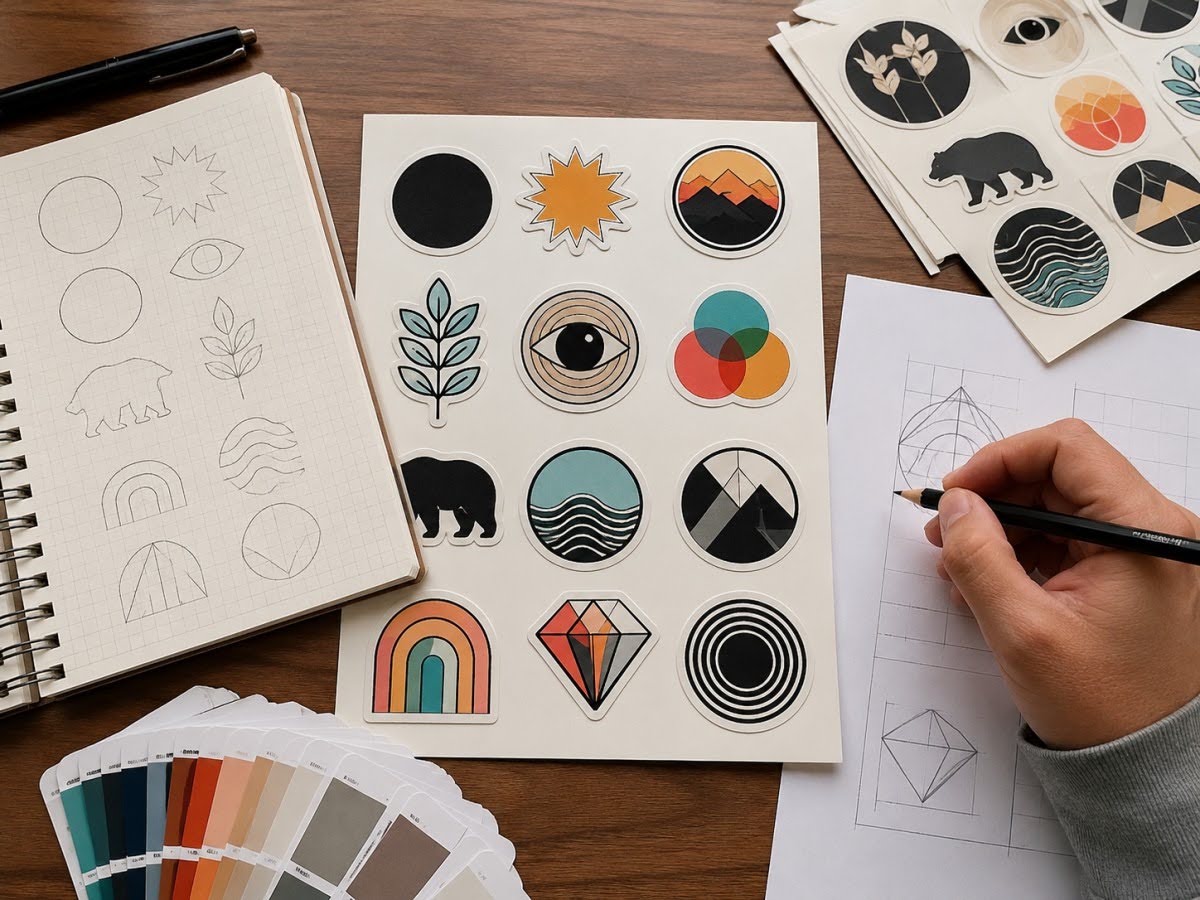
Vinyl vs. Paper Stickers: Which Material Should You Choose?

unnamed (5)

Choosing between vinyl stickers and paper stickers can significantly affect how a label looks, performs, and lasts. Although both materials can support custom sticker printing, they are designed for different conditions and business requirements.

Paper stickers are generally practical for dry indoor applications such as packaging, promotional labels and short-term product identification. Vinyl stickers offer greater resistance to moisture and physical wear, making them more suitable for demanding applications where durability is important.

That does not mean vinyl is automatically the better choice.

Using a weather-resistant material for a simple indoor packaging label can unnecessarily increase production requirements, while choosing basic paper for a product exposed to condensation may result in premature deterioration.

The right decision therefore depends on the sticker’s environment, expected lifespan, application surface, budget, and branding requirements.

This guide compares the two sticker materials to help businesses determine when paper is sufficient and when vinyl provides a practical advantage.

Overview

Vinyl and paper are two commonly used materials for adhesive labels and custom stickers. Both can carry branding, product information, promotional messages and decorative artwork, but their physical characteristics differ considerably.

At a basic level:

Factor Vinyl Stickers Paper Stickers
Material Synthetic Paper-based
Moisture resistance Higher Lower
Flexibility Higher Lower
Outdoor suitability Possible with suitable specification Generally limited
Indoor use Yes Yes
Durability Generally higher Generally lower
Typical applications Bottles, durable labels, decals Boxes, dry packaging, promotions
Finishing options Gloss, matte, lamination Gloss, matte, lamination

The most important distinction is that vinyl is a synthetic material, while paper is cellulose-based.

This affects how each material responds to water, tearing, bending, and environmental exposure.

Why Sticker Material Selection Matters

unnamed (6)

Sticker materials affect more than durability.

They can influence:

  • Print appearance
  • Surface texture
  • Flexibility
  • Adhesion performance
  • Product presentation
  • Resistance to environmental conditions
  • Overall production cost

Material selection should therefore happen early in the custom sticker printing process.

Businesses should first determine where the sticker will be used and then select a material capable of performing in those conditions.

Vinyl Stickers

unnamed (7)

Vinyl stickers use a flexible synthetic face material rather than paper. This gives them characteristics that are particularly useful when a sticker may encounter moisture, repeated handling or more demanding environments.

One of vinyl’s primary advantages is flexibility.

A flexible sticker can conform more easily to surfaces such as:

  • Bottles
  • Jars
  • Containers
  • Windows
  • Selected equipment
  • Curved packaging

This makes vinyl particularly useful where a relatively rigid sticker could develop tension around a curved surface.

Moisture Resistance

Vinyl does not absorb water in the same way as ordinary paper. This makes it a strong option for labels that may encounter:

  • Condensation
  • Humidity
  • Light water exposure
  • Wet handling

For businesses in Singapore, this can be particularly relevant because high humidity and temperature differences can create condensation on chilled products.

A beverage removed from refrigeration, for example, can quickly develop moisture across the bottle.

A suitable vinyl label is generally better equipped for this environment than an untreated paper sticker.

Are All Vinyl Stickers Waterproof?

Vinyl is naturally more water-resistant than paper, but calling every vinyl sticker “waterproof” oversimplifies the issue.

The complete sticker includes:

  • Face material
  • Printing
  • Adhesive
  • Optional laminate

All of these affect performance.

A vinyl face stock may resist water, while an unsuitable adhesive fails after prolonged moisture exposure. Printed graphics may also need protection depending on the production method.

Businesses requiring waterproof stickers should therefore specify the actual exposure conditions rather than simply request vinyl.

Vinyl and Outdoor Use

Vinyl can be suitable for outdoor stickers when the full construction is designed for outdoor exposure.

Outdoor conditions can include:

  • Rain
  • Sunlight
  • UV radiation
  • Heat
  • Humidity
  • Repeated temperature changes

A weather-resistant sticker may require suitable vinyl, outdoor adhesive, durable printing and possibly protective lamination.

Using vinyl alone does not guarantee indefinite outdoor performance.

Expected service life should be discussed before production.

Appearance and Finishing

Vinyl stickers can support a wide range of visual styles.

Depending on the material and printing process, options can include:

  • Gloss surfaces
  • Matte surfaces
  • Transparent effects
  • Laminated stickers
  • Custom shapes

Vinyl can therefore work for both functional and promotional applications.

A business might use vinyl for a durable product label while another uses it for branded decals distributed to customers.

Paper Stickers

unnamed (8)

Paper stickers use a paper-based printable face material with adhesive backing. They are widely used because many business applications do not require the additional environmental resistance of synthetic materials.

Common applications include:

  • Product boxes
  • Paper bags
  • Envelopes
  • Retail packaging
  • Promotional labels
  • Dry food packaging
  • Temporary identification

For these uses, paper can provide a practical balance between print quality, appearance and cost.

Why Businesses Use Paper Stickers

Paper works well when the sticker will remain in a relatively controlled environment.

A label attached to a cardboard box inside a retail store, for example, is unlikely to encounter the same conditions as a sticker on a chilled beverage bottle.

Paper can also provide a tactile appearance that suits certain packaging styles.

Depending on the finish, it may support:

  • Natural-looking branding
  • Minimal packaging
  • Matte presentation
  • Colourful promotional artwork

Businesses should therefore avoid treating paper simply as an inferior version of vinyl.

For the right application, it can be the more appropriate choice.

Limitations of Paper Stickers

Paper’s primary weakness is its sensitivity to environmental exposure.

Ordinary paper can:

  • Absorb moisture
  • Wrinkle
  • Tear
  • Scuff
  • Lose structural integrity when wet

This makes it less suitable for products that experience significant condensation or water.

Paper can also be less suitable for applications involving frequent handling over a long period.

Can Paper Stickers Be Laminated?

Yes. Lamination can provide additional surface protection to printed paper stickers.

A laminate can help improve resistance to:

  • Light moisture
  • Scratching
  • Handling
  • Surface wear

However, lamination does not necessarily turn a paper sticker into the equivalent of a synthetic waterproof label.

The sticker edges and adhesive remain part of the construction.

If the application regularly encounters water, starting with an appropriate synthetic material may provide a more suitable solution.

Durability Comparison

Sticker durability is one of the biggest differences between vinyl and paper.

Vinyl generally offers better resistance to moisture, tearing and environmental exposure, while paper performs best under controlled indoor conditions.

Water and Humidity

For moisture resistance, vinyl has the advantage.

This is relevant for:

  • Beverage bottles
  • Refrigerated foods
  • Bathroom products
  • Cosmetic containers
  • Selected outdoor applications

Paper remains suitable when the packaging stays dry.

Singapore’s humid climate does not mean every indoor label needs vinyl. A paper sticker on a dry cardboard box stored indoors may perform perfectly well.

The decision should be based on actual exposure rather than climate alone.

Tearing and Physical Wear

Paper can tear relatively easily when subjected to physical force.

Vinyl is more flexible and generally more resistant to tearing.

This makes vinyl useful for stickers expected to remain attached during:

  • Transport
  • Repeated handling
  • Product use
  • Cleaning
  • Outdoor exposure

For temporary labels, that additional durability may be unnecessary.

Sunlight and Weather

Paper is generally not the first choice for long-term outdoor exposure.

Vinyl can be better suited, but outdoor durability depends on more than the face material. UV exposure can gradually affect printing, material and adhesive.

Weather resistant stickers should therefore be specified according to:

  • Expected outdoor duration
  • Sunlight exposure
  • Rain
  • Temperature
  • Application surface

Protective lamination may help extend useful life where required.

Adhesive Durability

Sticker durability also depends on the adhesive.

Both vinyl and paper labels can be produced with different adhesive characteristics.

Common options include:

  • Permanent adhesive
  • Removable adhesive
  • Application-specific adhesive

The surface also matters.

Adhesive labels may behave differently on glass, metal, cardboard and different plastics. Businesses should identify the actual substrate before production.

Cost Comparison

Paper stickers are generally associated with more economical production for straightforward indoor applications, while vinyl can cost more because of its synthetic construction and greater durability.

However, comparing only the initial unit price can be misleading.

When Paper Can Be More Cost-Effective

Paper can be a practical choice when the sticker is:

  • Used indoors
  • Kept dry
  • Required for a short or moderate period
  • Applied to standard packaging
  • Not exposed to heavy handling

In these conditions, paying for additional weather resistance may provide little practical benefit.

When Vinyl Can Provide Better Value

Vinyl can provide better value when a paper label would need frequent replacement or would deteriorate before the end of the product’s intended use.

Consider a label placed on a bottle that regularly develops condensation.

If paper wrinkles or peels, the lower initial cost provides little advantage. A more durable vinyl sticker can be more economical across the actual product lifecycle.

Other Factors Affecting Sticker Cost

Material is only one component of custom sticker printing cost.

Pricing can also be influenced by:

  • Quantity
  • Dimensions
  • Shape
  • Number of designs
  • Printing method
  • Adhesive
  • Lamination
  • Die cutting
  • Other finishing requirements

For this reason, businesses should compare complete sticker specifications rather than assuming that material alone determines price.

Best Applications

Vinyl and paper each perform best when matched to appropriate environments.

Best Applications for Vinyl Stickers

Vinyl is generally suitable where durability and moisture resistance are priorities.

Common examples include:

Beverage Bottles

Chilled drinks can produce condensation, making moisture resistance particularly valuable.

Cosmetic and Personal-Care Products

Products used in bathrooms or humid environments may benefit from synthetic labels.

Outdoor Stickers

Properly specified vinyl can support outdoor branding, signage and promotional applications.

Equipment Labels

Where stickers are frequently handled or need greater resistance to physical wear, vinyl may offer an advantage.

Promotional Decals

Vinyl’s flexibility and durability can make it useful for logo stickers and promotional decals intended for longer-term use.

Best Applications for Paper Stickers

Paper works particularly well in controlled indoor environments.

Common examples include:

Cardboard Packaging

Paper stickers can integrate naturally with boxes, cartons and other paper-based packaging.

Retail Labels

Indoor retail products that remain dry may not require synthetic materials.

Paper Bags and Envelopes

Logo stickers and promotional seals can be produced economically using paper.

Short-Term Promotions

Temporary campaigns may not require the lifespan offered by vinyl.

Dry Product Packaging

Products stored and handled in dry environments can often use paper labels effectively.

What About Premium Packaging?

Premium does not automatically mean vinyl.

A high-quality matte paper sticker can complement natural or minimalist packaging, while glossy or transparent vinyl may suit a more polished contemporary design.

Material selection should support the brand’s visual identity as well as its functional requirements.

Which Material Is Best?

Neither vinyl nor paper is universally the best sticker material.

The better choice depends on the application.

A simple decision framework can help:

Requirement Better Starting Option
Dry indoor packaging Paper
Temporary promotional label Paper
Cardboard boxes Paper
Paper bags Paper
Refrigerated bottles Vinyl
Moist environments Vinyl
Longer-term durability Vinyl
Selected outdoor applications Vinyl
Curved containers Often vinyl
Natural paper aesthetic Paper

Choose Vinyl Stickers When…

Vinyl stickers are generally the stronger choice when:

  • Water resistance matters
  • The product experiences condensation
  • The label will be handled frequently
  • Greater tear resistance is required
  • The sticker may be used outdoors
  • The surface requires more flexibility
  • A longer practical lifespan is expected

Choose Paper Stickers When…

Paper stickers are generally more suitable when:

  • The product remains indoors
  • The surface stays dry
  • The label is temporary
  • Cost efficiency is important
  • The sticker is applied to paper or cardboard packaging
  • A natural paper appearance suits the brand

When Should You Consider Lamination?

Lamination can be useful when a sticker requires additional surface protection.

For vinyl, it may help protect printing against:

  • Scratching
  • UV exposure
  • Repeated handling

For paper, it can improve resistance to light moisture and surface wear.

However, lamination should not be used as a substitute for selecting the correct base material.

If the sticker regularly encounters demanding conditions, the face stock and adhesive should already be suitable for those conditions.

Frequently Asked Questions About Vinyl and Paper Stickers

Are vinyl stickers better than paper stickers?

Vinyl is generally more durable and moisture-resistant, but that does not make it better for every application. Paper may be more appropriate and economical for dry indoor packaging, temporary promotions and labels that do not require long-term environmental resistance.

Are vinyl stickers waterproof?

Vinyl provides strong water resistance, but waterproof performance depends on the complete sticker construction, including printing, adhesive and finishing. Businesses should specify the expected moisture exposure when ordering.

Can paper stickers get wet?

Ordinary paper stickers can absorb moisture, wrinkle or deteriorate when wet. Lamination may improve surface resistance, but applications involving regular water or condensation are generally better suited to synthetic materials.

Which sticker material is best for outdoor use?

Vinyl is generally a better starting point for outdoor stickers. However, the vinyl grade, adhesive, printing and protective finishing should all be suitable for UV exposure, rain, heat and the required outdoor lifespan.

Which sticker is better for product packaging?

Both can work. Paper is suitable for many dry boxes, bags and indoor products. Vinyl may be preferable for bottles, cosmetics, chilled products and packaging exposed to moisture or repeated handling.

Do vinyl stickers last longer?

Vinyl generally provides greater resistance to moisture, tearing and physical wear than paper, so it can have a longer practical lifespan under demanding conditions. Actual lifespan depends on the environment and sticker specification.

Are laminated paper stickers waterproof?

Lamination can improve the surface water resistance of paper stickers, but it does not necessarily make the entire label waterproof. Water can still affect exposed edges or an unsuitable adhesive.

Are paper stickers suitable for food packaging?

Paper stickers can be suitable for dry food packaging and outer packaging when environmental conditions allow. Material and printing requirements should also be considered according to how and where the label is used.

Which material is better for logo stickers?

It depends on how the logo sticker will be used. Paper can work for packaging seals, boxes and indoor promotional uses. Vinyl is generally more appropriate when customers may place the sticker on bottles, laptops, windows or other frequently handled surfaces.

Do vinyl stickers need lamination?

Not always. Lamination is useful when additional scratch, handling, weather or UV protection is required. An indoor vinyl product label may not need the same protection as a long-term outdoor sticker.

Can both vinyl and paper stickers be custom shaped?

Yes. Both materials can be produced as custom or die cut stickers where the production process supports the required shape. The cut can follow a logo, graphic or packaging-specific outline.

Choosing the Right Sticker Material for Your Application 

The choice between vinyl stickers and paper stickers should be based on how the finished label will actually be used.

Paper remains a practical choice for many indoor applications. Product boxes, paper bags, dry packaging and temporary promotional labels often do not need the additional environmental resistance provided by synthetic materials. In these situations, paper can deliver the required appearance and functionality without unnecessary specification.

Vinyl becomes more valuable when conditions are demanding. Its flexibility, moisture resistance and greater physical durability make it better suited to applications such as refrigerated bottles, cosmetic containers, frequently handled products and selected outdoor uses.

Businesses should also look beyond the face material. Adhesive, printing, lamination, application surface and expected lifespan all contribute to real-world sticker durability.

The goal is therefore not to decide whether vinyl is inherently superior to paper. It is to choose the simplest sticker construction capable of performing reliably throughout the intended application.

Choose the Material Around the Product, Not Just the Price

A sticker that looks good when first applied but deteriorates under normal product conditions is unlikely to provide good value. Equally, paying for weather-resistant vinyl when a label only needs to remain on a dry indoor box may be unnecessary.

For businesses comparing vinyl stickers, paper stickers, waterproof labels and other custom sticker materials, Printsys Pte Ltd can help match the sticker specification to the intended surface, environment, durability requirements and branding application. Get in touch with Printsys today!
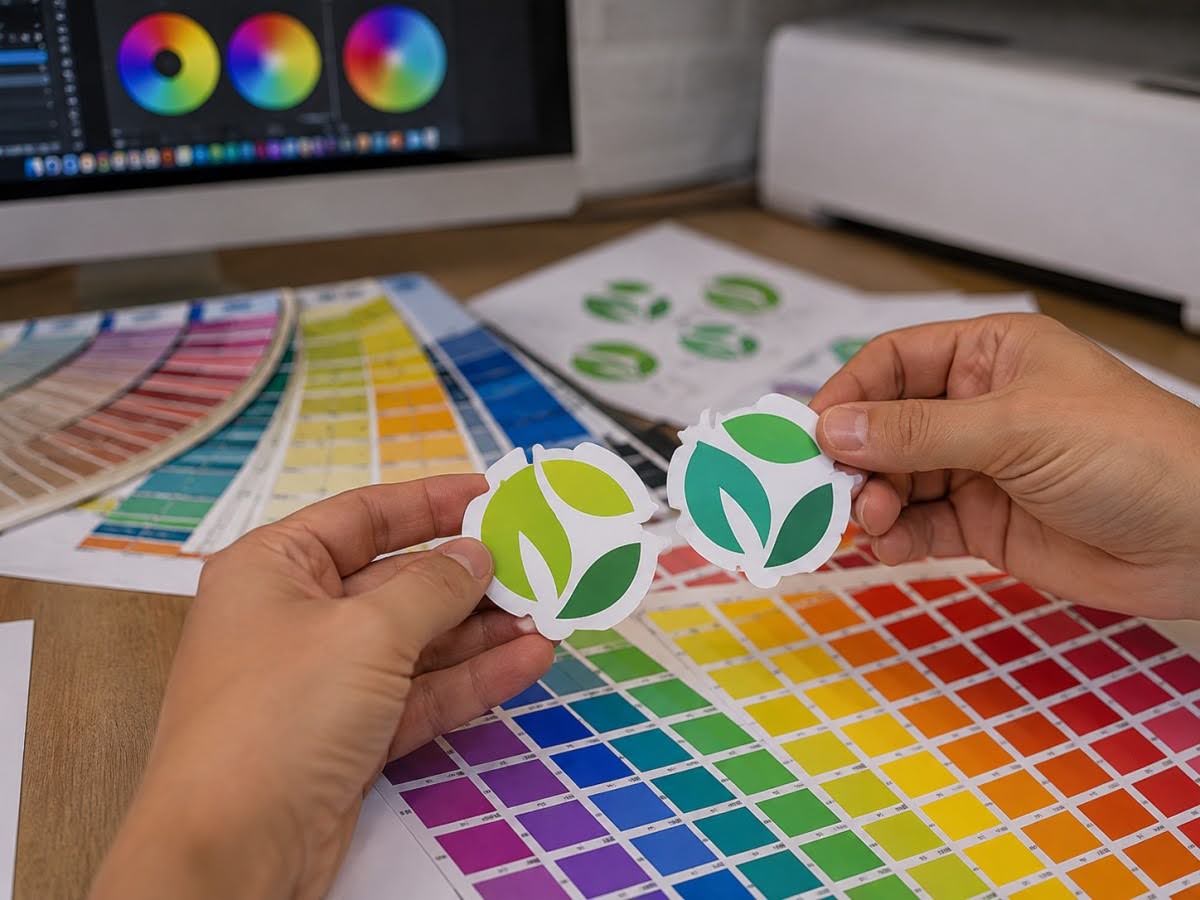
Custom Sticker Printing Guide: Everything Businesses Need to Know

unnamed (1)

Custom stickers can perform several roles at once. They can identify a product, communicate important information, reinforce branding, improve packaging presentation or turn an ordinary surface into a promotional opportunity.

Unlike generic labels, custom sticker printing allows businesses to determine the size, shape, material, adhesive, artwork, and finishing according to a specific application. A food business may need waterproof product stickers for refrigerated bottles, while a retailer may require branded packaging labels. An industrial company may prioritise durability and adhesion over decorative appearance.

For businesses in Singapore, these differences matter. Humidity, condensation, outdoor exposure, handling and the surface to which a sticker is applied can all influence performance. Choosing the right specification therefore requires more than uploading a logo and selecting a size.

This guide covers what businesses should know about custom sticker printing, from applications and materials to finishing, artwork preparation, production, and choosing a suitable printing company.

What Is Custom Sticker Printing?

Custom sticker printing is the production of adhesive labels according to specifications selected for a particular brand, product, or application.

Businesses can customise elements such as:

  • Size
  • Shape
  • Material
  • Artwork
  • Colour
  • Adhesive
  • Surface finish
  • Quantity
  • Cutting method

This flexibility separates personalised stickers from generic off-the-shelf labels.

For example, a company can produce small logo stickers for product packaging, large branded decals for promotional use, waterproof labels for bottles or die-cut stickers following the outline of its logo.

Custom Stickers vs Standard Labels

Standard labels are usually manufactured in predetermined sizes, shapes, or formats. They may work well for basic identification but provide limited flexibility when branding or specialised performance is required.

Custom labels allow specifications to be matched more closely to the product.

For example, a custom packaging label can be designed specifically around:

  • Container dimensions
  • Brand colours
  • Product information
  • Surface curvature
  • Storage conditions
  • Required durability

The result is a sticker that functions as part of the product or packaging rather than something added as an afterthought.

Business Applications

Custom sticker printing is used across many industries because adhesive labels can serve both marketing and operational purposes.

Product and Packaging Labels

unnamed (2)

Product stickers are among the most common applications.

They can display:

  • Brand name
  • Logo
  • Product name
  • Ingredients
  • Instructions
  • Product variants
  • Promotional information

Custom packaging labels can also help businesses differentiate products that use otherwise similar boxes, bottles, jars or pouches.

This approach can be useful for smaller product ranges because businesses can customise standard packaging through professionally printed labels rather than producing entirely different printed containers.

Logo and Branding Stickers

unnamed (3)

Logo stickers extend a company’s visual identity beyond its primary packaging.

Businesses can place them on:

  • Delivery boxes
  • Paper bags
  • Envelopes
  • Folders
  • Promotional items
  • Retail packaging

They can also be distributed as promotional stickers at events or included with customer purchases.

The key is consistency. Colours, logo proportions and typography should align with the broader brand identity.

Retail and E-Commerce

unnamed (4)

Retail and e-commerce businesses can use custom stickers throughout the customer journey.

A sticker may seal tissue paper, identify a product variant, brand a delivery box or provide care information.

For online businesses in particular, physical packaging may be one of the few offline interactions a customer has with the brand. Custom labels can therefore help make otherwise standard shipping materials more recognisable.

Food and Beverage

Food and beverage packaging often needs labels capable of handling conditions such as refrigeration, condensation and repeated handling.

Applications include:

  • Bottles
  • Jars
  • Takeaway containers
  • Food boxes
  • Packaged products

Where moisture is expected, businesses may need synthetic waterproof labels rather than ordinary paper stickers.

Industrial and Operational Uses

Not every custom sticker is promotional.

Companies also use labels for:

  • Equipment identification
  • Inventory
  • Safety information
  • Barcodes
  • Warranty information
  • Asset identification

Printsys lists specialised sticker applications including aluminium, barcode, hologram, warranty and medical labels, demonstrating how sticker printing can extend beyond decorative packaging.

Popular Materials

Sticker material influences appearance, flexibility, durability and resistance to environmental conditions. Selecting the right material should therefore begin with the intended use.

Paper Stickers

Paper is suitable for many dry indoor applications.

Common examples include:

  • Boxes
  • Retail packaging
  • Promotional labels
  • Dry product packaging
  • Short-term campaigns

Paper can provide good print reproduction and is suitable where extensive moisture resistance is unnecessary.

Its limitation is environmental durability. Water, humidity, and abrasion can damage untreated paper more easily than synthetic materials.

Vinyl Stickers

Vinyl is a popular synthetic sticker material because it combines flexibility with moisture resistance.

It can work well for:

  • Bottles
  • Containers
  • Promotional stickers
  • Windows
  • Product packaging
  • Selected outdoor applications

Its flexibility can also help when labels need to conform to curved surfaces.

Polypropylene Labels

Polypropylene is another synthetic option commonly used for product and packaging labels.

It can provide a useful balance of:

  • Moisture resistance
  • Lightweight construction
  • Print quality
  • Durability

It may be suitable for food, beverage, cosmetic and personal-care products.

Polyester Labels

Polyester or PET labels can provide greater dimensional stability and resistance to demanding conditions.

Potential applications include:

  • Electronics
  • Equipment
  • Industrial labels
  • Asset identification
  • Durable product identification

Businesses should still match the material to the actual environment rather than automatically selecting the most durable option.

Waterproof Labels

A waterproof label is not simply a sticker with a protective surface. Its material, printing, and adhesive need to work together under moisture exposure.

Synthetic materials such as vinyl, polypropylene, and polyester are commonly used for water-resistant applications. Printsys also notes that lamination and suitable adhesives can contribute to performance under moisture and frequent handling.

This is particularly relevant in Singapore for refrigerated products, outdoor applications, and packaging frequently exposed to humid environments.

Finishing Options

Sticker finishes influence both appearance and performance. They can change reflection, texture, protection, and even how customers perceive the packaging.

Gloss Finish

Gloss creates a reflective, polished surface.

It can:

  • Increase visual vibrancy
  • Create a smooth appearance
  • Complement glossy packaging
  • Provide additional surface protection when laminated

Gloss is commonly considered for colourful product stickers and promotional materials.

Matte Finish

Matte provides a lower-reflection surface.

It can help create:

  • Softer appearance
  • Reduced glare
  • More understated presentation
  • Premium-looking packaging

Matte can work particularly well for minimalist branding or products where highly reflective labels would compete with the packaging design.

Lamination

Lamination places a protective film over the printed sticker.

It can help protect against:

  • Moisture
  • Scratching
  • Handling
  • Surface wear

Printsys offers laminating among its finishing services and identifies gloss, matte and soft-touch options for different aesthetic and protective requirements.

Die Cutting

Die cutting allows a sticker to follow a custom shape instead of remaining a standard square, rectangle or circle.

Businesses can create:

  • Logo-shaped stickers
  • Custom product labels
  • Decorative packaging elements
  • Promotional decals

This can make die-cut stickers particularly effective where the shape itself contributes to brand recognition.

Design Considerations

Good custom sticker design has to work after printing, cutting, and application—not merely look attractive on a computer screen.

Keep the Purpose Clear

The first question should be, “What does this sticker need to do?”

A logo sticker has different priorities from a product label containing instructions and regulatory information.

Determine the hierarchy before designing.

For example:

  1. Brand
  2. Product name
  3. Essential information
  4. Supporting details

Trying to make every element equally prominent can create visual clutter.

Design for the Actual Size

Artwork that looks spacious on a large monitor can become difficult to read when reduced to a 40 mm product sticker.

Check:

  • Font size
  • Line spacing
  • Logo clarity
  • Fine details
  • Barcode dimensions
  • QR code readability

Always review artwork at approximately its final printed size.

Consider the Background Surface

Transparent or partially transparent stickers can change appearance depending on the surface beneath them.

The same artwork may look very different on:

  • Clear glass
  • White plastic
  • Black packaging
  • Brushed metal

White ink or an opaque background may be necessary where stronger contrast is required.

Use Appropriate Colour Settings

Artwork intended for print should be prepared according to the printer’s required colour workflow.

Colours displayed on an RGB monitor may not reproduce identically in physical printing.

Where brand colour consistency is important, businesses should discuss colour expectations and proofing with the printer before approving a production run.

Allow for Bleed and Cutting

Artwork extending to the edge of a sticker normally requires bleeding beyond the final cut line.

Important information should also remain inside an appropriate safe area.

These precautions reduce the chance of:

  • Unwanted white edges
  • Cropped text
  • Inconsistent borders

Custom-shaped stickers require particular attention to cut paths.

Printing Process

Understanding the custom sticker printing process helps businesses prepare better files and reduce avoidable production delays.

1. Define the Application

The process should start by identifying where and how the sticker will be used.

Consider:

  • Surface
  • Indoor or outdoor environment
  • Moisture
  • Heat
  • Handling
  • Required lifespan

These factors influence almost every subsequent decision.

2. Determine Size and Shape

The sticker should be measured against the actual product or surface.

For curved containers, dimensions become particularly important because overly wide labels can experience edge tension.

3. Select Material and Adhesive

Material is chosen according to appearance and environmental performance.

Adhesive should also match the application. Depending on requirements, this may involve permanent or removable options.

4. Prepare the Artwork

Print-ready artwork should use the appropriate:

  • Dimensions
  • Resolution
  • Bleed
  • Safe margins
  • Colour settings
  • Cut paths

Where possible, vector artwork is useful for logos and other elements that need to remain sharp at different sizes.

5. Pre-Press Checking

The printer reviews the file for potential production issues.

Printsys describes its workflow as including consultation, pre-press review, material selection, printing and finishing, cutting, quality control, and delivery.

6. Printing and Finishing

The approved design is printed onto the selected material.

Finishing such as lamination or custom cutting can then be applied according to the specification.

7. Quality Control

Finished stickers should be assessed for factors such as:

  • Print clarity
  • Colour consistency
  • Cutting accuracy
  • Surface finish
  • General production consistency

Specialised labels may require additional testing according to their intended function.

Common Mistakes

Many sticker problems originate before printing begins.

Choosing Material Based Only on Price

The lowest-cost material is not necessarily economical if labels peel, tear or deteriorate before the end of the product lifecycle.

Material should match the environment first.

Ignoring the Application Surface

A sticker may perform differently on glass, cardboard, metal, and different types of plastic.

Businesses should tell the printer exactly where the label will be applied.

Using Low-Resolution Artwork

Images taken from websites or social media may not contain enough resolution for high-quality printing.

Logos should ideally be supplied as suitable high-resolution or vector artwork.

Making Text Too Small

Product labels often need to fit substantial information into limited space.

Reducing everything until it fits can create a label customers cannot comfortably read.

The better solution may be to revise the layout, increase the label size or reduce unnecessary content.

Forgetting About Moisture and Temperature

This is especially important for Singapore businesses dealing with chilled beverages, food, cosmetics or outdoor products.

A sticker that performs well in a dry office may behave differently under condensation or heat.

Skipping Proofing

Small mistakes become expensive when multiplied across a large production quantity.

Businesses should carefully verify:

  • Spelling
  • Contact details
  • Product information
  • Barcodes
  • Dimensions
  • Colours
  • Cut lines

before approving final production.

Choosing the Right Printing Company

Choosing a printing company should involve more than comparing the lowest quotation.

A suitable provider should be able to understand the intended application and translate it into an appropriate sticker specification.

Material and Finishing Capabilities

Check whether the provider can offer materials and finishing appropriate for the project.

A business may need more than standard paper stickers. Requirements could include:

  • Vinyl
  • Waterproof labels
  • Transparent stickers
  • Die cutting
  • Lamination
  • Specialised labels

A broader production capability can be helpful when a business manages several label types.

Knowledge of Real-World Applications

A printer should ask where the sticker will be used.

Questions about surface, moisture, temperature and expected lifespan indicate that the recommendation is being based on function rather than appearance alone.

Artwork and Pre-Press Support

Print-ready artwork reduces production problems, but businesses do not always know whether their files meet printing requirements.

Pre-press checking can help identify problems involving resolution, dimensions, bleed or cutting before production begins.

Consistency and Quality Control

Businesses ordering product labels need consistency across the batch.

Variations in:

  • Colour
  • Cutting
  • Dimensions
  • Finishing

can become particularly noticeable when products are displayed side by side.

Ability to Support Different Business Requirements

A company’s sticker needs may evolve.

It may begin with logo stickers and later require waterproof packaging labels, barcode stickers or specialised security labels.

Choosing a provider with broader sticker printing capabilities can simplify future production.

Printsys offers custom sticker printing alongside label, barcode, hologram, fabric, warranty and printing-finishing services for businesses in Singapore.

Frequently Asked Questions (FAQs) 

What information should I provide when ordering custom stickers?

Provide the intended sticker size, quantity, artwork, application surface, indoor or outdoor use, expected exposure to water or heat, required lifespan, and preferred finish. These details help determine suitable material and adhesive options.

What is the best material for personalised stickers?

There is no universal best material. Paper may suit dry indoor uses, while vinyl and other synthetic materials can be better for moisture resistance or increased durability. The application should determine the material.

Are custom stickers suitable for product packaging?

Yes. Custom packaging labels can combine branding with product information and can be designed around bottles, jars, boxes, pouches and other packaging formats.

Can logo stickers be produced in custom shapes?

Yes. Die cutting can produce stickers following a custom outline, including shapes based on logos or other design elements.

What makes a sticker waterproof?

Waterproof performance depends on the combination of a water-resistant face material, suitable printing, adhesive, and, where appropriate, protective finishing. Vinyl, polypropylene, and polyester are common synthetic materials for moisture-resistant labels.

Should I choose gloss or matte sticker finishing?

Gloss is suitable when stronger reflection and vibrant presentation are desired. Matte reduces glare and creates a softer appearance. The correct choice depends on the packaging, branding, and environment.

Can custom stickers include QR codes and barcodes?

Yes. QR codes and barcodes can be incorporated into custom labels when sufficient size, contrast, and clear space are maintained. The finished code should be tested on the actual product.

What is the difference between die-cut and standard-shaped stickers?

Standard stickers typically use simple shapes such as rectangles, squares, or circles. Die-cut stickers can follow a custom outline, allowing the finished sticker to match a logo, illustration, or packaging design.

How should artwork be prepared for custom sticker printing?

Artwork should use the printer’s required dimensions, resolution, colour mode, bleed and safe margins. Custom shapes may also require a defined cutting path. Businesses should confirm the exact artwork specification with their printer before submission.

How can businesses make custom stickers last longer?

Start with material and adhesive suited to the environment. For stickers exposed to moisture, handling, abrasion, or sunlight, appropriate synthetic materials and protective finishing may improve durability.

Making the Right Choices for Custom Sticker Printing 

Custom sticker printing gives businesses far more control than simply placing a logo on an adhesive label. Size, material, shape, adhesive, printing method and finishing can all be adapted according to how the sticker will actually be used.

The most successful custom labels start with a clear application. Businesses should know whether the sticker will be placed on packaging, glass, plastic, equipment or another surface and whether it will encounter moisture, sunlight, refrigeration or frequent handling.

From there, material and finishing decisions become easier. Paper can suit straightforward indoor applications, while vinyl and other synthetic materials can provide additional durability. Gloss, matte and lamination can alter appearance and protection, while die cutting allows the sticker itself to become part of the visual identity.

Just as importantly, good artwork preparation and proofing help prevent production problems before a full quantity is printed.

For businesses in Singapore, approaching custom stickers as a combination of branding, information design and functional print production leads to a better result than choosing materials based solely on price or appearance.

Make Every Custom Sticker Serve a Clear Purpose

Whether the requirement is personalised stickers, logo stickers, product labels, die-cut stickers, or custom packaging labels, the specification should be built around the surface, environment, and business objective.

Printsys Pte Ltd provides custom sticker printing and related printing and finishing solutions in Singapore, including custom materials, shapes and finishes for different business applications. Get in touch with Printsys today!
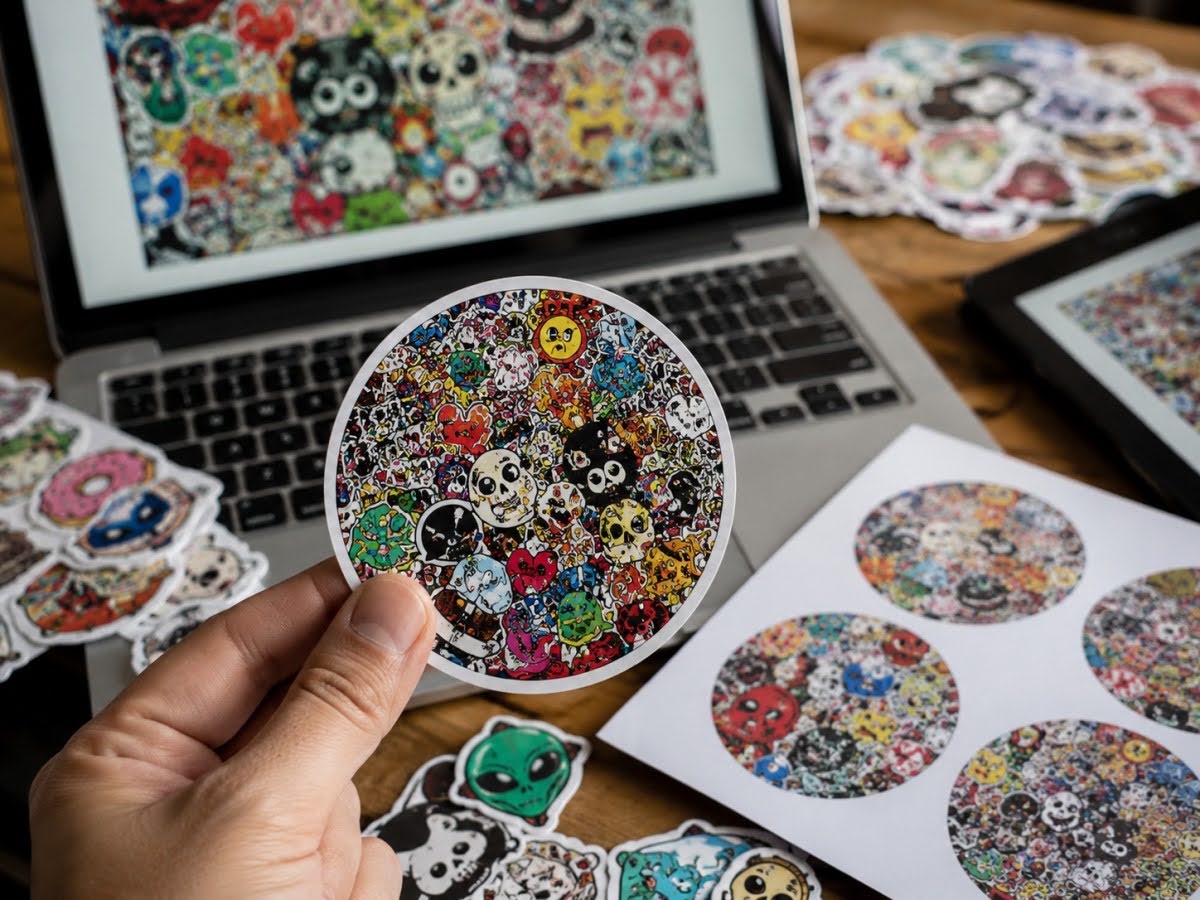
What Is Sticker Printing? A Complete Guide to Custom Stickers

unnamed (1)

Sticker printing is the process of producing adhesive-backed printed materials for branding, product identification, packaging, promotions, instructions, and many other business applications. Stickers can range from simple paper labels used on retail packaging to durable vinyl stickers designed to withstand moisture and demanding environments.

Custom stickers offer businesses in Singapore a flexible way to communicate information while reinforcing brand identity. They can appear on product packaging, delivery boxes, equipment, promotional materials, bottles, containers, and even shop displays. However, choosing the right sticker involves more than deciding what the artwork should look like.

Material, adhesive, printing method, finish, intended surface, and environmental exposure can all affect how a sticker performs. Understanding these factors helps businesses choose printed stickers that are suitable for their actual application rather than selecting based on appearance or price alone.

This guide explains the fundamentals of sticker printing, the most common sticker types and materials, how they are produced, where businesses use them, and what to consider before placing an order.

What Is Sticker Printing?

Sticker printing involves transferring text, graphics, branding, or other information onto an adhesive-backed material that can subsequently be applied to another surface.

A typical sticker consists of several components:

  • A printable face material
  • Printed artwork or information
  • An adhesive layer
  • A release liner protecting the adhesive before application

Additional finishing may also be applied depending on the intended use. For example, lamination can provide extra surface protection, while die cutting allows stickers to be produced in custom shapes.

Sticker printing can serve both decorative and functional purposes. A branded sticker on a delivery box is primarily promotional, whereas a barcode label on a product provides operational information. A product label may need to achieve both objectives by presenting branding alongside ingredients, instructions, or identification details.

This versatility is one reason custom sticker printing is used across so many industries.

Sticker Printing vs. Label Printing

The terms “sticker printing” and “label printing” are sometimes used interchangeably, although the intended application can differ.

Stickers are often associated with branding, promotions, and decorative applications. Labels tend to have a stronger informational or identification function, such as displaying product details, barcodes, or instructions.

In practice, the distinction is not always strict. A custom product sticker can simultaneously function as a brand element and a product label.

The more important question is therefore what the printed adhesive material needs to accomplish.

Common Uses of Stickers

unnamed (2)

Businesses use stickers because they provide a relatively simple way to add information or branding to an existing surface without printing directly onto the product.

One of the most common applications is packaging.

A business can use stickers on:

  • Boxes
  • Bottles
  • Jars
  • Pouches
  • Bags
  • Containers
  • Envelopes

Packaging stickers can display logos, product names, promotional messages, or product information. This can be particularly useful when a business uses standard packaging but wants to customise it for different products or campaigns.

Stickers are also frequently used for product identification. A label may contain a product code, barcode, serial number, instructions or other information that needs to remain attached to the item.

Promotional stickers provide another application. Businesses can distribute logo stickers at events, include them with purchases or apply them to promotional materials.

Internally, companies may also use printed labels for inventory, equipment identification, organisation and logistics.

The intended use should be defined before choosing a sticker because an indoor promotional sticker and a long-term product label can have very different material requirements.

Types of Stickers

Sticker types can be classified according to material, appearance, durability, or application. Understanding the main options helps businesses narrow down the specifications they actually require.

Paper Stickers

Paper stickers are commonly used for dry, indoor applications where extensive moisture or weather resistance is unnecessary.

They can be suitable for:

  • Retail packaging
  • Boxes
  • Dry food packaging
  • Promotional labels
  • Temporary product identification

Paper is generally not recommended for harsher weather conditions, as it is prone to wear and tear. 

It is more vulnerable to water, tearing, and abrasion than synthetic materials.

Vinyl Stickers

Vinyl stickers are synthetic labels valued for their flexibility and resistance to moisture.

They can be used for:

  • Product branding
  • Bottles
  • Promotional stickers
  • Windows
  • Equipment
  • Selected outdoor applications

Different vinyl specifications provide different levels of durability. Businesses should therefore avoid assuming that every vinyl sticker is automatically suitable for long-term outdoor use.

Waterproof Stickers

Waterproof stickers are designed for applications where labels may encounter water, condensation, or frequent wet handling.

Common uses include:

  • Beverage bottles
  • Bathroom products
  • Cosmetic packaging
  • Chilled products
  • Outdoor applications

A waterproof sticker needs more than a moisture-resistant face material. Adhesive and printing also need to remain suitable for the expected environment.

Transparent Stickers

Transparent stickers allow the underlying packaging or surface to remain visible.

They are commonly used on:

  • Glass bottles
  • Cosmetic containers
  • Clear packaging
  • Windows
  • Premium product packaging

Selective white ink can be used where certain parts of the artwork need stronger opacity or colour contrast.

Custom-Shaped Stickers

Custom stickers do not have to be rectangular or circular. Die cutting allows the finished sticker to follow a specific shape.

This can be useful for logos, promotional stickers, and packaging designs where the sticker itself contributes to the overall presentation.

Printing Methods

The appropriate printing method depends on factors such as quantity, artwork, material, variable information, and required print characteristics.

Digital Printing

unnamed

Digital printing transfers artwork directly from a digital file to the printing system without requiring conventional printing plates.

It is particularly useful for:

  • Shorter production runs
  • Multiple designs
  • Detailed graphics
  • Full-colour artwork
  • Jobs requiring greater production flexibility

Digital printing can make it practical for businesses to order custom stickers in quantities suited to campaigns, product variations, or changing packaging requirements.

Offset Printing

Offset printing transfers ink through a plate and blanket system before the image reaches the final printing surface.

It is widely used in commercial printing where consistency and production volume are important.

Whether offset is appropriate for a particular sticker job depends on the material, quantity and production requirements.

Thermal Printing

Thermal technologies are commonly associated with operational labels containing variable information.

Examples include:

  • Barcodes
  • Shipping labels
  • Inventory labels
  • Serial numbers

Thermal-transfer printing uses a ribbon to transfer an image onto compatible label material and can provide durable variable information when the ribbon and label stock are correctly matched.

The best printing method is therefore determined by what the sticker needs to communicate and how it will be used.

Materials Used

Material selection is one of the most important decisions in sticker printing because the face material affects appearance, flexibility, and durability.

Paper

Paper is suitable for many indoor packaging and promotional applications. It offers a familiar printed appearance and can be produced with different surface characteristics.

It is most appropriate where significant exposure to moisture is unlikely.

Vinyl

Vinyl provides greater moisture resistance and flexibility than ordinary paper. Its ability to conform to curved surfaces makes it useful for bottles, containers, and selected equipment applications.

Polypropylene

Polypropylene is another synthetic material frequently used for product labels. It provides moisture resistance and can be suitable for food, beverage, cosmetic, and personal-care packaging.

Polyester and PET

Polyester-based materials such as PET can provide greater dimensional stability and durability.

They may be considered for:

  • Equipment identification
  • Electronics
  • Asset labels
  • Industrial applications
  • Durable product labels

Material should always be matched to the actual conditions rather than chosen because one material is generally described as more durable.

Industries That Use Stickers

Sticker printing supports businesses across a wide range of sectors because almost every industry has products, assets, packaging, or information that needs to be identified.

Retail and E-Commerce

unnamed (4)

Retailers can use promotional stickers, packaging labels, product labels, and barcode stickers.

E-commerce businesses may also use branded stickers to turn plain delivery packaging into a more recognisable customer touchpoint.

Food and Beverage

Food and beverage businesses use labels for branding and product information on bottles, jars, boxes and other containers.

Chilled products may require materials capable of tolerating condensation and refrigeration.

Cosmetics and Personal Care

Cosmetic packaging frequently uses custom labels because product containers vary significantly in size, shape and material.

Moisture resistance can be particularly relevant for products used in bathrooms or other humid environments.

Manufacturing and Industrial Businesses

Manufacturing environments can require labels for equipment, assets, components, warnings and product identification.

These applications may require greater resistance to abrasion, moisture, chemicals or temperature changes than ordinary packaging stickers.

Logistics and Warehousing

Labels are essential for stock identification and tracking.

Barcode labels, warehouse labels and shipping identification can support more accurate handling throughout storage and distribution processes.

Choosing the Right Sticker

The right sticker is determined by its application rather than appearance alone.

Businesses should begin by answering several practical questions.

Where Will the Sticker Be Used?

An indoor cardboard box has very different requirements from an outdoor piece of equipment.

Determine whether the sticker will face:

  • Moisture
  • Sunlight
  • Heat
  • Refrigeration
  • Chemicals
  • Frequent handling

This helps establish the required level of durability.

What Surface Will It Be Applied To?

Adhesives perform differently on different surfaces.

Common substrates include:

  • Glass
  • Plastic
  • Metal
  • Paper
  • Cardboard

Surface texture and curvature also matter. A rigid material that works on flat packaging may lift when wrapped around a narrow bottle.

How Long Does It Need to Last?

A promotional sticker needed for several days does not require the same construction as an equipment label expected to remain readable for years.

Defining the intended lifespan can prevent both under-specification and unnecessary over-specification.

Does It Need to Be Removable?

Not every sticker should use permanent adhesive.

Temporary promotions, window graphics or short-term labels may benefit from removable adhesive, while product and industrial labels may require stronger permanent bonding.

Does It Need Special Finishing?

Finishing can improve appearance or protection.

Options may include:

  • Gloss lamination
  • Matte lamination
  • Protective film
  • Custom die cutting

The finish should solve a real functional or visual requirement rather than being added automatically.

Why Work with a Professional Printing Company

Working with a professional printing company can help businesses translate a design concept into a sticker specification that works in practice.

Artwork is only one component of successful sticker production.

A printing provider can help businesses consider factors such as:

  • Suitable material
  • Adhesive requirements
  • Printing method
  • Colour preparation
  • Finishing
  • Die-cut shape
  • Final dimensions
  • Intended application

This becomes particularly important for specialised requirements such as transparent stickers, waterproof labels, barcodes or industrial identification.

Professional production also helps businesses maintain consistency across larger quantities. Colour differences, cutting, or label dimensions can become noticeable when hundreds or thousands of products are displayed together.

Before production, businesses should provide clear information about where the sticker will be applied and the conditions it is expected to withstand. A printer cannot select the most suitable construction if the intended environment is unknown.

Frequently Asked Questions (FAQs)

What is the best material for custom stickers?

There is no single best material. Paper is suitable for many dry indoor applications, while vinyl, polypropylene, or polyester may be more appropriate where moisture, durability, or environmental resistance is required.

Are vinyl stickers waterproof?

Vinyl itself provides useful moisture resistance, but complete waterproof performance also depends on the printing, adhesive and finishing. The expected level of water exposure should be specified before production.

What is the difference between permanent and removable sticker adhesive?

Permanent adhesive is intended to maintain a stronger long-term bond, while removable adhesive is designed to allow easier removal under suitable conditions. The correct option depends on the surface, required lifespan and intended use.

Can custom stickers be printed in any shape?

Custom die cutting allows stickers to be produced in many shapes, including logo outlines and other customised forms. The design still needs to account for cutting tolerances and minimum production requirements.

What file format should be used for sticker printing?

Print-ready PDF and suitable vector artwork are commonly used, although requirements vary by printer and production process. Artwork should also use appropriate resolution, bleed, colour settings, and cut paths where required.

Can stickers be used outdoors?

Yes, provided the material, adhesive, printing and finishing are suitable for outdoor conditions. Outdoor stickers may need to resist rain, UV exposure, heat, and humidity rather than simply being described as waterproof.

How do I choose between paper and vinyl stickers?

Paper is generally suitable for dry indoor packaging and temporary applications. Vinyl is more appropriate when flexibility, moisture resistance or increased durability is required.

Can sticker printing include barcodes or QR codes?

Yes. Stickers can include barcodes and QR codes provided the codes are printed at suitable dimensions with sufficient contrast and clear space for reliable scanning.

Are transparent stickers suitable for product packaging?

Yes. Transparent stickers can create a clean appearance on glass, plastic and other smooth packaging. White ink may be required behind selected artwork when stronger opacity or colour consistency is needed.

Making Sticker Printing Work for the Intended Application

Sticker printing gives businesses a versatile way to combine branding, product information, identification, and promotion. However, the effectiveness of a sticker depends on more than the printed design.

Paper stickers can provide a practical solution for dry indoor packaging, while vinyl and other synthetic materials can support applications involving moisture or increased durability. Printing technology, adhesive, finishing, surface compatibility and expected lifespan should all be considered before production.

For businesses comparing sticker printing options in Singapore, the most useful starting point is therefore not simply asking which sticker looks best. It is defining where the sticker will be applied, what it needs to communicate and what conditions it needs to withstand.

Once those requirements are clear, material, printing and finishing decisions can be made around the actual application.

Why Choose Printsys for Sticker Printing

Looking for a printing company in Singapore for your custom stickers? Printsys provides sticker printing solutions tailored to different business applications, from product packaging and promotional materials to product identification and labels. With years of printing experience, Printsys focuses on matching materials, printing methods, and finishes to the intended use.

  • Quality materials: Suitable paper and synthetic materials can be selected based on durability and application requirements.
  • Customisation: Choose from different materials, sizes, shapes, and finishing options to suit your requirements.
  • Competitive pricing: Cost-effective printing solutions without compromising on the required specifications.
  • Experience: Printsys has supplied printing solutions to clients including IBM, Iceman, and Suzuki.
  • Efficient production: Streamlined processes help accommodate different quantities and project timelines.
  • Customer support: Assistance is available when determining suitable materials, adhesives, printing methods, and finishes for specific applications.

Turn Your Sticker Requirements Into the Right Print Specification

Whether you require product labels, promotional stickers, vinyl stickers, or other custom printed labels, selecting the appropriate combination of material, adhesive, printing method, and finish can help achieve more consistent results.

Printsys Pte Ltd provides sticker and commercial printing solutions for businesses in Singapore. Businesses can explore the company’s printing services to determine an appropriate solution for their intended sticker application. Get in touch with Printsys today!
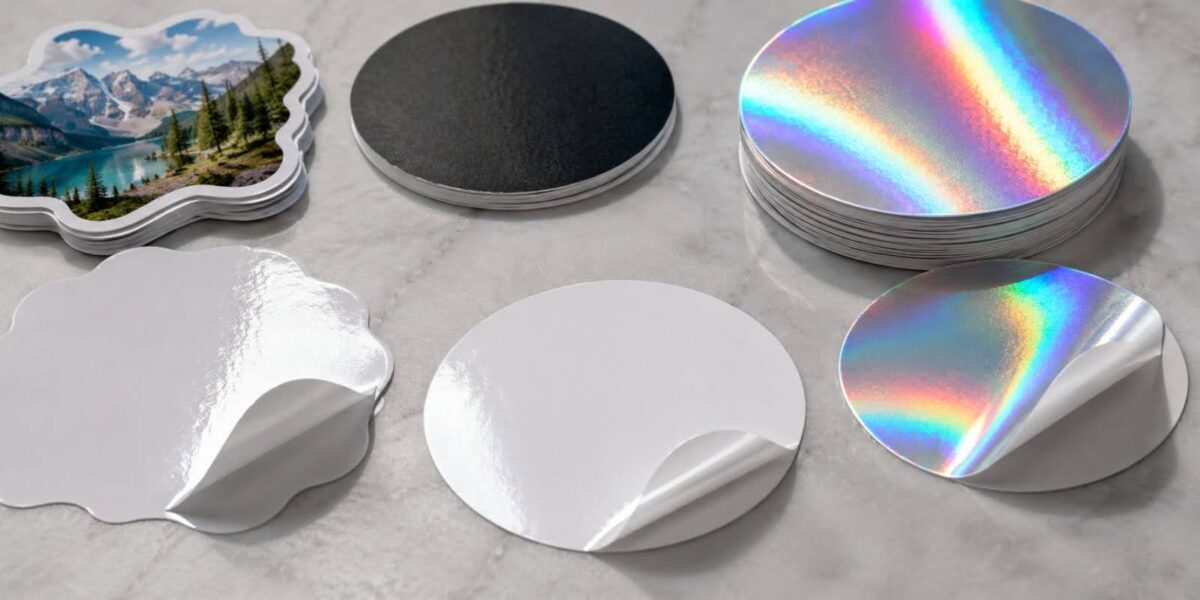
 

Vinyl Stickers Singapore: Custom Waterproof Vinyl Sticker Printing

Die-cut vinyl stickers display

Singapore’s tropical climate can quickly damage ordinary stickers. Heat, humidity, and sudden rainfall often cause paper labels to peel, wrinkle, or fade prematurely. Businesses that rely on packaging labels, promotional materials, or outdoor branding need stickers that maintain their appearance over time.

Vinyl stickers are widely used because they are waterproof, UV-resistant, and highly durable. The material performs reliably in both indoor and outdoor environments, making it suitable for product packaging, storefront displays, vehicles, and equipment labels.

For businesses in Singapore, vinyl sticker printing offers a dependable solution that keeps branding clear and professional even under demanding environmental conditions.

What Are Vinyl Stickers and Why Businesses Use Them

Vinyl stickers are adhesive labels made from polyvinyl chloride (PVC) designed for long-term durability. Unlike paper stickers, vinyl stickers resist moisture, UV exposure, and temperature changes. Because of their waterproof and flexible properties, they are widely used for product packaging, outdoor branding, vehicle decals, and equipment labelling.

The PVC material allows the sticker to remain stable even when exposed to Singapore’s humid climate. When paired with strong adhesives and protective lamination, vinyl stickers can maintain their colour, structure, and adhesion for years.

This reliability makes vinyl stickers a preferred option for businesses that require consistent branding across products, packaging, and promotional materials.

Why Vinyl Stickers Are the Most Durable Sticker Material

Branded vinyl stickers collection

Vinyl stickers are widely considered the most durable type of adhesive label. The PVC material is flexible, tear-resistant, and resistant to moisture and UV exposure. These properties allow vinyl stickers to maintain their shape, colour, and adhesion even in demanding indoor or outdoor environments.

Key durability advantages include:

Flexible Yet Tear-Resistant Material

Vinyl can bend and conform to curved surfaces without cracking. This flexibility makes it ideal for items such as bottles, helmets, laptops, and vehicles where flat labels would normally fail.

Stable Under Temperature Changes

Vinyl stickers maintain their structure even when exposed to heat or cooler temperatures. Unlike paper labels that may wrinkle or shrink, vinyl remains smooth and stable.

Strong Adhesive Bond

High-quality vinyl stickers use durable adhesives that attach securely to surfaces such as:

  • Glass
  • Plastic
  • Metal
  • Acrylic
  • Painted surfaces
  • Coated paper

This adhesive strength helps stickers remain firmly in place even in humid environments or high-traffic settings.

Waterproof Vinyl Stickers for Singapore’s Humid Climate

Custom vinyl stickers printing

Singapore experiences consistently high humidity and frequent rainfall, making waterproof materials essential for long-lasting labels.

Vinyl stickers provide excellent moisture protection because the PVC base layer naturally repels water. When combined with lamination, the printed design is sealed against moisture exposure.

Waterproof vinyl stickers prevent common issues such as:

  • Ink smudging
  • Sticker bubbling
  • Adhesive failure
  • Label warping

Because of these properties, waterproof vinyl stickers are commonly used for:

  • Beverage bottles
  • Cosmetic packaging
  • Food packaging labels
  • Refrigerated product containers
  • Outdoor promotional stickers

This moisture resistance ensures branding remains readable and professional even when exposed to condensation or rain.

UV-Resistant Vinyl Stickers for Outdoor Branding

Sunlight can gradually fade many printed materials. Stickers used on storefronts, vehicles, or outdoor signage must withstand constant exposure to UV radiation.

Vinyl stickers can be laminated with UV-resistant protective layers that help prevent colour fading and material degradation.

Benefits of UV-protected vinyl stickers include:

  • Colours remain vibrant for longer periods
  • Text and graphics stay readable
  • Stickers maintain professional appearance
  • Outdoor branding remains consistent

This durability is one reason why many businesses choose vinyl stickers for vehicle decals, window graphics, and outdoor promotional materials.

Indoor and Outdoor Applications for Vinyl Stickers

Vinyl stickers are highly versatile and can be used across many industries. Their durability allows them to perform well in environments that would quickly damage paper labels.

Common applications include:

  • Product packaging labels for cosmetics, beverages, and retail products
  • Retail window decals used in storefront promotions
  • Vehicle branding stickers for company cars or delivery fleets
  • Equipment identification labels for machinery and tools
  • Laptop and promotional stickers used in marketing campaigns

Because vinyl stickers maintain clarity and adhesion across various surfaces, businesses can use them confidently in both indoor and outdoor environments.

Common Types of Vinyl Stickers Used for Business Branding

Different types of vinyl stickers serve different branding and packaging needs. Understanding these options helps businesses choose the right format for their applications.

Die-Cut Vinyl Stickers

Die-cut stickers are cut precisely around the shape of the design. This format is commonly used for promotional stickers, product branding, and logo stickers.

Kiss-Cut Vinyl Stickers

Kiss-cut stickers are cut through the vinyl layer but remain attached to the backing sheet. They are often used for sticker sheets or labels that require easy peeling.

Transparent Vinyl Stickers

Transparent vinyl stickers have a clear background that blends with the surface they are applied to. These are frequently used for glass packaging, windows, and minimalist branding designs.

Laminated Vinyl Stickers

Laminated vinyl stickers include an additional protective layer that improves scratch resistance, UV protection, and waterproof durability.

Selecting the correct sticker type ensures the material performs well in its intended environment.

Vinyl Stickers vs Paper Stickers

Businesses often compare vinyl stickers with paper labels when choosing printing materials. While paper stickers may be cheaper initially, vinyl provides significantly better durability.

Feature Vinyl Stickers Paper Stickers
Durability Very high Low
Waterproof Yes No
UV Resistant Yes No
Outdoor Use Excellent Poor
Lifespan 3–7 years Months

Because vinyl stickers last longer and require fewer replacements, they often provide better long-term value.

Why Businesses in Singapore Choose Vinyl Sticker Printing

Companies in Singapore rely on vinyl sticker printing because the material performs well in humid and high-temperature environments. Packaging labels, promotional graphics, and equipment tags must remain readable and intact despite constant exposure to moisture and sunlight.

Vinyl stickers provide several advantages:

  • Long lifespan compared to paper stickers
  • Reliable adhesion on multiple surfaces
  • Resistance to humidity and rain
  • UV protection for outdoor applications
  • High-quality print clarity

These qualities make vinyl stickers a practical choice for businesses seeking reliable and professional branding solutions.

Cost Efficiency of Vinyl Stickers for Long-Term Use

Although vinyl stickers cost slightly more than standard paper labels, they offer greater durability. High-quality vinyl stickers can last three to seven years outdoors and even longer indoors.

Because they require fewer replacements, vinyl stickers often reduce long-term printing and maintenance costs. Businesses that rely heavily on packaging labels or outdoor branding typically find vinyl to be a more cost-efficient solution.

Frequently Asked Questions

1. Why are vinyl stickers suitable for Singapore’s climate?

Vinyl stickers are designed to handle humidity, rain, and strong sunlight. The PVC material repels moisture, while UV-resistant laminates protect colours from fading. These features make vinyl stickers ideal for Singapore’s tropical climate and long-term outdoor branding.

2. Are vinyl stickers waterproof?

Yes. Vinyl stickers are naturally water-resistant because PVC repels moisture. When laminated, the sticker becomes waterproof and protects printed ink from smudging, peeling, or bubbling caused by rain or condensation.

3. Do vinyl stickers fade in sunlight?

High-quality vinyl stickers include UV-protective laminates that reduce colour fading. This protection helps maintain vibrant graphics and readable text even when stickers are exposed to direct sunlight for extended periods.

4. What surfaces can vinyl stickers stick to?

Vinyl stickers adhere well to smooth surfaces such as glass, plastic, metal, acrylic, painted materials, and coated paper. Their strong adhesive ensures reliable bonding even in humid indoor environments or outdoor conditions.

5. Are vinyl stickers suitable for outdoor branding?

Yes. Vinyl stickers are widely used for vehicle decals, storefront windows, equipment labels, and promotional signage because they resist weather exposure and maintain strong adhesion.

6. How long do vinyl stickers last?

Vinyl stickers typically last three to seven years outdoors depending on weather exposure and laminate quality. Indoors, they can last even longer while maintaining colour clarity and adhesive strength.

7. Are vinyl stickers better than paper stickers?

Vinyl stickers are significantly more durable than paper stickers. They resist moisture, UV exposure, and temperature changes, while paper stickers are more prone to tearing, fading, and peeling.

Get Durable Vinyl Stickers for Your Business

If your business needs vinyl stickers in Singapore that remain clear, durable, and professional over time, choosing the right printing partner is essential.

Printsys provides high-quality vinyl sticker printing designed for product packaging, branding, equipment labels, and promotional materials. With durable materials, precise cutting, and protective laminates, your stickers remain vibrant and secure even in demanding environments.

Get in touch today.


Transparent Sticker Printing Singapore: A Complete Guide to Clear Labels for Modern Packaging

Transparent sticker printing Singapore

Packaging design continues to evolve toward clean, minimal aesthetics that allow products to stand out naturally. One approach that has become increasingly popular among businesses is transparent sticker printing in Singapore, where clear adhesive labels are used to present branding without hiding the product itself.

Transparent stickers allow companies to display logos, product information, and decorative elements while keeping the packaging surface visible. Instead of covering containers with opaque labels, businesses can maintain a sleek appearance that integrates the product into the overall design.

As more brands prioritise modern packaging and premium visual presentation, transparent sticker printing has become a preferred solution for industries such as cosmetics, food and beverage, lifestyle products, and retail packaging. When combined with thoughtful design and high-quality printing, transparent stickers can elevate packaging while maintaining clarity and visual balance.

What Is Transparent Sticker Printing Singapore?

Transparent sticker printing in Singapore refers to the production of clear adhesive labels that allow the packaging surface or product beneath the label to remain visible. These labels are typically printed on transparent materials such as clear vinyl, polyester, or BOPP film.

Unlike traditional labels that fully cover packaging surfaces, transparent stickers allow branding elements to appear directly on the product container. This approach creates a modern packaging design while maintaining visibility of the product’s colour, texture, or contents.

Because transparent materials allow light to pass through, designers often use white ink layers or selective opacity to ensure that text and graphics remain readable against different packaging backgrounds.

Why Businesses Use Transparent Sticker Printing Singapore

Many companies adopt transparent sticker printing in Singapore because it combines modern aesthetics with practical packaging benefits.

Transparent stickers offer several advantages:

  • Clean and minimal packaging design that aligns with modern branding trends
  • Product visibility that builds customer trust and transparency
  • Flexible application across glass, plastic, and metal packaging
  • Premium visual presentation without heavy label coverage
  • Versatile design possibilities including layered transparency effects

These benefits make transparent sticker printing especially valuable for brands that want their packaging to look sophisticated while still showcasing the product.

Key Advantages of Transparent Sticker Printing

Transparent sticker printing provides several functional and visual advantages for packaging design.

Key benefits include:

  • maintaining product visibility while displaying branding
  • creating clean, minimal packaging aesthetics
  • allowing flexible placement of design elements
  • supporting layered and dimensional design techniques
  • improving shelf appeal for retail products

These features make transparent labels a practical choice for packaging that aims to balance simplicity with strong branding.

Types of Transparent Stickers Used in Packaging

Types of Transparent Stickers Used in Packaging

Businesses using transparent sticker printing Singapore can choose from several types of clear labels depending on packaging needs and durability requirements.

Clear Vinyl Stickers

Clear vinyl stickers are waterproof, flexible, and highly durable. They are commonly used for bottles, cosmetic containers, and packaging exposed to moisture or frequent handling.

Transparent BOPP Stickers

BOPP (biaxially oriented polypropylene) stickers are lightweight, oil-resistant, and suitable for food packaging applications. They are widely used on jars, beverage bottles, and food containers.

Static Cling Transparent Stickers

Static cling stickers attach to surfaces without adhesive and are typically used for glass displays, promotional materials, and window applications.

Clear Polyester Stickers

Polyester transparent stickers are extremely durable and resistant to heat or chemicals. These labels are commonly used for industrial products or equipment labels.

Materials Used in Transparent Sticker Printing Singapore

The material used in transparent sticker printing affects durability, clarity, and performance.

Material Key Benefits Typical Applications
Clear Vinyl Waterproof and flexible Cosmetics, bottles, retail packaging
Clear Polyester Heat and chemical resistant Industrial labels
Transparent BOPP Lightweight and oil resistant Food and beverage packaging
Clear Film Clean and seamless appearance Premium retail packaging

Choosing the right material ensures that the transparent sticker remains clear and durable across different environments.

Design Considerations for Transparent Sticker Printing

Designing transparent stickers requires careful planning to ensure readability and visual balance.

Important design considerations include:

  • Contrast between graphics and packaging colour
  • Use of white ink layers for improved visibility
  • Selective opacity to highlight important information
  • Strategic placement of logos and text

Because transparent materials reveal the packaging surface underneath, designers often adjust colour density and layering techniques to maintain clarity and visual hierarchy.

Creative Layering Techniques Using Transparent Stickers

Layering transparent stickers is a popular technique that adds depth and dimension to packaging designs.

Common layering techniques include:

Opacity Layering

Designers use varying opacity levels to create subtle background shapes while keeping key graphics prominent.

Foreground and Background Separation

One transparent layer may contain decorative patterns, while another layer carries branding elements, creating a sense of visual depth.

Framing Product Details

Transparent shapes can highlight important product information such as brand logos or ingredient callouts without using heavy colour blocks.

Partial Product Reveal

Instead of exposing the entire product, transparent windows within sticker designs reveal selected areas of the packaging.

Layered transparent designs can transform simple packaging into a visually engaging composition.


Printing Methods Used for Transparent Sticker Printing

Several printing technologies are used to produce transparent stickers depending on design complexity and production volume.

Common printing methods include:

  • Digital printing for small to medium production runs
  • Offset printing for high-volume label production
  • UV printing for durable and vibrant colour output
  • Screen printing for strong opacity and bold designs

These methods ensure that graphics remain sharp and vibrant even when printed on transparent materials.

How Packaging Materials Affect Transparent Sticker Design

The packaging material underneath the sticker significantly influences the final appearance of transparent labels.

Clear containers such as glass bottles and plastic jars create the most striking effect because the product itself becomes part of the design. Colours and textures remain visible through the transparent label.

Matte or frosted packaging surfaces create a softer visual effect. The transparent sticker blends more subtly into the surface, producing a refined and understated look.

Smooth packaging surfaces typically produce the best adhesion and clarity for transparent sticker applications.

Common Applications of Transparent Sticker Printing in Singapore

Common Applications of Transparent Sticker Printing in Singapore

Transparent sticker printing in Singapore is widely used across industries that rely on visually appealing packaging.

Typical applications include:

  • cosmetic and skincare packaging
  • beverage bottles and glass jars
  • food packaging labels
  • lifestyle and stationery products
  • retail product packaging
  • promotional merchandise

In these cases, transparent labels allow branding to remain visible while preserving the clean appearance of the packaging.

Transparent Sticker Printing vs Standard Sticker Printing

Feature Transparent Sticker Printing Standard Sticker Printing
Label appearance Clear and minimal Fully opaque
Product visibility Product remains visible Product covered by label
Design style Modern and subtle Bold and graphic
Material options Clear vinyl, polyester Paper, vinyl, synthetic
Packaging impact Premium and refined Traditional label appearance

Brands often choose transparent sticker printing when they want packaging that feels sophisticated and visually balanced.

When to Use Transparent Sticker Printing

Transparent sticker printing works best for packaging that benefits from product visibility and minimal design.

Typical use cases include:

  • cosmetic bottles and skincare products
  • beverage containers and glass jars
  • food packaging that highlights freshness
  • premium retail products
  • lifestyle and stationery packaging

These packaging types benefit from clear labels that maintain a polished and modern presentation.

Frequently Asked Questions About Transparent Sticker Printing

1. What is transparent sticker printing?

Transparent sticker printing produces clear adhesive labels that allow the packaging surface or product beneath the label to remain visible. These labels are printed on transparent materials such as vinyl or polyester and are widely used for modern packaging and product branding.

2. Why do businesses use transparent sticker printing Singapore?

Businesses use transparent sticker printing Singapore because it creates clean packaging that highlights the product itself. Clear labels help brands maintain a minimal aesthetic while still displaying essential product information and logos.

3. Are transparent stickers durable?

Yes. Transparent stickers printed on materials such as clear vinyl or polyester are waterproof and resistant to moisture, scratches, and frequent handling. These materials help maintain label quality during shipping, storage, and retail display.

4. What products work best with transparent sticker labels?

Transparent sticker labels work well on glass bottles, plastic containers, jars, cosmetic packaging, beverage containers, and retail packaging where product visibility enhances the overall presentation.

5. Can transparent stickers be printed with white ink?

Yes. White ink is often used in transparent sticker printing to improve readability of text and graphics. This layer creates contrast between the printed design and the packaging surface.

6. How long do transparent sticker labels last?

Transparent sticker labels can last several years depending on the material used. Vinyl and polyester labels are highly durable and resistant to moisture, UV exposure, and scratching.

7. Can transparent stickers be layered for design effects?

Yes. Designers frequently layer transparent stickers to create depth and visual hierarchy. Adjusting opacity and placing elements on separate layers allows packaging to achieve a refined three-dimensional design.

Improve Your Packaging with Transparent Sticker Printing

If your brand aims to create modern packaging that highlights the product while maintaining strong visual branding, transparent sticker printing in Singapore offers a practical and elegant solution.

With the right materials, design techniques, and printing quality, transparent stickers can enhance packaging clarity while delivering professional branding.

To take your packaging further with clean, professional detailing, consider working with Printsys. 

Get in touch today for a quote.