


Label Printing Guide: Choosing the Right Labels for Your Products
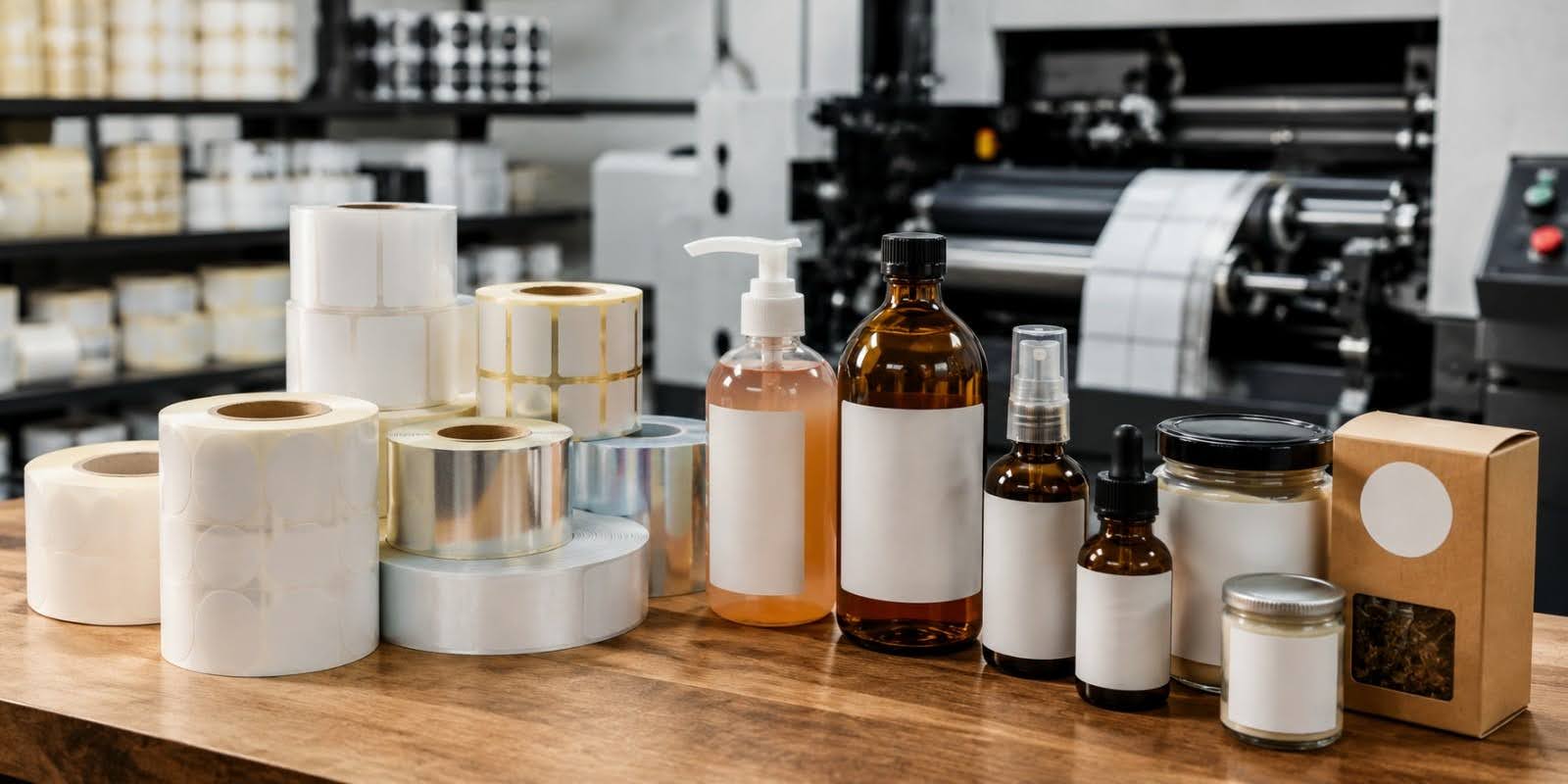
Labels may occupy only a small part of a product or package, but they often perform several jobs at the same time. A label can identify a product, communicate a brand, display instructions, carry a barcode and help customers distinguish one product variant from another.
This makes label printing more complex than simply choosing an attractive sticker design.
This guide explains the major types of labels, commonly used materials and finishes, printing methods and industry applications to help businesses choose labels based on how their products will actually be used.
What Is Label Printing?
Label printing refers to the production of printed adhesive or non-adhesive labels used for product identification, branding, packaging, tracking and other commercial applications.
Labels can carry information such as:
- Brand name and logo
- Product name
- Ingredients
- Instructions
- Product specifications
- Barcodes
- QR codes
- Serial numbers
- Batch information
- Warnings
- Promotional messages
The appropriate label depends heavily on its purpose.
For example, branding may be the primary concern for a premium cosmetic product. Barcode readability may take priority for warehouse inventory, while an industrial label may need to remain readable despite moisture, abrasion or repeated handling.
A Label Is a System, Not Just Printed Material
An adhesive label can contain several components:
Printed face material → ink → optional protective finish → adhesive → release liner
The performance of the finished label depends on how these components work together.
A waterproof face material does not guarantee reliable performance if the adhesive is unsuitable for the application surface. Likewise, a durable adhesive cannot prevent printed graphics from becoming scratched if the surface needs additional protection.
Businesses should therefore avoid choosing labels based on a single characteristic such as “waterproof” or “premium.”
The complete application needs to be considered.
Types of Labels
Different labels are designed for different business purposes. Identifying the label’s primary function is the first step towards choosing an appropriate specification.
Product Labels

Product labels are used directly on products or their immediate packaging.
They commonly contain:
- Brand logo
- Product name
- Product variant
- Instructions
- Supporting information
Product labels need to balance branding with readability.
A visually attractive design should not make essential information difficult to locate.
They may be used on:
- Bottles
- Jars
- Boxes
- Containers
- Pouches
- Retail packaging
The surface and shape of the packaging influence label size, material and adhesive requirements.
Packaging Labels
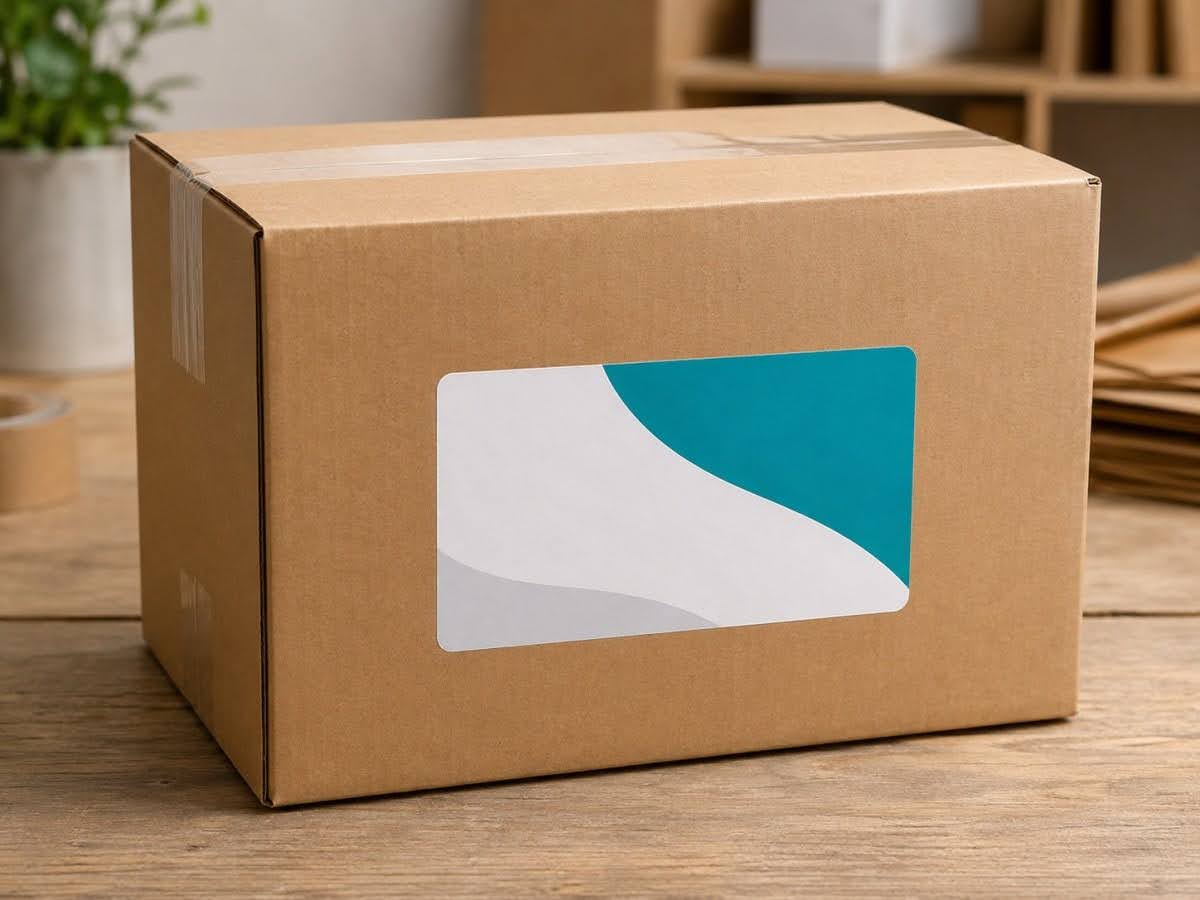
Packaging labels can provide branding or functional information on outer packaging.
Applications include:
- Boxes
- Bags
- Mailers
- Cartons
- Shipping packages
- Gift packaging
A business may use standard packaging and apply custom labels to create a branded appearance without manufacturing fully customised packaging.
This can be particularly useful for businesses managing multiple products or changing packaging designs regularly.
Barcode Labels
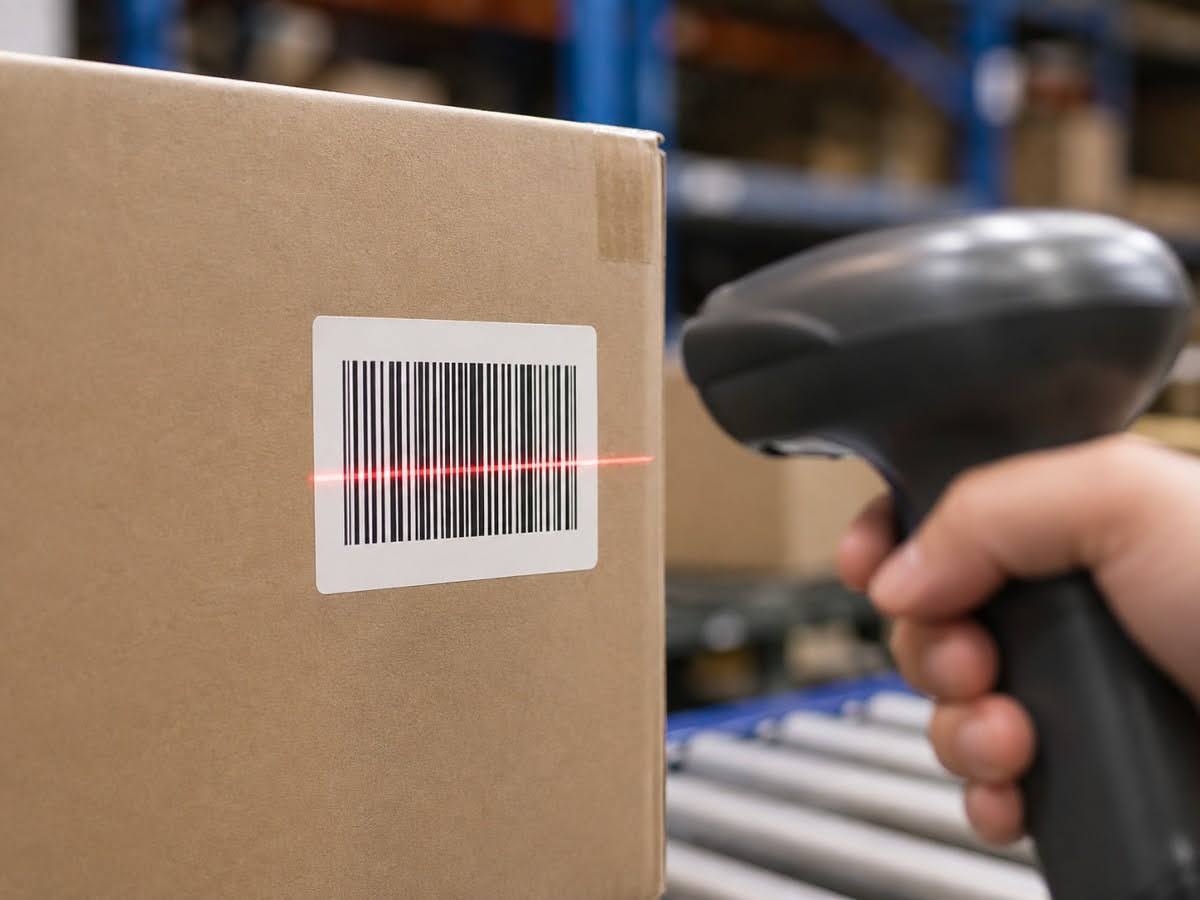
Barcode labels support product identification, inventory and operational processes.
They may contain:
- Product barcodes
- SKUs
- Serial numbers
- Batch codes
- Inventory identifiers
Barcode labels are used across retail, warehousing, logistics, healthcare and manufacturing.
Print quality is critical.
Poor contrast, incorrect sizing, damaged bars or unsuitable placement can affect scanning performance.
For this reason, barcode label printing should consider both visual quality and machine readability.
Waterproof Labels
Waterproof labels are designed for applications where exposure to water or significant moisture is expected.
Potential uses include:
- Beverage bottles
- Refrigerated products
- Toiletries
- Bathroom products
- Outdoor applications
Synthetic label materials are generally more appropriate than untreated paper for these conditions.
However, businesses should distinguish between waterproof, moisture-resistant and outdoor-resistant labels.
A material that withstands water does not automatically withstand prolonged sunlight, heat or chemical exposure.
Industrial Labels
Industrial labels are designed for more demanding applications.
They may be used for:
- Machinery
- Equipment
- Tools
- Electrical components
- Asset identification
- Safety information
- Manufacturing processes
Requirements can include resistance to:
- Moisture
- Abrasion
- Chemicals
- Temperature changes
- Frequent handling
Industrial label specifications should be based on the actual operating environment rather than appearance alone.
Promotional Labels
Promotional labels support temporary marketing activities.
Examples include:
- Limited edition
- New product
- Promotional price
- Special offer
- Seasonal campaign
These labels can be added to existing packaging without redesigning the permanent product label.
Because their lifespan may be relatively short, businesses should avoid unnecessarily expensive materials unless the environment requires them.
Security and Identification Labels
Some labels are used to help authenticate or identify products.
Applications can include:
- Warranty identification
- Asset tracking
- Serial numbering
- Security seals
- Holographic labels
The required printing method and material depend on the security function involved.
Materials
Material selection is one of the most important decisions in label printing.
The correct material depends on the packaging surface, environment, lifespan and desired appearance.
Paper Labels
Paper is a practical option for many indoor and dry applications.
Common uses include:
- Retail packaging
- Dry food products
- Boxes
- Paper bags
- Promotional stickers
- Shipping applications
Advantages can include:
- Good printability
- Wide availability
- Suitability for many indoor applications
- Cost efficiency for suitable projects
The primary limitation is environmental resistance.
Untreated paper can absorb moisture, wrinkle or tear when exposed to water.
Coated Paper Labels
Coated paper provides a smoother printing surface than standard uncoated paper.
It can be useful where businesses want:
- Sharper graphics
- Stronger colour presentation
- Smoother appearance
Coated paper labels can work well for retail and packaging applications that remain in relatively dry conditions.
Kraft Paper Labels
Kraft paper provides a natural brown appearance.
It can complement products positioned around:
- Handmade production
- Natural ingredients
- Artisan branding
- Sustainable visual themes
Businesses should account for the material colour when preparing artwork because colours may reproduce differently than they would on a white background.
Vinyl Labels
Vinyl is commonly used for custom labels requiring greater moisture resistance and flexibility.
Applications can include:
- Product bottles
- Promotional stickers
- Packaging
- Selected outdoor uses
- Frequently handled products
Vinyl can also adapt well to certain curved surfaces.
The actual durability depends on the complete specification, including ink, adhesive and finishing.
Polypropylene Labels
Polypropylene is a synthetic label material that can provide:
- Moisture resistance
- Smooth appearance
- Flexibility
- Strong printability
It is frequently considered for food, beverage, cosmetic and household product packaging.
PET and Polyester Labels
PET or polyester labels can provide greater dimensional stability and durability.
Potential applications include:
- Electronics
- Equipment
- Industrial products
- Asset identification
- Durable product labels
PET can be useful where a label needs to retain its shape and remain readable for an extended period.
Transparent Labels
Transparent label materials allow the packaging surface or product to remain visible.
They are commonly used on:
- Glass bottles
- Jars
- Cosmetic containers
- Clear plastic packaging
Transparent labels can create a minimal appearance, but artwork requires careful preparation.
Colours may appear differently depending on what is behind the label, and white ink may be required for selected designs.
Finishes
Label finishes can change appearance while also providing additional surface protection.
Matte Finish
Matte labels have a lower-reflection surface.
They can support:
- Minimalist packaging
- Premium products
- Cosmetics
- Corporate applications
Matte finishes can also reduce glare, which may improve readability in certain situations.
Gloss Finish
Gloss labels have a more reflective surface.
They can help colours appear visually vibrant and are commonly considered for:
- Food packaging
- Beverages
- Promotional products
- Colourful retail packaging
The right choice depends on the desired visual effect and label function.
Lamination
Lamination applies a protective film over the printed surface.
It can provide additional resistance to:
- Scratches
- Moisture
- Frequent handling
- Surface wear
Lamination may be particularly useful for product labels that are handled regularly or exposed to demanding environments.
However, lamination does not automatically make every label waterproof. The face material and adhesive still need to suit the application.
UV Coating
UV coating can create a polished surface or add protection depending on the process.
Spot UV can also be used selectively to highlight:
- Logos
- Product names
- Graphic elements
This can create visual contrast between glossy and non-glossy areas.
Foil and Specialty Finishes
Foil can add metallic effects to selected areas of a label.
It is often considered for:
- Premium packaging
- Cosmetics
- Luxury goods
- Gift products
Speciality finishing should support the brand rather than overwhelm the label.
A simple label with one well-placed premium detail can be more effective than several competing finishing effects.
Printing Methods
Different label printing methods suit different quantities, materials and information requirements.
Digital Label Printing
Digital printing produces labels directly from digital artwork without conventional printing plates.
It can be suitable for:
- Shorter production runs
- Multiple label variations
- Variable information
- Frequent artwork changes
- Product testing
Digital printing can be particularly useful for businesses with several product variants.
For example, a food company producing five flavours may need similar labels with different colours, product names and information. Digital production can provide flexibility across these variations.
Flexographic Printing
Flexographic printing is widely used for suitable roll-fed label production.
It can be effective for:
- Larger quantities
- Repeat label orders
- Packaging labels
- Product labels
Because flexographic printing requires more initial setup, its economics can become more attractive at larger production volumes.
Offset Printing
Offset printing may be used for selected label and packaging applications depending on the material and production format.
It can provide strong consistency for suitable commercial printing runs.
The appropriate method should be determined according to:
- Quantity
- Material
- Artwork
- Finishing
- Label format
Variable Data Printing
Variable data printing allows information to change between labels.
Examples include:
- Serial numbers
- Barcodes
- QR codes
- Batch numbers
- Unique identifiers
This is particularly valuable for:
- Inventory tracking
- Product authentication
- Asset management
- Logistics
Instead of every label being identical, each can contain unique information.
Die Cutting
Although die-cutting is technically a finishing process rather than a printing method, it plays an important role in label production.
Die cutting creates the final label shape.
Labels can be:
- Rectangular
- Circular
- Oval
- Custom shaped
Custom die-cut labels can follow a logo or packaging design, while standard shapes may provide greater production simplicity.
Industry Applications
Label printing is used across industries because almost every physical product needs some form of identification or information.
Food and Beverage
Food labels may communicate:
- Product name
- Ingredients
- Storage information
- Instructions
- Barcodes
- Branding
Material selection should account for the storage environment.
A label on a dry snack box may use paper, while a chilled drink bottle may require a synthetic material capable of handling condensation.
Businesses should also confirm any applicable regulatory requirements separately when preparing food labels.
Cosmetics and Personal Care
Cosmetic labels often need both strong presentation and environmental resistance.
Products can encounter:
- Water
- Humidity
- Oils
- Repeated handling
Synthetic label materials and protective finishes may therefore be appropriate.
Common applications include:
- Shampoo bottles
- Skincare containers
- Toiletries
- Cosmetic packaging
Retail
Retail businesses use labels for:
- Product branding
- Pricing
- Barcodes
- Promotions
- Inventory identification
Retail labels should balance visual presentation with operational requirements.
A beautiful barcode label that cannot be scanned efficiently is not an effective label.
Logistics and Warehousing
Logistics labels prioritise readability and identification.
Applications include:
- Inventory labels
- Shipping labels
- Barcode labels
- Warehouse identification
- Tracking labels
Print quality and label placement are important because operational efficiency depends on reliable scanning.
Manufacturing
Manufacturing applications may require:
- Machine labels
- Asset labels
- Safety labels
- Product identification
- Serial numbers
Durability can become a major priority.
Businesses should identify whether labels will encounter heat, oils, cleaning agents or abrasion before choosing a material.
Electronics
Electronic products may use labels for:
- Serial numbers
- Technical information
- Warranty identification
- Barcodes
- Product specifications
PET and other durable synthetic materials can be appropriate for selected applications requiring longer-term identification.
E-Commerce
E-commerce businesses use labels across both product and delivery packaging.
Applications include:
- Branded packaging labels
- Product stickers
- Barcode labels
- Shipping labels
- Promotional stickers
Custom labels can help businesses transform standard boxes, bags and mailers into branded packaging.
Frequently Asked Questions (FAQs)
What is label printing?
Label printing is the production of printed labels used for branding, product information, identification, packaging, tracking and other commercial purposes.
What is the best material for product labels?
There is no universal best material. Paper can suit dry indoor packaging, while vinyl, polypropylene and PET may be better for applications requiring greater moisture resistance or durability.
What is the difference between labels and stickers?
The terms often overlap. In business applications, “label” commonly refers to adhesive products used for information, identification or packaging, while “sticker” can include promotional and decorative applications. The physical construction may be similar.
Are vinyl labels waterproof?
Vinyl provides good moisture resistance and is commonly used for waterproof label applications. Overall performance still depends on the ink, adhesive, finishing and expected conditions.
What labels are suitable for refrigerated products?
Synthetic materials with suitable moisture-resistant adhesives are generally better starting points because refrigerated products may experience condensation.
What type of label is best for bottles?
It depends on the bottle material, shape and environment. Flexible synthetic labels can work well on many bottles, particularly where moisture or condensation is expected.
What labels are used for barcodes?
Paper and synthetic materials can both be used for barcode labels. The correct choice depends on lifespan, environment and handling. Print contrast and barcode dimensions are also critical.
Can labels include QR codes?
Yes. QR codes can be printed on product, promotional and identification labels. They should be produced at a suitable size and tested after printing.
What is the difference between paper and synthetic labels?
Paper is economical and suitable for many dry indoor applications. Synthetic labels generally provide greater resistance to water, tearing and demanding environmental conditions.
Do labels need lamination?
Not always. Lamination can provide additional surface protection, but labels used in controlled indoor environments may not require it.
Can custom labels have unusual shapes?
Yes. Die cutting can produce circular, oval or custom-shaped labels. The appropriate shape should account for branding, packaging surface and application method.
Which printing method is best for labels?
Digital printing can be advantageous for smaller runs and multiple variations, while flexographic printing can be efficient for suitable higher-volume label production. The best method depends on quantity and specifications.
How should businesses choose a label printing company in Singapore?
Businesses should compare material options, adhesives, printing technology, finishing, quality control and understanding of the intended application—not only price.
Put the Right Label on Every Product
From a simple paper product label to a durable barcode or waterproof label, the appropriate specification depends on where the label will be applied, what information it needs to communicate and the conditions it will encounter.
For businesses planning label printing, custom labels, product labels, barcode labels, packaging labels or other commercial printing requirements, Printsys Pte Ltd can help determine suitable label materials, printing methods and finishes for different product applications. Get in touch with Printsys today!