


Print Finishing Explained: Lamination, Foil, UV and More
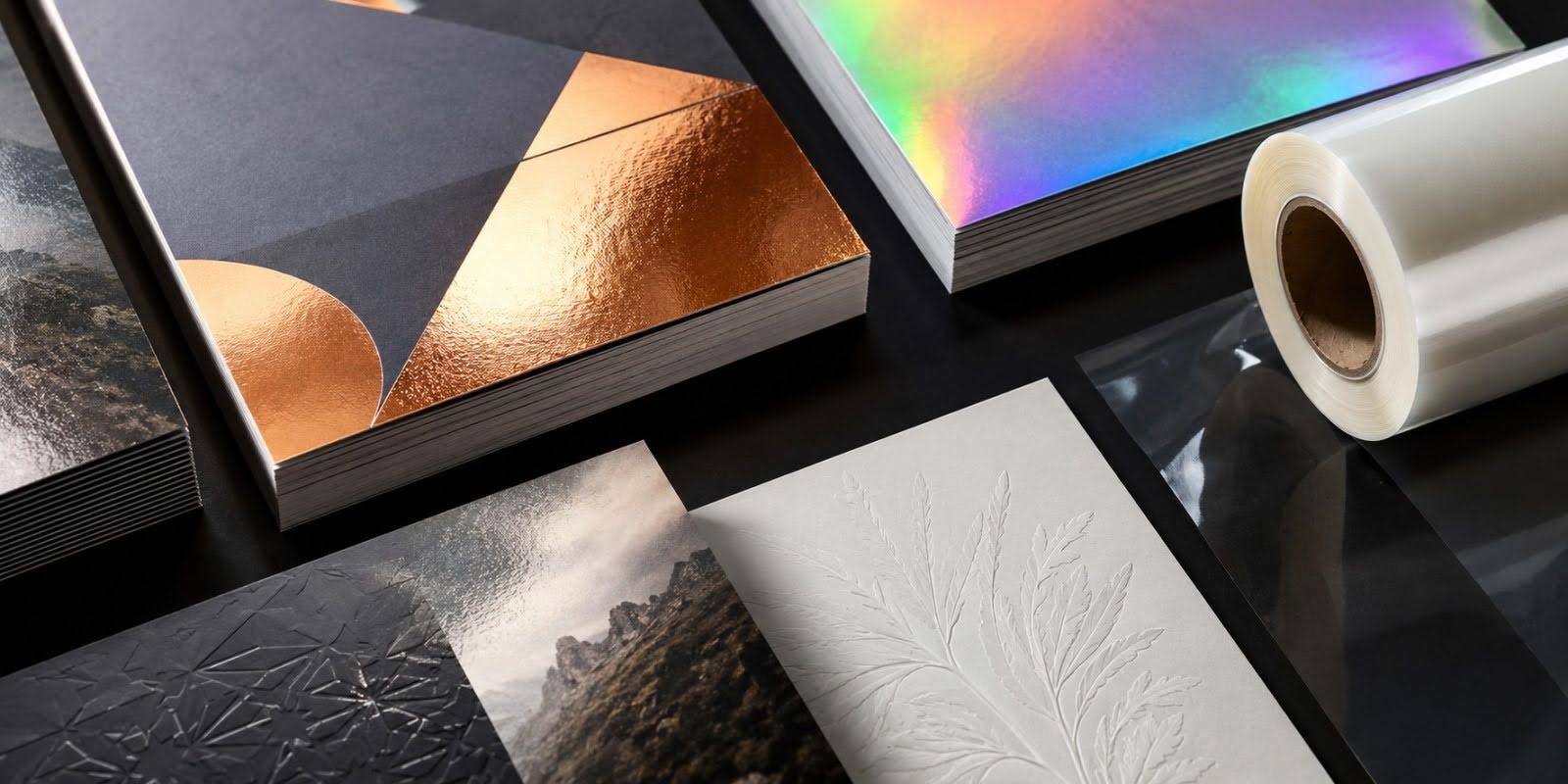
Printing does not always end when ink reaches the paper, card, label or other substrate. Many commercial print projects go through additional processes that alter their appearance, texture, shape or durability before the finished product is delivered.
These processes are collectively known as print finishing.
The challenge for businesses is deciding which finishing options genuinely improve the printed product. Adding several premium effects may increase production costs without improving usability or branding. On the other hand, selecting the right finish can protect frequently handled materials, strengthen visual hierarchy or make packaging more distinctive.
For businesses in Singapore comparing commercial printing options, print finishing should therefore be selected according to function, brand positioning, material, application and budget.
What Is Print Finishing?
Print finishing refers to processes performed during or after printing to create the final physical form, surface or appearance of printed materials.
Depending on the project, finishing can include:
- Lamination
- UV coating
- Foil stamping
- Embossing
- Debossing
- Die cutting
- Folding
- Binding
- Trimming
- Specialty coatings
Some finishing techniques are primarily protective. Others are decorative, structural or functional.
Printing vs Finishing
The printing stage places the visual content onto the selected substrate.
Finishing modifies what happens after or around that printed image.
For example, imagine a premium product brochure.
The print production process might involve:
Artwork → Printing → Lamination → Spot UV → Folding → Trimming
The printed artwork provides the colours, images and text. Lamination protects and alters the overall surface. Spot UV highlights selected design elements. Folding creates the brochure format, while trimming produces the final dimensions.
Finishing therefore contributes directly to the finished product rather than simply being an optional decorative extra.
Why Finishing Should Be Planned Early
One common mistake is designing a complete piece first and deciding on finishing at the last minute.
Some finishing techniques need to be considered during artwork preparation.
For example:
- Spot UV requires designated artwork areas.
- Foil stamping needs specific elements identified for foil.
- Embossing requires consideration of shape and positioning.
- Die cutting requires a cut path.
- Folding affects where text and graphics should be positioned.
Planning these elements early reduces the risk of artwork changes during production.
Popular Finishes
Different finishing techniques create different visual and functional effects. Understanding what each one does helps businesses avoid choosing finishes purely because they appear premium.
Lamination
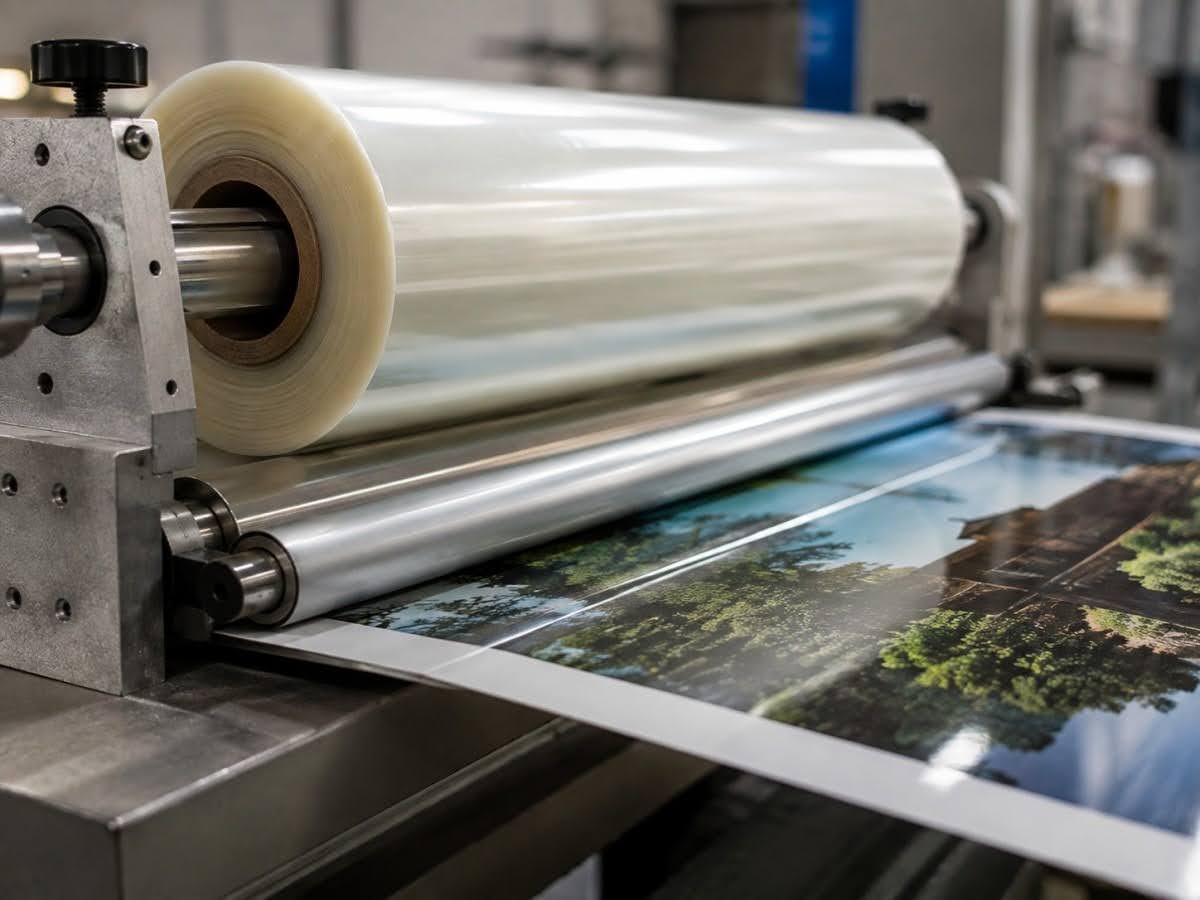
Lamination applies a thin protective film over a printed surface.
It is commonly available in finishes such as:
- Matte
- Gloss
Depending on the material and application, lamination can provide additional resistance to:
- Scratches
- Moisture
- Fingerprints
- Frequent handling
- Surface wear
Matte Lamination
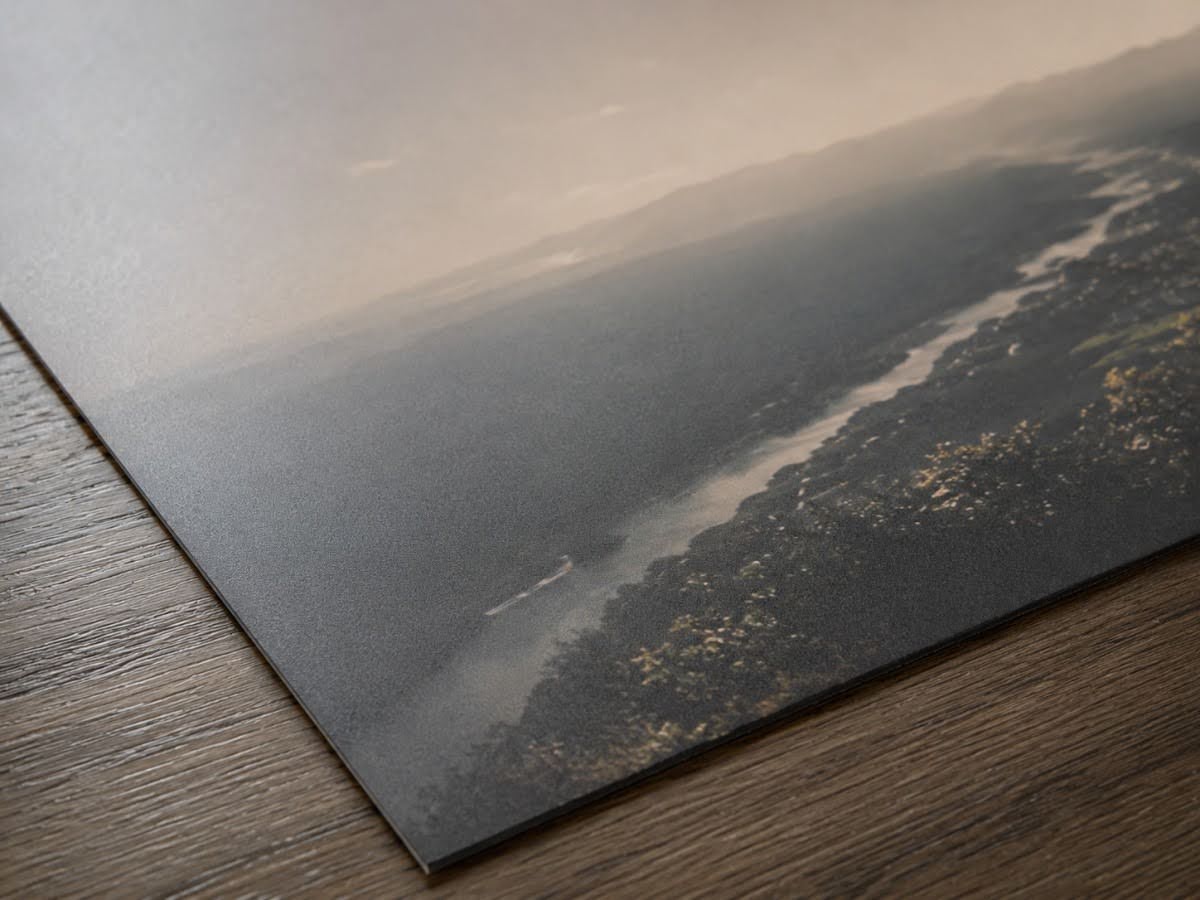
Matte lamination creates a low-reflection surface.
It is commonly considered for:
- Corporate brochures
- Presentation folders
- Premium packaging
- Business cards
- Book covers
Its understated appearance can complement minimalist or premium branding.
Reduced reflection can also improve readability under certain lighting conditions.
However, the final appearance depends on the artwork and material. A matte surface may make colours appear visually different from a high-gloss finish.
Gloss Lamination
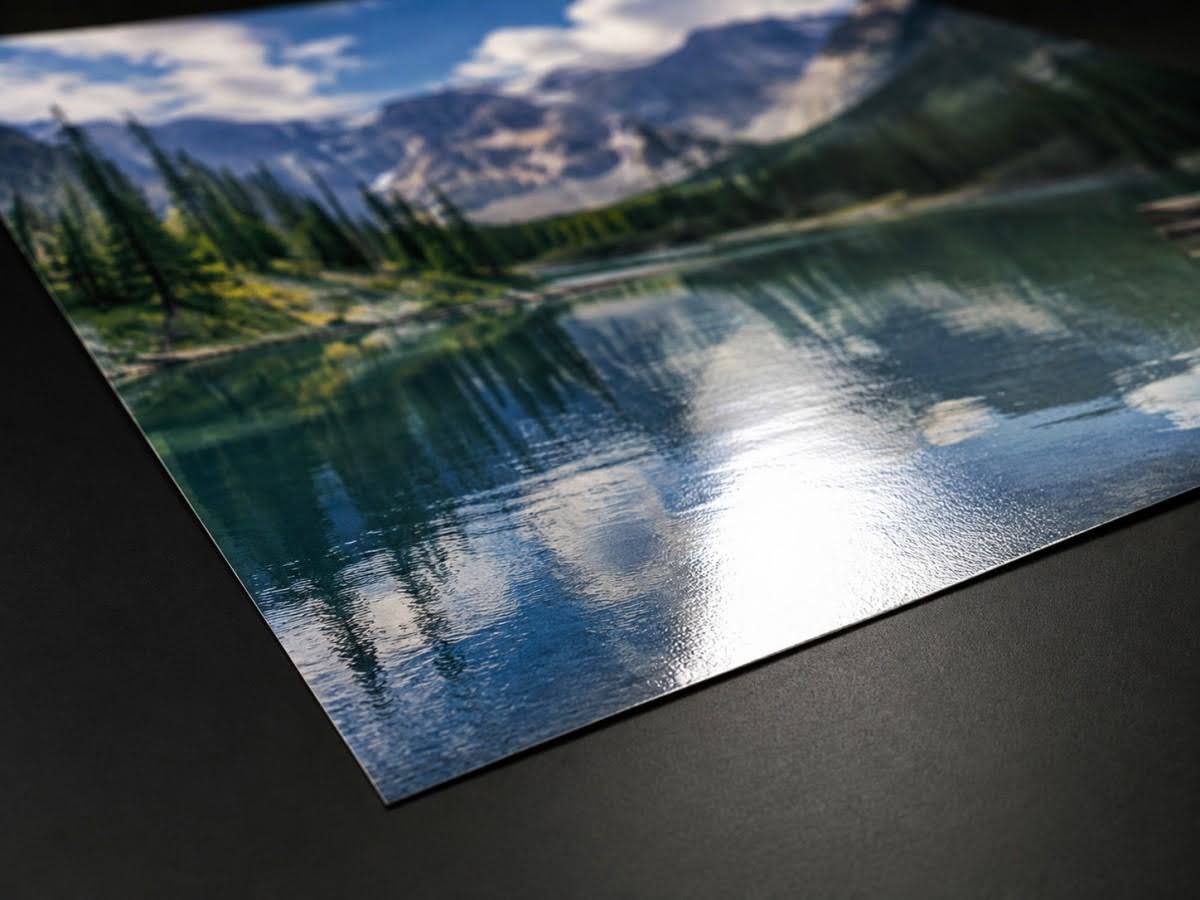
Gloss lamination produces a more reflective surface.
It can help colours and images appear vibrant and can work well for:
- Product catalogues
- Promotional materials
- Packaging
- Image-focused brochures
Gloss is particularly useful where strong visual impact is more important than reducing reflection.
The choice between matte and gloss should therefore reflect the intended design rather than the assumption that one is universally more premium.
UV Coating
UV coating is a liquid coating cured using ultraviolet light.
It can provide a smooth, polished surface and may be applied broadly or selectively depending on the production process.
UV coating can contribute to:
- Visual impact
- Surface protection
- Gloss
- Contrast
It is frequently associated with premium printing and marketing materials.
Spot UV
Spot UV applies the coating only to selected areas.
For example, a matte business card might have spot UV applied to:
- Company logo
- Brand name
- Graphic pattern
The contrast between the matte background and glossy UV area creates visual and tactile emphasis.
This can help direct attention to important elements without applying an effect across the entire piece.
However, spot UV works best when used selectively. Applying it to too many elements can weaken the hierarchy it is supposed to create.
Foil Stamping
Foil stamping applies a thin foil layer to selected areas using pressure and, depending on the process, heat or other transfer technology.
Common effects include:
- Gold
- Silver
- Metallic colours
- Holographic effects
- Other specialty foils
Foil stamping is frequently used for:
- Premium packaging
- Invitations
- Business cards
- Certificates
- Corporate folders
- Luxury product materials
The reflective nature of foil can create contrast that ordinary printed ink cannot reproduce in exactly the same way.
Using Foil Effectively
Foil is most effective when it highlights selected design elements.
For example:
Logo + product name + subtle border
may create a stronger impact than covering most of the printed piece in metallic foil.
Overusing premium finishing can make the design visually crowded and increase production complexity.
Embossing
Embossing creates a raised design on the printed material.
The effect is physical rather than simply visual.
Common embossed elements include:
- Logos
- Symbols
- Patterns
- Brand names
Because customers can feel the raised area, embossing adds a tactile dimension to print.
This can be particularly effective for materials that customers physically handle, such as business cards, packaging or presentation folders.
Debossing
Debossing creates the opposite effect.
Instead of raising an area, the selected design is pressed into the material.
This produces a recessed impression.
Debossing can support understated branding because it creates texture without necessarily requiring additional colours.
Both embossing and debossing require suitable material thickness and design planning.
Extremely fine details may not reproduce effectively as physical impressions.
Die Cutting
Die cutting changes the physical shape of printed material.
Rather than producing only standard rectangles, it can create:
- Custom packaging shapes
- Window cut-outs
- Custom labels
- Stickers
- Presentation folders
- Promotional materials
For example, a product label could follow the shape of a logo, or packaging could contain a cut-out window that reveals part of the product.
Die cutting can therefore be both functional and decorative.
Folding
Folding is a fundamental finishing technique for materials such as:
- Brochures
- Leaflets
- Menus
- Direct mail
- Instruction materials
Different folding configurations can affect how information is presented.
Common structures include:
- Half fold
- Tri-fold
- Z-fold
- Gate fold
Folding should be planned during design because panel dimensions and reading order affect artwork placement.
Binding
Multi-page materials may require binding.
Examples include:
- Catalogues
- Reports
- Manuals
- Booklets
- Corporate publications
Different binding methods suit different page counts, materials and presentation requirements.
Binding is functional, but it also influences the finished appearance and usability of the document.
Benefits
Print finishing can provide several advantages when matched correctly to the application.
Improved Durability
Protective finishes such as lamination can help printed materials withstand repeated handling.
This can be useful for:
- Menus
- Product catalogues
- Frequently used reference materials
- Packaging
- Covers
A finish that extends the usable life of a printed item can provide practical value beyond appearance.
Stronger Visual Hierarchy
Finishing can guide attention.
Spot UV, foil or embossing can emphasise:
- Logos
- Product names
- Headlines
- Important design elements
This works particularly well when the effect is applied selectively.
Enhanced Brand Presentation
Material and finish influence how customers perceive printed materials.
A business targeting a premium market may use:
- Heavier stock
- Matte lamination
- Selective foil
- Embossed branding
A colourful consumer brand may prefer:
- Gloss finishes
- Vibrant printing
- Custom die cutting
Neither approach is inherently superior. The finishing should reinforce the intended brand identity.
Greater Product Differentiation
Packaging often competes visually with other products.
Finishing techniques can help differentiate packaging through:
- Texture
- Reflection
- Shape
- Surface contrast
This can be especially valuable in retail environments where customers compare multiple products at once.
Functional Improvement
Not all finishing is decorative.
Die cutting can create functional openings.
Folding turns a flat sheet into an organised information format.
Binding converts individual pages into a usable publication.
Lamination can protect frequently handled surfaces.
Print finishing should therefore be understood as part of product construction as well as visual design.
Added Perceived Value
Premium finishes can increase the perceived value of printed materials when they align with the product or brand.
For example, a luxury product may benefit from subtle metallic foil and textured stock because the physical presentation reinforces its market positioning.
However, premium finishing cannot compensate for:
- Poor artwork
- Weak typography
- Low-quality images
- Incorrect information
Finishing works best when the underlying design is already strong.
Industry Applications
Different industries use finishing techniques for different reasons.
Corporate and Professional Services
Corporate materials often prioritise professional presentation and consistency.
Applications can include:
- Business cards
- Corporate brochures
- Presentation folders
- Reports
Matte lamination, selective foil or spot UV can be used to emphasise branding without overwhelming the content.
Retail
Retail businesses use finishing to attract attention and support product presentation.
Applications include:
- Promotional materials
- Product packaging
- Point-of-sale displays
- Gift packaging
- Labels
Gloss surfaces and custom die cutting may work well for visually energetic brands, while premium products may use more restrained finishing.
Food and Beverage
Food and beverage packaging may require both presentation and durability.
Finishing considerations can include:
- Moisture exposure
- Refrigeration
- Handling
- Packaging material
Lamination can provide additional surface protection where appropriate, while die cutting can create custom labels and packaging elements.
Businesses should remember that decorative finishing does not replace appropriate food-packaging materials or regulatory considerations.
Cosmetics and Beauty
Cosmetics frequently use finishing to reinforce premium presentation.
Examples include:
- Foil branding
- Matte lamination
- Spot UV
- Embossing
- Specialty label finishes
A skincare brand, for example, might use a matte label with selective metallic foil to create contrast without making the entire package reflective.
Durability also matters because cosmetic products may encounter water, oils and frequent handling.
Luxury Products
Luxury packaging often relies on restraint.
Potential finishing techniques include:
- Foil stamping
- Embossing
- Debossing
- Matte lamination
- Specialty materials
The key is consistency between the finish, material and brand.
Applying several premium effects at once can make the packaging look more complicated rather than more luxurious.
Events and Hospitality
Event and hospitality businesses may use finishing for:
- Invitations
- Menus
- Event programmes
- Promotional materials
- Presentation folders
The required finish depends on how long the material will be used and how frequently it will be handled.
Manufacturing and Industrial Applications
Industrial printing typically prioritises function and durability over decorative effects.
Applications may include:
- Equipment labels
- Product identification
- Instruction materials
- Technical documentation
Lamination and die cutting may be more relevant here than decorative foil or embossing.
The finishing technique should solve a practical problem.
Choosing Finishes
Businesses can make better finishing decisions by evaluating purpose before aesthetics.
Start With the Application
Ask what the printed item needs to do.
Will it be:
- Frequently handled?
- Used outdoors?
- Displayed in a retail environment?
- Presented during corporate meetings?
- Attached to packaging?
- Used for only a short campaign?
These conditions immediately help narrow down suitable finishing options.
Decide Whether the Goal Is Protection or Appearance
Finishes generally serve one or both of these purposes.
| Goal | Possible Finish |
| Protect against handling | Lamination |
| Create glossy surface | Gloss lamination or suitable UV coating |
| Reduce reflection | Matte lamination |
| Highlight selected areas | Spot UV |
| Add metallic detail | Foil stamping |
| Add raised texture | Embossing |
| Add recessed texture | Debossing |
| Create custom shape | Die cutting |
| Create brochure structure | Folding |
Defining the objective prevents unnecessary finishing.
Consider the Base Material
Finishing and printing materials must be compatible.
Paper thickness, coating and flexibility can affect:
- Folding
- Embossing
- Lamination
- Die cutting
- Binding
A finish that works well on one material may produce a different result on another.
Consider Handling
Frequently handled materials may benefit more from protective finishing than items intended for single use.
For example, a catalogue used repeatedly by a sales team may justify a laminated cover.
A flyer distributed for a one-day promotion may not.
Consider Brand Positioning
Finishing should reflect the brand.
A technology company might prefer:
- Clean matte surfaces
- Selective spot UV
- Minimal design
A luxury brand might use:
- Foil
- Embossing
- Textured material
A children’s brand might prefer:
- Glossy colours
- Custom shapes
- Playful die cutting
The best finish is one that supports the visual identity rather than following a trend.
Avoid Finishing Overload
More finishing does not automatically produce a better result.
Using:
- Matte lamination
- Gold foil
- Embossing
- Spot UV
- Complex die cutting
on the same item may create unnecessary cost and visual competition.
One or two carefully selected techniques can often create a stronger impact.
Consider Production Quantity
Some finishing processes involve additional setup.
The economics can therefore change according to quantity.
Businesses should request quotations based on the actual:
- Quantity
- Material
- Dimensions
- Printing method
- Finishing combination
rather than comparing finishing costs in isolation.
Plan Finishing During Artwork Development
Designers should know which finishing processes will be used before final artwork is completed.
Separate artwork layers or production files may be required for:
- Foil
- Spot UV
- Die cutting
- Embossing
This reduces the risk of last-minute technical changes.
Request a Proof or Sample Where Necessary
Premium finishing can look different physically than it does on screen.
A monitor cannot fully show:
- Metallic reflection
- Surface texture
- Raised embossing
- Matte feel
- Material thickness
For important projects, reviewing a physical sample or proof can help businesses understand the final effect before full production.
Frequently Asked Questions About Print Finishing
What is print finishing?
Print finishing refers to processes applied during or after printing that alter the final appearance, texture, shape, protection or construction of printed materials. Examples include lamination, UV coating, foil stamping, embossing, die cutting, folding and binding.
What is the purpose of lamination?
Lamination can provide additional surface protection while changing the appearance of printed materials. Matte and gloss are common options.
What is the difference between matte and gloss lamination?
Matte lamination creates a lower-reflection surface with a softer appearance. Gloss lamination produces a more reflective finish that can make colours appear visually vibrant.
What is UV coating?
UV coating is a liquid coating cured using ultraviolet light. It can provide gloss, surface protection or visual emphasis depending on how it is applied.
What is spot UV?
Spot UV applies UV coating only to selected areas of a design. It is commonly used to highlight logos, text or graphic elements through contrast.
What is foil stamping?
Foil stamping applies metallic or specialty foil to selected areas of printed material. It is often used for premium packaging, business cards, invitations and corporate materials.
What is the difference between embossing and debossing?
Embossing creates a raised impression, while debossing presses the design into the material to create a recessed effect.
What is die cutting?
Die cutting creates custom shapes, openings or cut-outs in printed materials. It is commonly used for stickers, labels, packaging and promotional materials.
Does print finishing improve durability?
Some finishes do. Lamination and certain coatings can provide additional protection against scratching, handling or moisture. Decorative finishes such as foil or embossing primarily affect presentation.
Does print finishing increase printing cost?
Usually, yes. Additional finishing introduces materials, setup or production processes. The impact depends on the finish, quantity, material and complexity.
Is premium finishing necessary for corporate printing?
Not always. Premium finishing should be used where it supports branding, durability or presentation. Standard printing may be more appropriate for everyday or short-term materials.
Can several finishing techniques be combined?
Yes, compatible techniques can sometimes be combined. However, businesses should consider whether each finish contributes meaningful value because excessive finishing can increase cost and make a design visually crowded.
Which print finish is best?
There is no universal best finish. The appropriate choice depends on the material, intended use, desired appearance, durability requirements, quantity and budget.
Conclusion
Print finishing is the stage that turns printed sheets, cards, labels or packaging into completed physical products.
Lamination can add protection and alter surface appearance. UV coating can create gloss and contrast, while spot UV can highlight selected design elements. Foil stamping introduces metallic or specialty effects, embossing and debossing create physical texture, and die cutting allows printed materials to take on customised shapes.
Other processes such as folding and binding demonstrate that finishing is not purely decorative. It can determine how a printed product functions.
The most effective approach is therefore not to ask which finishing technique looks the most premium.
Businesses should ask what the printed item needs to achieve.
A frequently handled catalogue may benefit from protective lamination. A luxury package may use selective foil to reinforce its positioning. A promotional sticker may need die cutting to follow the brand logo, while an industrial label may prioritise durability over decorative effects.
Material, artwork, printing and finishing should be planned together.
When finishing is selected according to purpose rather than added automatically, businesses can improve print quality, presentation and functionality without introducing unnecessary production costs.
Give Every Finish a Purpose
The strongest finishing choices are often the most deliberate. A single well-placed foil detail, protective laminate or custom die cut can contribute more than several competing effects when it supports the material, application and brand.
For businesses considering print finishing such as lamination, UV coating, foil stamping, embossing or die cutting, Printsys Pte Ltd can help determine suitable finishing techniques based on the printed material, application and production requirements. Get in touch with Printsys today!