


Vinyl vs. Paper Stickers: Which Material Should You Choose?
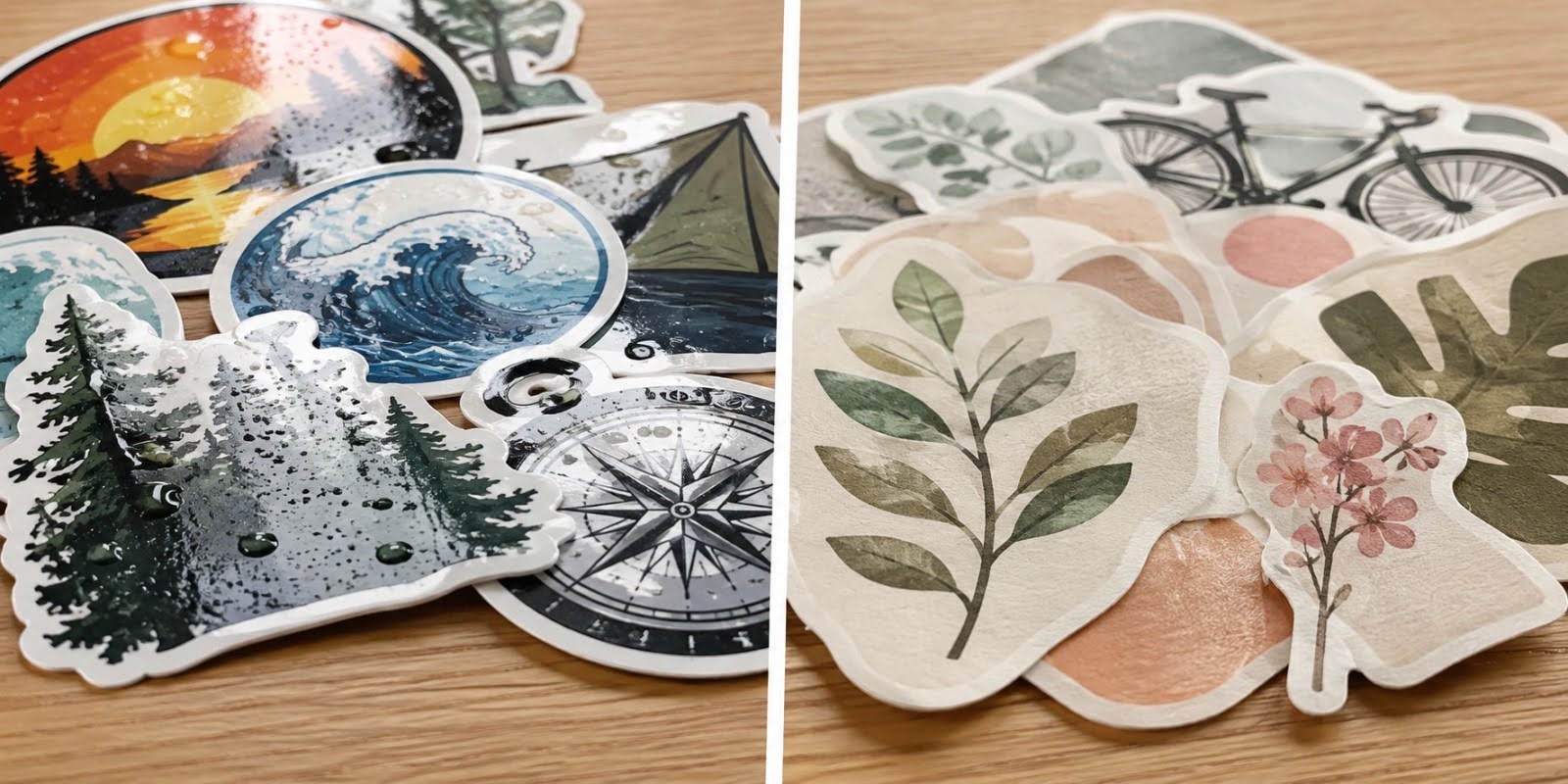
Choosing between vinyl stickers and paper stickers can significantly affect how a label looks, performs, and lasts. Although both materials can support custom sticker printing, they are designed for different conditions and business requirements.
Paper stickers are generally practical for dry indoor applications such as packaging, promotional labels and short-term product identification. Vinyl stickers offer greater resistance to moisture and physical wear, making them more suitable for demanding applications where durability is important.
That does not mean vinyl is automatically the better choice.
Using a weather-resistant material for a simple indoor packaging label can unnecessarily increase production requirements, while choosing basic paper for a product exposed to condensation may result in premature deterioration.
The right decision therefore depends on the sticker’s environment, expected lifespan, application surface, budget, and branding requirements.
This guide compares the two sticker materials to help businesses determine when paper is sufficient and when vinyl provides a practical advantage.
Overview
Vinyl and paper are two commonly used materials for adhesive labels and custom stickers. Both can carry branding, product information, promotional messages and decorative artwork, but their physical characteristics differ considerably.
At a basic level:
| Factor | Vinyl Stickers | Paper Stickers |
| Material | Synthetic | Paper-based |
| Moisture resistance | Higher | Lower |
| Flexibility | Higher | Lower |
| Outdoor suitability | Possible with suitable specification | Generally limited |
| Indoor use | Yes | Yes |
| Durability | Generally higher | Generally lower |
| Typical applications | Bottles, durable labels, decals | Boxes, dry packaging, promotions |
| Finishing options | Gloss, matte, lamination | Gloss, matte, lamination |
The most important distinction is that vinyl is a synthetic material, while paper is cellulose-based.
This affects how each material responds to water, tearing, bending, and environmental exposure.
Why Sticker Material Selection Matters
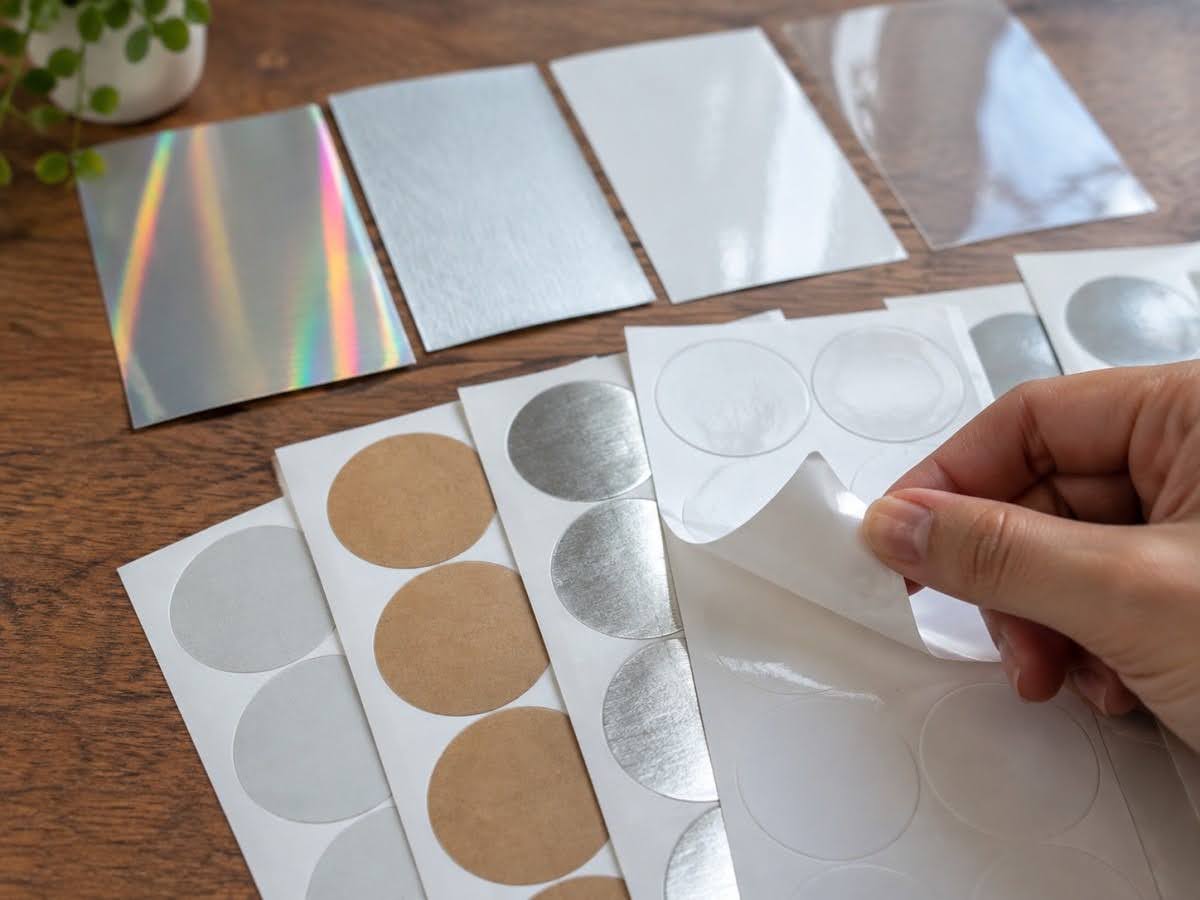
Sticker materials affect more than durability.
They can influence:
- Print appearance
- Surface texture
- Flexibility
- Adhesion performance
- Product presentation
- Resistance to environmental conditions
- Overall production cost
Material selection should therefore happen early in the custom sticker printing process.
Businesses should first determine where the sticker will be used and then select a material capable of performing in those conditions.
Vinyl Stickers
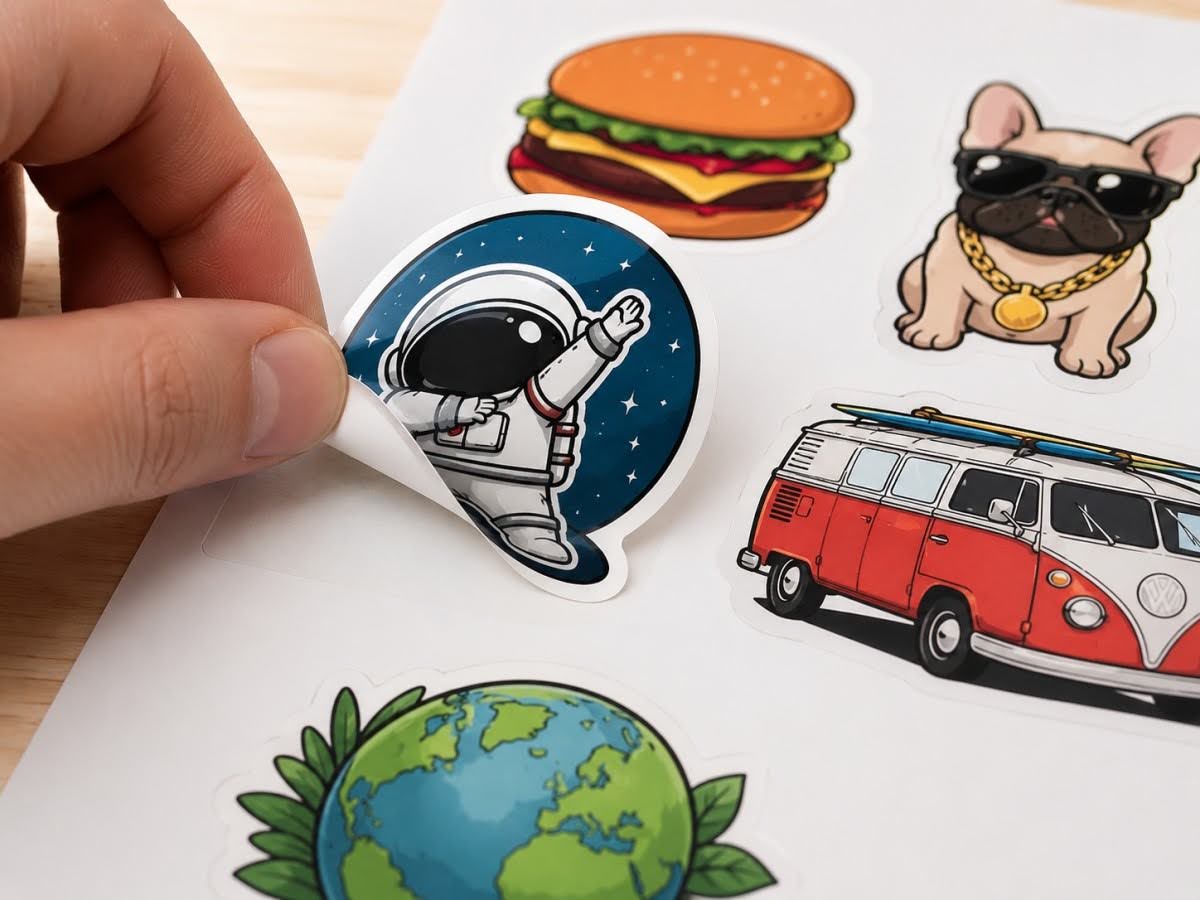
Vinyl stickers use a flexible synthetic face material rather than paper. This gives them characteristics that are particularly useful when a sticker may encounter moisture, repeated handling or more demanding environments.
One of vinyl’s primary advantages is flexibility.
A flexible sticker can conform more easily to surfaces such as:
- Bottles
- Jars
- Containers
- Windows
- Selected equipment
- Curved packaging
This makes vinyl particularly useful where a relatively rigid sticker could develop tension around a curved surface.
Moisture Resistance
Vinyl does not absorb water in the same way as ordinary paper. This makes it a strong option for labels that may encounter:
- Condensation
- Humidity
- Light water exposure
- Wet handling
For businesses in Singapore, this can be particularly relevant because high humidity and temperature differences can create condensation on chilled products.
A beverage removed from refrigeration, for example, can quickly develop moisture across the bottle.
A suitable vinyl label is generally better equipped for this environment than an untreated paper sticker.
Are All Vinyl Stickers Waterproof?
Vinyl is naturally more water-resistant than paper, but calling every vinyl sticker “waterproof” oversimplifies the issue.
The complete sticker includes:
- Face material
- Printing
- Adhesive
- Optional laminate
All of these affect performance.
A vinyl face stock may resist water, while an unsuitable adhesive fails after prolonged moisture exposure. Printed graphics may also need protection depending on the production method.
Businesses requiring waterproof stickers should therefore specify the actual exposure conditions rather than simply request vinyl.
Vinyl and Outdoor Use
Vinyl can be suitable for outdoor stickers when the full construction is designed for outdoor exposure.
Outdoor conditions can include:
- Rain
- Sunlight
- UV radiation
- Heat
- Humidity
- Repeated temperature changes
A weather-resistant sticker may require suitable vinyl, outdoor adhesive, durable printing and possibly protective lamination.
Using vinyl alone does not guarantee indefinite outdoor performance.
Expected service life should be discussed before production.
Appearance and Finishing
Vinyl stickers can support a wide range of visual styles.
Depending on the material and printing process, options can include:
- Gloss surfaces
- Matte surfaces
- Transparent effects
- Laminated stickers
- Custom shapes
Vinyl can therefore work for both functional and promotional applications.
A business might use vinyl for a durable product label while another uses it for branded decals distributed to customers.
Paper Stickers
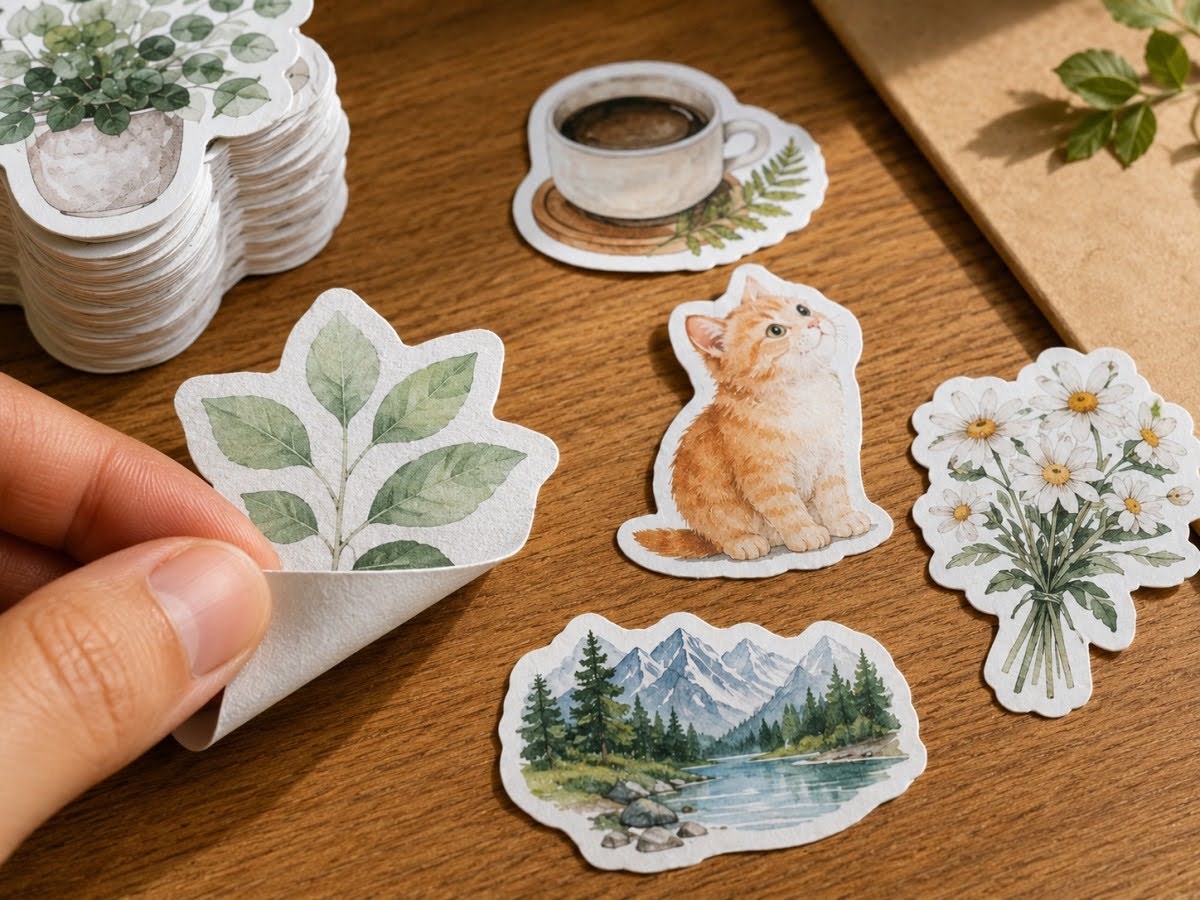
Paper stickers use a paper-based printable face material with adhesive backing. They are widely used because many business applications do not require the additional environmental resistance of synthetic materials.
Common applications include:
- Product boxes
- Paper bags
- Envelopes
- Retail packaging
- Promotional labels
- Dry food packaging
- Temporary identification
For these uses, paper can provide a practical balance between print quality, appearance and cost.
Why Businesses Use Paper Stickers
Paper works well when the sticker will remain in a relatively controlled environment.
A label attached to a cardboard box inside a retail store, for example, is unlikely to encounter the same conditions as a sticker on a chilled beverage bottle.
Paper can also provide a tactile appearance that suits certain packaging styles.
Depending on the finish, it may support:
- Natural-looking branding
- Minimal packaging
- Matte presentation
- Colourful promotional artwork
Businesses should therefore avoid treating paper simply as an inferior version of vinyl.
For the right application, it can be the more appropriate choice.
Limitations of Paper Stickers
Paper’s primary weakness is its sensitivity to environmental exposure.
Ordinary paper can:
- Absorb moisture
- Wrinkle
- Tear
- Scuff
- Lose structural integrity when wet
This makes it less suitable for products that experience significant condensation or water.
Paper can also be less suitable for applications involving frequent handling over a long period.
Can Paper Stickers Be Laminated?
Yes. Lamination can provide additional surface protection to printed paper stickers.
A laminate can help improve resistance to:
- Light moisture
- Scratching
- Handling
- Surface wear
However, lamination does not necessarily turn a paper sticker into the equivalent of a synthetic waterproof label.
The sticker edges and adhesive remain part of the construction.
If the application regularly encounters water, starting with an appropriate synthetic material may provide a more suitable solution.
Durability Comparison
Sticker durability is one of the biggest differences between vinyl and paper.
Vinyl generally offers better resistance to moisture, tearing and environmental exposure, while paper performs best under controlled indoor conditions.
Water and Humidity
For moisture resistance, vinyl has the advantage.
This is relevant for:
- Beverage bottles
- Refrigerated foods
- Bathroom products
- Cosmetic containers
- Selected outdoor applications
Paper remains suitable when the packaging stays dry.
Singapore’s humid climate does not mean every indoor label needs vinyl. A paper sticker on a dry cardboard box stored indoors may perform perfectly well.
The decision should be based on actual exposure rather than climate alone.
Tearing and Physical Wear
Paper can tear relatively easily when subjected to physical force.
Vinyl is more flexible and generally more resistant to tearing.
This makes vinyl useful for stickers expected to remain attached during:
- Transport
- Repeated handling
- Product use
- Cleaning
- Outdoor exposure
For temporary labels, that additional durability may be unnecessary.
Sunlight and Weather
Paper is generally not the first choice for long-term outdoor exposure.
Vinyl can be better suited, but outdoor durability depends on more than the face material. UV exposure can gradually affect printing, material and adhesive.
Weather resistant stickers should therefore be specified according to:
- Expected outdoor duration
- Sunlight exposure
- Rain
- Temperature
- Application surface
Protective lamination may help extend useful life where required.
Adhesive Durability
Sticker durability also depends on the adhesive.
Both vinyl and paper labels can be produced with different adhesive characteristics.
Common options include:
- Permanent adhesive
- Removable adhesive
- Application-specific adhesive
The surface also matters.
Adhesive labels may behave differently on glass, metal, cardboard and different plastics. Businesses should identify the actual substrate before production.
Cost Comparison
Paper stickers are generally associated with more economical production for straightforward indoor applications, while vinyl can cost more because of its synthetic construction and greater durability.
However, comparing only the initial unit price can be misleading.
When Paper Can Be More Cost-Effective
Paper can be a practical choice when the sticker is:
- Used indoors
- Kept dry
- Required for a short or moderate period
- Applied to standard packaging
- Not exposed to heavy handling
In these conditions, paying for additional weather resistance may provide little practical benefit.
When Vinyl Can Provide Better Value
Vinyl can provide better value when a paper label would need frequent replacement or would deteriorate before the end of the product’s intended use.
Consider a label placed on a bottle that regularly develops condensation.
If paper wrinkles or peels, the lower initial cost provides little advantage. A more durable vinyl sticker can be more economical across the actual product lifecycle.
Other Factors Affecting Sticker Cost
Material is only one component of custom sticker printing cost.
Pricing can also be influenced by:
- Quantity
- Dimensions
- Shape
- Number of designs
- Printing method
- Adhesive
- Lamination
- Die cutting
- Other finishing requirements
For this reason, businesses should compare complete sticker specifications rather than assuming that material alone determines price.
Best Applications
Vinyl and paper each perform best when matched to appropriate environments.
Best Applications for Vinyl Stickers
Vinyl is generally suitable where durability and moisture resistance are priorities.
Common examples include:
Beverage Bottles
Chilled drinks can produce condensation, making moisture resistance particularly valuable.
Cosmetic and Personal-Care Products
Products used in bathrooms or humid environments may benefit from synthetic labels.
Outdoor Stickers
Properly specified vinyl can support outdoor branding, signage and promotional applications.
Equipment Labels
Where stickers are frequently handled or need greater resistance to physical wear, vinyl may offer an advantage.
Promotional Decals
Vinyl’s flexibility and durability can make it useful for logo stickers and promotional decals intended for longer-term use.
Best Applications for Paper Stickers
Paper works particularly well in controlled indoor environments.
Common examples include:
Cardboard Packaging
Paper stickers can integrate naturally with boxes, cartons and other paper-based packaging.
Retail Labels
Indoor retail products that remain dry may not require synthetic materials.
Paper Bags and Envelopes
Logo stickers and promotional seals can be produced economically using paper.
Short-Term Promotions
Temporary campaigns may not require the lifespan offered by vinyl.
Dry Product Packaging
Products stored and handled in dry environments can often use paper labels effectively.
What About Premium Packaging?
Premium does not automatically mean vinyl.
A high-quality matte paper sticker can complement natural or minimalist packaging, while glossy or transparent vinyl may suit a more polished contemporary design.
Material selection should support the brand’s visual identity as well as its functional requirements.
Which Material Is Best?
Neither vinyl nor paper is universally the best sticker material.
The better choice depends on the application.
A simple decision framework can help:
| Requirement | Better Starting Option |
| Dry indoor packaging | Paper |
| Temporary promotional label | Paper |
| Cardboard boxes | Paper |
| Paper bags | Paper |
| Refrigerated bottles | Vinyl |
| Moist environments | Vinyl |
| Longer-term durability | Vinyl |
| Selected outdoor applications | Vinyl |
| Curved containers | Often vinyl |
| Natural paper aesthetic | Paper |
Choose Vinyl Stickers When…
Vinyl stickers are generally the stronger choice when:
- Water resistance matters
- The product experiences condensation
- The label will be handled frequently
- Greater tear resistance is required
- The sticker may be used outdoors
- The surface requires more flexibility
- A longer practical lifespan is expected
Choose Paper Stickers When…
Paper stickers are generally more suitable when:
- The product remains indoors
- The surface stays dry
- The label is temporary
- Cost efficiency is important
- The sticker is applied to paper or cardboard packaging
- A natural paper appearance suits the brand
When Should You Consider Lamination?
Lamination can be useful when a sticker requires additional surface protection.
For vinyl, it may help protect printing against:
- Scratching
- UV exposure
- Repeated handling
For paper, it can improve resistance to light moisture and surface wear.
However, lamination should not be used as a substitute for selecting the correct base material.
If the sticker regularly encounters demanding conditions, the face stock and adhesive should already be suitable for those conditions.
Frequently Asked Questions About Vinyl and Paper Stickers
Are vinyl stickers better than paper stickers?
Vinyl is generally more durable and moisture-resistant, but that does not make it better for every application. Paper may be more appropriate and economical for dry indoor packaging, temporary promotions and labels that do not require long-term environmental resistance.
Are vinyl stickers waterproof?
Vinyl provides strong water resistance, but waterproof performance depends on the complete sticker construction, including printing, adhesive and finishing. Businesses should specify the expected moisture exposure when ordering.
Can paper stickers get wet?
Ordinary paper stickers can absorb moisture, wrinkle or deteriorate when wet. Lamination may improve surface resistance, but applications involving regular water or condensation are generally better suited to synthetic materials.
Which sticker material is best for outdoor use?
Vinyl is generally a better starting point for outdoor stickers. However, the vinyl grade, adhesive, printing and protective finishing should all be suitable for UV exposure, rain, heat and the required outdoor lifespan.
Which sticker is better for product packaging?
Both can work. Paper is suitable for many dry boxes, bags and indoor products. Vinyl may be preferable for bottles, cosmetics, chilled products and packaging exposed to moisture or repeated handling.
Do vinyl stickers last longer?
Vinyl generally provides greater resistance to moisture, tearing and physical wear than paper, so it can have a longer practical lifespan under demanding conditions. Actual lifespan depends on the environment and sticker specification.
Are laminated paper stickers waterproof?
Lamination can improve the surface water resistance of paper stickers, but it does not necessarily make the entire label waterproof. Water can still affect exposed edges or an unsuitable adhesive.
Are paper stickers suitable for food packaging?
Paper stickers can be suitable for dry food packaging and outer packaging when environmental conditions allow. Material and printing requirements should also be considered according to how and where the label is used.
Which material is better for logo stickers?
It depends on how the logo sticker will be used. Paper can work for packaging seals, boxes and indoor promotional uses. Vinyl is generally more appropriate when customers may place the sticker on bottles, laptops, windows or other frequently handled surfaces.
Do vinyl stickers need lamination?
Not always. Lamination is useful when additional scratch, handling, weather or UV protection is required. An indoor vinyl product label may not need the same protection as a long-term outdoor sticker.
Can both vinyl and paper stickers be custom shaped?
Yes. Both materials can be produced as custom or die cut stickers where the production process supports the required shape. The cut can follow a logo, graphic or packaging-specific outline.
Choosing the Right Sticker Material for Your Application
The choice between vinyl stickers and paper stickers should be based on how the finished label will actually be used.
Paper remains a practical choice for many indoor applications. Product boxes, paper bags, dry packaging and temporary promotional labels often do not need the additional environmental resistance provided by synthetic materials. In these situations, paper can deliver the required appearance and functionality without unnecessary specification.
Vinyl becomes more valuable when conditions are demanding. Its flexibility, moisture resistance and greater physical durability make it better suited to applications such as refrigerated bottles, cosmetic containers, frequently handled products and selected outdoor uses.
Businesses should also look beyond the face material. Adhesive, printing, lamination, application surface and expected lifespan all contribute to real-world sticker durability.
The goal is therefore not to decide whether vinyl is inherently superior to paper. It is to choose the simplest sticker construction capable of performing reliably throughout the intended application.
Choose the Material Around the Product, Not Just the Price
A sticker that looks good when first applied but deteriorates under normal product conditions is unlikely to provide good value. Equally, paying for weather-resistant vinyl when a label only needs to remain on a dry indoor box may be unnecessary.
For businesses comparing vinyl stickers, paper stickers, waterproof labels and other custom sticker materials, Printsys Pte Ltd can help match the sticker specification to the intended surface, environment, durability requirements and branding application. Get in touch with Printsys today!