


Waterproof Sticker Printing: Best Materials for Long-Lasting Labels
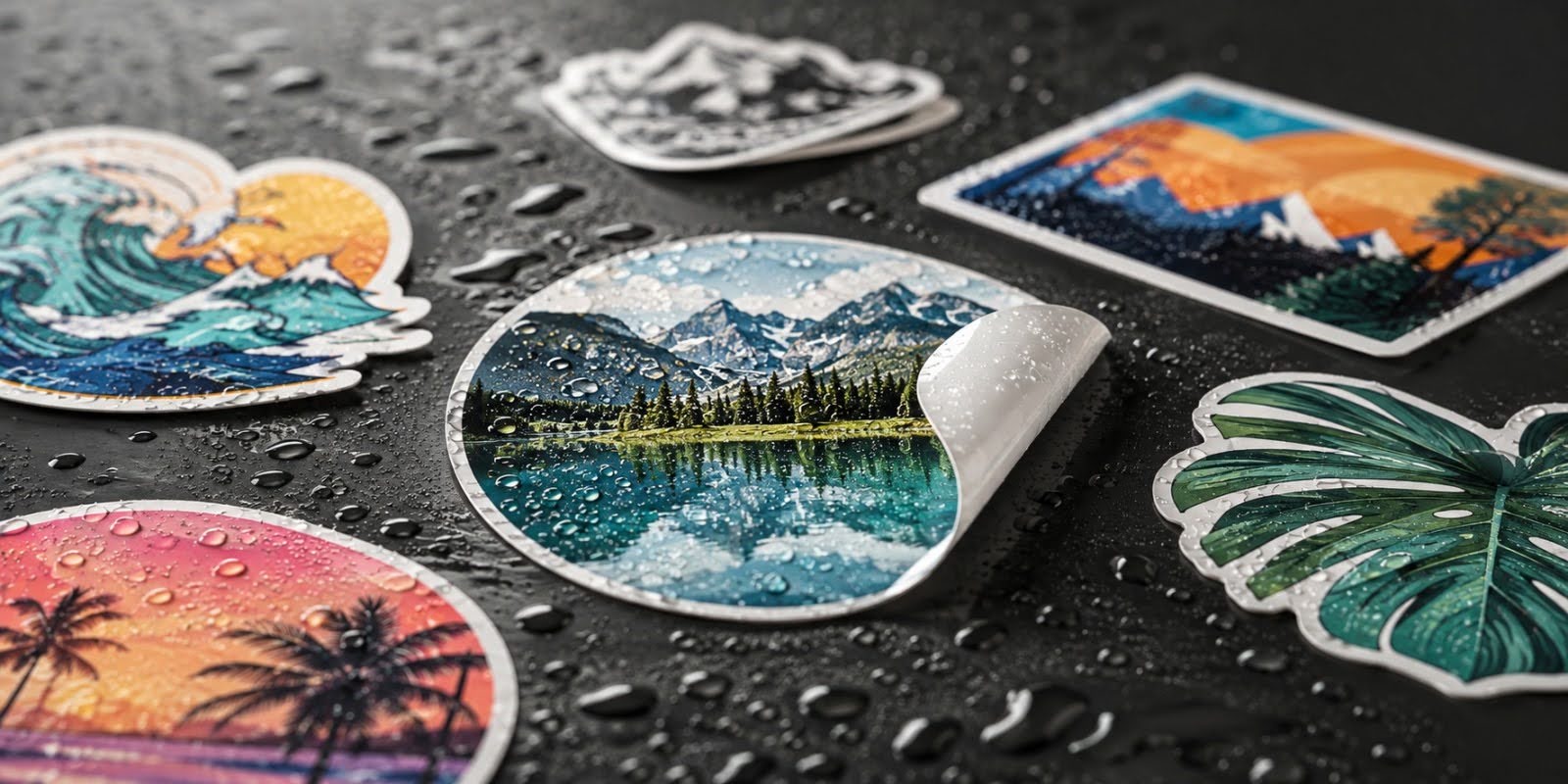
Water, humidity and condensation can quickly expose weaknesses in an unsuitable product label. A sticker that looks professional when first applied may wrinkle, peel, fade or become difficult to read after repeated contact with moisture.
Waterproof sticker printing addresses these challenges by combining moisture-resistant materials with suitable adhesives, printing methods, and protective finishes. These labels are commonly used on beverage bottles, cosmetic containers, food packaging, outdoor products, equipment, and other surfaces where ordinary paper labels may not provide sufficient durability.
In Singapore, moisture resistance can be particularly relevant because products may encounter high humidity, refrigeration, and frequent transitions between air-conditioned and warmer environments. Chilled bottles, for example, can quickly develop condensation after being removed from refrigeration.
However, simply choosing a material described as “waterproof” does not guarantee that the finished sticker will perform under every wet environment. Businesses need to consider the entire label construction, including the face material, adhesive, ink or printing technology, lamination, and application surface.
Understanding these factors makes it easier to select waterproof labels that remain functional and visually consistent throughout their intended use.
Why Waterproof Stickers Matter
Waterproof stickers matter whenever moisture could compromise the appearance, adhesion, or readability of a label.
Traditional paper labels can absorb water. Depending on the material and level of exposure, this can cause:
- Wrinkling
- Tearing
- Ink deterioration
- Edge lifting
- Loss of readability
- Reduced packaging presentation
For a product label, these issues can affect more than appearance.
Important information such as product names, instructions, barcodes or identification numbers may need to remain readable throughout the product lifecycle.
Water Resistance vs Waterproof Performance
“Water-resistant” and “waterproof” are often used loosely, but businesses should focus on the actual exposure the label needs to withstand.
A moisture-resistant sticker may be suitable for occasional splashes. A label on a refrigerated beverage bottle may need to tolerate repeated condensation. An outdoor sticker may encounter rain, sunlight and temperature changes over a much longer period.
These are different performance requirements.
The full sticker construction therefore matters:
Face material + printing + adhesive + finishing + application surface = real-world label performance.
A waterproof face material with the wrong adhesive can still peel. Likewise, a durable adhesive cannot protect printed artwork if the surface printing is unsuitable for repeated moisture exposure.
Why This Matters in Singapore
Singapore’s climate can make moisture an important consideration even for products that are not directly exposed to rain.
Labels may experience:
- High humidity
- Condensation
- Refrigeration
- Rain
- Frequent temperature changes
- Wet handling
This does not mean every sticker used in Singapore needs a waterproof specification. A dry carton stored indoors may work perfectly well with a standard paper label.
Waterproof sticker printing becomes valuable when moisture exposure is genuinely part of the product’s environment.
Materials
The material used for the face of a sticker is one of the biggest factors affecting water resistance and durability.
Synthetic materials are generally preferred for waterproof labels because they do not absorb water in the same way as ordinary paper.
Vinyl Stickers
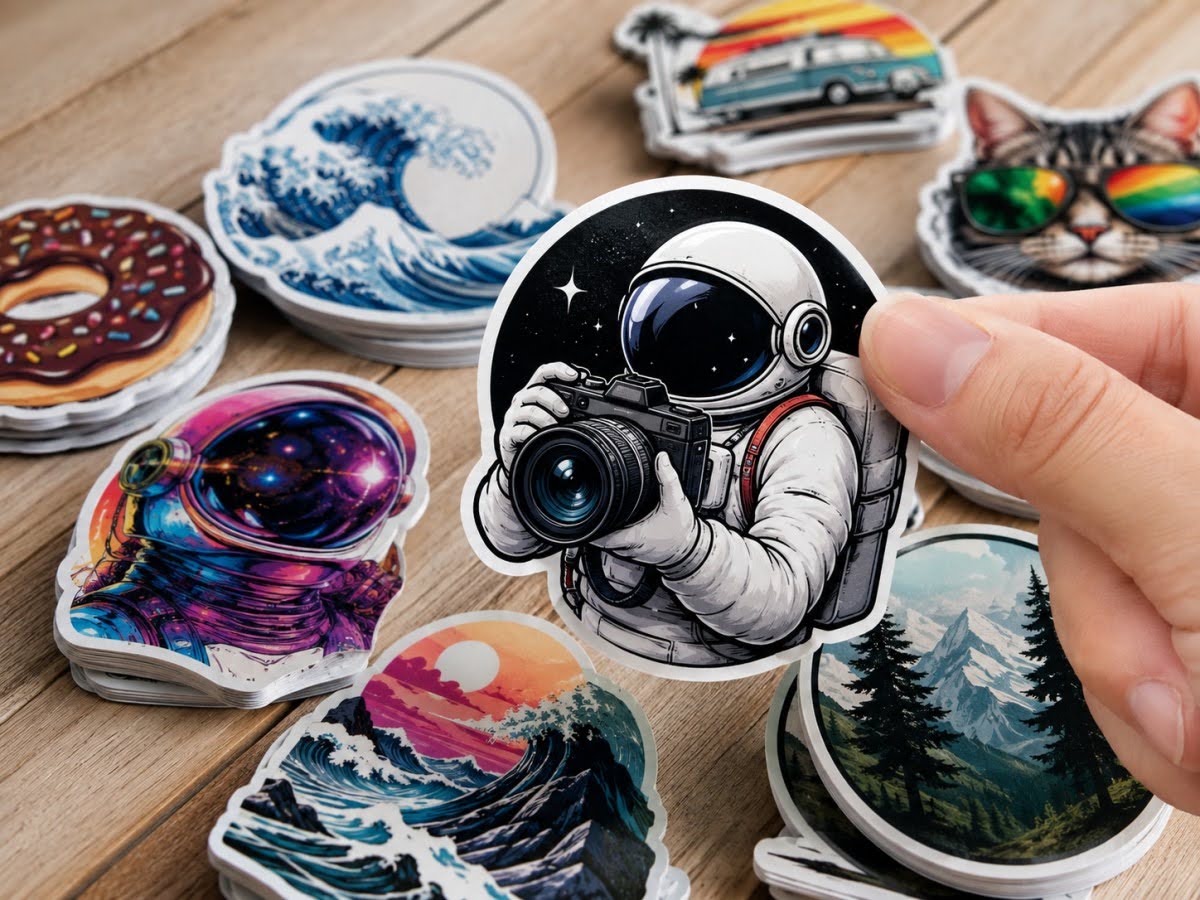
Vinyl stickers are widely used for applications requiring flexibility and moisture resistance.
Vinyl can be particularly suitable for:
- Bottles
- Containers
- Cosmetic products
- Promotional decals
- Outdoor stickers
- Curved surfaces
Its flexibility can help it conform to curved packaging more effectively than some more rigid materials.
Vinyl is also naturally resistant to water, but the exact performance of the finished sticker still depends on the adhesive, printing and finishing.
For outdoor use, businesses should ensure that the vinyl grade and complete label construction are intended for weather exposure.
Polypropylene Labels
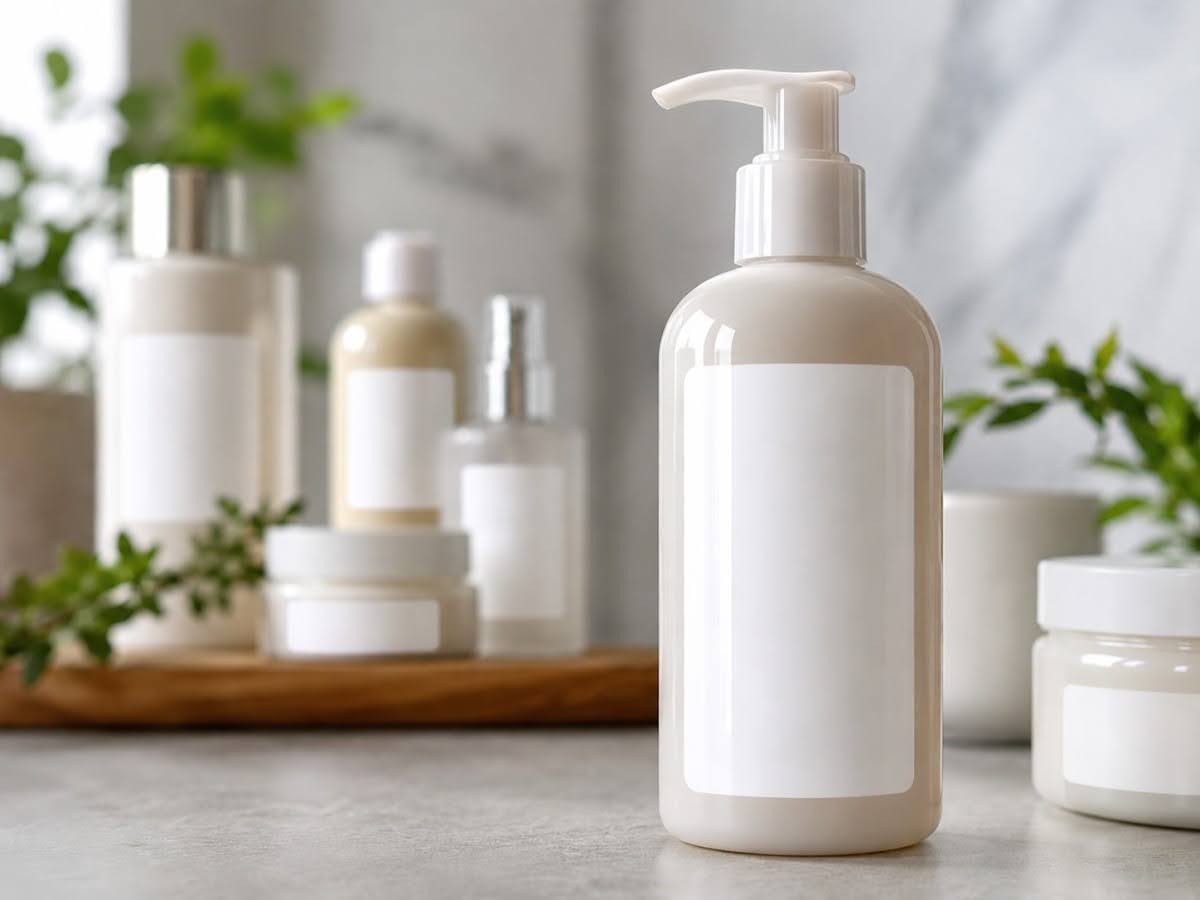
Polypropylene is another synthetic material commonly used for product and packaging labels.
It can provide:
- Moisture resistance
- Good printability
- Lightweight construction
- A smooth appearance
Typical applications include food, beverage, cosmetic and personal-care packaging.
Polypropylene can be useful where businesses want a synthetic label without necessarily requiring the heavier-duty characteristics associated with certain industrial materials.
Polyester and PET Labels
Polyester, often referred to as PET in label applications, provides strong dimensional stability and durability.
It can be suitable for:
- Industrial labels
- Equipment identification
- Electronics
- Asset labels
- Long-term product identification
PET can be particularly useful where a label needs to resist moisture while maintaining its shape.
However, a more rigid material is not automatically better. For narrow curved containers, flexibility may be more important than dimensional stability.
Synthetic Paper
Synthetic paper combines some of the print characteristics associated with paper with improved resistance to water and tearing.
Depending on the specification, it may be suitable for:
- Product labels
- Packaging labels
- Information labels
- Moist environments
Businesses should compare actual material characteristics rather than relying only on material names because different grades can perform differently.
Can Paper Be Used for Waterproof Labels?
Ordinary paper is generally not the first choice where repeated water exposure is expected.
Lamination can improve its surface resistance, but water may still enter through exposed edges or affect the adhesive.
For labels that regularly encounter condensation, rain or wet handling, starting with a suitable synthetic material is usually more appropriate than trying to make standard paper perform like a waterproof film.
Lamination Options
Lamination adds a protective film over the printed surface of the sticker. It can improve resistance to moisture, scratches, and repeated handling while also changing the visual appearance of the label.
Lamination should be considered an additional protective layer rather than a substitute for selecting the correct sticker material.
Gloss Lamination
Gloss lamination creates a smooth, reflective surface.
It can help:
- Protect printed artwork
- Increase resistance to handling
- Enhance colour vibrancy
- Provide additional moisture protection
Gloss laminated stickers can work particularly well on beverage bottles, product packaging and other applications where a polished appearance is desired.
One consideration is reflection. Strong lighting can create glare, which may matter if the label contains small text, barcodes or QR codes.
Matte Lamination
Matte lamination creates a less reflective surface.
It can provide:
- Reduced glare
- Softer appearance
- Surface protection
- Greater resistance to visible fingerprints
Matte laminated stickers are often considered for cosmetics, premium packaging and products where a subdued visual finish better matches the brand.
Does Lamination Make a Sticker Completely Waterproof?
Not necessarily.
Lamination protects the printed surface, but the sticker still has exposed edges and an adhesive layer.
If moisture reaches the adhesive or enters through poorly bonded areas, problems can still occur.
For demanding applications, businesses should combine a moisture-resistant face material with suitable printing, adhesive and lamination rather than relying on laminate alone.
Industries
Waterproof sticker printing is useful across industries where products encounter moisture, outdoor conditions or frequent handling.
Food and Beverage
Beverage labels are a clear example.
A chilled bottle removed from refrigeration can develop condensation almost immediately. Labels need to remain attached and readable despite repeated moisture.
Waterproof labels may be useful for:
- Water bottles
- Juice bottles
- Chilled beverages
- Sauces
- Refrigerated foods
- Food containers
The label material should also be compatible with the packaging surface.
Cosmetics and Personal Care
Cosmetic and personal-care products are often stored or used in humid environments.
Examples include:
- Shampoo bottles
- Skincare products
- Body-care products
- Cosmetic containers
- Toiletry packaging
These labels may encounter water, oils and repeated handling.
Water resistance is therefore only one consideration. Depending on the product, chemical resistance may also need to be evaluated.
Retail and Product Packaging
Not every waterproof label is exposed to extreme conditions.
Retail businesses may choose moisture-resistant custom labels simply because products are frequently handled or packaging needs to maintain a clean appearance for longer.
Synthetic product labels can be useful for items that move through storage, transportation and retail environments before reaching the customer.
Manufacturing and Industrial Applications
Industrial labels may need to remain readable despite exposure to moisture, abrasion, oils or cleaning.
Applications include:
- Equipment identification
- Machine labels
- Asset labels
- Warning labels
- Product identification
For these uses, businesses may require polyester or another durable synthetic material rather than standard packaging vinyl.
Logistics and Warehousing
Labels used in logistics can encounter varying temperatures, handling and environmental conditions.
Durable labels may be useful for:
- Inventory
- Shipping containers
- Warehouse identification
- Product tracking
- Storage bins
Barcode readability can become particularly important because physical deterioration can interfere with scanning.
Outdoor Applications
Weatherproof stickers may be used on:
- Windows
- Equipment
- Promotional displays
- Outdoor containers
- Signage
- Selected vehicles or surfaces
Outdoor labels need to withstand more than water.
UV exposure, heat, humidity and temperature changes should also be considered.
Printing Techniques
The printing method used for waterproof labels depends on the material, quantity, artwork and required durability.
Digital Printing
Digital printing is useful for custom labels because artwork can be printed directly from digital files without conventional printing plates.
It can support:
- Full-colour designs
- Shorter production runs
- Multiple designs
- Detailed graphics
- Product variations
For waterproof applications, the compatibility between the printing process and synthetic material is important.
UV Printing
UV printing uses ultraviolet light to cure specially formulated ink during production.
Depending on the substrate and system, it can provide strong print definition and durability.
It may be considered for selected synthetic and specialised label applications.
However, businesses should not confuse “UV printing” with “UV-resistant outdoor performance.” Outdoor durability still depends on the full material and printing specification.
Thermal Transfer Printing
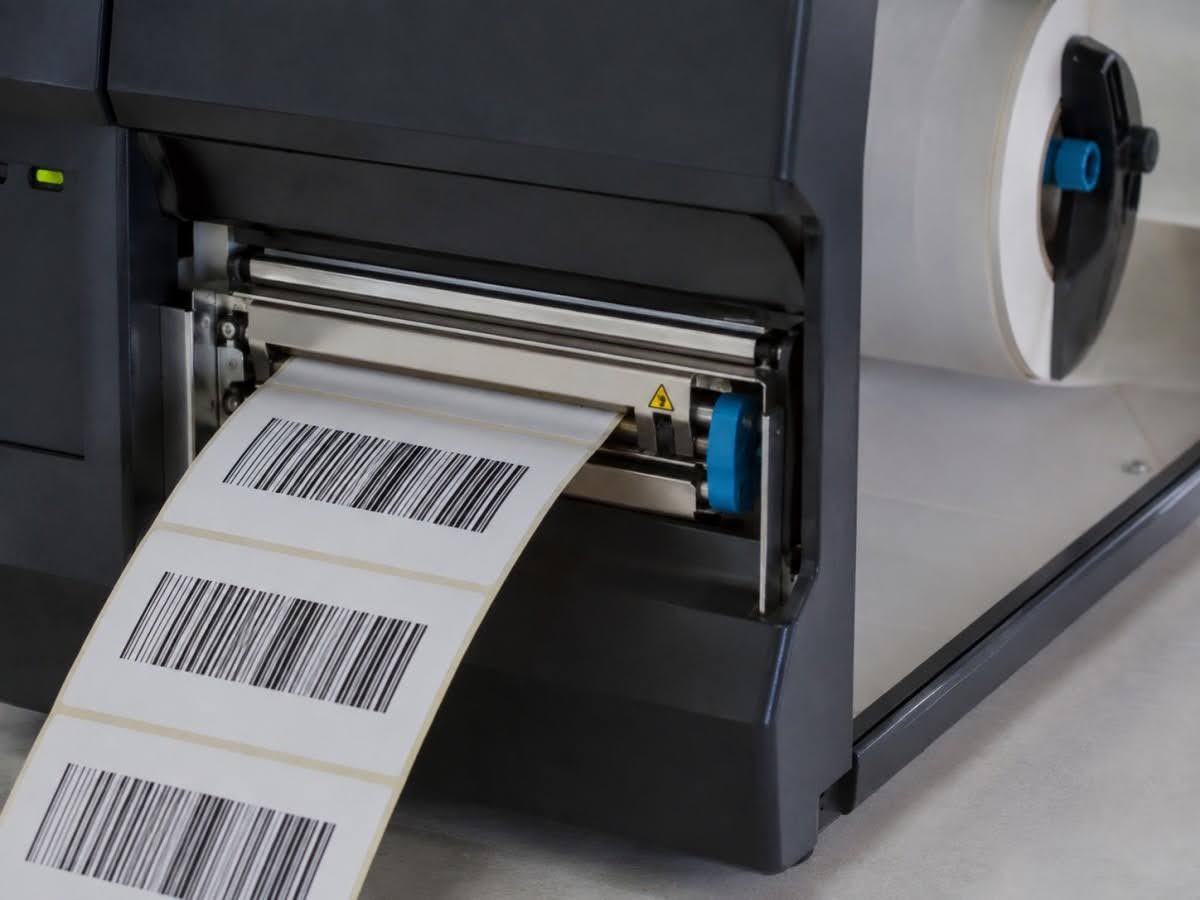
Thermal transfer printing is commonly used where labels require variable information such as:
- Barcodes
- Serial numbers
- Product codes
- Inventory information
The system uses heat to transfer material from a ribbon onto the label surface.
Matching the ribbon to the synthetic label stock is important when moisture, abrasion or chemical resistance is required.
Why Ink and Material Compatibility Matter
A waterproof material does not automatically protect unsuitable printing.
If the printed surface scratches or deteriorates, the label may remain physically attached while its information becomes unreadable.
For this reason, the printing technique should be selected together with:
- Face material
- Lamination
- Expected environment
- Required lifespan
This is particularly important for barcodes, instructions and identification labels where readability has an operational purpose.
Design Tips
Waterproof labels still need strong visual and functional design.
Durability cannot compensate for artwork that is difficult to read or unsuitable for the product.
Design for the Actual Label Size
Always review the artwork at its intended printed dimensions.
Check whether:
- Text remains readable
- Logos remain clear
- Fine details reproduce properly
- Barcodes have sufficient space
- QR codes remain scannable
A design that looks spacious on a monitor can become crowded when reduced to a small product label.
Consider the Product Surface
The design should account for whether the label will be applied to:
- Glass
- Plastic
- Metal
- Curved containers
- Textured surfaces
Transparent waterproof stickers may interact strongly with the background colour.
A design that works on clear glass may become difficult to read on a dark bottle.
Maintain Strong Contrast
Important product information needs adequate contrast.
This is particularly relevant for:
- Barcodes
- QR codes
- Instructions
- Product names
- Safety information
If transparent film is used, selective white ink may be needed behind important elements.
Plan for Bleed and Safe Areas
Artwork extending to the edge should include appropriate bleed according to the printer’s specification.
Important text and logos should remain inside a safe area.
This helps account for normal cutting tolerances.
Match the Finish to the Environment
Gloss, matte and protective lamination should be selected according to both appearance and practical use.
For example, a high-gloss finish may suit a beverage bottle visually, while a matte surface may reduce glare where labels contain more detailed information.
Common Mistakes
Waterproof sticker problems often result from assuming that one durable component makes the entire label waterproof.
Choosing Material Without Considering Adhesive
This is one of the most serious mistakes.
A waterproof vinyl face stock does little good if the adhesive cannot maintain its bond under condensation or wet conditions.
The adhesive needs to match:
- Surface
- Moisture exposure
- Temperature
- Required lifespan
Assuming Every Vinyl Sticker Is Weatherproof
Vinyl provides useful water resistance, but outdoor exposure introduces additional challenges.
Rain is only one factor.
Outdoor stickers can also encounter:
- UV radiation
- Heat
- Humidity
- Abrasion
Weather-resistant stickers should therefore be specified specifically for outdoor conditions.
Applying Stickers to Wet Surfaces
Even a waterproof sticker can fail if applied incorrectly.
Water, oil or contamination between the adhesive and surface can reduce bonding.
Where possible, surfaces should be:
- Clean
- Dry
- Free from oil
- Free from dust
Application conditions should also fall within the adhesive manufacturer’s recommended range.
Ignoring Condensation
A sticker may be applied to a dry bottle and later encounter heavy condensation after refrigeration.
Businesses should evaluate the entire product lifecycle rather than only the conditions during label application.
Using Lamination to Compensate for the Wrong Material
Laminating ordinary paper does not automatically create a heavy-duty waterproof label.
Water may still affect:
- Edges
- Adhesive
- Damaged areas
For repeated moisture exposure, a suitable synthetic material should generally form the foundation of the label.
Ignoring the Difference Between Water and Chemicals
A waterproof sticker is not necessarily chemical resistant.
Products may encounter:
- Alcohol
- Oil
- Cleaning solutions
- Detergents
- Solvents
Industrial, cosmetic and healthcare-related applications may therefore require additional resistance beyond water.
Skipping Real-World Testing
Physical testing can identify problems that are difficult to predict from specifications alone.
A sample should ideally be applied to the actual product and exposed to realistic conditions.
For a refrigerated beverage, that could include refrigeration followed by condensation. For an outdoor label, testing should consider weather and sunlight requirements.
Frequently Asked Questions (FAQs)
What is the best material for waterproof stickers?
Vinyl, polypropylene, and polyester are common synthetic options. Vinyl provides useful flexibility, polypropylene is widely used for product packaging, and polyester can provide greater dimensional stability for demanding applications. The best choice depends on the surface and environment.
Are vinyl stickers waterproof?
Vinyl is naturally resistant to water, but the complete sticker’s performance depends on the adhesive, printing, and finishing. A vinyl sticker should therefore be specified according to the actual moisture exposure.
What is the difference between waterproof and weatherproof stickers?
Waterproof stickers focus primarily on moisture resistance. Weatherproof stickers need to withstand broader outdoor conditions such as rain, sunlight, heat and humidity. An outdoor label may therefore require both water and UV resistance.
Do waterproof labels need lamination?
Not always. Some synthetic labels and printing systems can provide sufficient durability without lamination. Lamination becomes useful when additional protection against moisture, scratching, handling or environmental exposure is required.
Can waterproof stickers be used on refrigerated bottles?
Yes, provided the material and adhesive are suitable for refrigeration and condensation. The sticker should ideally be tested on the actual bottle under realistic temperature changes.
Are waterproof labels suitable for cosmetics?
Yes. Waterproof labels can be useful for cosmetic and personal-care products exposed to humid or wet environments. Businesses should also consider oils, alcohol or other substances that may require additional chemical resistance.
Can waterproof stickers be used outdoors?
Yes, but waterproof does not automatically mean outdoor-grade. Outdoor stickers should also be assessed for UV resistance, heat, humidity, adhesive durability and expected service life.
Can paper stickers be made waterproof with lamination?
Lamination can improve the surface water resistance of paper, but exposed edges and adhesive may still be vulnerable. Synthetic materials are generally a better starting point for labels regularly exposed to water.
What adhesive should be used for waterproof labels?
The appropriate adhesive depends on the application surface, temperature, moisture conditions and required lifespan. Glass, plastic and metal can require different adhesive characteristics, so testing on the actual surface is advisable.
How long do waterproof stickers last?
There is no universal lifespan. Durability depends on material, printing, adhesive, lamination, application surface and exposure to water, sunlight, chemicals and abrasion.
Can waterproof labels contain barcodes or QR codes?
Yes. Barcodes and QR codes can be printed on waterproof labels as long as sufficient contrast, dimensions and print quality are maintained. The codes should be tested after the finished sticker is applied to the actual product.
Choosing the Right Waterproof Sticker Specification
Waterproof sticker printing is most effective when durability is considered as a complete system rather than a single material feature.
Vinyl, polypropylene, polyester and other synthetic materials provide stronger resistance to moisture than ordinary paper, but the face material is only the starting point. Adhesive, printing technique, lamination and the surface beneath the label all influence how the sticker performs.
For products exposed to refrigeration or condensation, moisture resistance and adhesive performance should be prioritised. Outdoor stickers require broader protection against rain, UV exposure, heat and humidity. Industrial labels may need additional resistance to abrasion or chemicals.
Businesses should therefore define the environment before selecting the specification.
A label that only needs to survive occasional splashes does not require the same construction as an outdoor equipment sticker expected to remain readable for years. Matching the material and finishing to the real application helps avoid unnecessary cost while improving reliability.
For businesses operating in Singapore’s humid environment, this application-first approach is especially useful for beverage, cosmetic, food, retail and industrial labelling.
Build Waterproof Labels Around Real-World Conditions
The most durable custom label is not necessarily the one with the most layers or the highest specification. It is the one designed around the actual product, surface, moisture exposure and expected lifespan.
For businesses requiring waterproof sticker printing, product labels, laminated stickers or other durable custom labels, Printsys Pte Ltd can help determine an appropriate combination of sticker material, printing method and finishing for the intended application. Get in touch with Printsys today!