


Die-Cut vs Kiss-Cut Stickers: What’s the Difference?
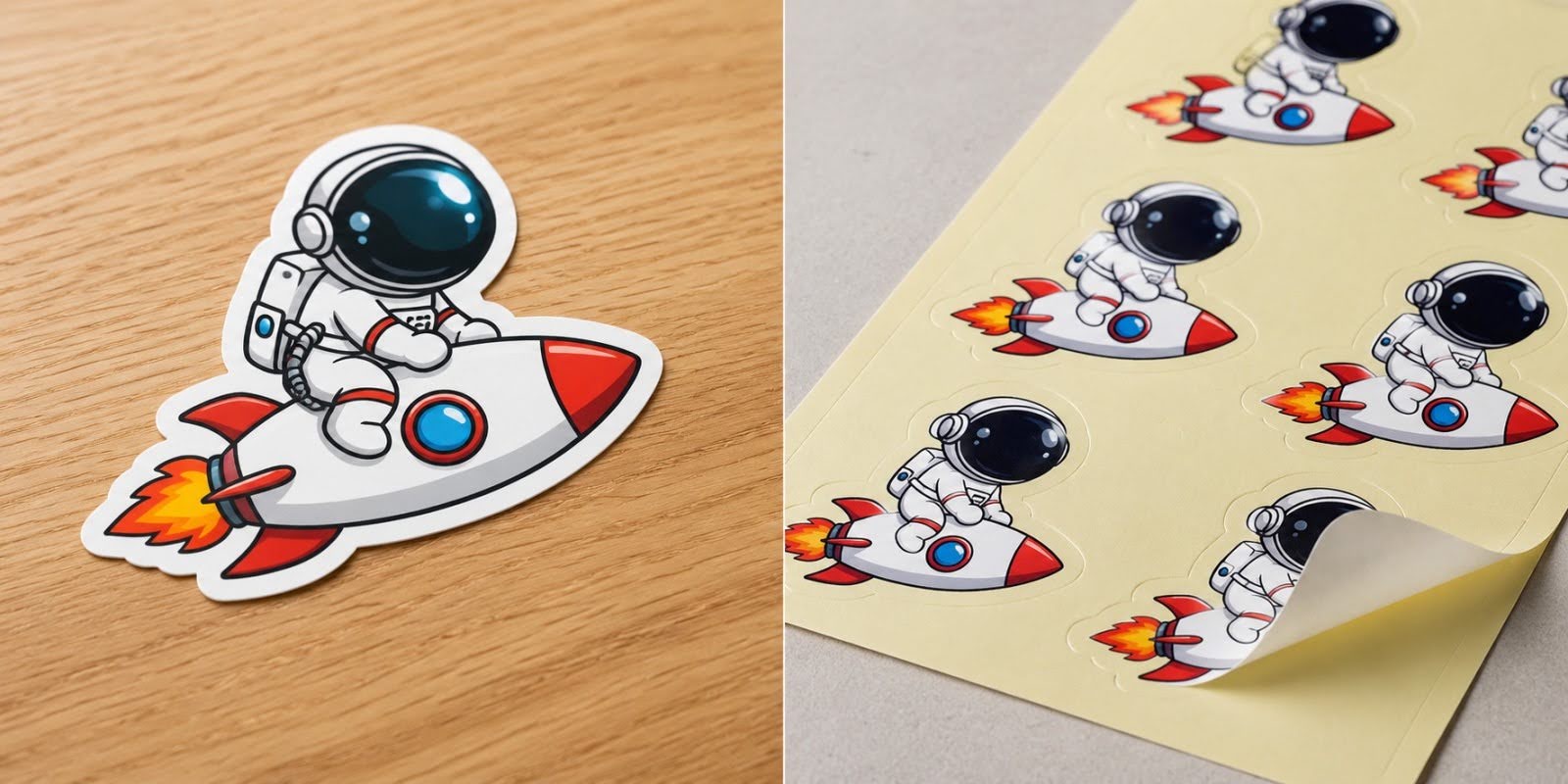
Die cut and kiss cut stickers can look almost identical once they are applied to a surface. The major difference lies in how they are cut and supplied before application.
Die cut stickers are typically cut through both the sticker material and its backing so the entire finished piece follows the shape of the design. Kiss cut stickers, by comparison, are cut through the sticker layer while leaving the surrounding backing liner intact.
That seemingly small production difference affects presentation, handling, application, packaging, and how multiple stickers can be supplied.
For businesses ordering custom sticker printing in Singapore, understanding these differences can help determine which format is more appropriate for product labels, promotional stickers, custom decals, packaging or sticker sheets.
Neither cutting method is inherently better. Die cut stickers can provide a distinctive standalone presentation, while kiss cut stickers can offer practical advantages where labels need to remain protected on a larger backing or where several designs need to appear on one sheet.
The right choice depends primarily on how the stickers will be distributed, stored and applied.
Definition
Die cutting and kiss cutting describe how a printed adhesive material is cut during the sticker production process.
A sticker normally contains at least:
- Printed face material
- Adhesive
- Release liner or backing
The cutting depth determines the finished format.
With a die-cut sticker, the cut normally passes through the sticker and backing material around the intended shape. With a kiss cut sticker, the cut passes through the adhesive sticker layer but stops before cutting completely through the backing liner.
The simplest distinction is:
Die-cut: sticker and backing follow the custom shape.
Kiss-cut: sticker follows the custom shape while remaining on a larger backing.
Once removed from its backing and applied, either type can produce essentially the same visible sticker shape.
The difference therefore matters primarily before application.
Why Cutting Method Matters
Cutting affects several practical aspects of custom sticker printing:
- Finished presentation
- Ease of peeling
- Handling
- Storage
- Distribution
- Sticker-sheet production
- Protection around complex designs
- Packaging
A company producing promotional logo stickers for an event may prefer a different format from a manufacturer applying hundreds of product labels during packaging.
The intended workflow should therefore influence the cutting method.
Die-Cut
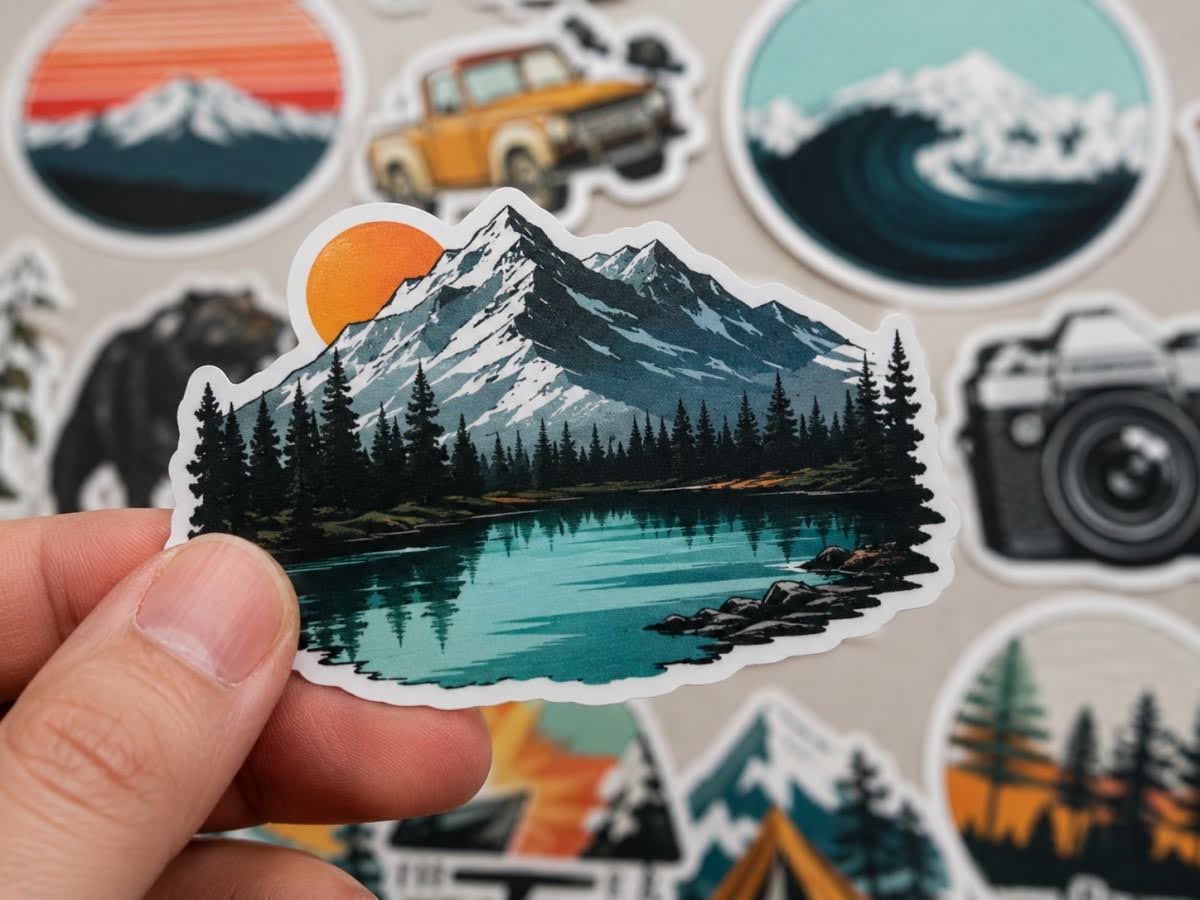
Die cut stickers are cut around the perimeter of the design so both the printed sticker material and its backing follow the final custom shape.
For example, if a company orders a sticker shaped like its circular logo, the finished sticker and release liner can both follow that circular outline.
If the logo has a more unusual silhouette, the cut can follow that custom shape within practical production tolerances.
How Die-Cut Stickers Are Produced
The general printing process involves:
- Preparing the artwork
- Establishing a cut path
- Printing the design
- Applying any required finishing
- Cutting through the sticker and backing
- Removing excess production material as required
Modern sticker production can use different cutting technologies depending on the quantity, material and equipment.
The defining characteristic is the final result rather than the specific cutting machine: the backing is cut to the finished sticker shape.
Visual Impact
One of the main attractions of die-cut stickers is presentation.
Because there is no large rectangular backing surrounding the design, the sticker looks like a finished standalone item before it has even been applied.
This can make die-cut stickers useful as:
- Promotional giveaways
- Logo stickers
- Event merchandise
- Branded inserts
- Custom decals
A distinctive silhouette can also become part of the branding.
For example, a coffee brand could produce stickers following the outline of its mascot rather than placing the mascot inside a standard square.
Material Options
Die cutting can be used with different sticker materials depending on production capabilities and application requirements.
These may include:
- Paper
- Vinyl
- Synthetic films
- Selected waterproof materials
Vinyl stickers are particularly common for promotional die-cut applications because flexibility and durability can be useful when customers may apply the sticker to different surfaces.
Kiss-Cut
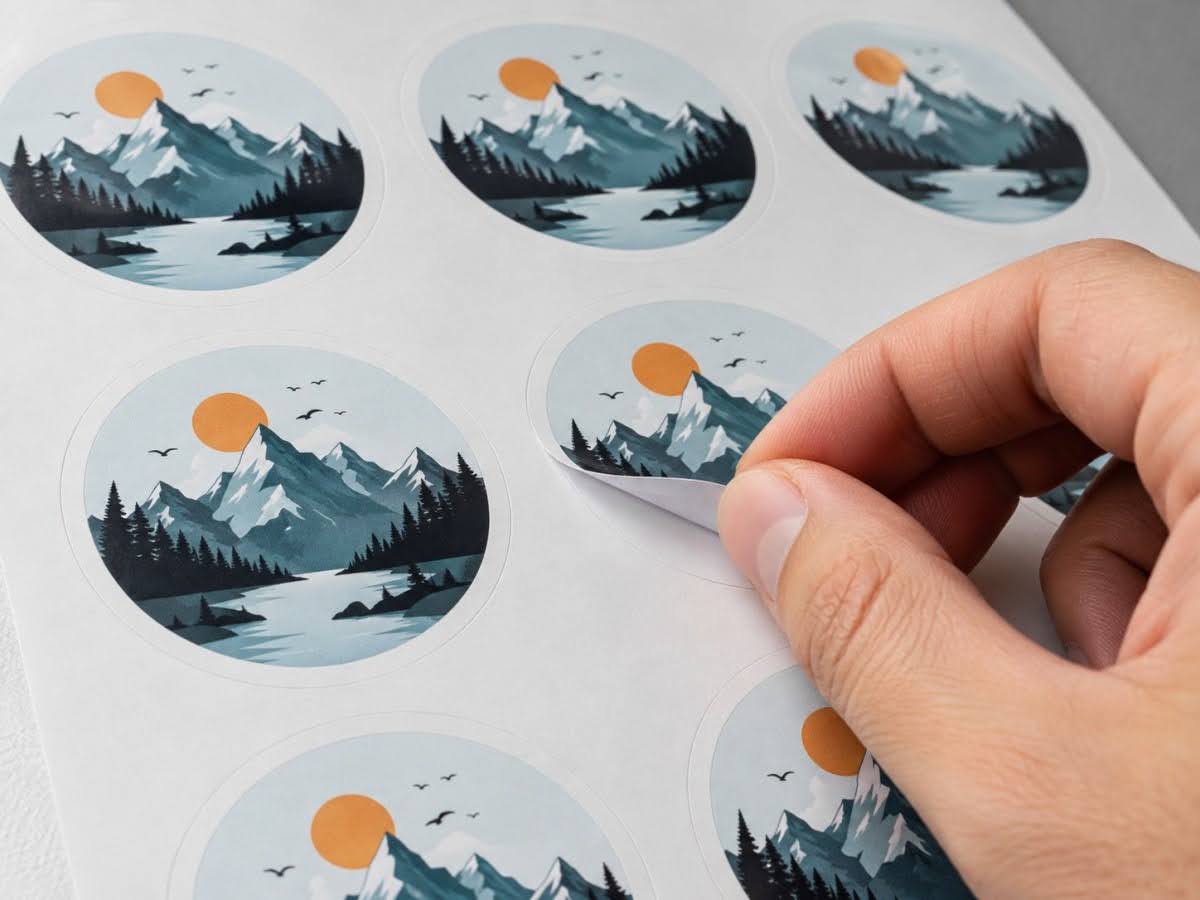
Kiss cutting works differently.
Instead of cutting completely through the entire sticker construction, the cutting process passes through the printable sticker material and adhesive while leaving the backing liner intact.
The custom-shaped sticker can then be peeled away from the larger backing.
Imagine a circular logo printed in the middle of a square backing sheet. The circular line is kiss-cut through the sticker material. When the customer peels it away, only the circular sticker is removed.
The surrounding liner remains.
Why Leave the Backing Intact?
Keeping a larger backing around the sticker can provide several practical advantages.
It can make the sticker:
- Easier to peel
- Easier to handle
- Better protected before use
- Easier to organise
- Suitable for inclusion on sticker sheets
This can be particularly useful for small or intricate stickers.
Kiss-Cut Sticker Sheets
One major advantage of kiss cutting is the ability to place several separate stickers on one sheet.
For example, one A5 sticker sheet could contain:
- Company logo
- Product icons
- Promotional messages
- Decorative graphics
- Social-media handle
Each design can have its own kiss-cut path while sharing the same backing sheet.
This makes kiss-cut stickers useful for promotional sticker packs, retail products, craft applications and branded giveaways.
Packaging and Product Labels
Kiss cutting is also widely relevant to product labelling.
Labels can remain attached to a continuous or larger liner until they are ready to be applied.
This keeps the adhesive protected and can make labels easier to organise during packaging operations.
The best supply format will depend on whether the labels are applied manually or through a more structured production process.
Advantages
Both cutting methods offer advantages. The right one depends on what happens to the sticker between printing and final application.
Advantages of Die-Cut Stickers
Strong Standalone Presentation
A die-cut sticker looks finished before application because the backing follows its shape.
This can make it especially effective as a promotional item.
Custom Branding Opportunities
The sticker’s physical outline can reinforce brand recognition.
Logos, mascots, symbols and illustrations can become recognisable sticker shapes rather than being contained within standard rectangles.
Good for Individual Distribution
Die-cut stickers can be handed out individually at:
- Events
- Exhibitions
- Product launches
- Retail counters
- Promotional campaigns
Each piece functions as an independent branded item.
Suitable for Custom Decals
Die cutting works well for custom decals where the shape itself contributes to the visual effect.
Advantages of Kiss-Cut Stickers
Easier Peeling
The larger backing around the sticker gives users more material to hold while separating the adhesive sticker.
This can be particularly useful for small shapes.
Additional Edge Protection
Because the custom sticker remains inside a larger liner, the edges are less exposed during storage and transportation.
Multiple Stickers on One Sheet
Kiss cutting makes sticker sheets practical.
Several different designs can share one backing, creating a convenient branded set.
Efficient Organisation
Businesses handling many labels can keep them together on backing sheets rather than managing individual loose pieces.
Flexible Presentation
The surrounding backing can itself carry printed information in some production formats, potentially providing room for instructions or additional branding.
Disadvantages
The differences between die-cut and kiss-cut stickers also create limitations.
Disadvantages of Die-Cut Stickers
Peeling Can Be Less Convenient
Because the backing follows the exact shape of the sticker, there may be less excess liner available to grip.
This can make certain small or intricate designs slightly more difficult to peel.
Edges Are More Exposed
The perimeter of the sticker sits at the edge of the backing.
During transport or repeated handling, this can potentially expose the edges to more physical contact.
Complex Shapes Need Careful Planning
Very narrow points, sharp corners and highly intricate outlines can create practical production or handling issues.
Simplifying the cut path may improve the finished result.
Disadvantages of Kiss-Cut Stickers
Less Distinctive Before Application
A custom-shaped sticker may still appear as a square or rectangular piece because of the surrounding backing.
For promotional giveaways, this may have less immediate visual impact than a fully die-cut piece.
Additional Backing Material
Kiss-cut stickers can use more liner material around the finished design.
The impact depends on layout, quantity, and production method.
Sticker Sheets Need Thoughtful Layout
When several stickers share one sheet, spacing and arrangement become part of the design.
Placing too many shapes too close together can make the sheet crowded or difficult to use.
Best Use Cases
The easiest way to choose between die-cut and kiss-cut stickers is to consider what happens before the sticker reaches its final surface.
Die-Cut Stickers for Promotional Giveaways
Die-cut stickers are particularly effective when the sticker itself is the product or promotional item.
Examples include:
- Trade-show giveaways
- Event stickers
- Customer freebies
- Branded merchandise
- Laptop decals
- Promotional inserts
A distinctive shape makes the sticker visually recognisable before it is applied.
Die-Cut Stickers for Logo Branding
Logo stickers are another strong application.
A company can follow the silhouette of its logo rather than placing the logo inside a generic rectangle.
This creates a cleaner standalone presentation.
Die-Cut Stickers for Custom Decals
Custom decals used for decorative or promotional applications can benefit from precise shapes that follow the artwork.
Vinyl may be particularly appropriate where additional durability or flexibility is required.
Kiss-Cut Stickers for Sticker Sheets
Kiss cutting is the natural choice when several stickers need to appear on one sheet.
Sticker sheets can be used for:
- Promotional packs
- Children’s products
- Retail merchandise
- Event giveaways
- Branded stationery
- Decorative stickers
Different shapes can be placed together while remaining organised on one backing.
Kiss-Cut Stickers for Small Designs
Very small stickers can be easier to peel when there is additional backing material around them.
This makes kiss-cutting practical for small product labels or decorative elements.
Kiss-Cut Stickers for Product Labels
Businesses applying labels during packing or production may prefer stickers supplied on a common liner because they remain organised until application.
The ideal configuration depends on production volume and application method.
Which Is Better for Packaging Stickers?
Either can work.
If the sticker is simply being applied to packaging during fulfilment, ease of peeling and organisation may make kiss-cut formats practical.
If the sticker is being included inside the package as a branded giveaway, die cutting may provide a more attractive standalone presentation.
This illustrates why the intended use is more important than the artwork alone.
Cost Comparison
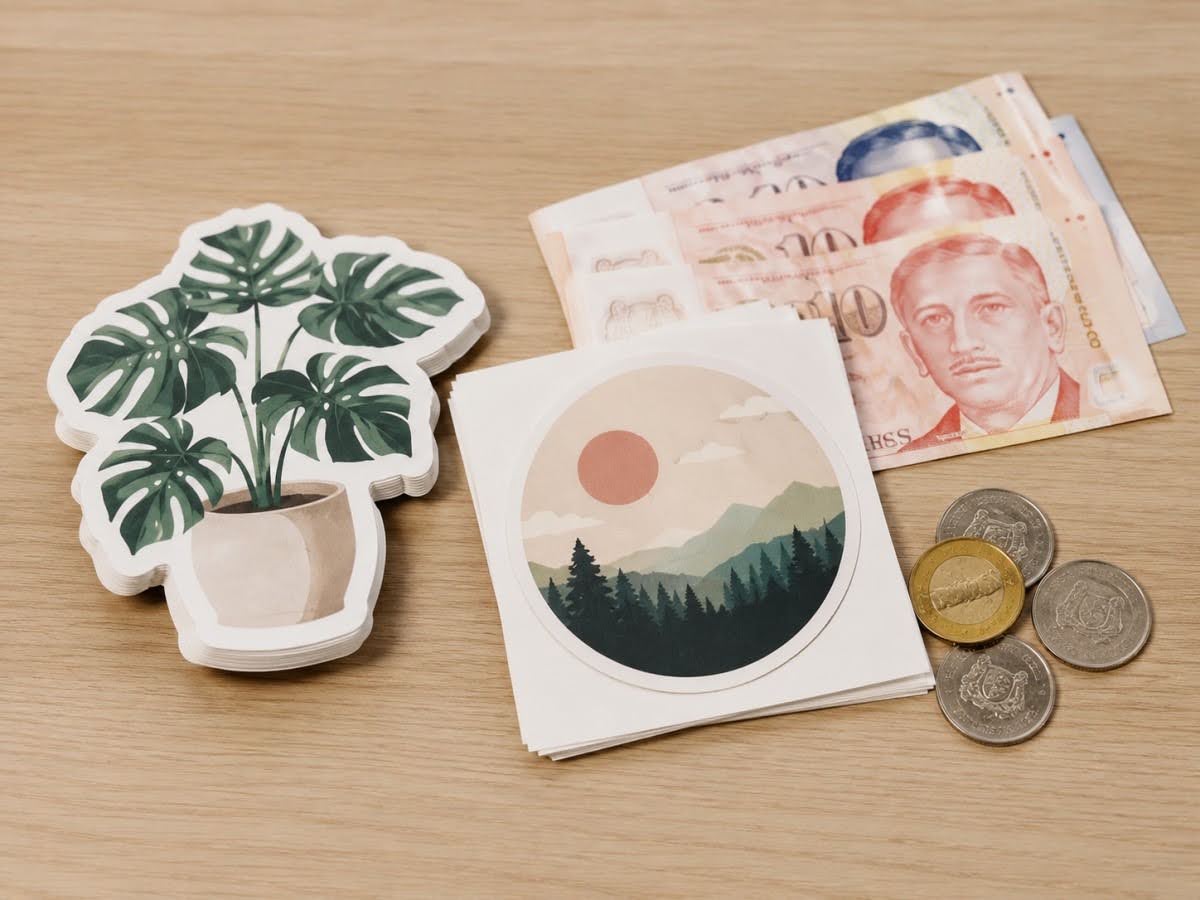
There is no universal rule that die-cut stickers always cost more than kiss-cut stickers or vice versa.
The final cost depends on the entire job specification.
Factors can include:
- Material
- Sticker dimensions
- Shape complexity
- Quantity
- Number of designs
- Printing method
- Lamination
- Finishing
- Sheet layout
- Cutting method
- Production setup
Shape Complexity
A simple circle or rounded rectangle is generally easier to process than a design containing numerous tiny corners and narrow extensions.
Complexity can affect both production and usability.
Even where a complicated shape is technically possible, simplifying the outline may produce a stronger sticker.
Material Choice
Material can have a larger impact on overall price than cutting style.
For example, a standard paper sticker and a laminated outdoor-grade vinyl sticker have significantly different specifications regardless of whether they are die cut or kiss cut.
Quantity
Production quantity affects unit economics.
Businesses should therefore request quotations based on the actual:
- Quantity
- Material
- Size
- Shape
- Finish
- Supply format
rather than comparing die cut and kiss cut terminology alone.
Sticker Sheets vs Individual Pieces
Kiss cut sticker sheets can provide practical value when several designs need to be distributed as a set.
Die cut pieces may provide greater standalone presentation but require individual handling.
The better value depends on the business objective.
A promotional sticker given away individually has different economics from 10 labels supplied together on one sheet.
Frequently Asked Questions (FAQs)
What is the main difference between die cut and kiss cut stickers?
Die cut stickers are generally cut through both the sticker material and backing so the finished piece follows the custom shape. Kiss cut stickers are cut through the sticker layer while leaving a larger backing liner intact.
Do die cut and kiss cut stickers look different after application?
Not necessarily. Once peeled from the backing and applied, both can have the same custom shape. The primary difference is how they are supplied before application.
Which is easier to peel?
Kiss-cut stickers can be easier to peel because the surrounding backing provides additional space to grip. This can be useful for small or intricate stickers.
Are die-cut stickers good for business branding?
Yes. Their custom standalone shape makes them particularly suitable for logo stickers, promotional giveaways, branded merchandise and custom decals.
Can vinyl stickers be die-cut?
Yes. Vinyl is commonly used for custom die-cut stickers because it can provide flexibility and durability. The exact material should still be selected according to the application environment.
Can paper stickers be kiss-cut?
Yes. Paper and various synthetic sticker materials can be kiss-cut where compatible with the production process.
What are kiss-cut sticker sheets?
Sticker sheets contain multiple individually cut stickers on a shared backing. Each sticker is kiss-cut so users can peel away individual designs while the rest remain attached to the liner.
Which cutting method is better for product labels?
Kiss-cut formats can be convenient for product labels because labels remain organised on a backing until application. However, the best format depends on quantity and whether the application is manual or automated.
Which option is better for promotional stickers?
Die-cut stickers are often well suited to individual promotional giveaways because each sticker has a distinctive finished shape. Kiss cut sheets may be better when a business wants to provide several designs as one promotional set.
Are die-cut stickers waterproof?
The cutting method does not determine waterproof performance. Waterproof resistance depends on sticker material, printing, adhesive and finishing. A die-cut vinyl sticker may be water-resistant, while a die-cut paper sticker may not be.
Can die-cut stickers be laminated?
Yes. Suitable stickers can be laminated before final cutting to provide additional protection against scratches, moisture or handling.
Does a complicated die-cut shape cost more?
It can. Pricing depends on the production method and overall job specification. Complex shapes can also introduce practical issues, such as fragile points or difficulty peeling, even when they can be produced.
Can kiss-cut stickers have custom shapes?
Yes. “Kiss-cut” does not mean the sticker itself must be rectangular. The sticker can follow a custom shape while the surrounding backing remains square, rectangular or another larger format.
Which option is better for small stickers?
Kiss cutting can make small stickers easier to handle and peel because users have a larger backing around the actual sticker. However, the appropriate method depends on how the stickers will be distributed and applied.
Choosing Between Die-Cut and Kiss-Cut Stickers
The difference between die-cut and kiss-cut stickers comes down primarily to the depth of the cut and the format in which the finished sticker is supplied.
Die-cut stickers are cut through the sticker and its backing, creating an individual piece that follows the custom shape. This can provide strong standalone presentation and makes die cutting particularly suitable for logo stickers, promotional giveaways and custom decals.
Kiss-cut stickers leave the surrounding backing intact. The sticker itself can still have virtually any practical custom shape, but the larger liner can make it easier to peel, protect the sticker edges and allow multiple designs to be arranged on a single sticker sheet.
Neither method is universally superior.
For promotional stickers intended to be handed to customers individually, die cutting may offer a stronger presentation. For product labels, small stickers or multi-design sheets, kiss cutting may provide greater convenience.
Businesses should also remember that cutting style does not determine sticker durability. Material, adhesive, printing and finishing remain separate decisions. A waterproof vinyl sticker and a basic paper sticker can both be die-cut or kiss-cut while performing very differently in real-world conditions.
The best choice is therefore the format that works most effectively from production through storage, distribution, and final application.
Make the Cut Work for Your Brand and Application
The right cutting method should make stickers easier to use while supporting the way the brand wants them to be presented. Whether that means an individually shaped promotional decal or an organised sheet of product labels depends on the application.
For businesses considering die-cut stickers, kiss-cut stickers, custom decals, or other custom sticker printing options, Printsys Pte Ltd can help determine a suitable combination of material, cutting method and finishing based on the intended use. Get in touch with Printsys today!