

How Waterproof Sticker Technology Really Works
The Hidden Engineering Behind Every Waterproof Sticker
A waterproof sticker may look simple, but its strength lies in layers of engineering that help it stay bright, tough and reliable. Every element, from the base material to the final printed surface, is designed to withstand moisture, heat and constant handling. Understanding what goes into these stickers reveals why they perform so well in everyday and industrial environments. This article explores the science behind the materials, adhesives, protective layers and printing technologies that allow waterproof labels to stay intact in demanding conditions
The Materials That Form the Base of Every Waterproof Sticker
The foundation of durability begins with the material that forms the body of the sticker. These materials influence how well the sticker bends, stretches and resists moisture over long periods.
Vinyl is widely used because it remains stable in humid environments. It adapts well to curved surfaces and holds its form even when exposed to temperature shifts. Polypropylene is another option that offers a lightweight and economical alternative while still resisting water. Polyester is valued for its rigidity and heat tolerance, and it is often chosen for labels applied to electronics, machinery or items exposed to friction.
Paper can be used, but it does not naturally repel moisture. It needs additional layers to protect it from absorbing water. This makes it suitable only when paired with protective coatings or laminates.
These choices show that material selection shapes the overall performance of the sticker. Once the base is selected, the adhesive layer becomes equally important for long-lasting results.
The Role of Adhesive Engineering in Long-Lasting Stickers
Adhesives determine whether a sticker stays in place when exposed to water or changing temperatures. They must bond to surfaces without softening or peeling away.
Pressure-sensitive adhesives are commonly used because they activate upon contact with a surface. They do not require heat or water to bond. Acrylic adhesives hold up well in both indoor and outdoor conditions. They resist moisture and provide stable adhesion on glass, metal and plastic. Rubber-based adhesives bond quickly and strongly but are more sensitive to heat and sunlight.
Different surfaces interact differently with adhesives. Smooth materials like glass may need an adhesive that spreads evenly, while textured surfaces require one that can grip through small gaps. Choosing the right adhesive ensures the waterproof sticker performs reliably under stress.
With a strong adhesive, the next layer that contributes to durability is the protective laminate that shields the sticker from wear.
How Laminates and Coatings Protect Stickers From Wear
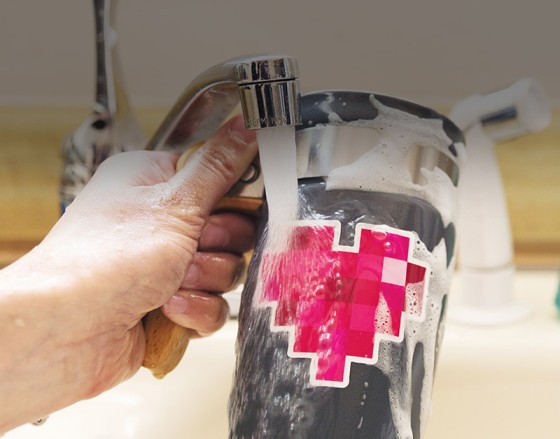
Lamination adds a barrier that guards against scratches, fingerprints and fading in a waterproof sticker. It acts as a shield that prevents moisture from reaching both the ink and the material beneath.
Gloss laminates enhance colour vibrancy and reflect light. Matte laminates reduce glare and create a smooth, understated finish. UV-resistant laminates protect the sticker from sun exposure and help maintain clarity over time.
When lamination is not practical, coatings or varnishes are used. These liquid-applied layers offer a thinner level of protection and are suitable for stickers intended for light indoor use.
Each of these layers adds another level of stability to the sticker. Once protected, the printed design itself must be durable, which depends heavily on the print technology used.
Why Print Technology Determines Sticker Lifespan
Print technology affects how well a sticker resists colour fading, moisture damage and abrasion. The type of ink and curing method determines how the final design holds up.
Solvent and eco-solvent printing provide deep colour saturation and produce prints that resist outdoor conditions. Latex printing uses water-based inks that become highly durable once cured. UV printing cures ink instantly using ultraviolet light and creates a surface that resists fading and scratching.
Ink curing plays a significant role in waterproof performance. Properly cured ink bonds firmly to the material and prevents smudging or colour lift when exposed to moisture.
High-resolution printing ensures that details remain sharp. This is especially important for barcodes, ingredient lists and safety labels that must stay legible in harsh environments.
These systems complete the engineering behind durable stickers and contribute to their ability to perform reliably in many settings.
Built to Last in Any Environment
A waterproof sticker depends on layers of engineering that work together to maintain performance. Materials form a sturdy base. Adhesives keep the sticker fixed. Laminates and coatings provide protection. Printing technology ensures the design stays vibrant and clear. Each component strengthens the next and helps the final product withstand the demands of daily use in Singapore.
For high-quality printing that applies these principles with precision, consider exploring the services offered by Printsys. Their expertise ensures that every sticker is produced with durability and performance in mind.
Frequently Asked Questions
1. What materials make waterproof stickers suitable for Singapore’s climate?
Vinyl, polypropylene and polyester perform well because they resist humidity, heat and frequent handling — conditions common in Singapore.
2. Why do adhesives matter for waterproof sticker performance?
Adhesives ensure the sticker stays in place even when exposed to moisture or temperature shifts. Acrylic adhesives, in particular, are reliable for both indoor and outdoor use.
3. Do waterproof stickers always require lamination?
While lamination provides strong protection against scratches, UV light and moisture, lighter indoor stickers may use coatings instead. The choice depends on how the sticker will be used.
4. What printing methods create long-lasting waterproof stickers?
UV, solvent and eco-solvent printing are commonly used because they produce durable, fade-resistant prints that hold up well in Singapore’s weather.
5. Where are waterproof stickers typically used in Singapore?
They are used for packaging, product labels, equipment tags, outdoor branding, safety labels and surfaces that face moisture — such as bottles, machinery and courier parcels.