


Corporate Printing Guide: Essential Print Materials Every Business Needs
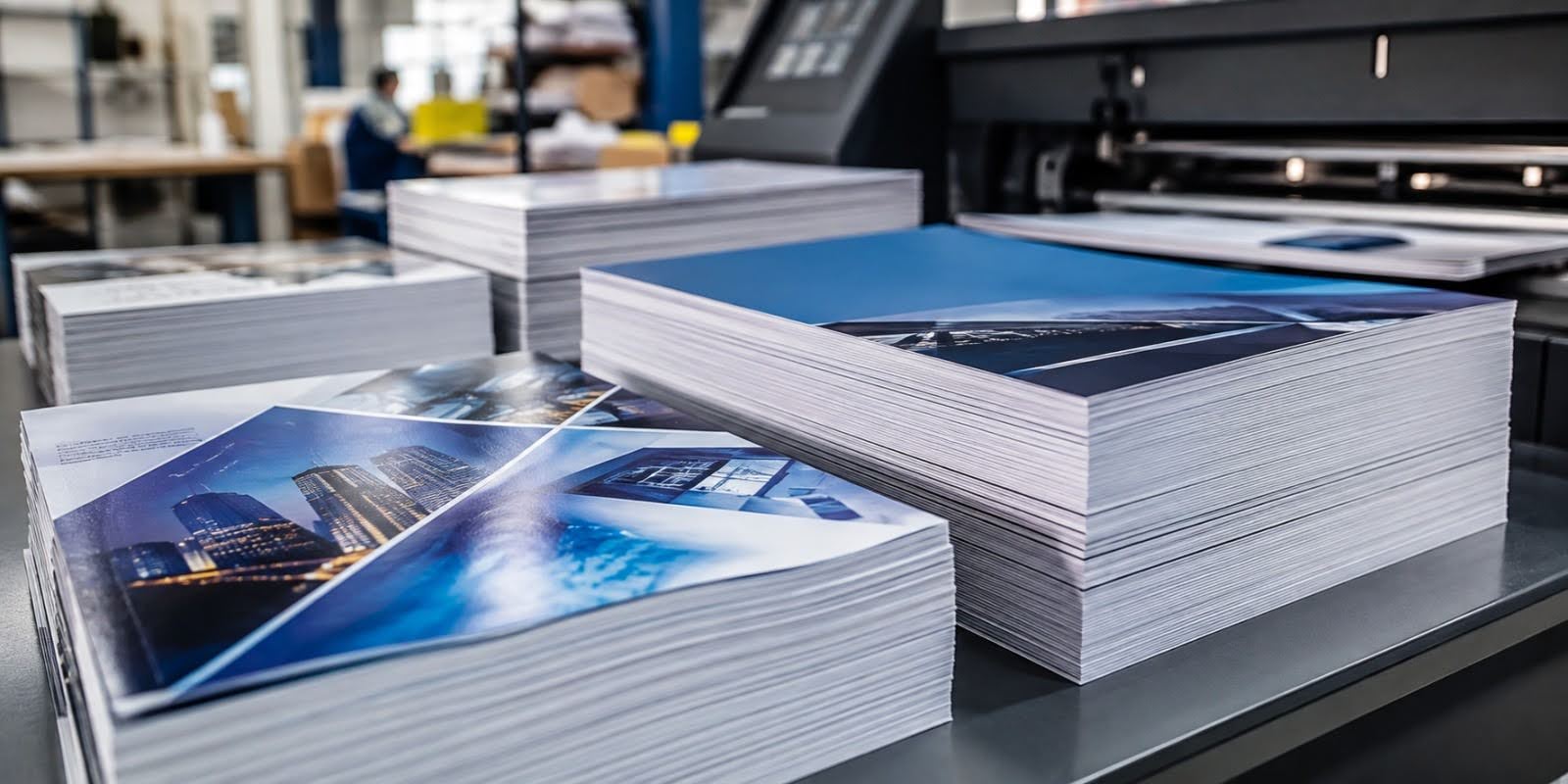
Digital communication has changed how businesses interact with customers, but physical print materials continue to play an important role in corporate communication, branding, sales and day-to-day operations.
Business cards are exchanged during meetings. Brochures help explain services. Presentation folders organise proposals. Catalogues provide customers with structured product information, while stationery reinforces brand identity across formal correspondence.
Corporate printing brings these materials together under a consistent visual and production standard.
The most effective corporate printing strategy therefore starts with purpose. Each printed item should have a clear role, use consistent branding and be produced to a quality appropriate for how customers and stakeholders will interact with it.
Corporate Printing Overview
Corporate printing refers to professionally produced printed materials used to represent, communicate or support a business.
These materials can serve several purposes:
- Corporate identity
- Sales support
- Marketing
- Customer communication
- Internal operations
- Events and exhibitions
- Product presentation
Corporate printing can range from simple office stationery to professionally finished marketing materials.
Corporate Printing vs Office Printing
Office printing typically refers to everyday internal documents produced using standard printers, such as:
- Reports
- Drafts
- Internal forms
- Meeting documents
- Temporary notices
Corporate printing generally involves materials that require greater consistency, professional presentation or larger production quantities.
Why Businesses Still Use Printed Materials
Print and digital communication do not need to compete.
They often perform different functions.
A company website may provide detailed information before a meeting, while a printed brochure gives a prospect something physical to review afterwards. A salesperson can send a digital proposal by email while presenting the printed version in a branded folder during the meeting.
Physical materials can also be useful where customers need information without opening a device.
Corporate printing is therefore most effective when integrated with digital communication rather than treated as a replacement for it.
Essential Materials
The print materials a business needs depend on its industry, customers and sales process. However, several categories remain widely useful.
Business Cards
Business cards are among the most recognisable corporate printing materials.
They typically contain:
- Employee name
- Position
- Company name
- Logo
- Telephone number
- Website
Some businesses also include QR codes linking to:
- Company websites
- Digital profiles
- Product pages
- Contact information
Although contact details can easily be exchanged digitally, business cards remain practical during networking events, exhibitions and face-to-face meetings.
What Makes an Effective Business Card?
A business card should prioritise clarity.
Avoid overcrowding a small format with excessive information.
Important considerations include:
- Readable typography
- Clear hierarchy
- Consistent brand colours
- Adequate spacing
- Suitable paper stock
- Accurate contact information
Finishing such as matte lamination or speciality effects may support the brand, but it should not reduce readability.
Corporate Brochures
Brochures give businesses more space to explain what they offer.
They can include:
- Company overview
- Products
- Services
- Capabilities
- Case studies
- Contact information
- Calls to action
Brochures are particularly useful for businesses whose services require more explanation than a business card or flyer can provide.
For example, a corporate brochure might be distributed during:
- Client meetings
- Exhibitions
- Sales presentations
- Corporate events
- Business development activities
The structure should guide readers logically rather than simply fitting as much information as possible onto each panel.
Presentation Folders
Corporate folders provide a structured way to present multiple documents together.
They can hold:
- Quotations
- Proposals
- Brochures
- Product sheets
- Contracts
- Business cards
Presentation folders can be especially useful for professional services, property, education, corporate sales and other industries where customers receive several documents during meetings.
The folder itself also provides additional branding space.
A clean exterior featuring the logo and brand colours can often be more effective than filling every surface with promotional messages.
Catalogues
Catalogues are useful for businesses with larger product or service ranges.
They can contain:
- Product images
- Product codes
- Descriptions
- Specifications
- Available variations
- Ordering information
Catalogue printing requires more planning than simple flyers because businesses need to consider page count, navigation and binding.
The information should be organised so customers can locate relevant products quickly.
Categories, contents pages, page numbering and clear product hierarchy can improve usability.
Letterheads
Letterheads support formal business communication.
They commonly include:
- Company logo
- Business name
- Contact information
- Website
- Corporate details where applicable
Even when most correspondence is digital, professionally printed letterheads can remain useful for formal documents and external communications.
The design should provide enough branding to identify the company without interfering with the document itself.
Envelopes
Branded envelopes can reinforce identity before the recipient opens the correspondence.
They may be used for:
- Formal letters
- Contracts
- Statements
- Corporate documents
- Invitations
The envelope design should coordinate with other stationery rather than appearing as a separate visual system.
Notepads and Office Stationery
Corporate stationery can include:
- Notepads
- Memo pads
- Forms
- Envelopes
- Letterheads
- Internal documentation
These items may seem less visible than marketing materials, but they can support a consistent brand environment.
Branded notepads can also be used as event or client giveaways when appropriate.
Flyers
Flyers are practical for short-form promotional communication.
They can support:
- Product launches
- Events
- Sales campaigns
- New services
- Limited promotions
Because flyers are usually intended to communicate quickly, the message should be concise.
A strong flyer typically answers:
- What is being offered?
- Why should the reader care?
- What should the reader do next?
Promotional Printing
Promotional printing can include materials created for:
- Events
- Exhibitions
- Campaigns
- Seasonal promotions
- Product launches
These may range from flyers and cards to stickers and other printed collateral.
Because promotional campaigns often have limited lifespans, businesses should be careful about ordering excessive quantities simply to achieve a lower unit price.
Branding
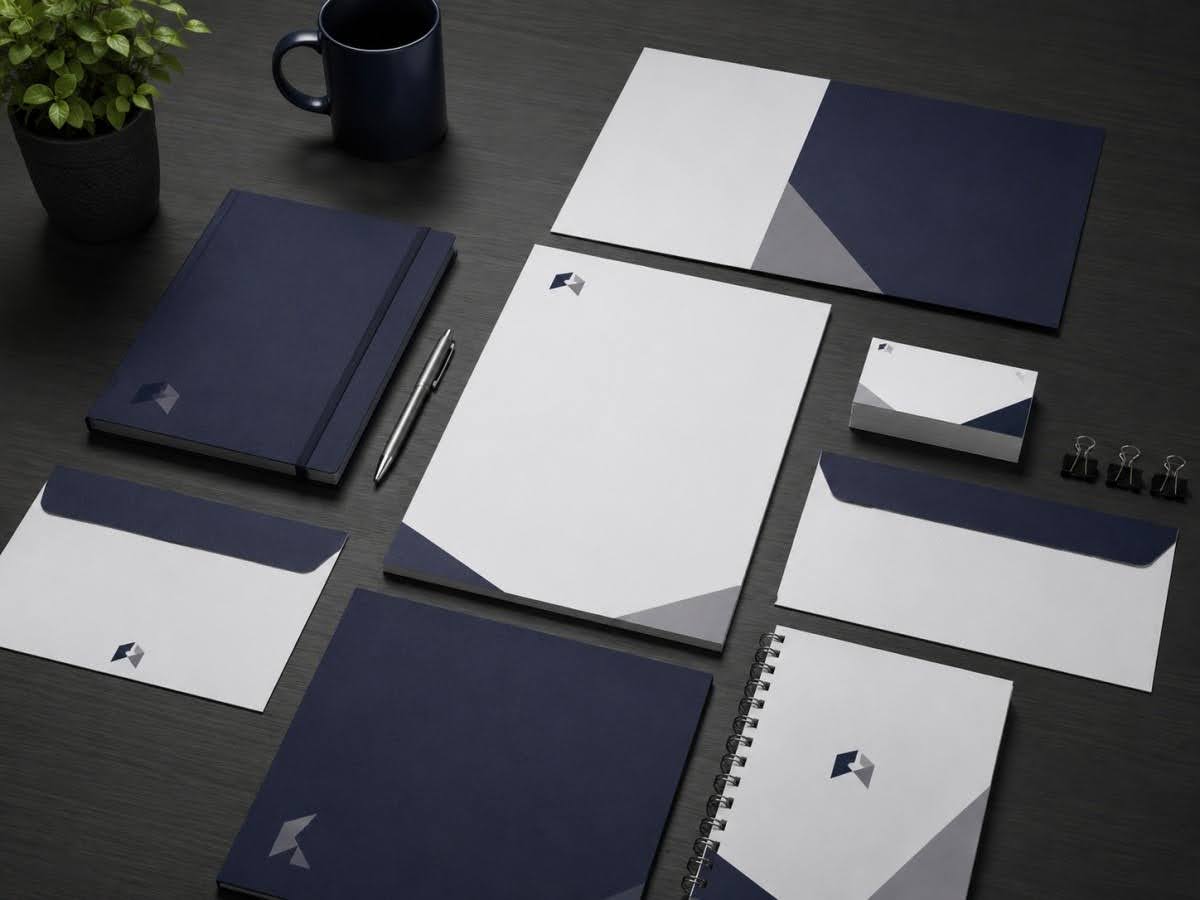
Corporate printing is most effective when every printed material feels like it belongs to the same company.
This requires consistency.
Use Consistent Brand Colours
Colour is a major recognition signal.
The same core colours should appear consistently across:
- Business cards
- Brochures
- Folders
- Catalogues
- Stationery
- Marketing materials
However, businesses should remember that screen colours and printed colours can differ.
Digital screens generally display colours using RGB light, while commercial printing commonly uses CMYK inks or other colour systems.
Brand-critical colours should therefore be managed according to the printing process rather than judged solely from a computer monitor.
Maintain Logo Consistency
Different employees or departments sometimes use different versions of the company logo.
Common problems include:
- Outdated logos
- Incorrect colours
- Stretched proportions
- Low-resolution images
- Missing clear space
Businesses should maintain approved logo files and usage guidelines.
Vector files are particularly useful for printing because they can be scaled without the same loss of quality associated with low-resolution raster images.
Standardise Typography
Typography should remain consistent across corporate materials.
Businesses may define:
- Primary font
- Secondary font
- Heading styles
- Body text styles
- Minimum text sizes
Consistency makes different materials feel connected even when their layouts vary.
Create a Visual Hierarchy
Corporate printing should not make every piece of information equally prominent.
A brochure, for example, may use:
Headline → Supporting message → Details → Call to action
A business card might use:
Name → Position → Contact details
Clear hierarchy helps people scan information efficiently.
Coordinate Print and Digital Branding
Customers may encounter a business through multiple channels.
They might:
- Find the company through search.
- Visit the website.
- Attend a meeting.
- Receive a business card.
- Take home a brochure.
- Scan a QR code.
The experience should feel connected.
Using dramatically different colours, logos or messaging across print and digital channels can weaken recognition.
Use QR Codes Purposefully
QR codes can connect printed materials with digital content.
A brochure could link to:
- Product details
- Booking pages
- Contact forms
- Videos
- Digital catalogues
A business card could link to a digital contact page.
However, the destination should provide genuine value. Adding a QR code simply because space is available does not improve the printed material.
Print Quality
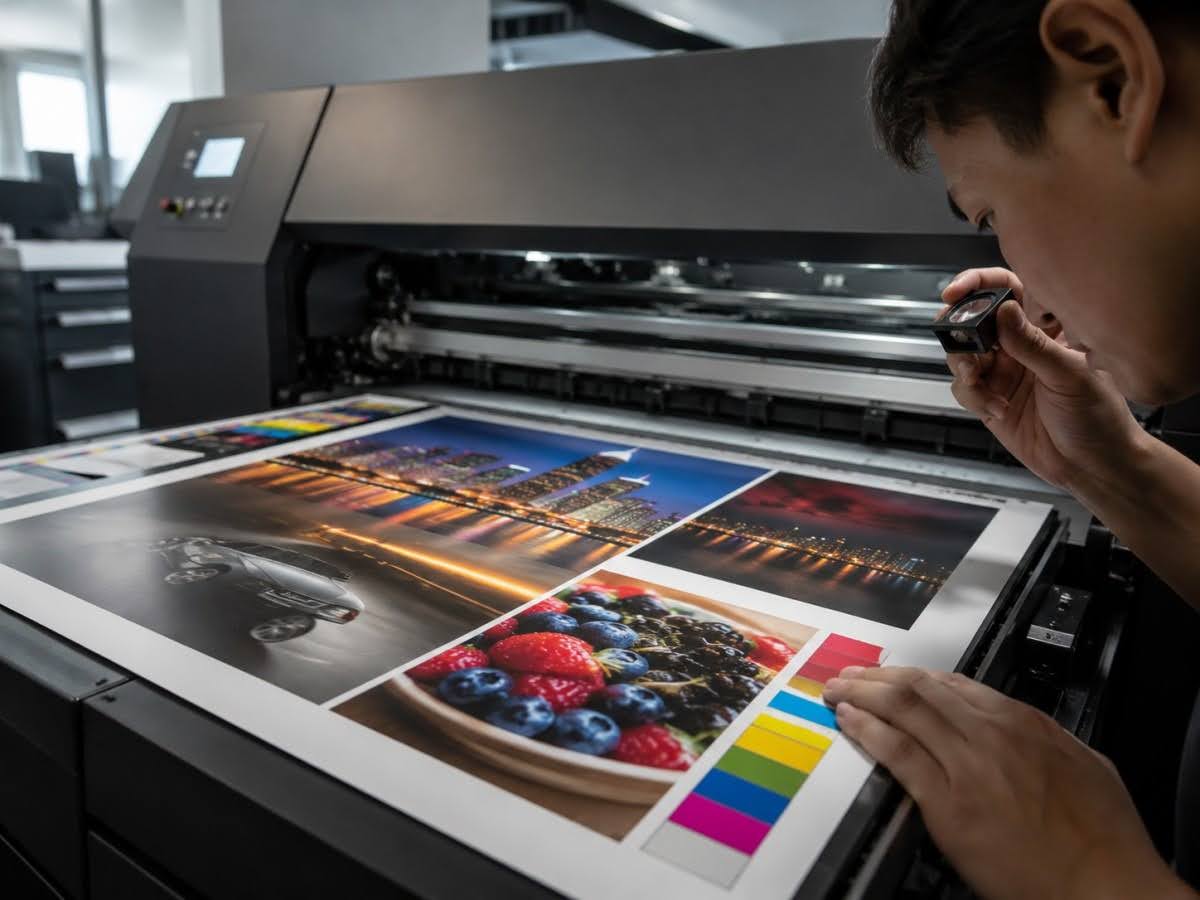
Professional corporate printing depends on more than using attractive artwork.
Several technical factors affect the finished result.
Image Resolution
Images intended for printing should have sufficient resolution at their final printed size.
Low-resolution images can appear:
- Pixelated
- Blurry
- Soft
Businesses should avoid copying small images directly from websites for large printed materials.
Where possible, original high-resolution assets should be used.
Colour Management
Colours displayed on a screen may not match printed output exactly.
Differences can result from:
- RGB vs CMYK colour spaces
- Paper colour
- Ink
- Coatings
- Printing technology
- Screen calibration
Brand-critical projects may require proofing before full production.
Paper Selection
Paper affects both appearance and physical feel.
Businesses should consider:
- Weight
- Thickness
- Surface texture
- Coating
- Opacity
- Folding requirements
A corporate brochure may require a different stock from a temporary promotional flyer.
Selecting the heaviest paper available does not automatically produce a more professional result. Material should suit the purpose and construction.
Bleed and Safe Areas
Artwork that extends to the edge of the finished piece generally requires bleeding.
This provides additional printed area beyond the final trim line so small cutting variations do not create unintended white edges.
Important text and logos should also remain within appropriate safe areas.
Finishing Quality
Finishing can influence both appearance and durability.
Options may include:
- Matte lamination
- Gloss lamination
- Folding
- Binding
- Die-cutting
- Foil
- Spot UV
Finishing should support a specific purpose.
For example, lamination can help protect frequently handled materials, while foil may provide selective visual emphasis for premium corporate collateral.
Proofreading
Print errors can become expensive once hundreds or thousands of pieces have been produced.
Before approving artwork, businesses should verify:
- Names
- Job titles
- Phone numbers
- Email addresses
- Website addresses
- Product information
- Prices
- QR codes
QR codes should be physically tested, while telephone numbers and URLs should be checked independently.
Consistency Across Reprints
Businesses should keep records of approved:
- Artwork versions
- Paper specifications
- Dimensions
- Finishing
- Colour requirements
This can make future reprints more consistent and reduce confusion between old and new files.
Choosing a Printing Company
Selecting a printing company in Singapore should involve both technical capability and reliability.
Review the Range of Printing Services
Businesses may require several types of corporate printing.
A provider capable of supporting:
- Business cards
- Brochures
- Folders
- Catalogues
- Stationery
- Labels
- Promotional printing
can simplify coordination.
However, service range alone is not enough. The provider should also be able to recommend suitable specifications for each item.
Ask About Printing Technology
Digital and offset printing have different advantages.
Digital printing can be useful for:
- Smaller quantities
- Multiple versions
- Faster setup
- Variable data
Offset printing can be efficient for suitable larger quantities.
A printing provider should recommend technology based on the project rather than automatically using one method for everything.
Compare Equivalent Specifications
A lower quotation does not necessarily represent better value.
Before comparing prices, check whether each quotation uses the same:
- Paper
- Size
- Quantity
- Printing method
- Finishing
- Number of colours
- Delivery requirements
Two brochures of identical dimensions can have very different production specifications.
Evaluate Artwork Requirements
The printing company should clearly communicate requirements for:
- File format
- Resolution
- Colour mode
- Bleed
- Fonts
- Safe margins
Clear technical requirements can reduce revisions and production delays.
Consider Proofing
Proofing is particularly useful for important corporate materials.
A proof can help identify:
- Colour concerns
- Incorrect text
- Layout problems
- Unexpected sizing
- Finishing issues
Physical proofs may be particularly valuable when paper or finishing is an important part of the design.
Check Lead Times
Corporate printing is often connected to fixed deadlines such as:
- Meetings
- Conferences
- Exhibitions
- Product launches
- Campaigns
Businesses should allow enough time for:
Artwork → Proofing → Approval → Printing → Finishing → Delivery
Planning only around the printing stage can result in unrealistic deadlines.
Look Beyond Price
The cheapest printing company may not provide the lowest overall business cost if poor quality leads to:
- Reprints
- Delays
- Incorrect finishing
- Colour inconsistency
- Damaged materials
Reliability, communication and quality control should therefore form part of the purchasing decision.
Frequently Asked Questions (FAQs)
What is corporate printing?
Corporate printing refers to professionally produced printed materials used by businesses for branding, communication, marketing and operations. Examples include business cards, brochures, folders, catalogues and stationery.
What corporate print materials does a business need?
Requirements vary by business. Common materials include business cards, corporate brochures, presentation folders, letterheads, envelopes, catalogues and promotional materials.
Are business cards still useful?
Yes, particularly for networking, exhibitions, sales meetings and face-to-face introductions. They can also include QR codes linking to digital contact information.
What should a corporate brochure contain?
A corporate brochure can include a company overview, services or products, differentiators, supporting information and clear contact details or calls to action.
What is the best paper for corporate printing?
There is no universal best paper. The appropriate choice depends on the material being produced, desired appearance, handling requirements, printing method and budget.
Is digital or offset printing better for corporate materials?
Digital printing can suit shorter quantities, variable information and frequently updated materials. Offset printing can provide strong efficiency for suitable larger production runs. The correct method depends on the project.
Why do printed colours look different from a computer screen?
Screens create colours using emitted light, while printing uses inks on physical materials. Paper, coatings, printing technology and colour management can all influence the final appearance.
Should corporate materials use matte or gloss lamination?
The choice depends on appearance and application. Matte provides lower reflection and a subdued finish, while gloss provides a more reflective surface. Lamination can also add protection.
What information should businesses check before printing?
Check spelling, names, job titles, contact information, website addresses, prices, dates and product information. QR codes and barcodes should also be tested before approving production.
How should businesses choose a printing company in Singapore?
Evaluate printing capabilities, material options, finishing, quality control, artwork requirements, proofing, lead times and reliability in addition to pricing.
Build a Consistent Corporate Presence in Print
Every printed touchpoint—from a business card handed over at a meeting to a brochure presented to a potential client—contributes to how a company is perceived. Keeping those materials consistent helps turn separate pieces of collateral into a recognisable corporate identity.
For businesses planning corporate printing for business cards, brochures, folders, catalogues, stationery and other marketing materials, Printsys Pte Ltd can help determine suitable printing methods, materials and finishing options for different business requirements. Get in touch with Printsys today!