


Commercial Printing Services Explained: A Complete Business Guide
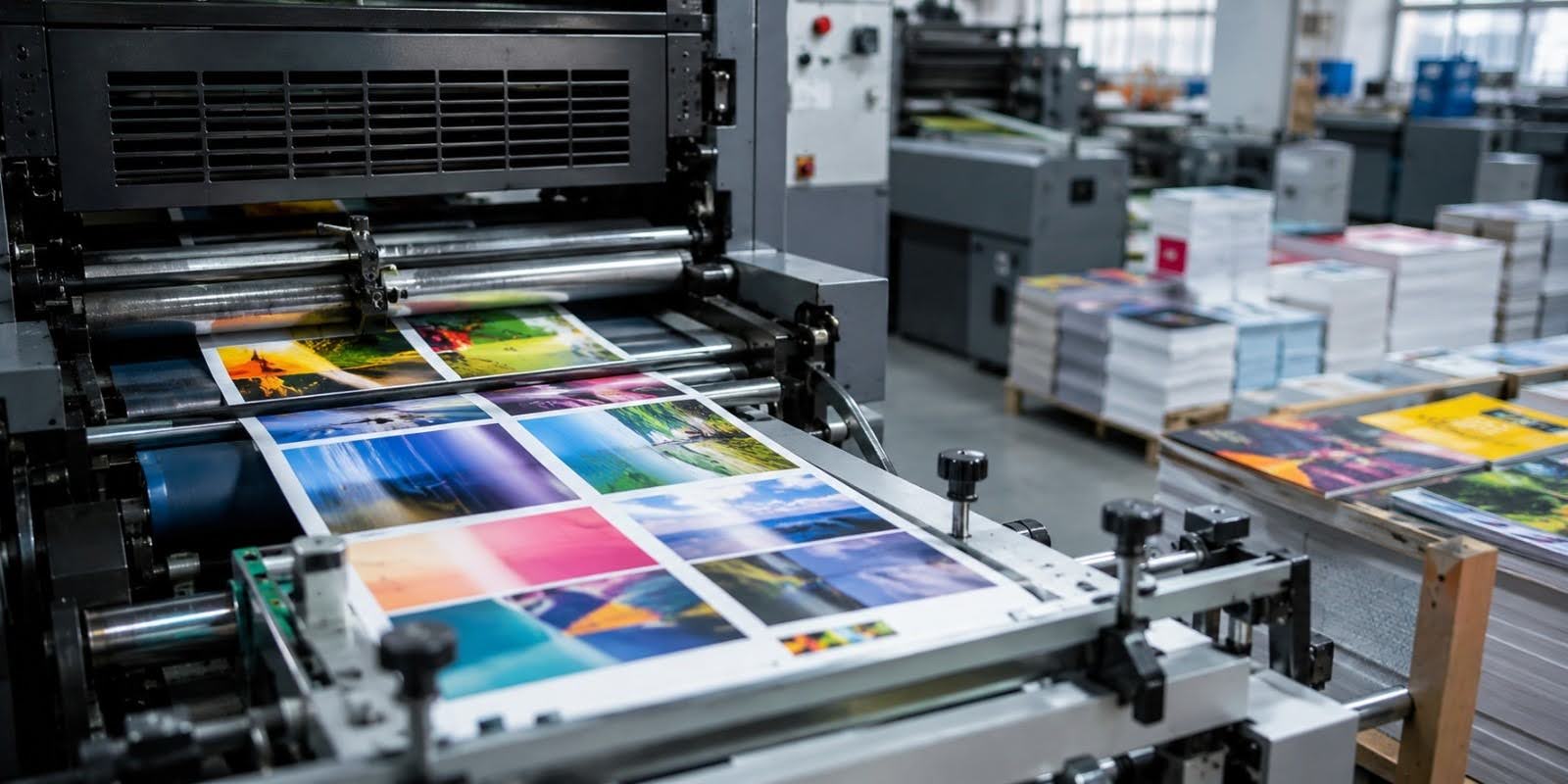
Businesses rely on printed materials for far more than advertising. Product labels identify goods, packaging communicates brand identity, brochures explain services, catalogues organise product ranges, and corporate documents support day-to-day operations.
Commercial printing services bring these requirements together through professional printing equipment, production processes, materials, and finishing capabilities designed for business use.
For businesses in Singapore, choosing a commercial printing provider involves more than finding someone capable of putting ink on paper. The provider should be able to understand the application and recommend a practical combination of printing technology, material, finishing and production quantity.
This guide explains what commercial printing is, the types of services businesses commonly use, major industry applications, printing technologies, provider selection and the benefits of using professional print solutions.
What Is Commercial Printing?
Commercial printing refers to the professional production of printed materials for businesses, organisations, and other commercial purposes.
It can cover both marketing and operational materials, including:
- Brochures
- Flyers
- Catalogues
- Labels
- Stickers
- Packaging
- Corporate stationery
- Promotional materials
- Product identification
- Business documents
Commercial printing differs from basic office printing because production is designed around greater quantities, professional finishing, and more controlled output.
Commercial Printing Is a Production Process
A commercial print project usually involves more than the printing stage itself.
The complete process can include:
- Artwork preparation
- Pre-press checking
- Material selection
- Printing
- Cutting
- Folding
- Binding
- Lamination
- Die cutting
- Other finishing
- Quality checking
- Packing and delivery
Not every project requires every stage.
A simple flyer may only need printing and trimming, while a product catalogue could require printing, folding, binding and finishing. Custom labels may require printing, lamination, and die-cutting.
This is why commercial printing should be approached as a complete production workflow rather than just a printing machine.
Business Printing vs Consumer Printing
Consumer printing often focuses on small personal orders.
Business printing frequently requires:
- Larger quantities
- Repeat production
- Consistent branding
- Multiple product variations
- Specific dimensions
- Special materials
- Finishing
- Delivery schedules
Businesses may also need the same materials reprinted months later, making reliable artwork management and specifications particularly important.
Types of Services
Commercial printing services can cover a wide range of business requirements. The right service depends on what the printed material needs to communicate and how it will be used.
Brochure Printing
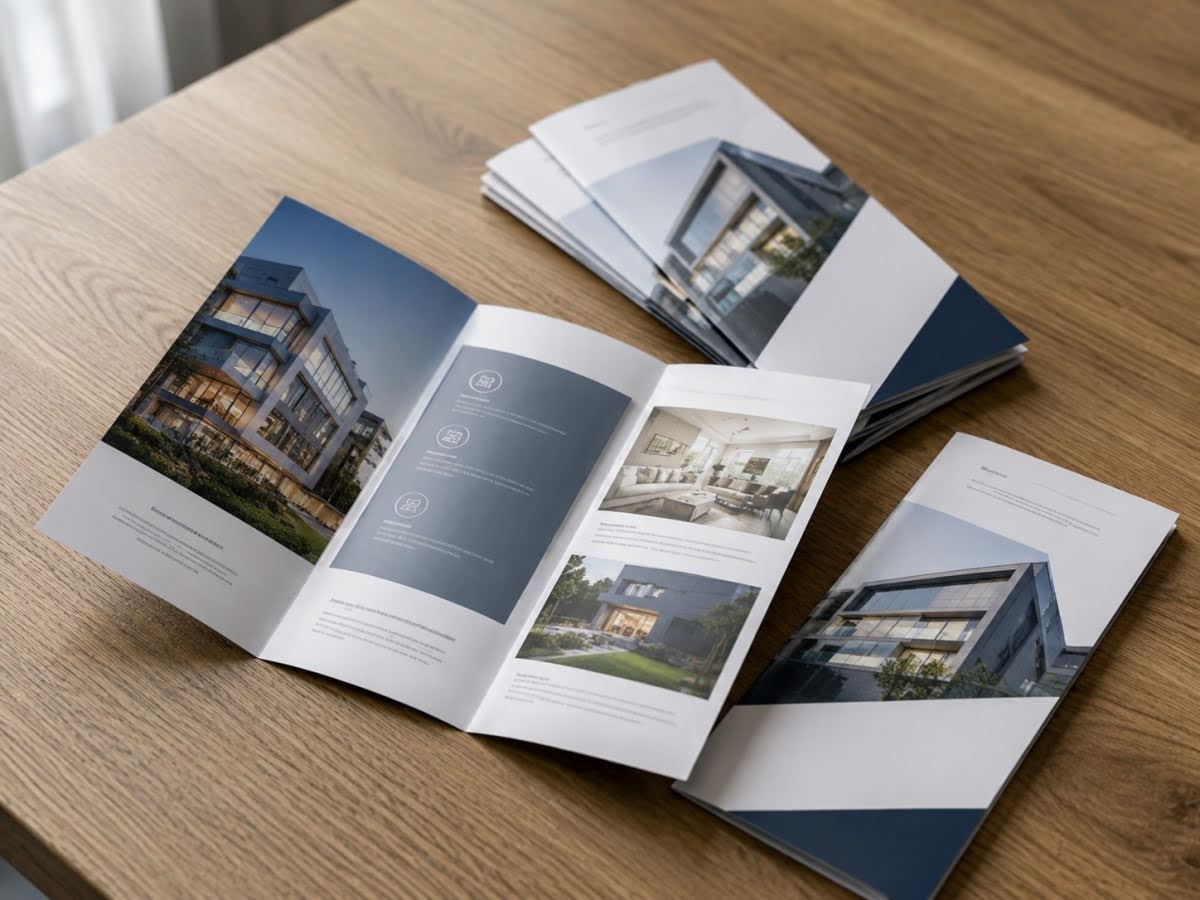
Brochures provide businesses with space to explain products, services, or company information in a structured format.
They may be used for:
- Corporate introductions
- Service information
- Sales presentations
- Property marketing
- Educational materials
- Exhibitions
Brochures can use different folding configurations depending on the amount of information and intended presentation.
Common considerations include:
- Paper stock
- Paper weight
- Number of panels
- Folding style
- Matte or gloss finish
- Quantity
Good brochure production should support both readability and brand consistency.
Flyer Printing

Flyers are typically single-sheet marketing materials designed to communicate information quickly.
They can support:
- Promotions
- Events
- New product launches
- Retail campaigns
- Service advertisements
- Direct distribution
Because flyers may be produced in significant quantities, businesses should balance print quality with cost efficiency.
A short promotional campaign, for example, may not require the same premium material as a corporate brochure intended for long-term use.
Catalogue Printing

Catalogues contain larger volumes of structured information.
They may feature:
- Product ranges
- Specifications
- Images
- Pricing
- Product codes
- Ordering information
Catalogue production can be more complex because businesses need to consider:
- Page count
- Binding
- Paper stock
- Cover material
- Image quality
- Colour consistency
- Final size
For product-heavy businesses, catalogue printing remains useful where customers or sales teams need a physical reference.
Label Printing
Labels serve both branding and functional purposes.
Applications include:
- Product labels
- Food labels
- Cosmetic labels
- Barcode labels
- Asset labels
- Packaging labels
- Industrial labels
Label requirements can vary considerably.
A paper sticker for a dry cardboard box does not require the same material as a label applied to a refrigerated beverage bottle or industrial equipment.
Commercial label printing therefore requires consideration of the surface, environment, adhesive and required durability.
Sticker Printing
Custom stickers can be used for:
- Branding
- Packaging
- Promotions
- Product identification
- Events
- Corporate campaigns
Available options can include paper, vinyl, and other synthetic materials, along with different cutting and finishing methods.
Businesses should select sticker specifications based on the intended application rather than appearance alone.
Packaging Printing
Packaging is both functional and promotional.
Printed packaging can help communicate:
- Brand identity
- Product name
- Instructions
- Product information
- Promotional messaging
Packaging projects may involve boxes, sleeves, labels, or other printed components.
Because packaging directly interacts with the product, material selection and dimensions need to be carefully controlled.
Corporate Printing
Corporate printing can include everyday business materials such as:
- Letterheads
- Envelopes
- Presentation folders
- Corporate brochures
- Forms
- Business cards
Consistency across these materials helps businesses maintain a recognisable visual identity.
Industries
Commercial printing supports businesses across almost every sector, although the type of printing required can differ significantly.
Retail
Retail businesses use print for both promotion and product identification.
Common requirements include:
- Flyers
- Promotional materials
- Product labels
- Price labels
- Packaging
- Point-of-sale materials
Retail campaigns can change frequently, so businesses may benefit from printing quantities that align with actual campaign duration.
Food and Beverage
Food and beverage businesses may require:
- Product labels
- Packaging stickers
- Menus
- Promotional flyers
- Boxes
- Branded packaging
Material selection becomes particularly important for refrigerated products because condensation can affect unsuitable labels.
Food packaging may also involve specific regulatory or application requirements that should be evaluated separately from ordinary promotional printing.
Corporate and Professional Services
Professional businesses frequently use:
- Corporate brochures
- Presentation materials
- Reports
- Folders
- Event materials
- Business stationery
These materials often need consistent branding because they may be presented directly to clients or stakeholders.
Manufacturing
Manufacturers may require commercial printing for:
- Product labels
- Industrial stickers
- Barcode labels
- Safety information
- Product catalogues
- Technical documents
Functionality can be more important than decorative finishing in these applications.
An industrial label, for example, may need to remain readable under demanding conditions rather than simply look attractive.
Healthcare
Healthcare-related organisations can use printed materials for:
- Information brochures
- Labels
- Forms
- Instructions
- Packaging
- Identification
Accuracy and readability are especially important where printed information supports operational or product-related requirements.
Logistics and Warehousing
Commercial printing can support logistics through:
- Barcode labels
- Inventory labels
- Shipping labels
- Warehouse identification
- Tracking labels
Print quality matters because poorly reproduced barcodes can cause scanning issues and slow operations.
Hospitality
Hotels, restaurants and event businesses may require:
- Menus
- Brochures
- Promotional materials
- Event materials
- Packaging
- Branded collateral
These materials often need to balance durability with visual presentation because they may be handled repeatedly by customers.
Printing Technologies
Different printing technologies suit different quantities, materials and production requirements.
Understanding the basic differences can help businesses have more productive conversations with their printing provider.
Digital Printing
Digital printing produces printed output directly from electronic artwork without conventional printing plates.
It is commonly suitable for:
- Shorter print runs
- Multiple artwork versions
- Personalised materials
- Variable data
- Faster production requirements
Digital printing can be particularly useful when businesses need smaller quantities or expect information to change frequently.
For example, a company printing a temporary promotional flyer may prefer a smaller digital run rather than producing a large inventory that could become outdated.
Offset Printing
Offset printing uses plates and transfers the printed image indirectly to the substrate.
It requires more initial setup than digital printing but can become highly efficient for suitable larger production quantities.
Offset is commonly associated with:
- Brochures
- Catalogues
- Flyers
- Corporate materials
- Large-volume commercial work
It can provide strong consistency across long print runs when properly managed.
Flexographic Printing
Flexographic printing is widely used for suitable roll-fed label and packaging applications.
Depending on the production system, it can support:
- Product labels
- Packaging labels
- High-volume sticker production
- Flexible packaging applications
Its economics can be particularly attractive for larger repeat quantities.
Large-Format Printing
Large-format printing is designed for applications larger than typical office or commercial sheet sizes.
Applications may include:
- Posters
- Displays
- Event graphics
- Signage
- Exhibition materials
Material and finishing requirements depend heavily on whether the printed item will be used indoors or outdoors.
Variable Data Printing
Variable data printing allows individual printed pieces to contain different information.
This can include:
- Names
- Serial numbers
- QR codes
- Barcodes
- Promotional codes
Digital printing technology makes this particularly practical.
Businesses can therefore combine physical printing with personalised marketing or tracking systems.
Choosing a Provider
Selecting a printing company in Singapore should involve more than comparing the lowest quoted price.
A quotation only becomes meaningful when the specifications being compared are equivalent.
Evaluate the Range of Services
Businesses with multiple printing requirements may benefit from a provider capable of handling several categories, such as:
- Marketing materials
- Labels
- Stickers
- Corporate printing
- Finishing
This can simplify coordination and help maintain consistent production specifications.
Ask About Printing Technologies
A provider with access to different printing methods may be able to select the production approach according to the job rather than forcing every project through the same technology.
The appropriate method depends on:
- Quantity
- Artwork
- Material
- Turnaround
- Finishing
- Variable data requirements
Review Material Options
Material should be selected according to the application.
For labels, for example, businesses may need to consider:
- Paper
- Vinyl
- PET
- Synthetic materials
- Waterproof options
For brochures and flyers, paper weight and surface characteristics can influence both presentation and cost.
Check Finishing Capabilities
Commercial print solutions may require finishing such as:
- Lamination
- Folding
- Binding
- Die cutting
- Foil
- Cutting
- Specialty coatings
A printer should be able to explain which finishing options provide functional or visual value rather than encouraging unnecessary complexity.
Consider Artwork Support
Artwork problems can cause delays and unexpected output.
A printing company should provide clear guidance covering:
- File formats
- Resolution
- Colour mode
- Bleed
- Safe margins
- Fonts
- Cut paths where required
Businesses should also maintain their original design files rather than relying only on low-resolution images taken from websites.
Assess Quality Control
Quality control is particularly important for repeat orders.
Businesses may need consistency in:
- Dimensions
- Colour
- Cutting
- Finishing
- Label positioning
- Quantity
For critical projects, proofs or production samples can help identify problems before the complete order is produced.
Consider Lead Time and Delivery
Printing is often tied to:
- Product launches
- Events
- Marketing campaigns
- Packaging schedules
Businesses should therefore ask about realistic production and delivery timelines.
Planning ahead can reduce the need for urgent printing, which may limit available production options.
Frequently Asked Questions (FAQs)
What are commercial printing services?
Commercial printing services involve professional production of printed materials for businesses and organisations. They can include brochures, flyers, catalogues, labels, stickers, packaging, corporate stationery, and other printed materials.
What is the difference between commercial and office printing?
Office printing generally handles smaller everyday document requirements. Commercial printing uses production equipment and processes designed for larger quantities, specialised materials, professional finishing and greater consistency.
What printing method is best for commercial printing?
There is no single best method. Digital printing can be suitable for shorter runs and variable data, while offset can be highly efficient for suitable larger quantities. Other technologies may be used for labels, packaging and large-format applications.
Is digital printing suitable for business printing?
Yes. Digital printing is commonly used for business materials, particularly when quantities are smaller, artwork changes frequently or individual pieces require variable information.
What is commercial offset printing used for?
Offset printing is commonly used for suitable higher-volume projects such as brochures, flyers, catalogues and corporate materials where the artwork remains consistent across the run.
What materials can commercial printers produce?
Depending on their capabilities, commercial printers may produce brochures, flyers, catalogues, business stationery, labels, stickers, packaging components and promotional materials.
Can a commercial printer produce waterproof labels?
Yes, where the provider offers suitable synthetic materials, adhesives and printing or finishing processes. Waterproof performance should be specified according to the actual environment.
Does commercial printing require print-ready artwork?
Print-ready artwork generally makes production more efficient. Files should follow the printer’s requirements for dimensions, resolution, colour, bleed, and other technical specifications.
What affects commercial printing prices?
Cost can be influenced by quantity, dimensions, paper or material, printing method, number of colours, finishing, binding, cutting, artwork preparation, and delivery.
Is it cheaper to print larger quantities?
The cost per piece can decrease as quantity increases because setup costs are spread across more units. However, businesses should avoid ordering excessive quantities that may become obsolete or require unnecessary storage.
Can commercial printers handle recurring orders?
Yes. Repeat commercial printing is common. Maintaining consistent artwork files and specifications can make recurring production easier and help improve consistency between orders.
Bring Your Business Printing Requirements Under One Roof
Managing brochures with one supplier, labels with another, and promotional printing somewhere else can create unnecessary complexity. A commercial printing provider with multiple production capabilities can help businesses coordinate specifications while choosing the appropriate process for each application.
For businesses seeking commercial printing services for brochures, flyers, catalogues, labels, packaging, and other print solutions, Printsys Pte Ltd offers commercial printing options to meet diverse business and production requirements. Get in touch with Printsys today!