


Printing Materials Guide: Choosing the Right Paper and Synthetic Media
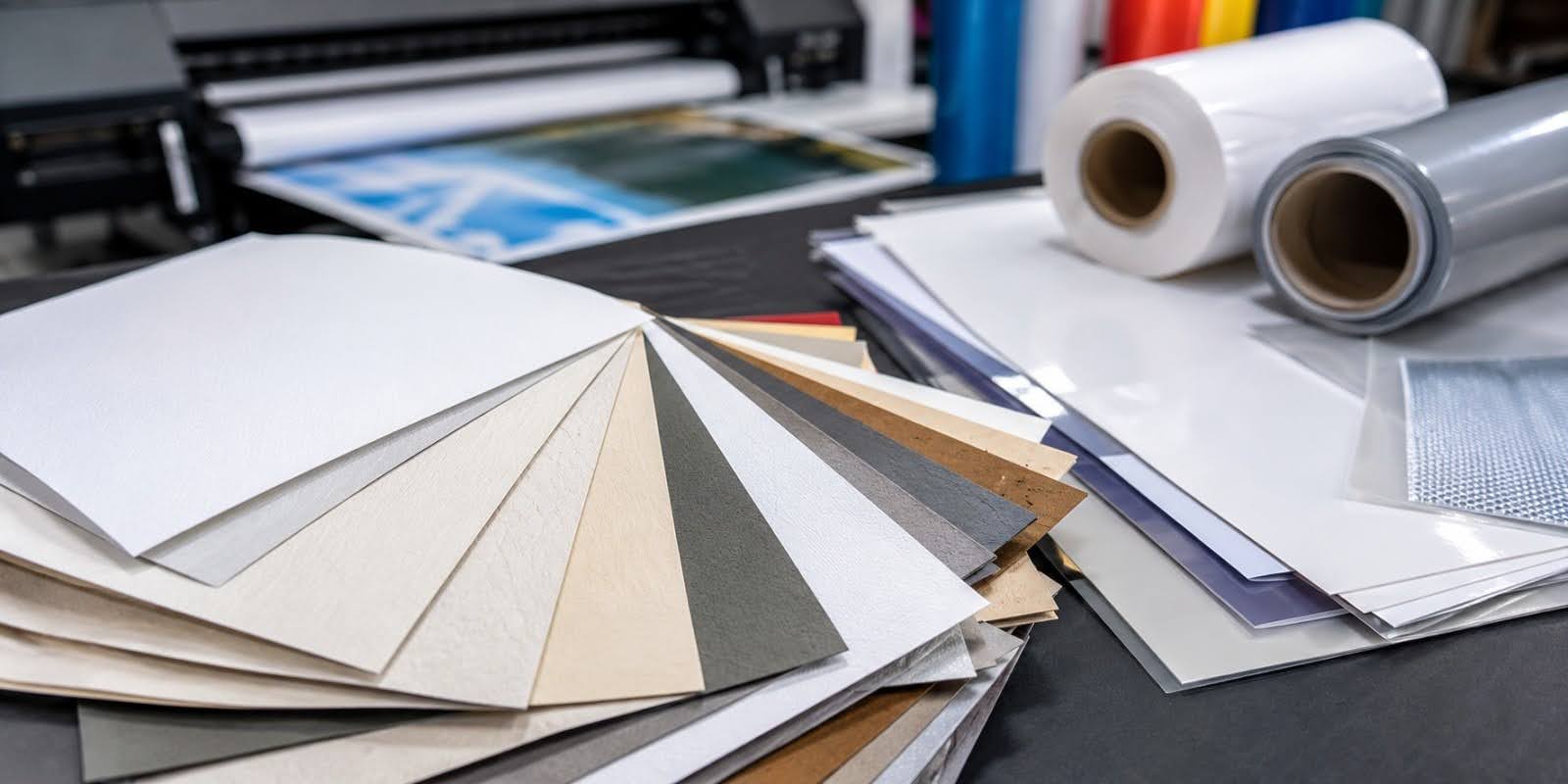
The material used for a printing project can influence almost every aspect of the finished product, from its appearance and texture to its durability and suitability for the intended environment.
A corporate brochure designed for an indoor meeting does not require the same printing materials as a product label exposed to condensation. Likewise, a temporary promotional flyer may perform perfectly on lightweight paper, while an industrial identification label may require a durable synthetic material such as PET.
Understanding these differences allows businesses to choose materials that provide the required performance without paying for characteristics the project does not need.
Material Types
Printing materials can broadly be divided into paper-based and synthetic media, although each category contains many different specifications.
Paper-Based Materials
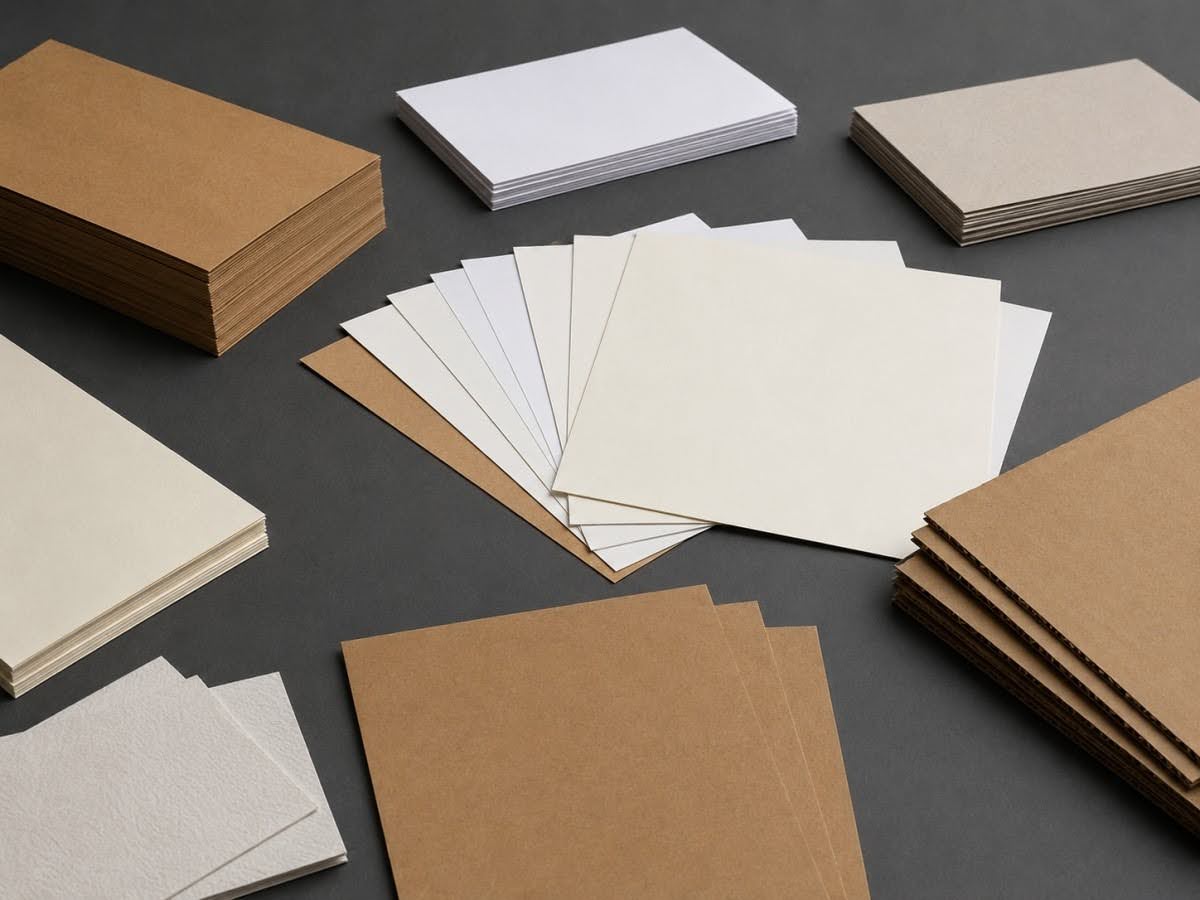
Paper remains one of the most widely used commercial printing materials.
Common applications include:
- Brochures
- Flyers
- Catalogues
- Business cards
- Corporate stationery
- Posters
- Paper labels
- Packaging inserts
Paper can vary significantly in weight, texture, coating, brightness and finish.
This means two printed pieces described simply as “paper” can look and feel very different.
Synthetic Materials
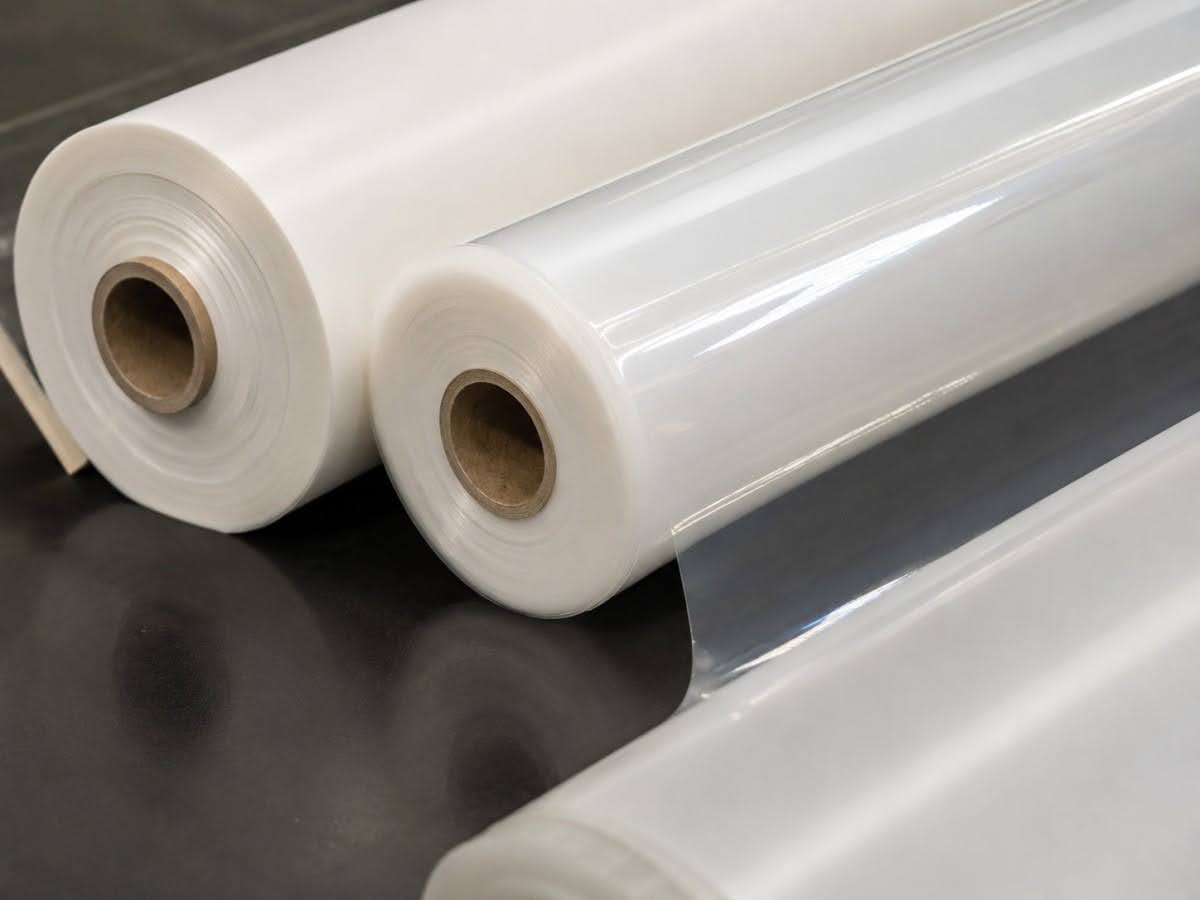
Synthetic printing media are manufactured using plastic or polymer-based materials rather than conventional wood-pulp paper.
Examples can include:
- Vinyl
- PVC
- PET
- Polypropylene
- Synthetic paper
- Other specialised films
These materials are often selected when ordinary paper cannot provide sufficient resistance to environmental conditions.
Potential applications include:
- Waterproof labels
- Product stickers
- Industrial labels
- Outdoor decals
- Equipment identification
- Durable promotional materials
Why Material Selection Matters
The material influences more than appearance.
It can affect:
- Print quality
- Colour appearance
- Flexibility
- Tear resistance
- Water resistance
- Adhesion
- Finishing compatibility
- Expected lifespan
- Overall cost
Material selection should therefore be considered part of the production specification rather than an aesthetic decision made at the end of the design process.
Paper Options
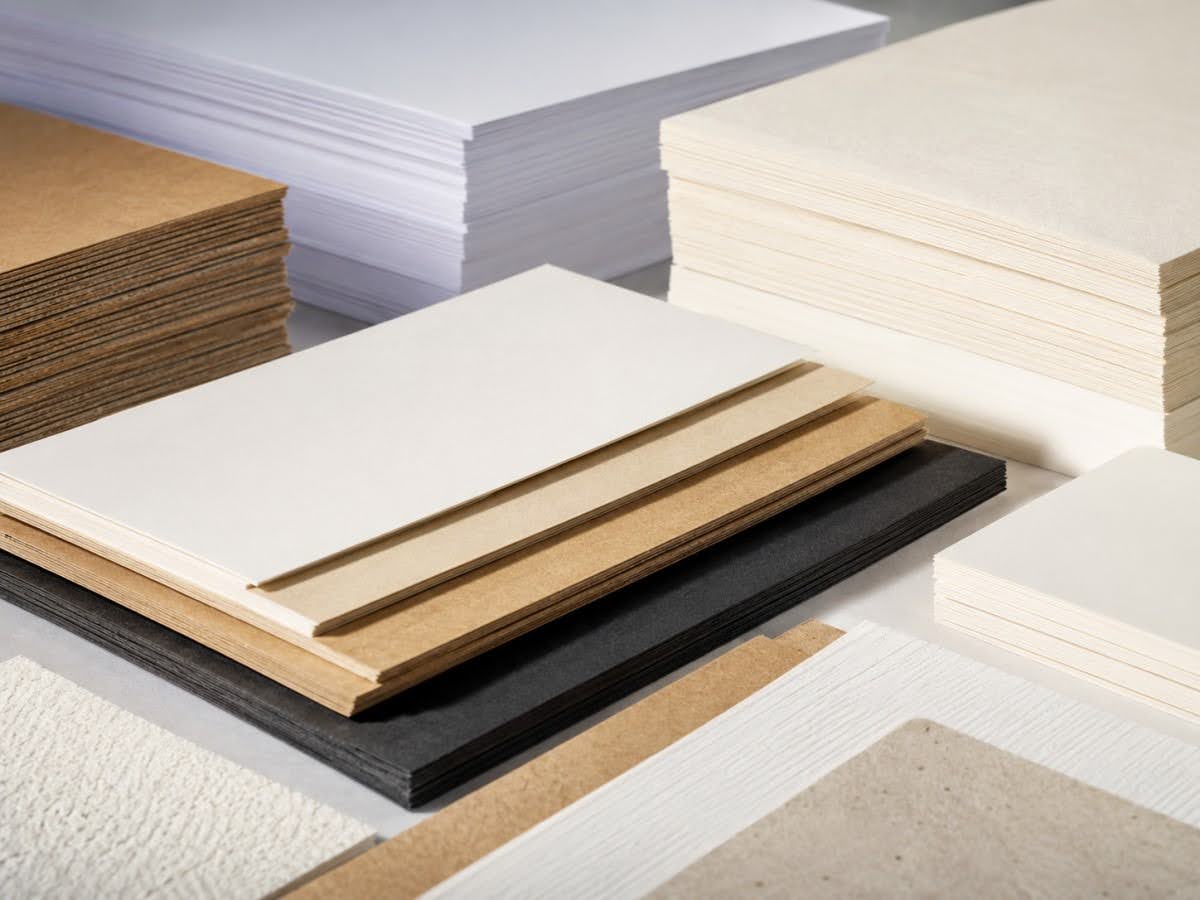
Paper comes in numerous forms, but businesses can begin by understanding several fundamental characteristics.
Coated Paper
Coated paper has a surface treatment designed to provide a smoother printing surface.
Depending on the specification, coated stocks can provide:
- Smooth appearance
- Strong image reproduction
- Clear details
- Vibrant colour presentation
Coated paper is commonly considered for:
- Brochures
- Catalogues
- Flyers
- Corporate profiles
- Marketing materials
Where photography or detailed graphics are important, a coated surface can help create a polished result.
Gloss-Coated Paper
Gloss-coated paper provides a more reflective surface.
This can make colours and images appear visually vibrant, making it useful for materials such as:
- Product catalogues
- Promotional brochures
- Flyers
- Image-heavy marketing pieces
However, the reflective surface can create glare under certain lighting conditions.
For documents containing substantial amounts of text, businesses should consider whether readability or image impact is the higher priority.
Matte-Coated Paper
Matte-coated paper provides a smoother surface with less reflection than high-gloss alternatives.
It can be suitable for:
- Corporate brochures
- Premium marketing materials
- Reports
- Product catalogues
Matte surfaces can provide a more restrained appearance while still supporting high-quality printed graphics.
Uncoated Paper
Uncoated paper does not have the same smooth surface coating.
Its more natural texture can be appropriate for:
- Letterheads
- Notepads
- Forms
- Stationery
- Certain brochures
- Natural or minimalist branding
Uncoated paper can also be easier to write on, making it useful for materials that need handwritten information.
However, ink interacts differently with uncoated surfaces, so colours and images may appear less glossy or saturated than on coated stock.
That is not necessarily a disadvantage. It can be an intentional part of the visual design.
Paper Weight
Paper weight affects the feel and structural behaviour of printed materials.
Lighter paper may be appropriate for:
- Flyers
- Inserts
- Internal documents
- High-volume handouts
Heavier paper can be considered for:
- Brochure covers
- Business cards
- Presentation materials
- Premium marketing collateral
The highest paper weight is not automatically the best.
A very heavy stock may create difficulties for folding or binding, while an unnecessarily thick flyer can increase material and distribution costs.
Choosing Paper by Function
Instead of asking for the “best paper,” businesses can start with the intended function.
| Application | Possible Starting Point |
| Corporate letterhead | Uncoated paper |
| Marketing brochure | Coated paper |
| Product catalogue | Coated paper |
| Business card | Heavier suitable stock |
| Promotional flyer | Coated or uncoated paper |
| Writable form | Uncoated paper |
| Dry paper label | Suitable adhesive paper |
The final specification should account for printing technology, quantity, finishing and brand requirements.
Synthetic Materials
Paper is highly versatile, but some applications require properties it cannot naturally provide.
Synthetic printing materials become particularly useful where moisture, tearing or demanding handling is involved.
Vinyl
Vinyl is commonly used for stickers, labels and decals.
Depending on the specification, it can provide:
- Flexibility
- Moisture resistance
- Tear resistance
- Smooth print surface
- Suitability for curved surfaces
Applications can include:
- Product labels
- Promotional stickers
- Bottle labels
- Custom decals
- Selected outdoor stickers
Vinyl is often associated with waterproof applications, but businesses should not assume every vinyl sticker is automatically suitable for prolonged outdoor exposure.
Performance also depends on:
- Ink
- Adhesive
- Lamination
- UV exposure
- Environmental conditions
PVC
PVC stands for polyvinyl chloride and is used in various printing and labelling applications.
It can provide characteristics such as:
- Flexibility
- Durability
- Moisture resistance
- Compatibility with selected indoor and outdoor applications
Commercial terminology around PVC and vinyl can sometimes overlap because many vinyl products are PVC-based.
For this reason, businesses should focus on the actual material specification rather than the name alone.
Questions should include:
- Is it suitable for outdoor use?
- How flexible is it?
- What adhesive is used?
- Is lamination required?
- How long should it last?
PET
PET, or polyethene terephthalate, is a polyester-based synthetic material.
PET labels are often considered where dimensional stability and durability are important.
Potential applications include:
- Equipment labels
- Electronics
- Industrial identification
- Asset labels
- Durable product labels
Compared with flexible vinyl, PET can provide a more stable construction.
This can be useful for flat equipment surfaces or labels that need to maintain their shape during prolonged use.
However, it may not always be the preferred option for highly curved or flexible surfaces.
Synthetic Paper
Synthetic paper is designed to combine some characteristics associated with paper and plastic materials.
Depending on its composition, it can provide:
- Tear resistance
- Moisture resistance
- Printable surface
- Greater durability than ordinary paper
It can be considered for applications such as:
- Menus
- Tags
- Durable documents
- Instructions
- Selected labels
- Frequently handled materials
Synthetic paper can be particularly useful where a business wants a paper-like printed format but needs more resistance to environmental exposure.
Polypropylene and Other Synthetic Media
Polypropylene is another synthetic film commonly used in packaging and labelling applications.
It can provide:
- Moisture resistance
- Flexibility
- Smooth appearance
- Good printability
Other specialised synthetic materials may be available for applications requiring specific resistance to heat, chemicals or abrasion.
The important point is that “synthetic” is a broad category rather than a single performance standard.
Durability
Durability should be defined according to the actual environment.
A material does not need to withstand every possible condition. It needs to withstand the conditions it will realistically encounter.
Moisture Resistance
Ordinary paper generally provides limited resistance to water.
When exposed to significant moisture, it can:
- Wrinkle
- Tear
- Absorb water
- Lose structural strength
Synthetic materials such as vinyl, PET and polypropylene generally provide stronger moisture resistance.
This can make them useful for:
- Refrigerated products
- Beverage bottles
- Bathroom products
- Outdoor applications
- Frequently cleaned surfaces
Tear Resistance
Paper can tear relatively easily compared with many synthetic materials.
For brochures and flyers, this may not matter.
For frequently handled labels or instructions, greater tear resistance may be valuable.
UV and Outdoor Exposure
Outdoor applications face additional challenges:
- Sunlight
- UV radiation
- Rain
- Heat
- Humidity
- Dirt
A material that survives water exposure may still fade or deteriorate under prolonged sunlight.
Businesses should therefore distinguish between:
water resistance and outdoor durability.
Suitable ink, lamination and adhesive may be required in addition to synthetic face material.
Chemical Resistance
Industrial labels may encounter:
- Cleaning chemicals
- Oils
- Solvents
- Detergents
Waterproof material does not automatically provide resistance to these substances.
Applications involving chemical exposure should be specified clearly to the printing company.
Handling and Abrasion
Printed materials that are touched, rubbed or moved frequently can experience surface wear.
Examples include:
- Menus
- Equipment labels
- Product labels
- Frequently handled cards
Lamination or another protective finishing material may help preserve the printed surface.
Printing Compatibility
Selecting a material without considering the printing process can create problems.
Not every printing material is equally compatible with every printing technology.
Digital Printing
Digital printing can work with a wide range of suitable papers and selected synthetic media.
It can be advantageous for:
- Shorter quantities
- Multiple designs
- Personalised printing
- Variable data
- Faster production
However, materials need to be compatible with the specific digital printing system.
Offset Printing
Offset printing is commonly used with suitable paper stocks for larger commercial production.
Applications can include:
- Brochures
- Catalogues
- Flyers
- Corporate materials
Offset printing can support a broad range of papers, but material thickness, coating and surface characteristics still need to be compatible with the press and finishing process.
Label Printing
Label printing requires consideration of both face material and adhesive.
A label construction may include:
Printable material → ink → optional laminate → adhesive → release liner
All components need to work together.
For example, a durable PET face material provides little value if the adhesive fails on the intended surface.
Ink and Material Interaction
Ink behaves differently on coated paper, uncoated paper and synthetic media.
On uncoated paper, ink may absorb more into the surface.
On coated materials, the ink interacts with a smoother surface.
Synthetic films may require compatible printing systems or treatments to ensure proper adhesion.
This is one reason why artwork should not be assessed solely from a computer screen.
Finishing Compatibility
Printing materials also need to work with the required finishing processes.
These may include:
- Lamination
- Folding
- Binding
- Die cutting
- Foil
- UV coating
For example, a thick paper stock that looks attractive as a flat sheet may behave differently when folded.
Material and finishing should therefore be planned together.
Selecting Materials
Choosing the right printing materials becomes easier when businesses evaluate requirements in a logical sequence.
Step 1: Define the Printed Product
Start by identifying what is being produced.
Is it a:
- Brochure?
- Flyer?
- Catalogue?
- Business card?
- Product label?
- Sticker?
- Menu?
- Industrial label?
Different products naturally have different material requirements.
Step 2: Determine the Environment
Ask where the printed material will be used.
Consider whether it will be:
- Indoors
- Outdoors
- Refrigerated
- Frequently handled
- Exposed to water
- Exposed to chemicals
- Stored for a long period
Environmental requirements can quickly eliminate unsuitable options.
Step 3: Determine the Required Lifespan
A promotional flyer used for one weekend does not need the same durability as an industrial label expected to remain attached for several years.
Businesses can save money by avoiding unnecessary over-specification.
At the same time, using an inadequate material can create replacement costs.
Step 4: Consider Appearance
Material contributes to branding.
For example:
Gloss-coated paper can support vibrant imagery.
Matte-coated paper can create a more subdued professional appearance.
Uncoated paper can provide a natural tactile quality.
Vinyl can provide smooth, flexible sticker applications.
Transparent synthetic media can create minimal label effects.
Material should support the intended visual identity.
Step 5: Consider Physical Requirements
Ask whether the printed material needs to:
- Fold
- Bend
- Wrap around a container
- Remain rigid
- Resist tearing
- Accept handwriting
- Adhere to a surface
These requirements can be more important than appearance.
Step 6: Match the Material to the Printing Technology
Businesses do not necessarily need to determine this themselves.
Provide the printing company with the application, quantity, dimensions and desired appearance.
The provider can then recommend materials compatible with its production equipment.
Step 7: Consider Finishing
Finishing materials and processes should be selected according to purpose.
For example:
- Lamination for additional protection
- Matte finish for reduced glare
- Gloss finish for visual vibrancy
- Die cutting for custom shapes
- Specialty finishes for selective visual emphasis
Finishing should complement the base material rather than compensate for a fundamentally unsuitable choice.
Step 8: Test Important Applications
For demanding applications, testing is valuable.
A label can be applied to the actual:
- Bottle
- Box
- Plastic container
- Metal equipment
- Glass surface
and exposed to realistic conditions.
Testing can reveal problems with:
- Adhesion
- Flexibility
- Condensation
- Colour
- Readability
- Surface durability
This is particularly important for industrial and product labelling applications.
Frequently Asked Questions (FAQs)
What are the most common printing materials?
Common printing materials include coated paper, uncoated paper, vinyl, PVC, PET, polypropylene and synthetic paper. The appropriate option depends on the printed product and application environment.
What is the difference between coated and uncoated paper?
Coated paper has a treated, smoother surface that can support sharper images and more vibrant presentation. Uncoated paper has a more natural texture and can be better suited to stationery and materials that need to be written on.
Is coated paper better than uncoated paper?
Neither is universally better. Coated paper is often preferred for image-heavy marketing materials, while uncoated paper can work well for stationery, forms and designs requiring a more natural appearance.
What paper is best for brochures?
Coated paper is commonly used for brochures because it can support strong image and colour reproduction. However, uncoated stocks may be appropriate where the brand requires a more natural appearance.
What is synthetic paper?
Synthetic paper is manufactured using polymer-based materials and is designed to provide a paper-like printing surface with greater resistance to moisture and tearing than ordinary paper.
Is vinyl waterproof?
Vinyl provides strong moisture resistance and is commonly used for waterproof labels and stickers. However, complete waterproof performance also depends on the ink, adhesive and finishing.
What is PET used for in printing?
PET is commonly used for durable labels, industrial identification, electronics and other applications where dimensional stability and environmental resistance are important.
What is the difference between PET and vinyl?
PET is generally more dimensionally stable, while vinyl can offer greater flexibility. Vinyl may therefore work well on certain curved surfaces, while PET can be appropriate for durable identification on flatter surfaces.
Which printing material is best for outdoor use?
Suitable synthetic materials such as outdoor-grade vinyl or other durable films are generally better starting points than ordinary paper. UV exposure, ink, adhesive and lamination also need to be considered.
What printing material is best for waterproof labels?
Vinyl, PET, polypropylene and other suitable synthetic films can provide moisture resistance. The entire label construction should be specified according to the expected water exposure.
Does paper weight affect print quality?
Paper weight primarily influences thickness, handling and physical feel rather than print quality alone. Surface coating, printing technology and artwork also affect the finished appearance.
Can synthetic materials be digitally printed?
Many synthetic materials can be digitally printed when compatible with the specific equipment. Businesses should confirm material compatibility with their printing provider.
How should a business choose printing materials?
Start with the application, environment, lifespan and physical requirements. Appearance and cost should then be considered within those practical requirements.
Choose the Material Around the Job, Not Just the Look
The most attractive printing material is not necessarily the most appropriate one. A successful specification balances appearance with durability, production compatibility, functionality and cost.
For businesses comparing printing materials such as coated paper, uncoated paper, vinyl, PET, PVC and other synthetic media, Printsys Pte Ltd can help identify suitable material and finishing options based on the intended printing application. Get in touch with Printsys today!