


Digital Printing vs Offset Printing: Which Is Better for Your Business
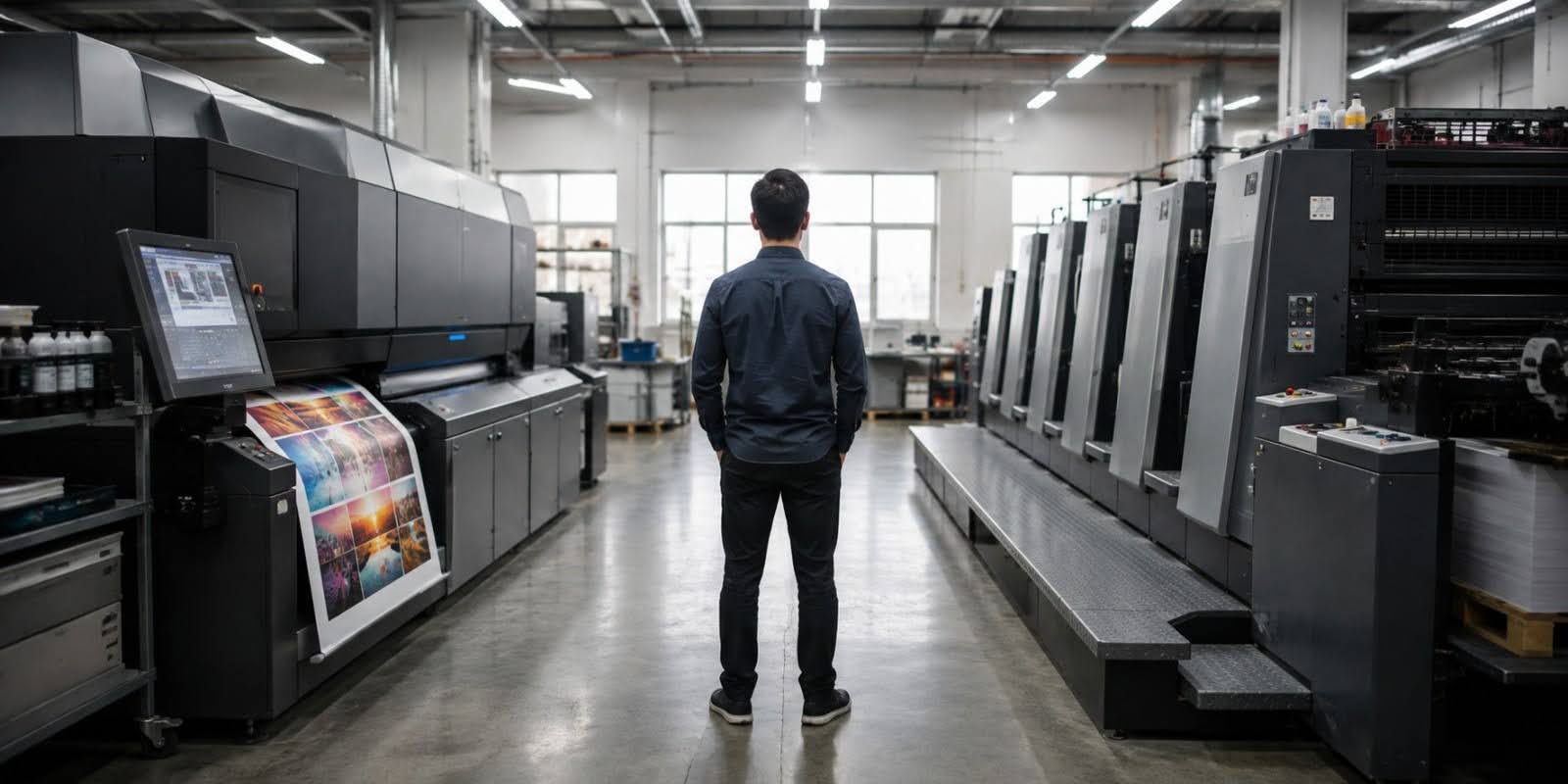
Digital printing transfers a digital file directly to the printing system without requiring conventional printing plates. This makes it particularly useful for short run printing, jobs involving variable information and projects requiring greater production flexibility.
Offset printing uses printing plates and transfers ink indirectly to the final printing surface, traditionally through a rubber blanket. Although the initial setup is more involved, offset printing can become highly efficient for suitable bulk printing projects.
The question of digital printing vs offset printing therefore cannot be answered by declaring one technology universally better.
A business printing 200 personalised promotional pieces has very different requirements from a company ordering 100,000 identical brochures. Quantity, artwork, substrate, colour requirements, turnaround time and finishing all influence which method provides the better solution.
Understanding these differences helps businesses make printing decisions based on actual project requirements rather than assumptions about which printing technology is newer or more established.
Introduction
Digital and offset are two major printing methods used across commercial print production.
They can both be used for applications such as:
- Brochures
- Flyers
- Marketing materials
- Business stationery
- Packaging components
- Labels
- Promotional materials
- Corporate communications
However, their production workflows are different.
At a high level:
| Factor | Digital Printing | Offset Printing |
| Printing plates | Generally not required | Required |
| Setup | Lower/faster | More extensive |
| Short quantities | Strong advantage | Less economical in many cases |
| High quantities | Suitable depending on job | Often highly efficient |
| Variable data | Strong advantage | Less flexible |
| Colour control | Strong, system-dependent | Strong, particularly for controlled production |
| Turnaround | Often faster | Requires additional setup |
| Personalisation | Highly suitable | Limited compared with digital |
These differences influence both pricing and suitability.
Rather than choosing a method based only on perceived print quality, businesses should consider the entire production requirement.
Digital Printing Explained
Digital printing produces printed material directly from an electronic file.
Artwork prepared using design software can be processed by the printing system without first creating conventional printing plates for each colour.
This reduces several setup stages associated with traditional offset production.
How Digital Printing Works
The exact technology depends on the printing equipment.
Commercial digital systems can use technologies such as:
- Toner
- Electrophotographic printing
- Inkjet
- Other digital imaging systems
Although the technologies vary, the common principle is direct processing from digital artwork.
This allows the printer to move relatively quickly from approved files to production.
Why Digital Printing Works Well for Short Runs
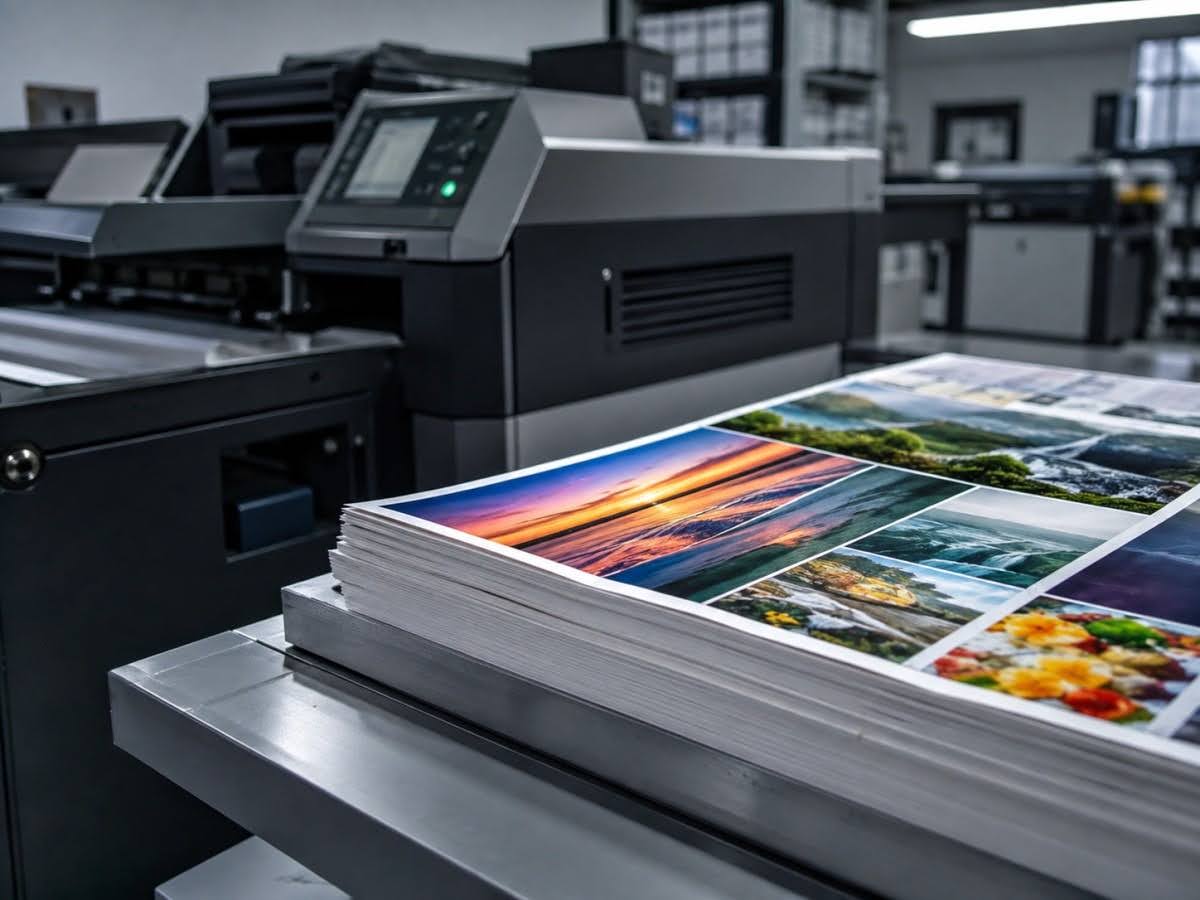
Many printing jobs involve fixed setup costs.
Because digital printing generally requires less conventional setup, it can be economical for smaller quantities.
Examples might include:
- Small brochure runs
- Limited promotional campaigns
- Event materials
- Prototype packaging
- Short-run labels
- Business cards
This does not mean digital printing is only suitable for small jobs. Modern commercial digital systems can handle substantial production volumes.
The key point is that digital technology can remain economically practical at quantities where offset setup may represent a larger proportion of the overall printing cost.
Variable Data Printing
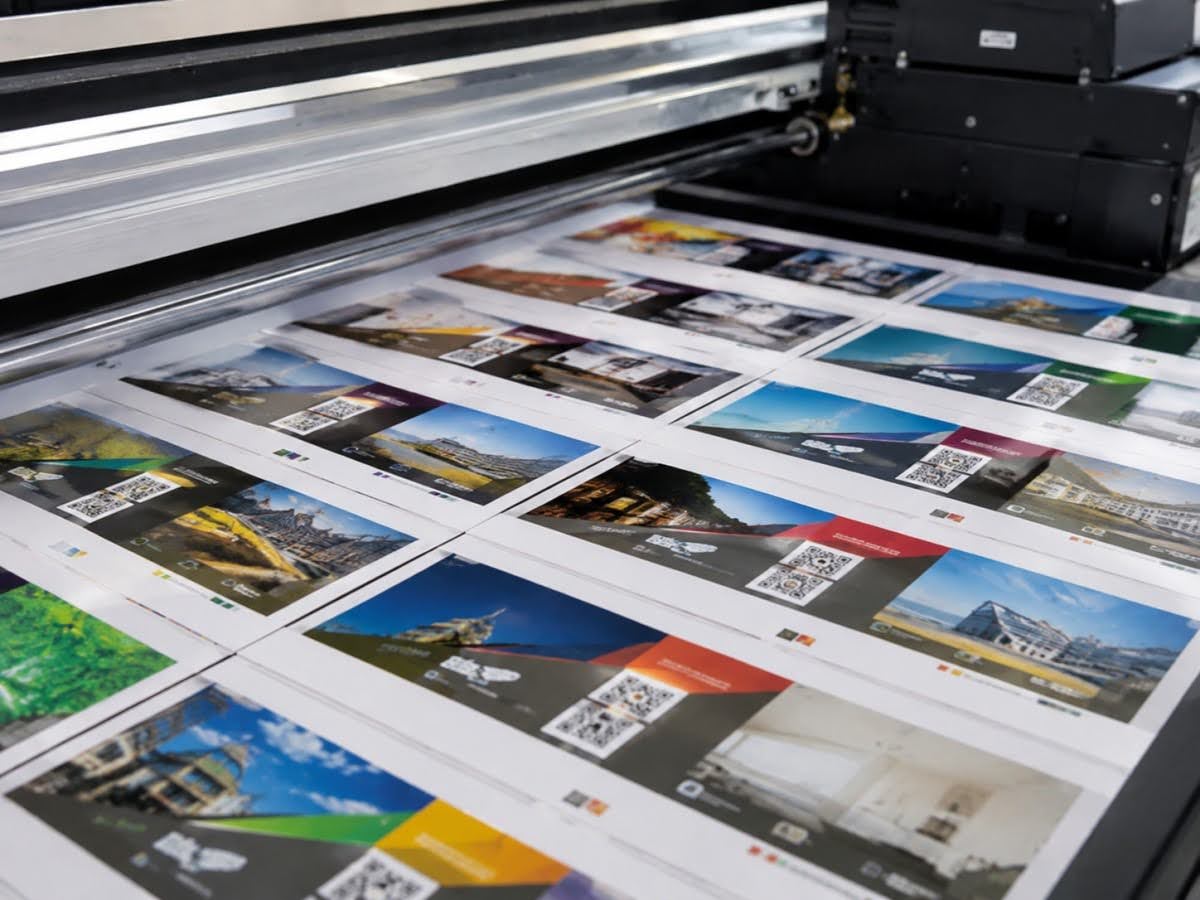
One of digital printing’s most important advantages is the ability to change information between printed pieces.
Variable elements can include:
- Customer names
- Serial numbers
- QR codes
- Barcodes
- Unique promotional codes
- Addresses
- Images
For example, 1,000 direct-mail pieces could potentially contain different customer names or codes without requiring a completely separate conventional print setup for each version.
This capability makes digital printing valuable for personalised marketing and identification applications.
Digital Proofing and Prototyping
Digital printing can also be useful for prototypes or small test quantities.
Businesses can produce a limited number of pieces before committing to a larger production run.
This can be helpful when testing:
- Packaging concepts
- Promotional materials
- Artwork variations
- Product labels
- Campaign designs
It provides flexibility where artwork may still evolve.
Offset Printing Explained
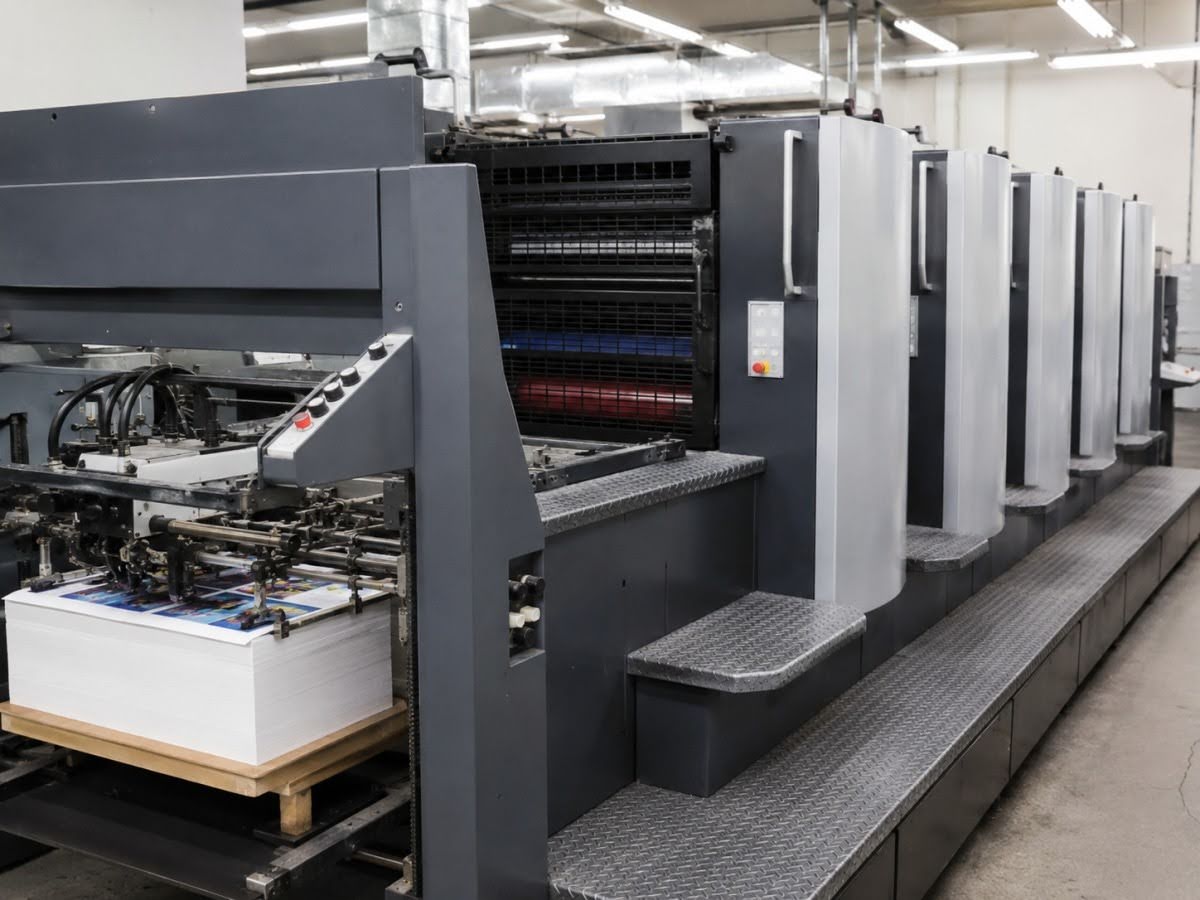
Offset printing is an established commercial printing process commonly used for larger production runs.
The process is described as “offset” because ink is not transferred directly from the printing plate onto the final paper in the conventional process.
Instead, the image is transferred from the plate to a rubber blanket and then onto the printing surface.
How Offset Printing Works
Traditional offset lithography generally involves:
- Preparing artwork
- Producing printing plates
- Installing and setting up the plates
- Preparing inks and press settings
- Running colour and registration checks
- Beginning full production
This creates more initial setup than digital printing.
However, once the press is properly configured, offset can produce large quantities efficiently.
Why Offset Printing Is Used for Bulk Printing
The economics of offset printing become more attractive as production quantities increase in suitable jobs.
Initial setup costs can be distributed across a larger number of printed pieces.
For example, if a project requires tens of thousands of identical brochures, the setup required for offset printing may represent a relatively small proportion of the total job.
This is why offset is commonly associated with high-volume commercial printing.
Colour Capabilities
Offset printing can provide strong colour consistency across long production runs when properly managed.
It can also support specific ink requirements depending on the equipment and project.
This can be valuable where businesses require controlled brand reproduction across a large quantity.
However, it would be misleading to say that offset automatically provides better print quality than digital printing in every case.
Modern digital printing technology can produce excellent results. The visible difference depends on the equipment, substrate, artwork and specific production requirements.
Substrate Options
Offset printing can work with a wide range of suitable paper stocks and other substrates depending on the press.
This can provide flexibility for commercial projects requiring specific:
- Paper weights
- Textures
- Finishes
- Sizes
Again, actual capabilities vary by printing company and equipment.
Advantages of Each
Both printing methods have genuine strengths.
Advantages of Digital Printing
Faster Setup
Because conventional plates are generally unnecessary, digital production can move more quickly from approved artwork to printing.
This can support shorter turnaround requirements.
Economical Short Runs
Lower setup requirements can make digital printing practical for smaller quantities.
This is particularly useful for businesses that do not want to hold large amounts of printed inventory.
Personalisation
Variable data is one of digital printing’s strongest capabilities.
Individual pieces can contain unique:
- Names
- Numbers
- Codes
- Images
- Messages
This can support targeted marketing and tracking.
Easier Artwork Changes
If a business needs several artwork variations, digital production can provide greater flexibility.
For example, a restaurant could print similar promotional materials for several branches while changing addresses or QR codes between versions.
Lower Inventory Risk
Businesses can potentially order smaller batches more frequently.
This can reduce the risk of storing thousands of printed pieces containing information that later becomes outdated.
Advantages of Offset Printing
High-Volume Efficiency
Offset printing can become highly cost-efficient for suitable large production runs once initial setup has been completed.
Consistency Across Large Runs
A properly managed offset press can provide consistent reproduction across substantial quantities.
Special Colour Requirements
Offset printing can support specialised ink configurations and colour requirements depending on the press and project.
This may be important for businesses with specific brand reproduction requirements.
Wide Substrate Possibilities
Depending on the equipment, offset production can accommodate various paper stocks and formats.
Established Commercial Production
Offset remains highly relevant for large-scale commercial printing where quantity and repeatability are major priorities.
Cost Comparison
Cost is often the deciding factor when businesses compare digital printing vs offset printing, but there is no fixed point where one automatically becomes cheaper.
Pricing depends on the entire project.
Digital Printing Cost Structure
Digital printing generally has lower initial setup requirements.
This can make it cost-effective for:
- Small quantities
- Multiple versions
- Personalised materials
- Frequent artwork changes
If only 100 or 500 pieces are required, avoiding conventional plate setup can provide an economic advantage.
Offset Printing Cost Structure
Offset printing involves greater initial preparation.
These setup costs may include:
- Plate production
- Press setup
- Colour adjustment
- Make-ready material
For a very small quantity, those costs are distributed across relatively few units.
For a large quantity, however, the setup is spread across many more pieces.
This can reduce the unit cost substantially.
Quantity Is Not the Only Cost Factor
A common mistake is assuming:
Small quantity = digital
Large quantity = offset
This is useful as a starting principle but not a universal rule.
Other pricing factors include:
- Paper or substrate
- Dimensions
- Number of pages
- Colours
- Finishing
- Folding
- Binding
- Die cutting
- Lamination
- Artwork variations
- Delivery
The printing company should therefore evaluate the complete specification.
Consider Total Cost, Not Just Unit Price
Suppose offset printing offers a lower unit price at 10,000 pieces than digital printing at 3,000 pieces.
That does not automatically make 10,000 better business decisions.
If only 3,000 pieces are actually needed, the remaining 7,000 represent:
- Additional cash spent
- Storage requirements
- Potential waste
- Risk of outdated information
Businesses should compare the cost of the quantity they realistically expect to use.
Best Applications
Different business requirements naturally favour different printing methods.
Digital Printing Is Well Suited to Short Runs
Digital printing is often a strong option for:
- Small brochure quantities
- Business cards
- Event materials
- Promotional campaigns
- Test runs
- Prototype packaging
- Limited-edition materials
The reduced setup allows businesses to print closer to actual demand.
Personalised Marketing
Digital printing is particularly useful when each piece needs unique information.
Examples include:
- Personalised direct mail
- Event tickets
- Membership materials
- Promotional vouchers
- Unique QR codes
This would be more complicated using conventional offset production.
Frequently Updated Materials
Some printed content changes regularly.
Examples include:
- Price lists
- Menus
- Promotional offers
- Training materials
- Product catalogues
Printing smaller quantities digitally can reduce the risk of holding obsolete stock.
Offset Printing for High-Volume Commercial Work
Offset can be highly suitable for large quantities of consistent printed material.
Examples include:
- Corporate brochures
- Catalogues
- Flyers
- Marketing inserts
- Books
- Large-volume stationery
Where the artwork remains the same across the entire run, offset’s production efficiency can become particularly valuable.
Brand-Critical Printing
Projects requiring highly controlled colour reproduction may also benefit from offset capabilities, depending on the colour specification and printing equipment.
Businesses should discuss actual brand colour requirements rather than assuming either technology will automatically reproduce colours exactly as they appear on a screen.
Packaging Applications
Both digital and offset printing can play roles in packaging production.
Digital can support:
- Prototypes
- Smaller product runs
- Multiple variants
- Market testing
Offset can support larger quantities where designs remain consistent.
The right choice depends on the packaging material, format and production volume.
Choosing the Right Method
Businesses can make a more informed choice by evaluating several questions.
1. How Many Pieces Are Required?
Quantity is one of the first considerations.
Smaller quantities often favour digital printing because of reduced setup.
Larger quantities may make offset increasingly economical.
However, ask for pricing based on the actual specification rather than relying on a universal quantity threshold.
2. Will Every Piece Be Identical?
If all pieces contain identical artwork, either method may be suitable depending on quantity.
If pieces need different:
- Names
- Barcodes
- QR codes
- Numbers
- Images
digital printing is generally better suited to variable production.
3. How Quickly Is the Printing Needed?
Digital printing can provide shorter setup times for many projects.
Offset requires additional preparation before the production run begins.
Urgent requirements may therefore favour digital printing, although actual turnaround depends on the printer’s production schedule and finishing requirements.
4. Are Special Colours Required?
If the project requires highly specific colours or special inks, discuss these requirements with the printing company.
Offset may offer advantages for certain spot-colour applications, while modern digital systems can reproduce a broad colour range.
The correct decision should be based on the actual colour requirement.
5. What Material Will Be Printed?
Not every substrate works equally well with every printing technology.
Businesses should identify:
- Paper type
- Thickness
- Texture
- Coating
- Final product
The printer can then recommend a compatible production method.
6. What Finishing Is Required?
Printing is often only one stage of the production process.
A project may also require:
- Lamination
- Folding
- Binding
- Die cutting
- Foil
- Spot UV
- Cutting
- Other finishing
The complete workflow can influence which printing method is most efficient.
7. How Likely Is the Content to Change?
This is frequently overlooked.
If a business expects to change:
- Prices
- Product information
- Contact details
- Promotional messages
Within several months, ordering a very large print run simply to reduce the unit price can create waste.
Smaller digital runs can provide greater flexibility.
Digital vs Offset: Quick Decision Guide
| Requirement | Digital | Offset |
| Short print run | ✓ | |
| Very large identical run | ✓ | |
| Variable data | ✓ | |
| Personalisation | ✓ | |
| Quick setup | ✓ | |
| Frequent artwork changes | ✓ | |
| Large-scale repeat production | ✓ | |
| Selected special inks | ✓ | |
| Prototyping | ✓ | |
| Multiple small variants | ✓ |
This table provides general guidance. Actual suitability depends on the printing company’s equipment and project specification.
Frequently Asked Questions About Digital and Offset Printing
What is the main difference between digital and offset printing?
Digital printing generally prints directly from electronic artwork without conventional printing plates. Offset printing uses plates and transfers the image through an intermediate blanket before printing onto the final substrate.
Is digital printing better than offset printing?
Not universally. Digital is often advantageous for shorter runs, personalisation and faster setup, while offset can provide strong cost efficiency and consistency for suitable high-volume jobs.
Which printing method has better quality?
Both can produce professional commercial print quality. The result depends on the equipment, artwork, paper or substrate, colour management and production requirements rather than printing technology alone.
Is digital printing cheaper?
Digital can be more economical for smaller quantities because conventional plate setup is avoided. At sufficiently high quantities, offset may achieve a lower unit cost for suitable jobs.
Why does offset printing become cheaper for large quantities?
Offset has initial setup requirements such as plate production and press preparation. Once production begins, those fixed costs can be distributed across thousands of pieces, improving the cost per unit.
Which method is better for short run printing?
Digital printing is generally well suited to short runs because of its lower setup requirements and flexibility.
Which method is better for bulk printing?
Offset printing can be highly efficient for large quantities of identical printed material. However, businesses should compare quotations based on the actual job because there is no universal quantity threshold.
Can digital printing handle personalised information?
Yes. Variable data printing is a major digital advantage and can allow individual pieces to contain different names, numbers, QR codes, barcodes or other information.
Is offset printing outdated?
No. Offset remains an important commercial printing technology, particularly for suitable high-volume production and specialised print requirements. Digital and offset serve different production needs rather than one simply replacing the other.
Which method is faster?
Digital printing can often begin production faster because it avoids conventional plate preparation. Total turnaround still depends on quantity, finishing and the printer’s production schedule.
Which method is better for business cards?
Either may be appropriate. Digital can be practical for smaller quantities and frequent updates, while offset can be efficient for larger consistent orders. Paper, finishing and colour requirements also matter.
Can both printing methods support finishing?
Yes. Printed materials from either process may undergo finishing such as lamination, folding, cutting or other processes where compatible with the job.
Which printing method is more suitable for prototypes?
Digital printing is generally advantageous for prototypes and test runs because businesses can produce smaller quantities without committing to extensive conventional setup.
Should a business choose the printing method itself?
Not necessarily. Businesses can provide the printing company with quantity, artwork, substrate, colour, finishing and deadline requirements. The printer can then recommend an appropriate production method.
Conclusion
The digital printing vs offset printing decision is ultimately a question of matching production technology to the requirements of the job.
Digital printing provides significant flexibility. It is particularly useful for short runs, personalised materials, variable data, prototypes and projects where artwork changes frequently. Reduced setup requirements can also support faster production for suitable jobs.
Offset printing remains highly relevant for commercial printing, particularly where businesses require large quantities of identical materials. Its more extensive setup can become economically efficient when those costs are distributed across substantial production volumes.
Neither method should be judged solely by age, speed or perceived quality.
Modern digital systems can deliver excellent commercial print quality, while offset continues to provide important advantages for large-scale and specialised production.
Businesses should instead evaluate quantity, artwork variations, colour requirements, substrate, turnaround time, finishing and the likelihood that printed information will change.
The lowest unit price is also not always the lowest total business cost. Printing more materials than necessary can create storage costs and waste if information becomes outdated.
The better printing method is therefore the one that delivers the required quality and functionality at the most practical total cost for the actual project.
Match Your Printing Method to the Job, Not the Trend
Digital and offset printing are complementary technologies. The best choice depends on whether a business needs flexibility, personalisation and shorter quantities or the production efficiency associated with a larger consistent print run.
For businesses comparing digital printing vs offset printing for commercial printing projects, Printsys Pte Ltd can help assess the quantity, artwork, material, finishing and production requirements to determine a suitable printing approach. Get in touch with Printsys today!