


Best Sticker Types for Packaging and Product Branding
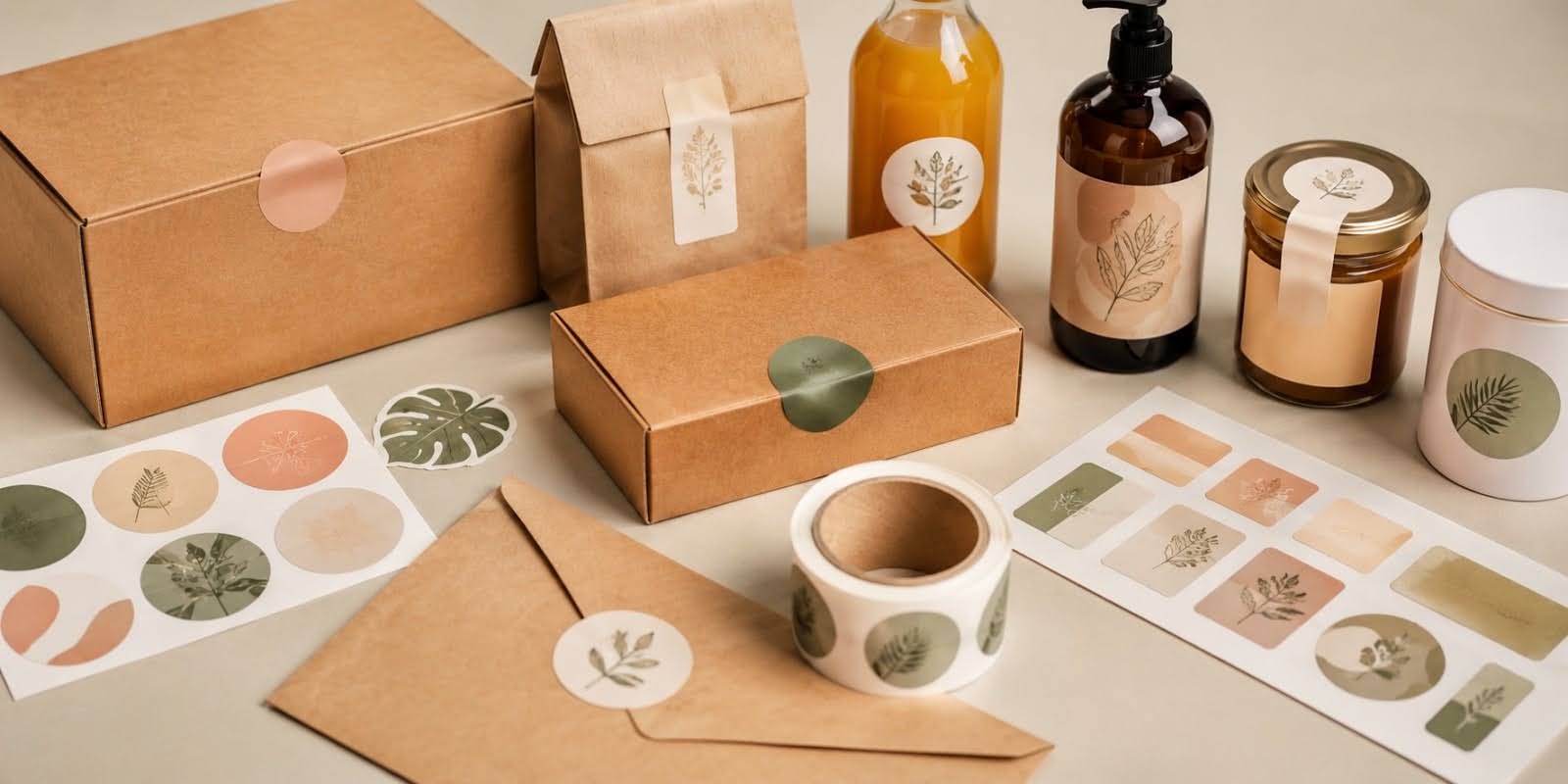
Packaging stickers can turn a plain box, bottle, jar, pouch or bag into recognisable branded packaging without requiring every component to be custom-manufactured.
For businesses, however, choosing packaging stickers is not purely a design decision. A label needs to communicate clearly, remain attached to the packaging and withstand the conditions the product encounters before it reaches
This guide explains the main types of packaging stickers, commonly used materials and finishes, industry applications, branding considerations and factors to assess when choosing a printing company.
Why Packaging Stickers Matter
Packaging is one of the most visible physical representations of a brand.
Before a customer opens a product, the packaging may already communicate:
- Brand identity
- Product category
- Quality positioning
- Product information
- Usage instructions
- Promotional messages
Packaging stickers provide a flexible way to add these elements to different types of containers.
They Help Create Brand Recognition
Consistent branding stickers can make products easier to recognise.
When the same:
- Logo
- Colours
- Typography
- Graphic style
- Label layout
appear across a product range, customers can begin to associate those elements with the business.
This is particularly useful for companies selling several product variants.
Different flavours, sizes or formulations can use a consistent packaging system while individual stickers distinguish each variation.
They Can Make Standard Packaging More Distinctive
Not every business requires fully custom-manufactured packaging.
A company might use standard:
- Boxes
- Bottles
- Jars
- Pouches
- Paper bags
and add custom packaging stickers to create a branded presentation.
This can provide flexibility when packaging requirements change or when businesses are managing several product variations.
Packaging Stickers Communicate Information
Product labels also perform a functional role.
Depending on the application, they may display:
- Product names
- Ingredients
- Instructions
- Warnings
- Storage information
- Barcodes
- QR codes
- Batch information
The label therefore needs to balance branding with readability.
A visually attractive label that makes essential information difficult to find is not an effective packaging solution.
They Influence Product Presentation
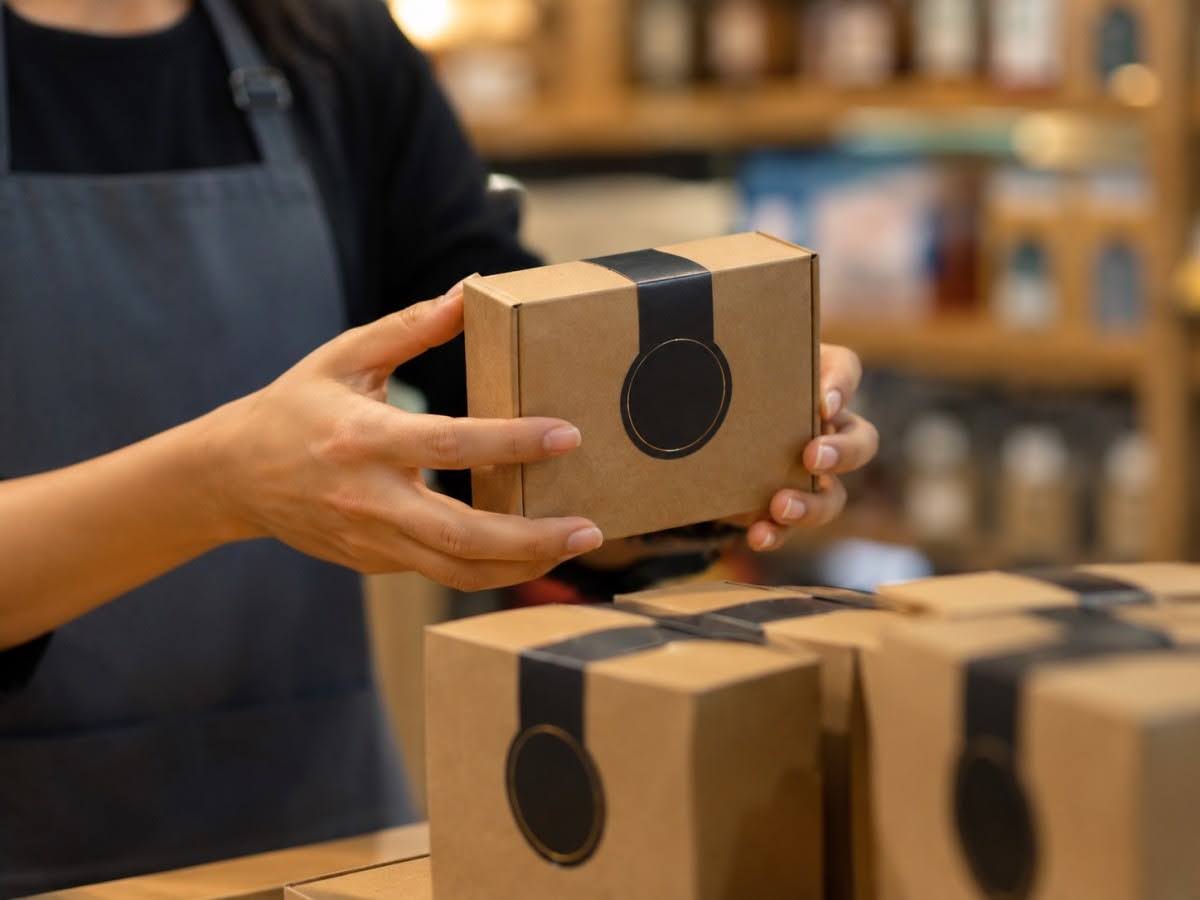
Customers often make quick visual assessments based on packaging.
Material, print quality and finish can influence whether a product appears:
- Premium
- Natural
- Technical
- Playful
- Minimalist
- Practical
This means the sticker itself can contribute to perceived product positioning.
Types of Packaging Labels
Packaging labels can serve different purposes. Businesses should first identify the label’s role before choosing its material and finish.
Primary Product Labels
Primary product labels are usually the main stickers displayed prominently on packaging.
They often contain:
- Brand logo
- Product name
- Product variant
- Key selling information
For bottles and jars, the primary label may occupy the front-facing area.
Its design should establish a clear hierarchy so the brand and product can be recognised quickly.
Information Labels
Some packaging requires secondary stickers containing more detailed information.
These may include:
- Ingredients
- Directions
- Storage instructions
- Product specifications
- Warnings
- Contact details
Separating detailed information from the primary branding area can help maintain a cleaner front label.
Barcode Labels
Barcode labels support inventory, retail and logistics processes.
They may contain:
- Product barcode
- SKU
- Serial number
- Inventory information
- Product identifier
Print clarity is particularly important because poor contrast, distortion or damage can affect scanning.
Barcode labels should also be positioned on a suitable part of the packaging rather than being wrapped excessively around edges or highly curved surfaces.
Promotional Stickers
Promotional stickers can be added temporarily without redesigning the main packaging.
Examples include:
- Limited edition
- New product
- Promotional price
- Seasonal offer
- Gift set
- Special campaign
This can make them useful for short-term marketing activities.
Packaging Seals
Stickers can also be used to close:
- Boxes
- Tissue paper
- Paper bags
- Envelopes
- Selected containers
In these applications, the sticker can function as both a closure and a branding element.
Transparent Labels
Transparent stickers can create a minimal “no-label” appearance where the packaging itself remains visible.
They are commonly considered for:
- Glass bottles
- Jars
- Cosmetic containers
- Clear plastic packaging
Design needs additional attention because the product or container colour becomes part of the background.
Die Cut Branding Stickers
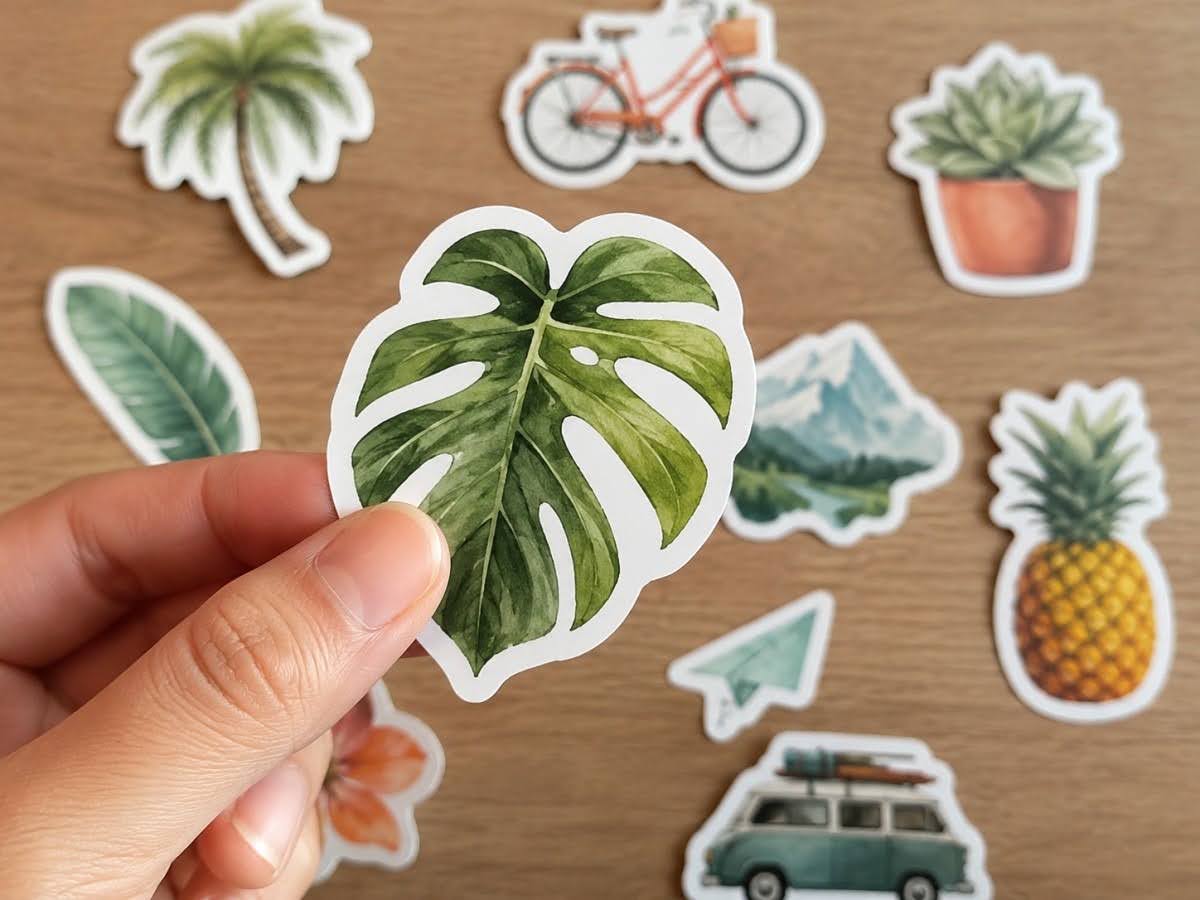
Die cut stickers follow a custom shape instead of a standard square or rectangle.
They can be used to emphasise:
- Logos
- Symbols
- Product graphics
- Promotional branding
Custom shapes can make packaging more distinctive, although practical application should remain a priority.
Materials
Sticker material should be selected according to the packaging surface and environmental conditions.
Paper Labels
Paper is suitable for many dry indoor packaging applications.
Common uses include:
- Boxes
- Paper bags
- Dry food packaging
- Retail products
- Promotional seals
Paper can provide strong print quality and can suit brands seeking a traditional or natural appearance.
Its main limitation is moisture.
Ordinary paper can wrinkle, tear or deteriorate when exposed to water or significant condensation.
Kraft Paper
Kraft labels have a natural brown appearance that can complement:
- Handmade products
- Artisan foods
- Gift packaging
- Natural-themed brands
The material itself becomes part of the visual identity.
Businesses should remember that printed colours can appear different on brown kraft compared with white material.
Vinyl Stickers
Vinyl provides greater moisture and tear resistance than standard paper.
It can be suitable for:
- Beverage bottles
- Cosmetic products
- Promotional packaging
- Frequently handled containers
- Selected outdoor applications
Its flexibility can also make it useful for curved surfaces.
Polypropylene Labels
Polypropylene is another synthetic material frequently considered for product labels.
It can provide:
- Moisture resistance
- Smooth appearance
- Good printability
- Flexibility
This can make it suitable for food, beverage and cosmetic packaging depending on the exact application.
PET and Polyester Labels
PET/polyester can provide greater dimensional stability and durability for more demanding applications.
It may be considered for:
- Industrial products
- Electronics
- Equipment packaging
- Durable identification
The appropriate material still depends on the container surface, flexibility requirements and environmental exposure.
Waterproof Labels
Waterproof labels generally use synthetic face materials rather than ordinary untreated paper.
However, waterproof performance depends on more than the material.
Businesses should consider:
Face material + printing + adhesive + finishing
A waterproof material with an unsuitable adhesive may still peel when exposed to condensation.
Finishes
Finishing can alter both appearance and durability.
Matte Finish
Matte stickers have a low-reflection appearance.
They can complement:
- Cosmetics
- Premium products
- Natural products
- Minimalist packaging
Reduced glare may also help labels containing detailed text.
Gloss Finish
Gloss stickers have a polished reflective surface that can make colours appear more vibrant.
They can suit:
- Beverages
- Food products
- Colourful retail packaging
- Promotional products
Gloss can create a strong visual impact, although reflection should be considered where labels contain barcodes or QR codes.
Lamination
Lamination places a protective film over the printed surface.
It can improve resistance to:
- Moisture
- Scratches
- Frequent handling
- Surface wear
Both matte and gloss lamination may be available depending on the printing process.
Lamination is particularly useful when packaging needs additional protection, but it does not automatically make an unsuitable paper label fully waterproof.
Foil
Foil can add metallic emphasis to selected areas such as:
- Logos
- Product names
- Borders
- Decorative elements
It can support premium packaging when used selectively.
Spot UV
Spot UV can create glossy contrast on selected design elements.
For example, a matte label might use spot UV over the logo to create visual and tactile differentiation.
Specialty finishes should have a clear purpose. Adding several premium effects does not automatically improve packaging.
Industry Examples
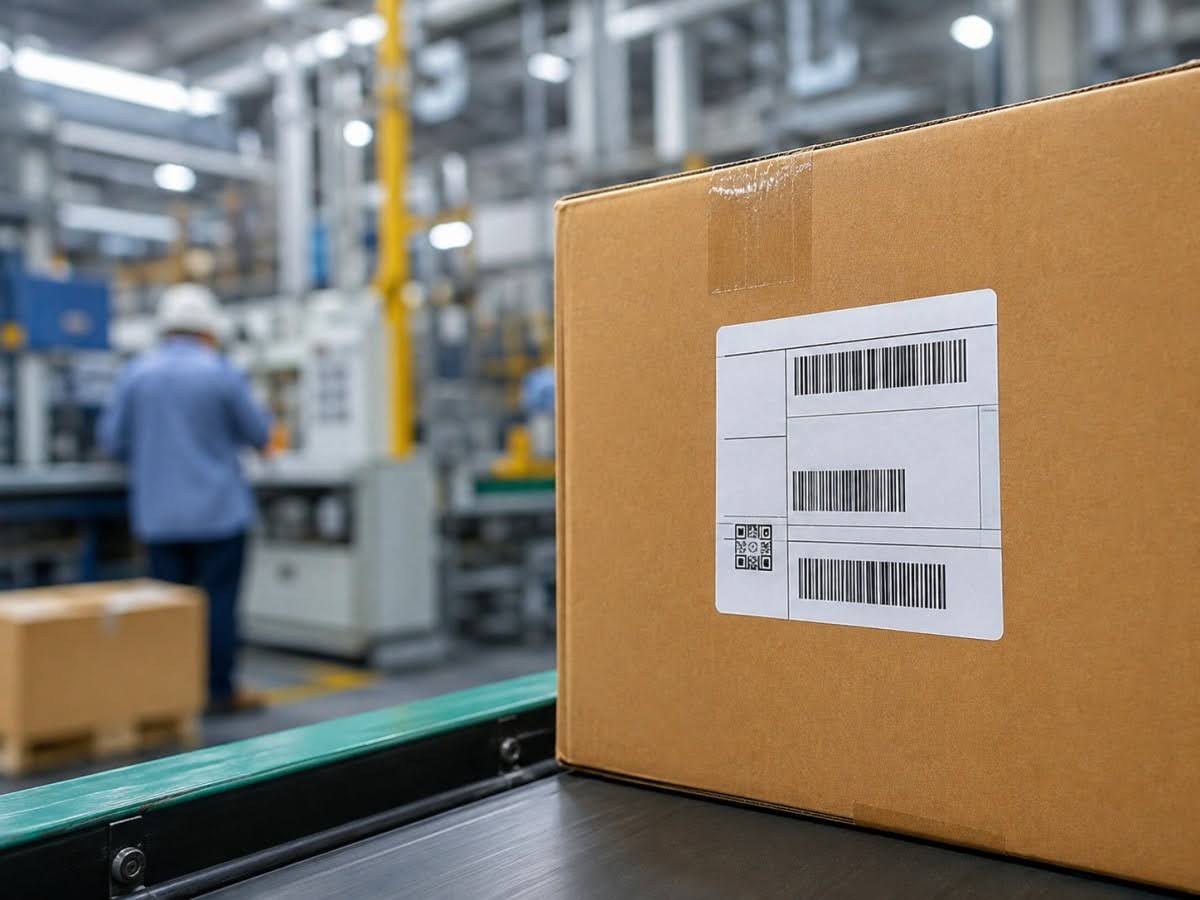
Different industries place different demands on packaging stickers.
Food and Beverage
Food labels may need to display product information clearly while remaining compatible with the packaging environment.
Dry products may use paper labels effectively.
Examples include:
- Bakery boxes
- Snack packaging
- Dry goods
- Paper containers
Chilled products can require a different approach.
Beverage bottles and refrigerated foods may experience condensation, making suitable waterproof labels or synthetic materials more appropriate.
Food businesses should also distinguish between general outer packaging labels and applications involving specific food-contact requirements.
Cosmetics and Personal Care
Cosmetic labels often need to combine strong visual presentation with resistance to moisture and repeated handling.
Products can include:
- Shampoo
- Skincare
- Body care
- Toiletries
- Cosmetic containers
A label used in a bathroom environment may need to withstand humidity and splashes.
Some products may also expose labels to oils, alcohol or other substances, meaning chemical resistance could matter in addition to water resistance.
Retail
Retail packaging stickers can be used for:
- Branding
- Pricing
- Promotions
- Product identification
- Barcodes
Retail labels should be visually consistent while remaining easy for staff and customers to understand.
Short-term promotional stickers can be particularly useful because campaigns can change without redesigning permanent packaging.
E-Commerce
E-commerce businesses frequently use packaging stickers to brand standard shipping materials.
Applications include:
- Mailer boxes
- Tissue paper
- Envelopes
- Thank-you packaging
- Product containers
A logo sticker can transform an otherwise plain shipping box into a branded customer touchpoint.
Promotional stickers can also be included inside parcels as giveaways.
Manufacturing
Manufacturing labels may prioritise function over decorative appearance.
Applications can include:
- Product identification
- Batch information
- Barcodes
- Equipment labels
- Safety information
Durability and readability may therefore matter more than specialty finishing.
Electronics
Electronic products may use labels for:
- Serial numbers
- Product information
- Warranty identification
- Barcodes
- Technical information
PET/polyester and other durable synthetic materials may be considered where long-term identification is required.
Branding Tips
Packaging stickers should work as part of a larger brand system rather than as isolated graphics.
Maintain Visual Consistency
Use established:
- Brand colours
- Logo versions
- Fonts
- Graphic elements
- Tone of communication
Consistent packaging strengthens recognition across different products.
Create Clear Hierarchy
Customers should immediately understand what they are looking at.
For a product label, the hierarchy might be:
Brand → Product → Variant → Supporting information
Do not make every element the same size or weight.
Avoid Overcrowding
More information does not automatically create better packaging.
Small labels can quickly become difficult to read when businesses attempt to include too much.
Prioritise essential content and consider using separate secondary labels where appropriate.
Consider the Container Colour
Sticker artwork should be evaluated on the actual packaging.
This is particularly important for transparent labels.
A logo that looks clear against a white design background may disappear when placed on:
- Dark glass
- Coloured plastic
- Transparent liquid
White ink or stronger contrast may be necessary.
Use Shape Strategically
Custom-shaped branding stickers can help reinforce recognition.
However, unusual shapes should serve the brand rather than create application difficulties.
Simple shapes are often easier to:
- Align
- Peel
- Apply
- Store
Design for the Actual Printed Size
Review packaging stickers at their intended dimensions.
Check:
- Text readability
- Logo clarity
- Fine lines
- Barcode size
- QR-code size
- Safe margins
A design that looks spacious on a large monitor can become overcrowded when reduced to a 50 mm label.
Build a Consistent Product Family
Businesses with several products can use a shared label system.
For example, all products might use the same:
- Logo position
- Typography
- Label shape
- Information hierarchy
while different colours identify individual variants.
This creates both consistency and differentiation.
Choosing the Right Printing Company
Choosing a printing provider should involve more than comparing the lowest quotation.
The printer needs to understand the intended application and translate it into an appropriate material and production specification.
Look for Relevant Material Options
A printing company should be able to discuss different materials rather than recommend the same sticker stock for every job.
Depending on the application, businesses may need:
- Paper
- Kraft
- Vinyl
- Transparent film
- PET/polyester
- Other synthetic labels
The printer should be able to explain why a particular option is suitable.
Discuss the Application, Not Just the Artwork
Businesses should tell the printer:
- What the sticker will be applied to
- Whether the surface is curved
- Whether the product is refrigerated
- Whether the label gets wet
- Whether it is used outdoors
- How long it needs to last
This information can be more useful than simply asking for “premium stickers.”
Check Printing and Finishing Capabilities
Depending on the project, required capabilities may include:
- Full-colour printing
- Custom die cutting
- Lamination
- Matte or gloss finishing
- Transparent sticker printing
- Barcode printing
- Specialty finishing
Confirm these requirements before finalising the design.
Ask About Artwork Requirements
A professional printer should provide clear specifications covering:
- File format
- Resolution
- Colour mode
- Bleed
- Safe margins
- Cut paths
Following these requirements helps reduce production problems.
Consider Proofing
Proofing can be valuable for packaging because screen previews cannot fully reproduce:
- Material texture
- Transparency
- Finish
- Actual size
- Adhesion
Where packaging presentation is important, testing a physical sample on the actual product can identify issues before a larger production run.
Evaluate Application Requirements
If the business applies large quantities of labels, the supply format matters.
Questions can include:
- Are labels supplied individually?
- On sheets?
- On rolls?
- Are they manually applied?
- Will machinery apply them?
The best printing solution should support the packaging workflow as well as the final visual appearance.
Frequently Asked Questions (FAQs)
What are packaging stickers?
Packaging stickers are adhesive printed labels used on boxes, bottles, jars, bags, pouches and other packaging. They can provide branding, product information, identification, promotional messaging or operational information such as barcodes.
What material is best for packaging stickers?
It depends on the application. Paper can work well for dry indoor packaging, while vinyl, polypropylene and other synthetic materials can be better for moisture, condensation or demanding handling.
Are packaging stickers suitable for food products?
Yes, stickers are widely used for food packaging. The material should suit the storage environment and packaging surface. Specific regulatory or food-contact requirements should also be confirmed where applicable.
What labels are best for refrigerated products?
Synthetic waterproof or moisture-resistant labels are generally better starting points because refrigerated products can develop condensation. Adhesive performance should also be tested under the actual conditions.
What labels are suitable for cosmetics?
Vinyl, polypropylene and other synthetic labels can be suitable where cosmetic products encounter moisture and frequent handling. The exact choice depends on the container and exposure to water, oils or other substances.
Can packaging stickers be waterproof?
Yes. Waterproof labels can use synthetic materials, compatible printing and suitable adhesives. The complete sticker construction should be designed for the expected moisture exposure.
Can packaging stickers include barcodes?
Yes. Barcode labels can be integrated into product packaging as long as print quality, dimensions, contrast and placement support reliable scanning.
Are matte or gloss labels better for packaging?
Neither is universally better. Matte provides reduced reflection and a softer appearance, while gloss can make colours appear more vibrant. The choice should support both the brand and practical requirements.
Can transparent stickers be used on bottles?
Yes. Transparent labels can create a minimal appearance on glass and clear plastic bottles. Artwork should account for the colour of the container or product behind the sticker.
What is the difference between a product label and a promotional sticker?
A product label generally communicates permanent product or branding information. Promotional stickers are commonly added for temporary campaigns such as new launches, seasonal offers or limited editions.
Are custom-shaped stickers good for packaging?
They can be. Die cut branding stickers can make packaging more distinctive, particularly when the shape reinforces a logo or brand element. Practical application and production complexity should still be considered.
How do businesses choose a label printing company?
Compare material options, printing capabilities, finishing, artwork support, quality control and understanding of the intended application—not price alone. A suitable printer should be able to recommend specifications based on the packaging environment.
Make Every Package Carry Your Brand Further
From a simple logo seal on a box to a durable waterproof label on a product bottle, the right packaging sticker can make standard packaging more recognisable while supporting the information customers need.
For businesses planning packaging stickers, product labels, branding stickers, barcode labels or other custom sticker printing requirements, Printsys Pte Ltd can help determine suitable materials, printing options and finishes based on the product and packaging application. Get in touch with Printsys today!