


Choosing the Right Sticker Materials for Every Application
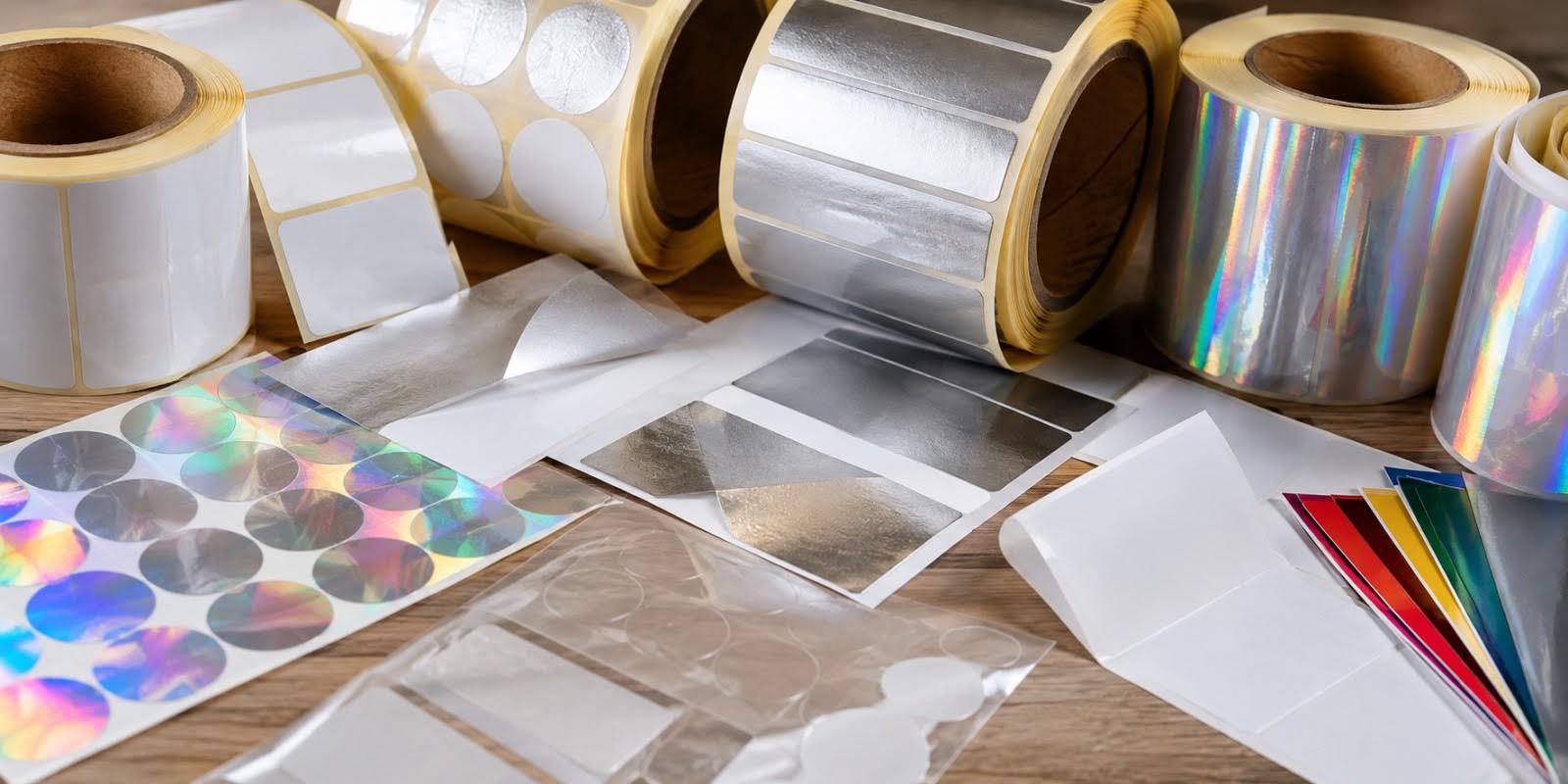
Choosing the right sticker material is one of the most important decisions in label and sticker printing. While design determines how a sticker communicates visually, the material determines whether it can perform reliably in its intended environment.
A paper label placed on a dry cardboard box has very different requirements from an industrial sticker exposed to moisture, heat and repeated handling. Similarly, a product label for a refrigerated beverage may need greater water resistance than a promotional sticker distributed at an indoor event.
This is why there is no single sticker material that is best for every application.
Businesses need to consider the application surface, environmental conditions, expected lifespan, flexibility, appearance and adhesive requirements before selecting a material. Options can include paper, kraft paper, vinyl, PVC, PET and other synthetic labels, each with different characteristics.
For businesses in Singapore, factors such as humidity, condensation and outdoor exposure can make this decision particularly important.
Understanding the differences between common sticker materials makes it easier to avoid both under-specification, where a label fails prematurely, and over-specification, where businesses pay for durability they do not actually need.
Overview
Sticker materials form the printable face of an adhesive label. This is the surface that carries the logo, product information, barcode, instructions, or other printed content.
A typical sticker construction can include:
Face material → printing → optional protective finish → adhesive → release liner
All of these components contribute to performance.
The face material, however, has a major influence on:
- Appearance
- Flexibility
- Tear resistance
- Moisture resistance
- Temperature performance
- Print compatibility
- Outdoor suitability
- Expected lifespan
This is why material selection should happen before production rather than after the artwork has already been finalised.
Material Should Follow the Application
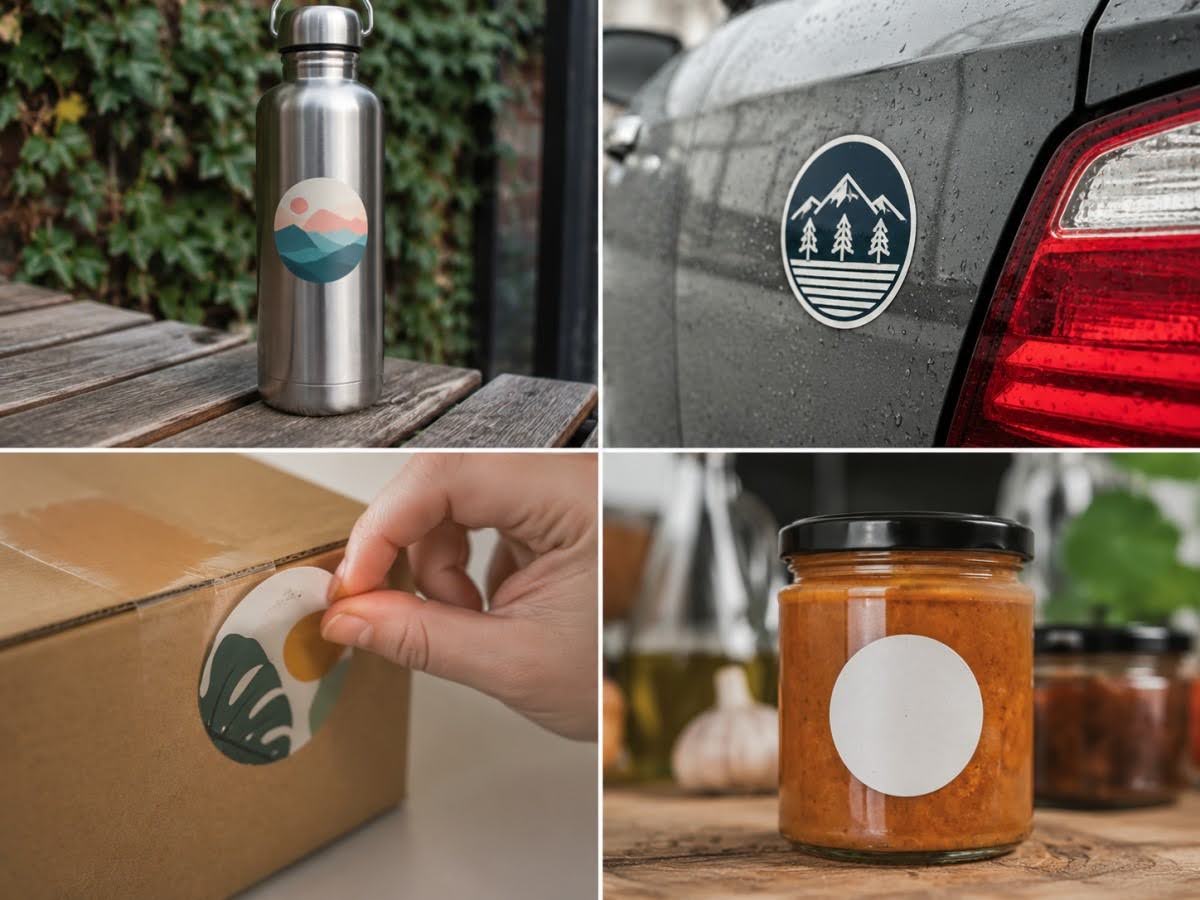
One of the simplest ways to approach material selection is to ask where the sticker will spend most of its life.
For example:
| Application | Possible Starting Material |
| Indoor cardboard packaging | Paper |
| Natural or rustic packaging | Kraft paper |
| Beverage bottles | Vinyl or suitable synthetic film |
| Cosmetic containers | Vinyl, PET or synthetic film |
| Outdoor stickers | Suitable outdoor-grade synthetic material |
| Equipment identification | PET/polyester |
| Short-term promotions | Paper or vinyl |
| Refrigerated products | Moisture-resistant synthetic label |
These are starting points rather than universal rules.
The final specification should account for the exact environment, surface and expected duration.
Common Materials
Understanding the characteristics of commonly available materials can help businesses narrow down their options.
Paper
Paper is one of the most familiar sticker materials.
It is commonly used for:
- Retail labels
- Boxes
- Paper bags
- Packaging seals
- Dry product labels
- Promotional stickers
Paper can provide strong print quality and is often practical for applications that remain indoors and dry.
It is also available in different textures and finishes, giving businesses flexibility in packaging presentation.
Its primary limitation is environmental resistance.
Ordinary paper can absorb moisture, wrinkle, tear and deteriorate when exposed to water. This generally makes it less suitable for refrigerated products, outdoor environments or labels expected to encounter repeated wet handling.
Kraft Paper
Kraft paper has a recognisable natural brown appearance that can complement brands seeking a rustic, handcrafted or environmentally influenced aesthetic.
Common applications can include:
- Artisan products
- Food packaging
- Handmade goods
- Gift packaging
- Natural product branding
Its appearance becomes part of the design.
However, kraft paper creates specific printing considerations. Because the material itself is brown rather than white, printed colours may appear differently than they would on an opaque white label.
Fine colour matching may therefore require additional consideration.
Kraft paper also shares many of the moisture limitations associated with other paper-based labels unless specifically treated or protected.
Vinyl
Vinyl is a flexible synthetic sticker material commonly selected when greater resistance to moisture and physical wear is required.
Applications can include:
- Bottles
- Containers
- Promotional decals
- Product labels
- Windows
- Selected outdoor stickers
Vinyl’s flexibility can make it useful on curved surfaces because it can conform more readily than some rigid materials.
It is also commonly associated with waterproof labels because the face material does not absorb water like ordinary paper.
However, businesses should distinguish between a water-resistant vinyl material and a fully weather-resistant sticker construction.
Outdoor durability also depends on printing, adhesive, lamination and UV exposure.
PVC
PVC, or polyvinyl chloride, is a synthetic plastic material used in various printing and labelling applications.
It can offer:
- Flexibility
- Moisture resistance
- Durability
- Compatibility with selected indoor and outdoor applications
PVC and vinyl terminology can sometimes overlap commercially because vinyl materials are often based on polyvinyl chloride.
Businesses therefore should not rely solely on a material name when comparing specifications. It is more useful to ask about the actual performance characteristics of the proposed label stock.
These include thickness, flexibility, adhesive, outdoor suitability and expected service life.
PET and Polyester Labels
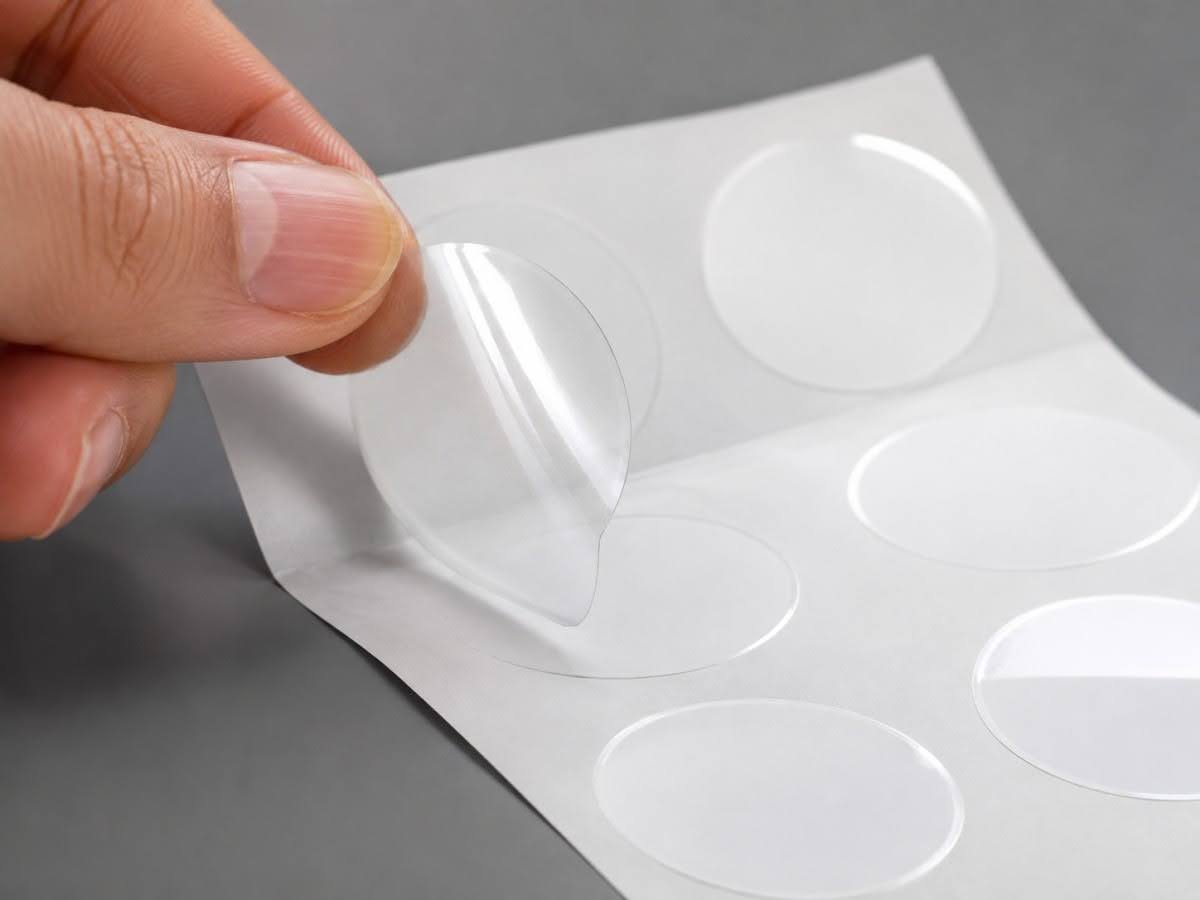
PET, or polyethene terephthalate, is a polyester material used where labels require greater dimensional stability and durability.
Polyester labels can be suitable for:
- Equipment
- Electronics
- Asset identification
- Machinery
- Industrial products
- Durable product labels
Compared with flexible vinyl, PET can provide a more dimensionally stable construction.
This may be useful where the label needs to maintain its shape under repeated handling or demanding conditions.
However, increased durability does not automatically make PET the best choice. On certain highly curved surfaces, a more flexible material may perform better.
Other Synthetic Labels
Synthetic labels can include polypropylene and other polymer-based films designed to provide characteristics that ordinary paper cannot.
Depending on the material, synthetic labels can provide:
- Moisture resistance
- Tear resistance
- Flexibility
- Chemical resistance
- Improved durability
They are commonly used for product packaging, cosmetics, food and beverage applications, industrial identification and other environments where paper may be unsuitable.
Durability Comparison
Durability should be evaluated according to the conditions the sticker needs to withstand.
A label does not need maximum resistance to every possible environmental factor. It needs sufficient resistance to the factors it will actually encounter.
Moisture Resistance
Paper generally provides the lowest natural moisture resistance among common sticker materials.
Vinyl, PVC, PET and other synthetic films offer better starting points where exposure to water or condensation is expected.
This makes synthetic materials useful for:
- Refrigerated beverages
- Bathroom products
- Outdoor labels
- Chilled foods
- Frequently cleaned surfaces
Lamination may add additional protection, but the base material should still suit the environment.
Tear Resistance
Paper can tear relatively easily.
Synthetic films generally offer greater resistance to tearing, although the degree varies by material and thickness.
This can matter for labels exposed to:
- Frequent handling
- Transport
- Equipment use
- Outdoor conditions
Abrasion Resistance
Industrial stickers and frequently handled product labels may experience rubbing and scratching.
In these situations, durability depends on both the face material and printed surface.
A strong PET label can still become difficult to read if the printing is easily scratched.
Protective finishing may therefore be required.
Temperature and Chemical Exposure
Some specialised applications encounter:
- Heat
- Cold
- Cleaning agents
- Oils
- Chemicals
- Solvents
A label described as waterproof is not automatically resistant to these conditions.
Industrial users should define the actual exposure so that material, adhesive and printing can be selected accordingly.
Comparing Common Sticker Materials
| Material | Moisture Resistance | Tear Resistance | Flexibility | Typical Durability |
| Standard paper | Low | Low | Moderate | Short–moderate |
| Kraft paper | Low | Low | Moderate | Short–moderate |
| Vinyl | High | High | High | Moderate–high |
| PVC | High | High | High | Moderate–high |
| PET/polyester | High | High | Moderate | High |
| Other synthetic films | Moderate–high | High | Varies | Moderate–high |
Actual performance varies according to material grade, adhesive, printing, finishing and environmental conditions.
Indoor vs Outdoor
Whether a sticker will be used indoors or outdoors significantly affects material selection.
Indoor Stickers
Indoor environments are generally more controlled.
Stickers used on:
- Office products
- Retail packaging
- Boxes
- Paper bags
- Indoor displays
may not require strong resistance to weather or UV exposure.
Paper and kraft paper can therefore be perfectly appropriate.
Using industrial-grade PET for a temporary indoor packaging seal, for example, may add cost without providing meaningful additional value.
Indoor Environments Can Still Be Demanding
“Indoor” does not always mean “dry and protected.”
Indoor labels may still experience:
- Refrigeration
- High humidity
- Frequent washing
- Chemical cleaning
- Abrasion
- Heat
A label on a chilled bottle inside a supermarket has different requirements from a label on a dry box in the same building.
The actual conditions matter more than the indoor/outdoor classification alone.
Outdoor Stickers
Outdoor stickers can encounter:
- Rain
- Sunlight
- UV radiation
- Heat
- Humidity
- Dirt
- Temperature changes
Synthetic materials such as suitable vinyl, PVC or polyester are generally better starting points than ordinary paper.
However, outdoor performance is determined by the complete label.
Businesses should consider:
Material + ink + adhesive + laminate + expected exposure period
A vinyl face material does not automatically guarantee long-term weather resistance.
Food Packaging
Food packaging labels require careful material selection because their environments can vary significantly.
Dry Food Packaging
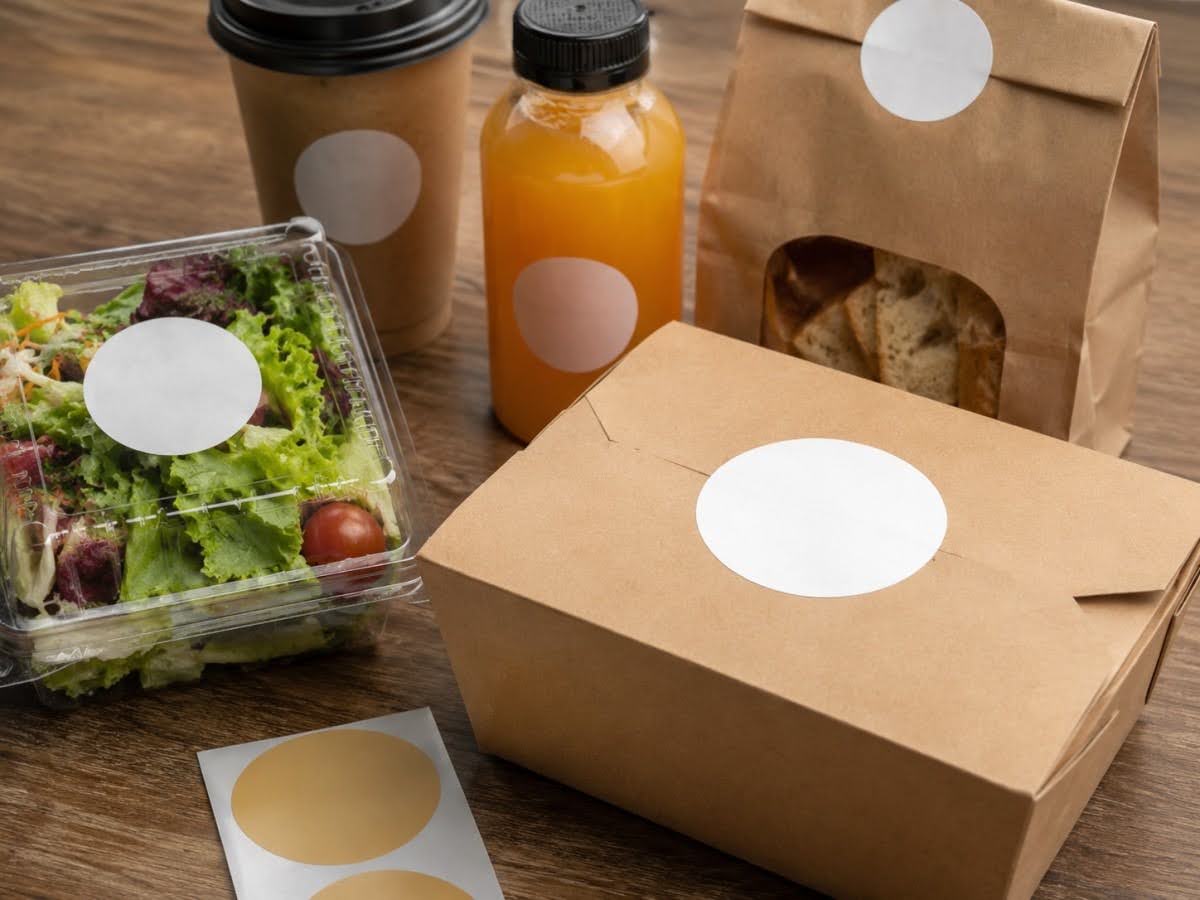
Paper and kraft paper can work effectively for dry products stored under controlled conditions.
Examples include:
- Bakery boxes
- Snack packaging
- Dry goods
- Outer cartons
- Paper bags
These applications may benefit from the appearance and cost efficiency of paper-based labels.
Refrigerated Products
Chilled food and beverage packaging can produce condensation.
A paper label may absorb this moisture, resulting in:
- Wrinkling
- Softening
- Edge lifting
- Reduced print quality
Suitable synthetic labels such as vinyl, polypropylene or PET may provide better moisture resistance.
Bottles and Jars
Material flexibility becomes important on curved packaging.
A label applied to a narrow bottle needs to conform properly without excessive tension at the edges.
Vinyl and other flexible films can be useful for this purpose.
The adhesive should also be compatible with the container material, whether it is glass or plastic.
Food Packaging Design Considerations
The label may need to display:
- Product name
- Ingredients
- Storage instructions
- Product information
- Barcode
- Branding
Material should support reliable printing and maintain readability throughout the intended product lifecycle.
Where labels are intended for direct or specialised food-contact applications, businesses should also confirm applicable material and regulatory requirements rather than assuming that a general packaging sticker is suitable.
Industrial Applications
Industrial stickers often have more demanding performance requirements than ordinary packaging labels.
They may be used for:
- Machinery
- Equipment
- Electrical components
- Assets
- Tools
- Storage systems
- Safety identification
- Product tracking
Why Polyester Labels Are Common in Industrial Uses
PET/polyester labels can provide strong dimensional stability and resistance to environmental wear.
Depending on the specification, they may be useful where labels need to remain readable for extended periods.
Applications can include:
- Serial numbers
- Equipment identification
- Warning information
- Asset numbers
- Barcodes
Adhesive Materials Become Critical
The face material is only half of the equation.
Industrial surfaces may include:
- Smooth metal
- Powder-coated metal
- Plastic
- Textured surfaces
- Painted equipment
An adhesive that works effectively on smooth glass may perform differently on a textured industrial surface.
Businesses should therefore provide information about the actual substrate when ordering industrial stickers.
Chemical and Heat Exposure
Industrial environments may expose labels to oils, cleaning agents, chemicals or elevated temperatures.
These conditions require application-specific testing.
“Waterproof” should not be interpreted as:
- Chemical proof
- Heat proof
- Solvent proof
- Oil proof
Each type of resistance needs to be evaluated separately.
Choosing the Right Material
The most reliable way to choose sticker materials is to work backwards from the application.
Step 1: Identify the Surface
Determine whether the sticker will be applied to:
- Paper
- Cardboard
- Glass
- Plastic
- Metal
- Painted surfaces
- Textured surfaces
Surface energy, texture and curvature can all affect adhesion.
Step 2: Identify Environmental Exposure
Ask whether the label will encounter:
- Water
- Condensation
- Sunlight
- Heat
- Refrigeration
- Chemicals
- Oil
- Frequent cleaning
This immediately eliminates materials that cannot handle the environment.
Step 3: Determine the Required Lifespan
A sticker needed for a three-day event does not require the same construction as an equipment label intended to remain readable for several years.
Avoid paying for unnecessary durability, but also avoid specifying a material that will fail before the end of the required lifespan.
Step 4: Determine Flexibility Requirements
Curved surfaces may benefit from flexible materials such as vinyl.
Flat equipment panels may support more dimensionally stable materials such as PET.
The shape of the substrate should therefore influence material choice.
Step 5: Consider Appearance
Material is also a design decision.
For example:
- Kraft paper can provide a natural appearance.
- White paper creates an opaque printable background.
- Clear synthetic film can create a no-label look.
- Vinyl can provide smooth, durable branding.
- PET can support a more technical appearance.
The material should complement the packaging and brand identity.
Step 6: Select the Adhesive
Consider whether the sticker needs:
- Permanent adhesion
- Removability
- Repositionability
- Specialised environmental resistance
Do not assume that all labels using the same face material use the same adhesive.
Step 7: Determine Whether Finishing Is Needed
Lamination or other protective finishing may be useful where labels experience:
- Scratching
- Moisture
- Frequent handling
- Outdoor exposure
Finishing should solve a real performance or aesthetic requirement rather than being added automatically.
Step 8: Test the Complete Sticker
Where performance is important, test the actual sticker construction on the real surface.
A practical test can reveal issues involving:
- Adhesion
- Edge lifting
- Curvature
- Condensation
- Readability
- Scanning
- Surface wear
This is more reliable than selecting materials based purely on general descriptions.
Frequently Asked Questions (FAQs)
What is the most durable sticker material?
There is no single most durable option for every environment. PET/polyester, vinyl and other synthetic films can provide strong durability, but their suitability depends on moisture, chemicals, heat, abrasion, surface and adhesive requirements.
What sticker material is best for waterproof labels?
Vinyl, PET/polyester and polypropylene are common synthetic options for moisture-resistant labels. The adhesive and printing also need to be appropriate for water exposure.
Is vinyl the same as PVC?
Many vinyl sticker materials are based on PVC, which stands for polyvinyl chloride. However, commercial specifications can vary, so businesses should compare actual performance characteristics rather than relying only on the terminology.
Is PET better than vinyl?
Not universally. PET offers strong dimensional stability and can suit industrial identification, while vinyl’s flexibility can make it more appropriate for curved surfaces and other applications. The better material depends on the use case.
What is the best material for outdoor stickers?
Suitable outdoor-grade vinyl or other synthetic materials are common choices. The complete sticker should also use appropriate printing, adhesive and protective finishing for rain, UV exposure, heat and humidity.
Which sticker material is best for bottles?
Flexible moisture-resistant materials such as vinyl or polypropylene can work well for many bottles. PET may also be suitable depending on the container and application. The label should be tested for curvature, condensation and adhesive performance.
Is kraft paper suitable for product labels?
Yes, particularly for dry indoor products where its natural appearance supports the brand. It is less appropriate where significant moisture resistance is required.
Are synthetic labels waterproof?
Many synthetic materials provide strong water resistance because they do not absorb water like ordinary paper. However, waterproof performance depends on the entire label construction, including printing and adhesive.
What sticker material is suitable for industrial equipment?
PET/polyester and other durable synthetic labels are commonly considered for industrial applications. The correct specification depends on heat, chemicals, abrasion, moisture and the equipment surface.
Can paper stickers be used outdoors?
Ordinary paper is generally not ideal for prolonged outdoor exposure. Protective finishing can improve resistance, but suitable synthetic materials are usually a better starting point for weather-exposed applications.
Which sticker material is best for food packaging?
It depends on the packaging environment. Paper can suit dry outer packaging, while synthetic labels can be more appropriate for refrigerated products, bottles and packaging exposed to condensation. Application-specific requirements should also be considered.
Does a thicker sticker material always last longer?
No. Thickness is only one characteristic. Adhesive, material chemistry, printing, lamination and environmental compatibility can have a greater influence on actual performance.
How do I know whether a sticker will stick to plastic?
Different plastics have different surface characteristics. The safest approach is to identify the exact substrate and test the proposed adhesive on the actual product, particularly for demanding or long-term applications.
Choosing the Right Sticker Material for Your Application
Choosing the right sticker material is not about finding one material that outperforms everything else. It is about matching the characteristics of the label to the conditions it will actually encounter.
Paper and kraft paper can be highly effective for dry indoor packaging, retail applications and short-term promotional use. Vinyl and PVC provide greater flexibility and moisture resistance, making them useful for bottles, product labels and selected outdoor applications. PET/polyester and other synthetic labels can provide additional dimensional stability and durability for industrial and long-term identification requirements.
The application environment ultimately determines the correct specification.
Businesses should consider the surface, moisture exposure, sunlight, temperature, chemicals, required lifespan, flexibility and visual appearance before deciding on a material. Adhesive and finishing should then be selected around those same conditions.
This application-first approach prevents two common problems: paying unnecessarily for performance the label does not need, and selecting an economical material that cannot survive the intended environment.
For businesses in Singapore, where humidity, refrigeration and outdoor exposure can introduce additional challenges, understanding these differences can make sticker printing more reliable and cost-effective.
Match the Sticker Material to What It Actually Needs to Survive
The right label starts with the environment, not the material name. Once the surface, exposure, lifespan and branding requirements are clear, businesses can choose between paper, kraft, vinyl, PET and other synthetic options with much greater confidence.
For businesses comparing sticker materials for product labels, packaging, waterproof labels or industrial stickers, Printsys Pte Ltd can help determine an appropriate material, adhesive and finishing combination for the intended application. Get in touch with Printsys today!