


Sticker Finishes Explained: Matte, Gloss, UV, and Lamination
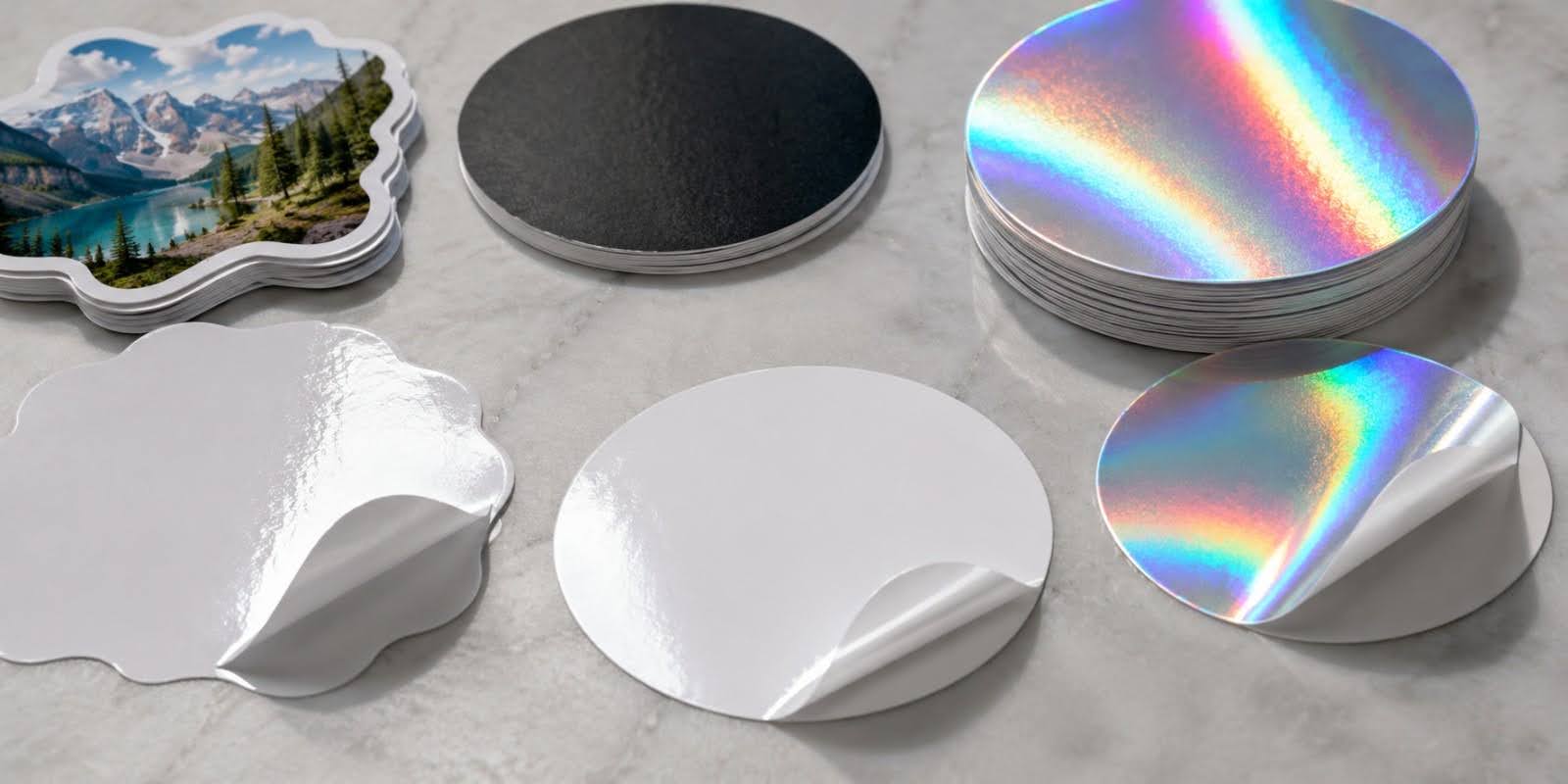
Sticker finishes influence much more than whether a label looks shiny or matte. The finish applied after sticker printing can affect colour presentation, surface texture, resistance to scratches, moisture protection and how the label performs during regular handling.
Matte stickers can create a softer, less reflective appearance, while gloss stickers provide a brighter and more polished surface. Lamination adds a protective film over printed artwork, while UV-related finishes can be used for visual effects or additional protection depending on the specific process. Speciality options such as foil and embossing can further enhance packaging where businesses want the label to contribute to a more distinctive brand presentation.
Choosing among these sticker finishes should therefore start with the sticker’s purpose. A premium cosmetic label, refrigerated beverage sticker, promotional label and industrial identification sticker may each benefit from different finishing options.
For businesses in Singapore, environmental conditions such as humidity, condensation and frequent handling may also affect the decision. The right finish needs to balance appearance, durability, readability and cost rather than focusing on aesthetics alone.
Why Finishes Matter
Sticker finishing is generally applied after the primary printing process to alter or protect the label’s surface.
Depending on the technique, finishing can influence:
- Surface appearance
- Colour intensity
- Reflection
- Texture
- Scratch resistance
- Moisture resistance
- Handling durability
- Perceived product quality
This makes finishing both a functional and branding decision.
For example, two labels can use identical artwork and sticker material but look noticeably different when one receives gloss lamination and the other receives matte lamination.
Finishing Can Influence Brand Perception
Packaging is often one of the first physical interactions customers have with a product.
A finish can reinforce the visual positioning of the brand.
A highly polished gloss label may suit products with bright colours and energetic branding. A matte finish can support a more restrained or minimalist presentation. Foil can highlight selected premium elements, while embossing introduces physical texture.
The finish should support the overall packaging rather than compete with it.
Finishing Can Improve Protection
Some finishes also protect printed artwork from environmental and physical wear.
Depending on the specification, protection may be useful against:
- Fingerprints
- Light scratching
- Moisture
- Abrasion
- Repeated handling
- Sunlight
However, finishing should not be expected to solve problems caused by an unsuitable sticker material or adhesive.
A laminated paper sticker, for example, may have greater surface moisture resistance than untreated paper, but it is not automatically equivalent to a synthetic waterproof label.
Matte Finish
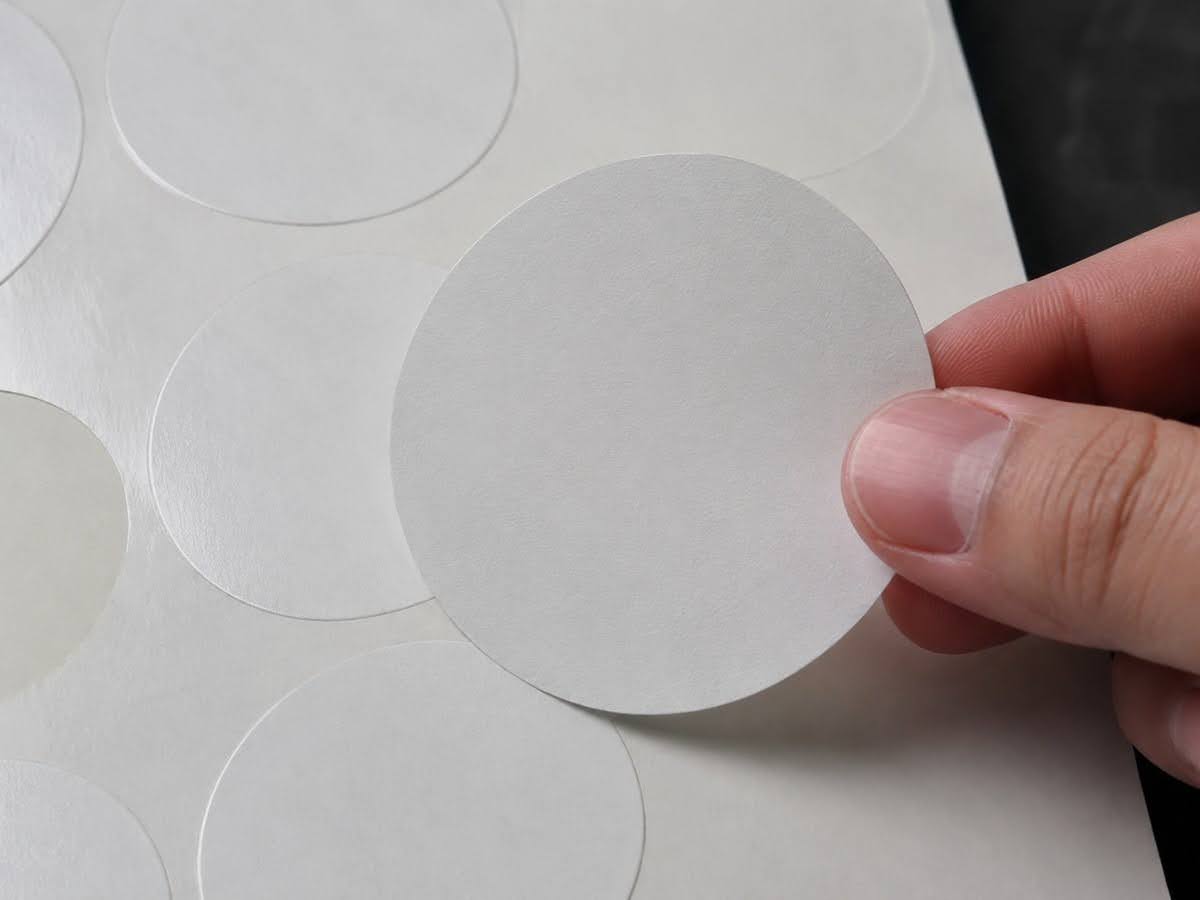
A matte finish produces a low-reflection surface that creates a softer and more understated appearance than gloss.
Matte stickers are commonly associated with:
- Cosmetics
- Skincare
- Boutique products
- Premium packaging
- Minimalist branding
- Information-heavy labels
The reduced reflection can also improve readability in environments where strong lighting would otherwise create glare.
How Matte Stickers Look
Matte finishing diffuses reflected light rather than producing a mirror-like surface.
This can make colours appear somewhat softer and create a smooth visual effect.
Matte is particularly effective when a brand wants its packaging to feel:
- Refined
- Minimal
- Natural
- Contemporary
- Understated
It can also complement packaging materials that already have a matte or frosted appearance.
Practical Benefits of Matte Finishing
Reduced glare is one of the main functional benefits.
This can help where labels contain:
- Detailed product information
- Instructions
- Small text
- QR codes
Matte surfaces can also make fingerprints less visually obvious than highly reflective gloss surfaces.
That may be valuable for cosmetic containers, electronics, and frequently handled premium products.
Limitations of Matte Stickers
Matte is not automatically more premium or more durable.
Depending on the specific finish, colours may appear less vibrant than they do under gloss. Matte transparent labels can also reduce optical clarity and create a slightly frosted appearance.
Businesses wanting maximum transparency or strong colour saturation may therefore prefer another option.
Gloss Finish
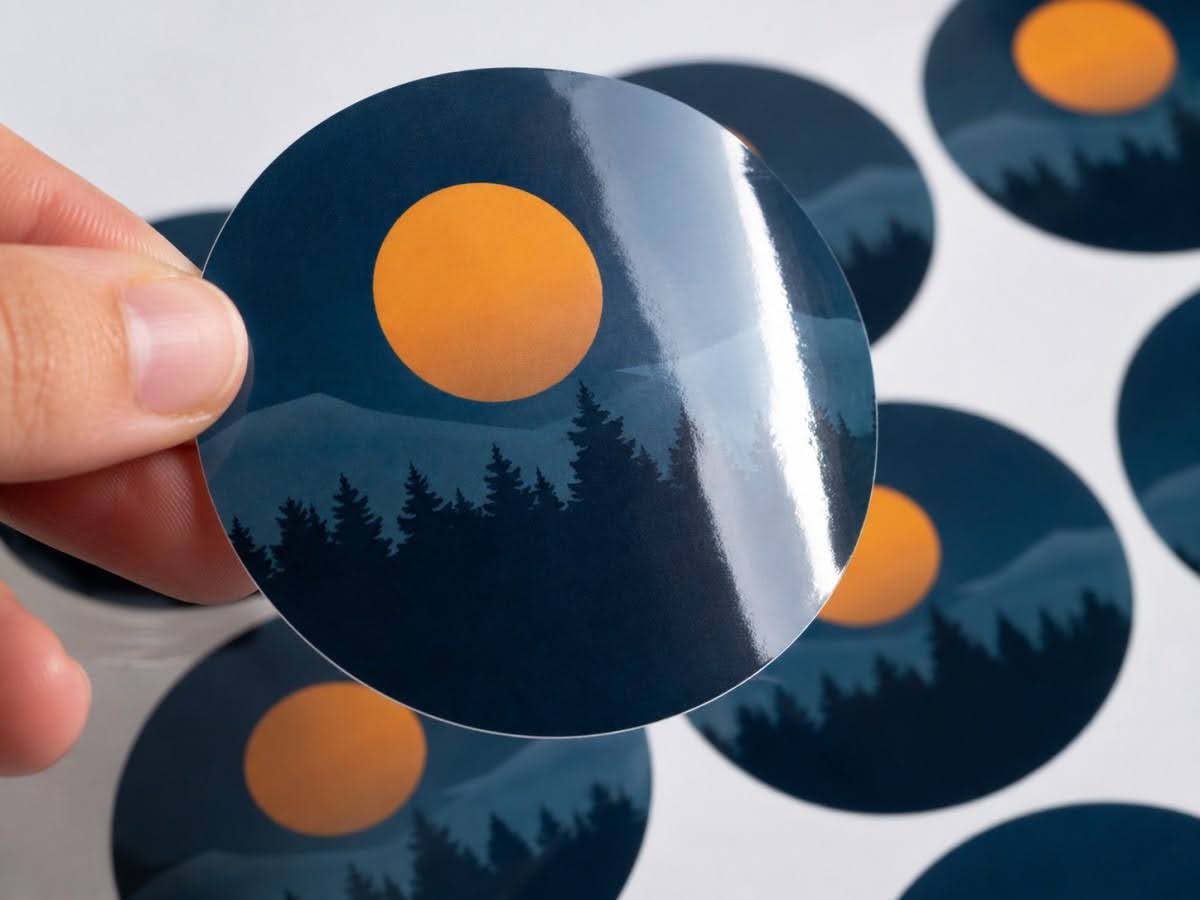
Gloss finishing creates a smooth, reflective sticker surface.
It is commonly used where businesses want printed colours and graphics to appear bright and visually prominent.
Gloss stickers can suit:
- Beverage labels
- Food packaging
- Promotional stickers
- Retail products
- Colourful branding
- Product packaging
The reflective surface can help create a polished presentation, particularly when paired with glossy bottles or containers.
How Gloss Affects Colour
Gloss can make colours appear more vivid because the smooth surface reflects light differently from matte material.
This can strengthen:
- Photographs
- Illustrations
- Bright brand colours
- Promotional graphics
For brands built around vibrant visual identities, gloss can therefore be a natural choice.
Protection from Gloss Lamination
When gloss is achieved through lamination, it can provide surface protection in addition to visual enhancement.
Gloss laminated stickers can gain greater resistance to:
- Scratches
- Moisture
- Frequent handling
- Surface wear
The degree of protection depends on the laminate and complete sticker construction.
Limitations of Gloss Stickers
The biggest consideration is glare.
Strong overhead lighting or direct sunlight can reflect from the label and temporarily reduce readability from certain angles.
This may matter for stickers containing:
- Barcodes
- QR codes
- Small instructions
- Detailed information
Gloss surfaces can also make fingerprints or fine scratches more visible.
For that reason, businesses should evaluate the sticker under realistic lighting and handling conditions.
UV Finish
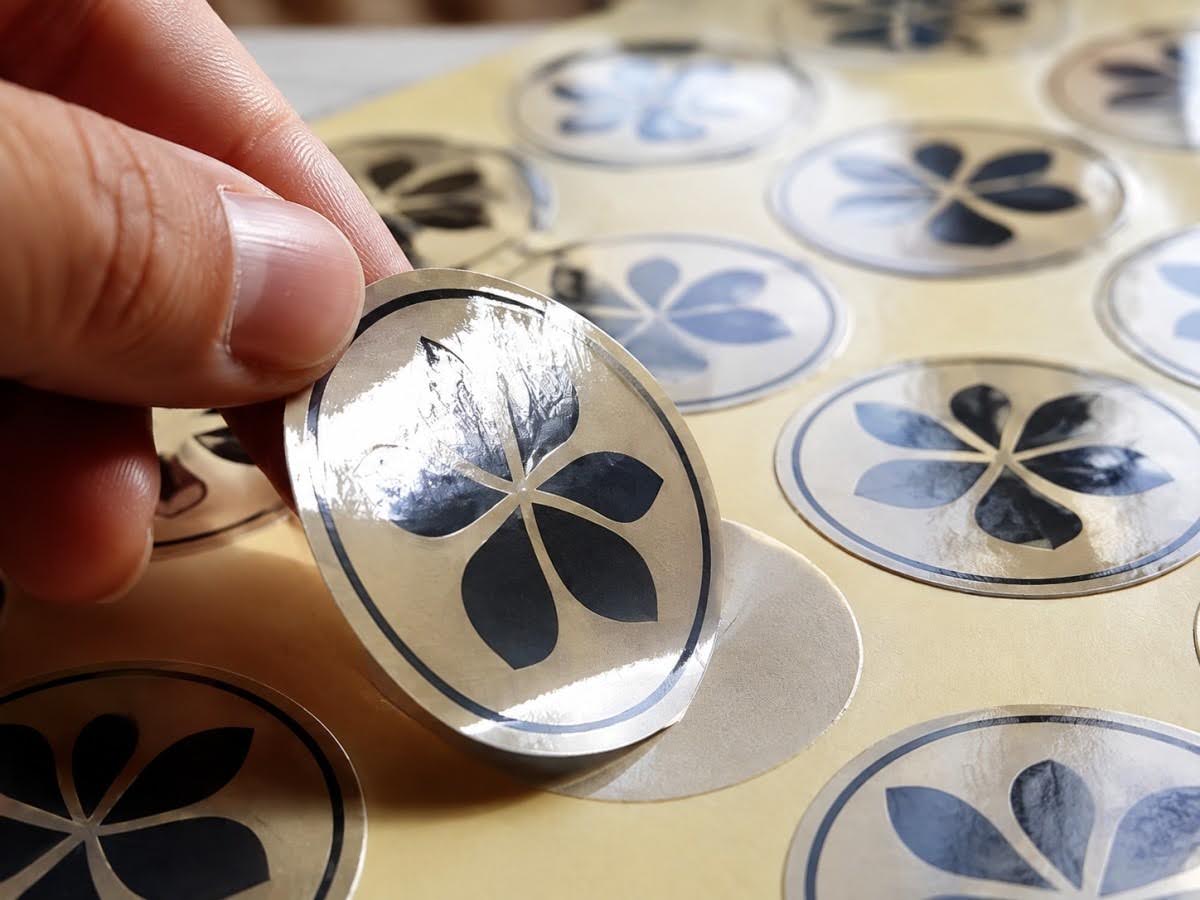
The term “UV finish” can refer to different processes, so businesses should clarify exactly what a printing provider is offering.
UV-related finishing may involve a coating cured using ultraviolet light, a protective treatment, or a decorative technique such as spot UV.
These processes do not all serve the same purpose.
UV Coating
UV coating is a liquid coating applied to a printed surface and cured rapidly using ultraviolet light.
Depending on the coating, it can provide:
- Enhanced surface appearance
- Additional protection
- Greater resistance to handling
- Increased gloss
It can be applied across a larger printed area or selectively depending on the production process.
Spot UV
Spot UV applies a glossy UV coating only to selected areas of a design.
For example, it may highlight:
- A logo
- Product name
- Pattern
- Graphic
- Brand element
The contrast between a matte background and glossy spot UV can create visual and tactile differentiation.
This makes spot UV particularly useful for premium stickers and packaging where selected elements need greater emphasis.
UV Finishing vs UV Resistance
These terms should not be confused.
A sticker produced or coated using UV-curing technology is not automatically designed for prolonged outdoor sunlight.
UV resistance refers to the ability of the printed label to tolerate ultraviolet exposure without excessive fading or deterioration.
Outdoor stickers may therefore require a complete weather-resistant specification involving:
- Suitable face material
- Outdoor adhesive
- UV-resistant printing
- Protective finishing
Businesses should discuss expected outdoor exposure rather than simply request a “UV sticker.”
Lamination
Lamination involves applying a thin protective film over the printed sticker.
It is one of the most practical sticker finishes when additional protection is required.
Laminated stickers can be useful where labels encounter:
- Moisture
- Repeated handling
- Scratching
- Abrasion
- Product contact
Lamination can also modify the visual appearance through gloss, matte or other film characteristics.
Gloss Lamination
Gloss lamination combines surface protection with a polished reflective appearance.
It is often selected for:
- Beverage labels
- Retail packaging
- Promotional stickers
- Colourful product labels
It can strengthen colour appearance while providing a physical barrier over printed artwork.
Matte Lamination
Matte lamination combines protective film with reduced reflection.
It can be useful for:
- Cosmetics
- Premium packaging
- Electronics
- Minimalist labels
The surface tends to show fewer reflections and may make fingerprints less noticeable.
Does Lamination Make Stickers Waterproof?
Lamination can improve moisture resistance, but the answer depends on the complete sticker.
Consider four components:
Material → printing → laminate → adhesive
If the base material absorbs water or the adhesive is unsuitable for wet conditions, surface lamination alone cannot guarantee waterproof performance.
For waterproof labels, businesses should generally start with a suitable moisture-resistant material and adhesive before deciding whether lamination provides useful additional protection.
When Is Lamination Worth Adding?
Lamination is particularly useful when labels:
- Are handled frequently
- Need greater scratch resistance
- Encounter condensation
- Need to retain appearance longer
- Require additional surface protection
For a short-term indoor promotional sticker, additional lamination may provide little practical benefit.
Specialty Finishes
Matte, gloss, and lamination are not the only finishing options available. Speciality finishes can be used when labels need greater visual differentiation or a more distinctive tactile effect.
Foil Stickers
Foil can add metallic effects to selected design elements.
Common foil appearances include metallic tones such as gold or silver, although available options depend on the production method.
Foil can be used to highlight:
- Logos
- Product names
- Borders
- Decorative patterns
- Limited-edition elements
It is often associated with premium packaging because metallic reflection immediately distinguishes selected artwork from standard printing.
However, foil is most effective when used selectively. Applying it to too many elements can weaken the visual hierarchy.
Embossing
Embossing creates a raised impression on selected areas of the printed piece, while debossing creates a recessed effect.
These techniques introduce physical texture.
They can highlight:
- Logos
- Symbols
- Product names
- Patterns
The suitability of embossing for a sticker depends on the material, construction and production process. Not every adhesive label is appropriate for this type of finishing.
Die Cutting
Although technically a cutting process rather than a surface coating, die cutting is an important finishing option for custom stickers.
It allows the final sticker to follow:
- A logo
- Product shape
- Illustration
- Custom outline
This can turn the physical shape of the sticker into part of the brand design.
Combining Speciality Finishes
Some applications can combine finishes.
For example, premium packaging might use:
Matte base + selective gloss element + custom die-cut shape
The advantage is contrast.
The risk is overdesign.
Finishes should direct attention toward important branding rather than making every part of the sticker compete for attention.
Choosing the Right Finish
The best sticker finish is the one that supports the sticker’s purpose, environment and visual requirements.
Businesses can begin by considering several factors.
1. Determine the Desired Appearance
Ask how the sticker should feel visually.
For a bright, polished presentation, gloss may be suitable.
For a restrained or minimalist look, matte may be more appropriate.
For premium emphasis, foil, embossing, or selective UV effects may be considered.
2. Consider the Product Environment
Appearance should not override practical conditions.
Determine whether the sticker will experience:
- Moisture
- Refrigeration
- Sunlight
- Heat
- Scratching
- Repeated handling
This helps determine whether a protective laminate or other durable finishing is necessary.
3. Consider the Base Sticker Material
Finishing should be compatible with the sticker material.
Paper, vinyl, polypropylene and polyester do not necessarily require the same finishing strategy.
For example, laminating a paper label may improve surface protection, but a synthetic label may still be more suitable where regular moisture exposure is expected.
4. Consider Readability
Finishing affects how light interacts with printed information.
Gloss can produce glare.
Matte can reduce reflection.
For labels containing significant text, businesses should evaluate readability under the actual conditions where customers will see the product.
5. Consider Barcode and QR Code Performance
Machine-readable codes require reliable contrast.
Highly reflective surfaces can sometimes affect scanning depending on lighting, angle and the scanner being used.
Businesses should test barcodes and QR codes after final finishing rather than relying only on the digital artwork.
6. Consider the Brand Positioning
Finishing can support brand perception.
For example:
| Brand/Product Goal | Finish to Consider |
| Bright, colourful retail packaging | Gloss |
| Minimalist premium packaging | Matte |
| Luxury product emphasis | Foil |
| Tactile brand presentation | Embossing |
| Selective visual contrast | Spot UV |
| Added surface protection | Lamination |
| Custom visual shape | Die cutting |
These are starting points rather than fixed rules.
A well-designed gloss label can look premium, just as a matte label can be simple and economical.
7. Consider Cost Against Functional Value
Additional finishing generally adds production steps.
Businesses should therefore ask whether the finish provides a meaningful benefit.
A premium product may justify foil or specialised finishing because packaging contributes significantly to customer perception.
A basic internal inventory label may need durability but gain little from decorative treatment.
The strongest specification is not the one containing the most finishes. It is the one where each finishing process has a clear purpose.
Frequently Asked Questions (FAQs)
What is the difference between matte and gloss stickers?
Matte stickers have a lower-reflection surface that produces a softer appearance, while gloss stickers have a shiny reflective surface that can make colours appear more vivid. The better choice depends on branding, readability and the intended application.
Is matte or gloss better for product labels?
Neither is universally better. Gloss can work well for colourful retail and beverage packaging, while matte can suit cosmetics, premium products and labels where reduced glare is desirable.
Does lamination make stickers last longer?
Lamination can help extend practical sticker life by protecting printed artwork from scratches, moisture and repeated handling. Actual lifespan still depends on the material, adhesive and environment.
Do waterproof labels need lamination?
Not necessarily. A waterproof label can use moisture-resistant synthetic material, suitable printing and appropriate adhesive without requiring lamination. Lamination may provide additional protection when the application demands it.
What is the difference between UV coating and lamination?
UV coating is a liquid surface treatment cured using ultraviolet light, while lamination places a physical film over the printed sticker. Both can affect appearance and protection, but they use different production processes.
Is UV coating the same as making a sticker UV-resistant?
No. UV-curing describes a production or coating process, whereas UV resistance describes how well a label withstands prolonged ultraviolet exposure. Outdoor stickers should be specified specifically for sunlight and weather exposure.
What is spot UV?
Spot UV applies a glossy UV coating selectively to certain design elements, such as a logo or product name. It creates contrast between coated and uncoated areas and is often used for premium visual effects.
What finish is best for waterproof stickers?
The best finish depends on the exposure. Gloss or matte lamination can add surface protection, but waterproof performance begins with the correct moisture-resistant material, printing and adhesive.
Are foil stickers suitable for premium packaging?
Yes. Foil can add metallic visual emphasis to logos, product names or decorative elements and is often used for premium packaging. It should generally be applied selectively to maintain a clear visual hierarchy.
Can stickers be embossed?
Selected sticker materials and constructions can support embossing, depending on the production process. Businesses considering embossed stickers should confirm material and design suitability with the printing provider.
What finish is best for outdoor stickers?
Outdoor stickers require more than a specific surface appearance. The complete construction should consider weather-resistant material, outdoor adhesive, UV exposure, moisture and the required service life. Protective lamination may be useful depending on the application.
Which sticker finish is best for QR codes and barcodes?
A finish that maintains strong contrast and reliable scanning is most important. Matte can reduce glare, but gloss can also work when the code is properly designed and tested under realistic lighting conditions.
Can matte and gloss effects be combined?
Yes. Selected printing and finishing processes can combine contrasting effects, such as a matte surface with spot gloss or spot UV elements. This can highlight specific branding without making the entire sticker reflective.
Choosing the Right Sticker Finish for Your Application
Sticker finishes influence both how a label looks and how it performs throughout its intended use.
Matte finishes provide a softer, low-reflection appearance that can suit minimalist and premium packaging. Gloss finishes create a brighter, polished surface and can strengthen the visual impact of colourful artwork. UV-related processes can provide decorative or protective effects depending on the specific technique, while lamination adds a physical layer that can improve resistance to moisture, scratches and repeated handling.
Specialty options such as foil, embossing and die cutting allow businesses to take sticker design further when packaging presentation plays an important role in brand differentiation.
The most important principle is to avoid selecting a finish in isolation.
Businesses should consider the sticker material, application surface, environmental exposure, artwork, readability and required lifespan together. A beautiful finish cannot compensate for the wrong material or adhesive, while an unnecessarily complex finish can add production requirements without improving the label’s actual function.
For businesses in Singapore, moisture, humidity, condensation and handling may also influence whether additional protection is worthwhile.
When every finishing choice has a clear visual or functional purpose, custom sticker printing can deliver labels that support both brand presentation and practical performance.
Give Your Labels the Finish Their Application Deserves
The right finish can turn a standard printed label into something more durable, visually distinctive or better suited to the product environment. The key is determining whether matte, gloss, lamination, UV-related finishing or a specialty effect provides a genuine benefit for the intended application.
For businesses evaluating sticker finishes, premium stickers, laminated stickers and other custom printing options, Printsys Pte Ltd can help businesses select materials and finishing options appropriate for their packaging, branding and labelling requirements. Get in touch with Printsys today!