


Custom Sticker Printing Guide: Everything Businesses Need to Know
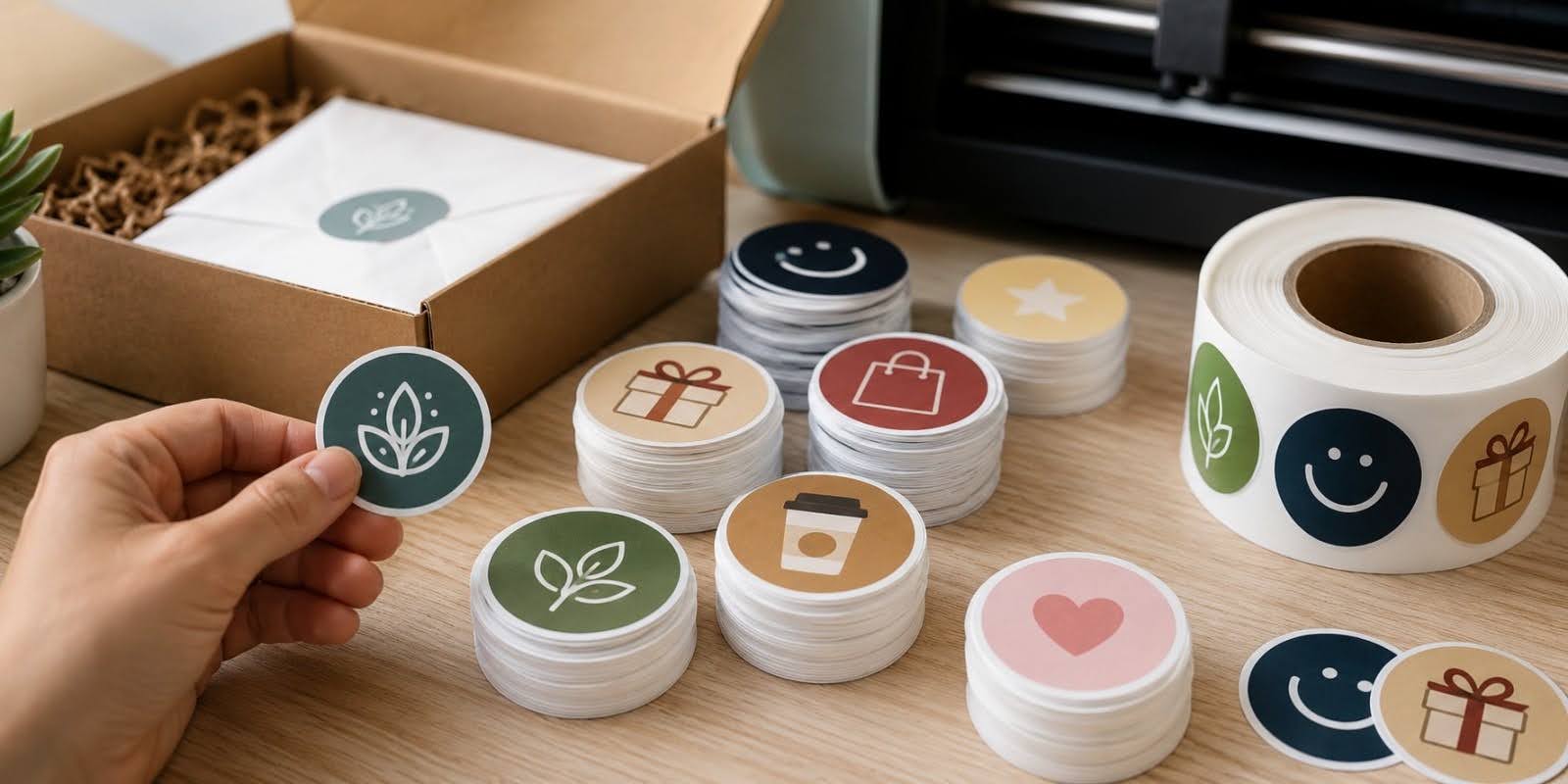
Custom stickers can perform several roles at once. They can identify a product, communicate important information, reinforce branding, improve packaging presentation or turn an ordinary surface into a promotional opportunity.
Unlike generic labels, custom sticker printing allows businesses to determine the size, shape, material, adhesive, artwork, and finishing according to a specific application. A food business may need waterproof product stickers for refrigerated bottles, while a retailer may require branded packaging labels. An industrial company may prioritise durability and adhesion over decorative appearance.
For businesses in Singapore, these differences matter. Humidity, condensation, outdoor exposure, handling and the surface to which a sticker is applied can all influence performance. Choosing the right specification therefore requires more than uploading a logo and selecting a size.
This guide covers what businesses should know about custom sticker printing, from applications and materials to finishing, artwork preparation, production, and choosing a suitable printing company.
What Is Custom Sticker Printing?
Custom sticker printing is the production of adhesive labels according to specifications selected for a particular brand, product, or application.
Businesses can customise elements such as:
- Size
- Shape
- Material
- Artwork
- Colour
- Adhesive
- Surface finish
- Quantity
- Cutting method
This flexibility separates personalised stickers from generic off-the-shelf labels.
For example, a company can produce small logo stickers for product packaging, large branded decals for promotional use, waterproof labels for bottles or die-cut stickers following the outline of its logo.
Custom Stickers vs Standard Labels
Standard labels are usually manufactured in predetermined sizes, shapes, or formats. They may work well for basic identification but provide limited flexibility when branding or specialised performance is required.
Custom labels allow specifications to be matched more closely to the product.
For example, a custom packaging label can be designed specifically around:
- Container dimensions
- Brand colours
- Product information
- Surface curvature
- Storage conditions
- Required durability
The result is a sticker that functions as part of the product or packaging rather than something added as an afterthought.
Business Applications
Custom sticker printing is used across many industries because adhesive labels can serve both marketing and operational purposes.
Product and Packaging Labels
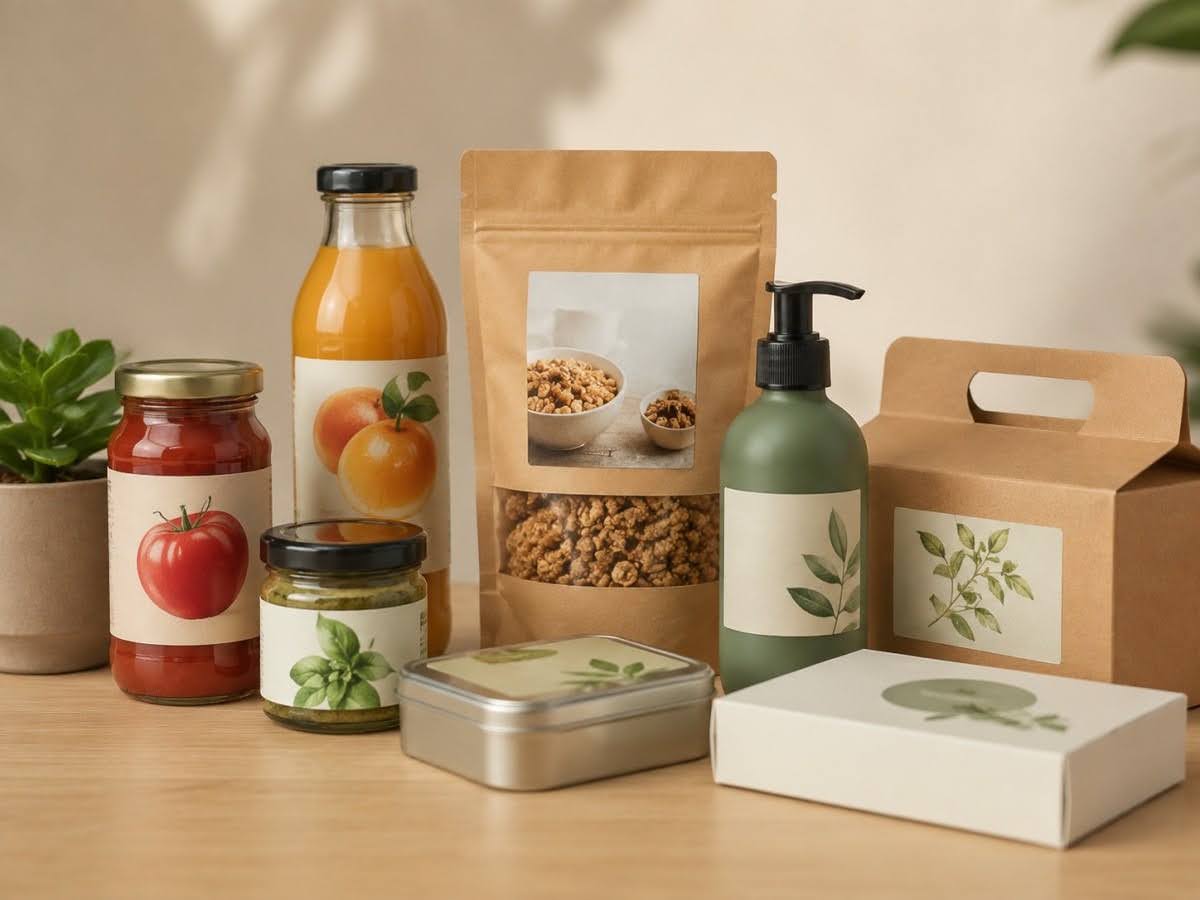
Product stickers are among the most common applications.
They can display:
- Brand name
- Logo
- Product name
- Ingredients
- Instructions
- Product variants
- Promotional information
Custom packaging labels can also help businesses differentiate products that use otherwise similar boxes, bottles, jars or pouches.
This approach can be useful for smaller product ranges because businesses can customise standard packaging through professionally printed labels rather than producing entirely different printed containers.
Logo and Branding Stickers
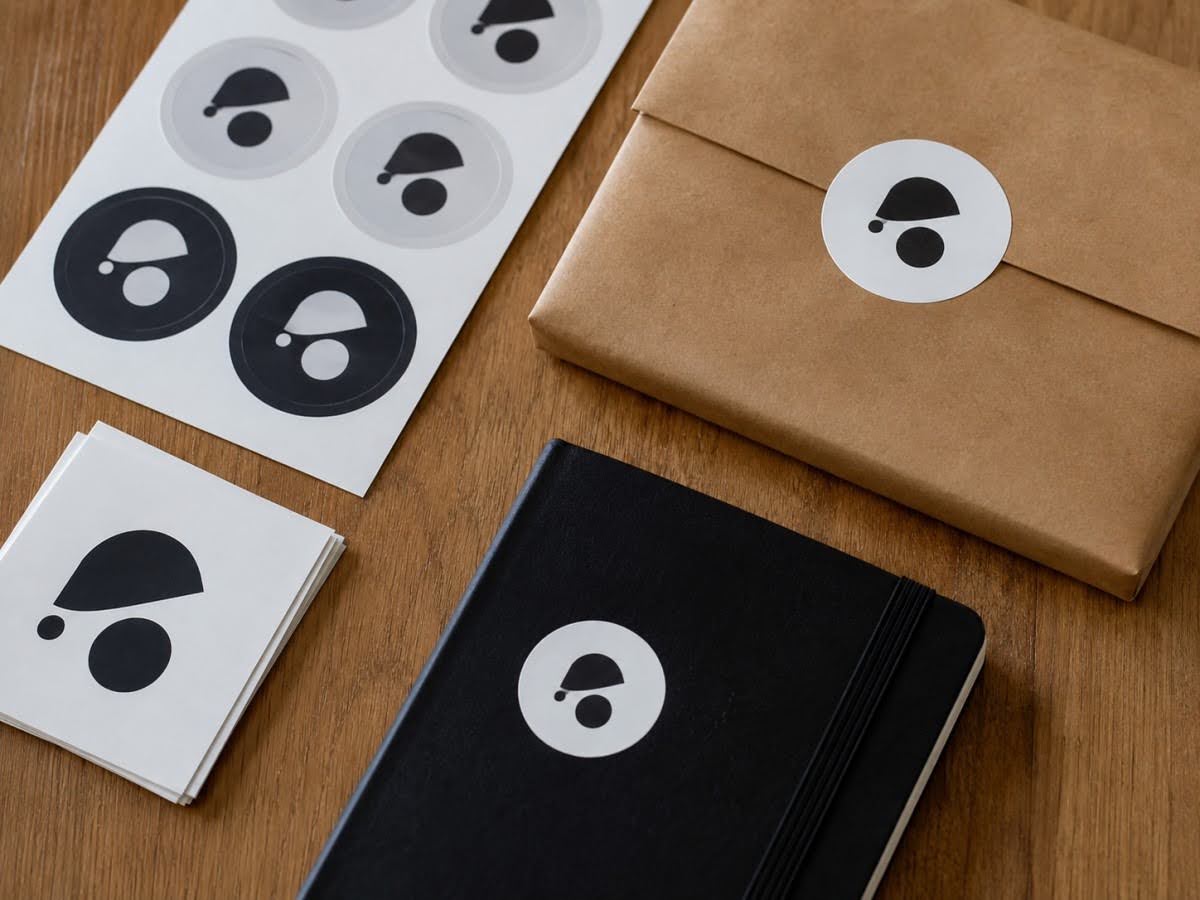
Logo stickers extend a company’s visual identity beyond its primary packaging.
Businesses can place them on:
- Delivery boxes
- Paper bags
- Envelopes
- Folders
- Promotional items
- Retail packaging
They can also be distributed as promotional stickers at events or included with customer purchases.
The key is consistency. Colours, logo proportions and typography should align with the broader brand identity.
Retail and E-Commerce
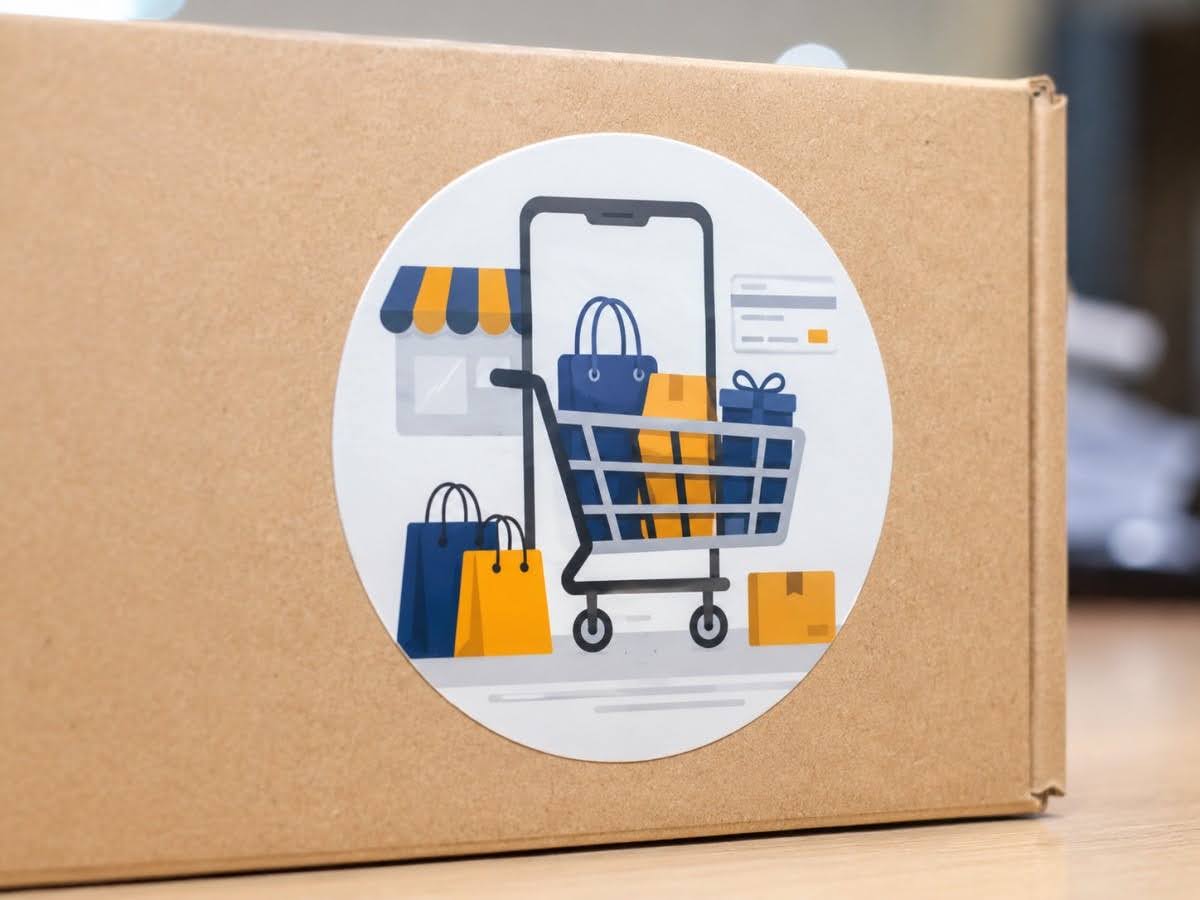
Retail and e-commerce businesses can use custom stickers throughout the customer journey.
A sticker may seal tissue paper, identify a product variant, brand a delivery box or provide care information.
For online businesses in particular, physical packaging may be one of the few offline interactions a customer has with the brand. Custom labels can therefore help make otherwise standard shipping materials more recognisable.
Food and Beverage
Food and beverage packaging often needs labels capable of handling conditions such as refrigeration, condensation and repeated handling.
Applications include:
- Bottles
- Jars
- Takeaway containers
- Food boxes
- Packaged products
Where moisture is expected, businesses may need synthetic waterproof labels rather than ordinary paper stickers.
Industrial and Operational Uses
Not every custom sticker is promotional.
Companies also use labels for:
- Equipment identification
- Inventory
- Safety information
- Barcodes
- Warranty information
- Asset identification
Printsys lists specialised sticker applications including aluminium, barcode, hologram, warranty and medical labels, demonstrating how sticker printing can extend beyond decorative packaging.
Popular Materials
Sticker material influences appearance, flexibility, durability and resistance to environmental conditions. Selecting the right material should therefore begin with the intended use.
Paper Stickers
Paper is suitable for many dry indoor applications.
Common examples include:
- Boxes
- Retail packaging
- Promotional labels
- Dry product packaging
- Short-term campaigns
Paper can provide good print reproduction and is suitable where extensive moisture resistance is unnecessary.
Its limitation is environmental durability. Water, humidity, and abrasion can damage untreated paper more easily than synthetic materials.
Vinyl Stickers
Vinyl is a popular synthetic sticker material because it combines flexibility with moisture resistance.
It can work well for:
- Bottles
- Containers
- Promotional stickers
- Windows
- Product packaging
- Selected outdoor applications
Its flexibility can also help when labels need to conform to curved surfaces.
Polypropylene Labels
Polypropylene is another synthetic option commonly used for product and packaging labels.
It can provide a useful balance of:
- Moisture resistance
- Lightweight construction
- Print quality
- Durability
It may be suitable for food, beverage, cosmetic and personal-care products.
Polyester Labels
Polyester or PET labels can provide greater dimensional stability and resistance to demanding conditions.
Potential applications include:
- Electronics
- Equipment
- Industrial labels
- Asset identification
- Durable product identification
Businesses should still match the material to the actual environment rather than automatically selecting the most durable option.
Waterproof Labels
A waterproof label is not simply a sticker with a protective surface. Its material, printing, and adhesive need to work together under moisture exposure.
Synthetic materials such as vinyl, polypropylene, and polyester are commonly used for water-resistant applications. Printsys also notes that lamination and suitable adhesives can contribute to performance under moisture and frequent handling.
This is particularly relevant in Singapore for refrigerated products, outdoor applications, and packaging frequently exposed to humid environments.
Finishing Options
Sticker finishes influence both appearance and performance. They can change reflection, texture, protection, and even how customers perceive the packaging.
Gloss Finish
Gloss creates a reflective, polished surface.
It can:
- Increase visual vibrancy
- Create a smooth appearance
- Complement glossy packaging
- Provide additional surface protection when laminated
Gloss is commonly considered for colourful product stickers and promotional materials.
Matte Finish
Matte provides a lower-reflection surface.
It can help create:
- Softer appearance
- Reduced glare
- More understated presentation
- Premium-looking packaging
Matte can work particularly well for minimalist branding or products where highly reflective labels would compete with the packaging design.
Lamination
Lamination places a protective film over the printed sticker.
It can help protect against:
- Moisture
- Scratching
- Handling
- Surface wear
Printsys offers laminating among its finishing services and identifies gloss, matte and soft-touch options for different aesthetic and protective requirements.
Die Cutting
Die cutting allows a sticker to follow a custom shape instead of remaining a standard square, rectangle or circle.
Businesses can create:
- Logo-shaped stickers
- Custom product labels
- Decorative packaging elements
- Promotional decals
This can make die-cut stickers particularly effective where the shape itself contributes to brand recognition.
Design Considerations
Good custom sticker design has to work after printing, cutting, and application—not merely look attractive on a computer screen.
Keep the Purpose Clear
The first question should be, “What does this sticker need to do?”
A logo sticker has different priorities from a product label containing instructions and regulatory information.
Determine the hierarchy before designing.
For example:
- Brand
- Product name
- Essential information
- Supporting details
Trying to make every element equally prominent can create visual clutter.
Design for the Actual Size
Artwork that looks spacious on a large monitor can become difficult to read when reduced to a 40 mm product sticker.
Check:
- Font size
- Line spacing
- Logo clarity
- Fine details
- Barcode dimensions
- QR code readability
Always review artwork at approximately its final printed size.
Consider the Background Surface
Transparent or partially transparent stickers can change appearance depending on the surface beneath them.
The same artwork may look very different on:
- Clear glass
- White plastic
- Black packaging
- Brushed metal
White ink or an opaque background may be necessary where stronger contrast is required.
Use Appropriate Colour Settings
Artwork intended for print should be prepared according to the printer’s required colour workflow.
Colours displayed on an RGB monitor may not reproduce identically in physical printing.
Where brand colour consistency is important, businesses should discuss colour expectations and proofing with the printer before approving a production run.
Allow for Bleed and Cutting
Artwork extending to the edge of a sticker normally requires bleeding beyond the final cut line.
Important information should also remain inside an appropriate safe area.
These precautions reduce the chance of:
- Unwanted white edges
- Cropped text
- Inconsistent borders
Custom-shaped stickers require particular attention to cut paths.
Printing Process
Understanding the custom sticker printing process helps businesses prepare better files and reduce avoidable production delays.
1. Define the Application
The process should start by identifying where and how the sticker will be used.
Consider:
- Surface
- Indoor or outdoor environment
- Moisture
- Heat
- Handling
- Required lifespan
These factors influence almost every subsequent decision.
2. Determine Size and Shape
The sticker should be measured against the actual product or surface.
For curved containers, dimensions become particularly important because overly wide labels can experience edge tension.
3. Select Material and Adhesive
Material is chosen according to appearance and environmental performance.
Adhesive should also match the application. Depending on requirements, this may involve permanent or removable options.
4. Prepare the Artwork
Print-ready artwork should use the appropriate:
- Dimensions
- Resolution
- Bleed
- Safe margins
- Colour settings
- Cut paths
Where possible, vector artwork is useful for logos and other elements that need to remain sharp at different sizes.
5. Pre-Press Checking
The printer reviews the file for potential production issues.
Printsys describes its workflow as including consultation, pre-press review, material selection, printing and finishing, cutting, quality control, and delivery.
6. Printing and Finishing
The approved design is printed onto the selected material.
Finishing such as lamination or custom cutting can then be applied according to the specification.
7. Quality Control
Finished stickers should be assessed for factors such as:
- Print clarity
- Colour consistency
- Cutting accuracy
- Surface finish
- General production consistency
Specialised labels may require additional testing according to their intended function.
Common Mistakes
Many sticker problems originate before printing begins.
Choosing Material Based Only on Price
The lowest-cost material is not necessarily economical if labels peel, tear or deteriorate before the end of the product lifecycle.
Material should match the environment first.
Ignoring the Application Surface
A sticker may perform differently on glass, cardboard, metal, and different types of plastic.
Businesses should tell the printer exactly where the label will be applied.
Using Low-Resolution Artwork
Images taken from websites or social media may not contain enough resolution for high-quality printing.
Logos should ideally be supplied as suitable high-resolution or vector artwork.
Making Text Too Small
Product labels often need to fit substantial information into limited space.
Reducing everything until it fits can create a label customers cannot comfortably read.
The better solution may be to revise the layout, increase the label size or reduce unnecessary content.
Forgetting About Moisture and Temperature
This is especially important for Singapore businesses dealing with chilled beverages, food, cosmetics or outdoor products.
A sticker that performs well in a dry office may behave differently under condensation or heat.
Skipping Proofing
Small mistakes become expensive when multiplied across a large production quantity.
Businesses should carefully verify:
- Spelling
- Contact details
- Product information
- Barcodes
- Dimensions
- Colours
- Cut lines
before approving final production.
Choosing the Right Printing Company
Choosing a printing company should involve more than comparing the lowest quotation.
A suitable provider should be able to understand the intended application and translate it into an appropriate sticker specification.
Material and Finishing Capabilities
Check whether the provider can offer materials and finishing appropriate for the project.
A business may need more than standard paper stickers. Requirements could include:
- Vinyl
- Waterproof labels
- Transparent stickers
- Die cutting
- Lamination
- Specialised labels
A broader production capability can be helpful when a business manages several label types.
Knowledge of Real-World Applications
A printer should ask where the sticker will be used.
Questions about surface, moisture, temperature and expected lifespan indicate that the recommendation is being based on function rather than appearance alone.
Artwork and Pre-Press Support
Print-ready artwork reduces production problems, but businesses do not always know whether their files meet printing requirements.
Pre-press checking can help identify problems involving resolution, dimensions, bleed or cutting before production begins.
Consistency and Quality Control
Businesses ordering product labels need consistency across the batch.
Variations in:
- Colour
- Cutting
- Dimensions
- Finishing
can become particularly noticeable when products are displayed side by side.
Ability to Support Different Business Requirements
A company’s sticker needs may evolve.
It may begin with logo stickers and later require waterproof packaging labels, barcode stickers or specialised security labels.
Choosing a provider with broader sticker printing capabilities can simplify future production.
Printsys offers custom sticker printing alongside label, barcode, hologram, fabric, warranty and printing-finishing services for businesses in Singapore.
Frequently Asked Questions (FAQs)
What information should I provide when ordering custom stickers?
Provide the intended sticker size, quantity, artwork, application surface, indoor or outdoor use, expected exposure to water or heat, required lifespan, and preferred finish. These details help determine suitable material and adhesive options.
What is the best material for personalised stickers?
There is no universal best material. Paper may suit dry indoor uses, while vinyl and other synthetic materials can be better for moisture resistance or increased durability. The application should determine the material.
Are custom stickers suitable for product packaging?
Yes. Custom packaging labels can combine branding with product information and can be designed around bottles, jars, boxes, pouches and other packaging formats.
Can logo stickers be produced in custom shapes?
Yes. Die cutting can produce stickers following a custom outline, including shapes based on logos or other design elements.
What makes a sticker waterproof?
Waterproof performance depends on the combination of a water-resistant face material, suitable printing, adhesive, and, where appropriate, protective finishing. Vinyl, polypropylene, and polyester are common synthetic materials for moisture-resistant labels.
Should I choose gloss or matte sticker finishing?
Gloss is suitable when stronger reflection and vibrant presentation are desired. Matte reduces glare and creates a softer appearance. The correct choice depends on the packaging, branding, and environment.
Can custom stickers include QR codes and barcodes?
Yes. QR codes and barcodes can be incorporated into custom labels when sufficient size, contrast, and clear space are maintained. The finished code should be tested on the actual product.
What is the difference between die-cut and standard-shaped stickers?
Standard stickers typically use simple shapes such as rectangles, squares, or circles. Die-cut stickers can follow a custom outline, allowing the finished sticker to match a logo, illustration, or packaging design.
How should artwork be prepared for custom sticker printing?
Artwork should use the printer’s required dimensions, resolution, colour mode, bleed and safe margins. Custom shapes may also require a defined cutting path. Businesses should confirm the exact artwork specification with their printer before submission.
How can businesses make custom stickers last longer?
Start with material and adhesive suited to the environment. For stickers exposed to moisture, handling, abrasion, or sunlight, appropriate synthetic materials and protective finishing may improve durability.
Making the Right Choices for Custom Sticker Printing
Custom sticker printing gives businesses far more control than simply placing a logo on an adhesive label. Size, material, shape, adhesive, printing method and finishing can all be adapted according to how the sticker will actually be used.
The most successful custom labels start with a clear application. Businesses should know whether the sticker will be placed on packaging, glass, plastic, equipment or another surface and whether it will encounter moisture, sunlight, refrigeration or frequent handling.
From there, material and finishing decisions become easier. Paper can suit straightforward indoor applications, while vinyl and other synthetic materials can provide additional durability. Gloss, matte and lamination can alter appearance and protection, while die cutting allows the sticker itself to become part of the visual identity.
Just as importantly, good artwork preparation and proofing help prevent production problems before a full quantity is printed.
For businesses in Singapore, approaching custom stickers as a combination of branding, information design and functional print production leads to a better result than choosing materials based solely on price or appearance.
Make Every Custom Sticker Serve a Clear Purpose
Whether the requirement is personalised stickers, logo stickers, product labels, die-cut stickers, or custom packaging labels, the specification should be built around the surface, environment, and business objective.
Printsys Pte Ltd provides custom sticker printing and related printing and finishing solutions in Singapore, including custom materials, shapes and finishes for different business applications. Get in touch with Printsys today!