


What Is Sticker Printing? A Complete Guide to Custom Stickers
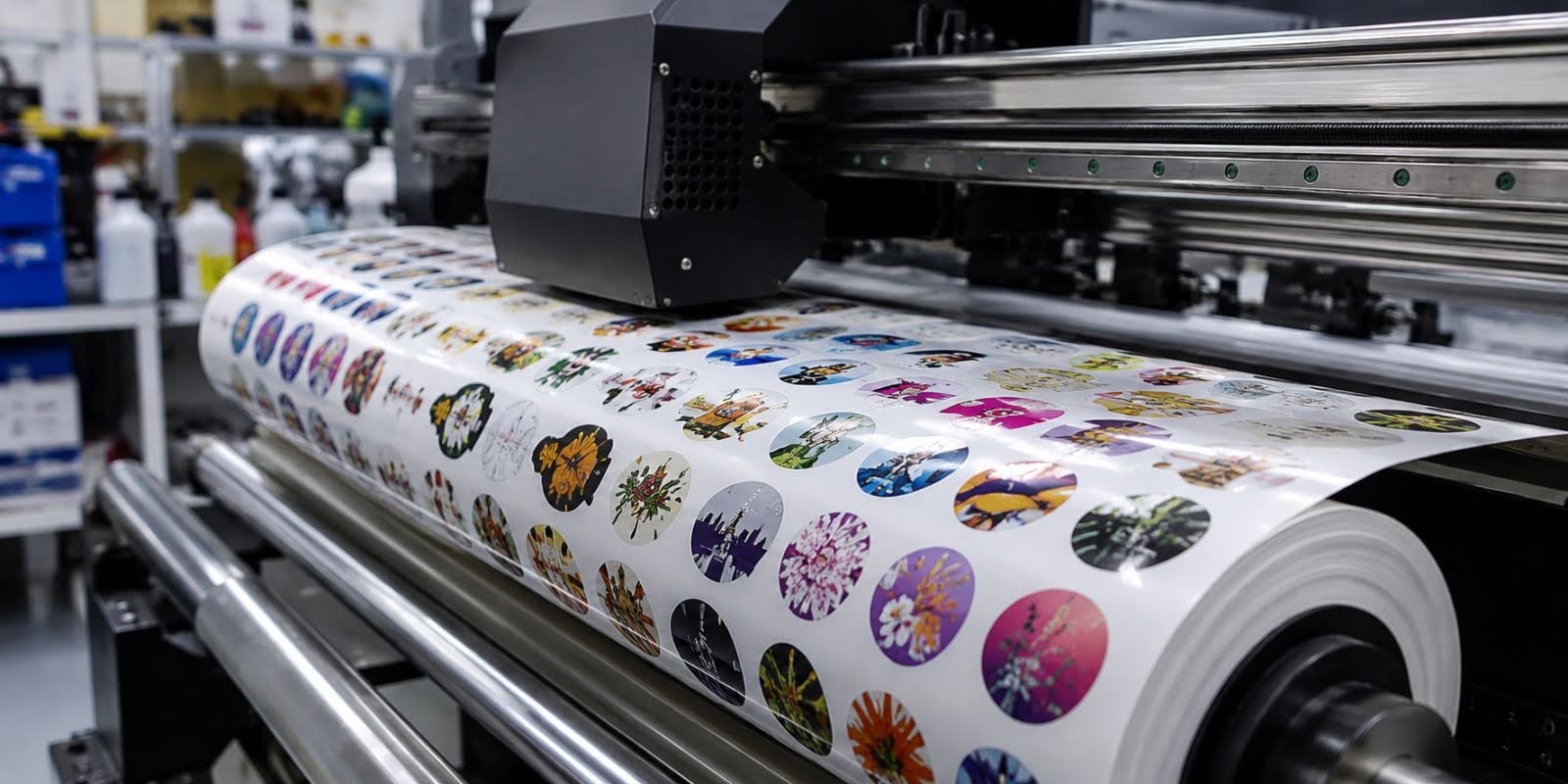
Sticker printing is the process of producing adhesive-backed printed materials for branding, product identification, packaging, promotions, instructions, and many other business applications. Stickers can range from simple paper labels used on retail packaging to durable vinyl stickers designed to withstand moisture and demanding environments.
Custom stickers offer businesses in Singapore a flexible way to communicate information while reinforcing brand identity. They can appear on product packaging, delivery boxes, equipment, promotional materials, bottles, containers, and even shop displays. However, choosing the right sticker involves more than deciding what the artwork should look like.
Material, adhesive, printing method, finish, intended surface, and environmental exposure can all affect how a sticker performs. Understanding these factors helps businesses choose printed stickers that are suitable for their actual application rather than selecting based on appearance or price alone.
This guide explains the fundamentals of sticker printing, the most common sticker types and materials, how they are produced, where businesses use them, and what to consider before placing an order.
What Is Sticker Printing?
Sticker printing involves transferring text, graphics, branding, or other information onto an adhesive-backed material that can subsequently be applied to another surface.
A typical sticker consists of several components:
- A printable face material
- Printed artwork or information
- An adhesive layer
- A release liner protecting the adhesive before application
Additional finishing may also be applied depending on the intended use. For example, lamination can provide extra surface protection, while die cutting allows stickers to be produced in custom shapes.
Sticker printing can serve both decorative and functional purposes. A branded sticker on a delivery box is primarily promotional, whereas a barcode label on a product provides operational information. A product label may need to achieve both objectives by presenting branding alongside ingredients, instructions, or identification details.
This versatility is one reason custom sticker printing is used across so many industries.
Sticker Printing vs. Label Printing
The terms “sticker printing” and “label printing” are sometimes used interchangeably, although the intended application can differ.
Stickers are often associated with branding, promotions, and decorative applications. Labels tend to have a stronger informational or identification function, such as displaying product details, barcodes, or instructions.
In practice, the distinction is not always strict. A custom product sticker can simultaneously function as a brand element and a product label.
The more important question is therefore what the printed adhesive material needs to accomplish.
Common Uses of Stickers
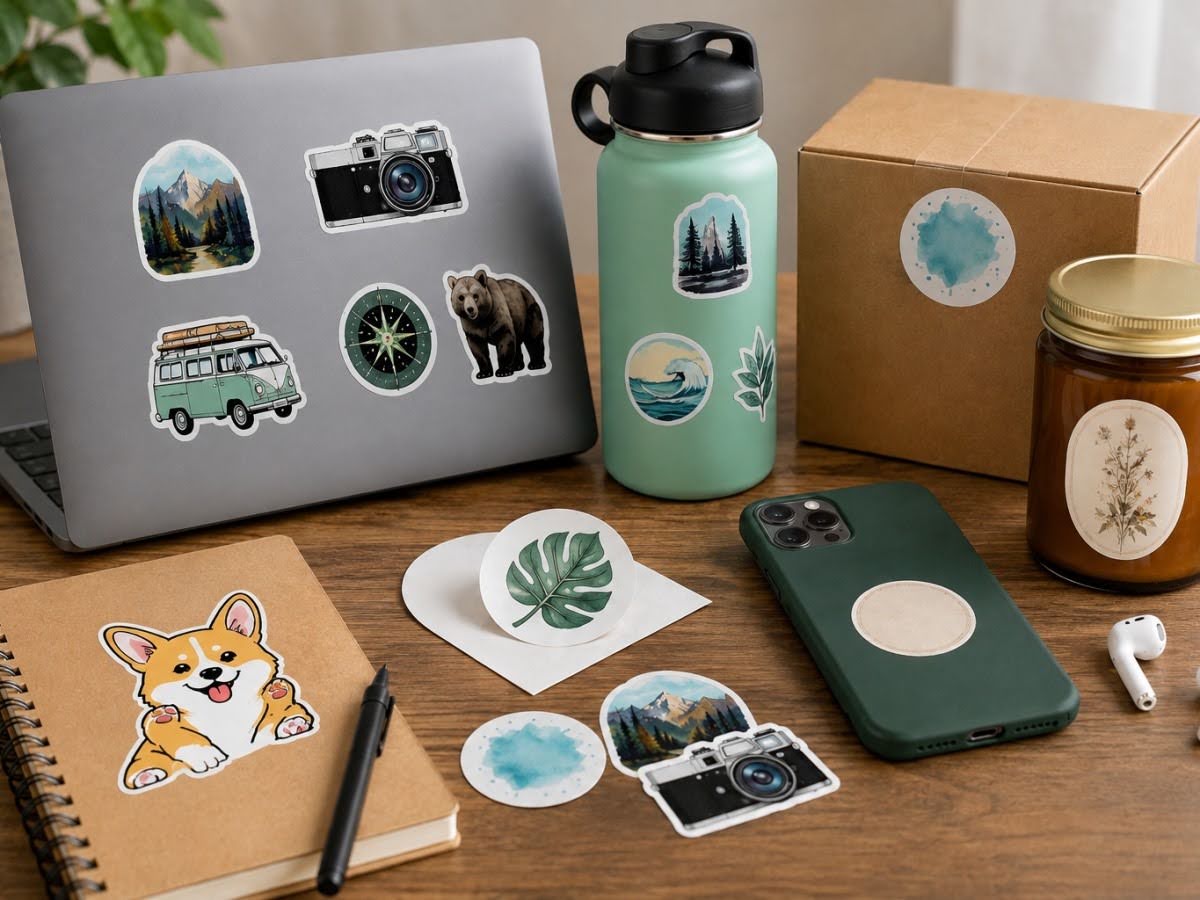
Businesses use stickers because they provide a relatively simple way to add information or branding to an existing surface without printing directly onto the product.
One of the most common applications is packaging.
A business can use stickers on:
- Boxes
- Bottles
- Jars
- Pouches
- Bags
- Containers
- Envelopes
Packaging stickers can display logos, product names, promotional messages, or product information. This can be particularly useful when a business uses standard packaging but wants to customise it for different products or campaigns.
Stickers are also frequently used for product identification. A label may contain a product code, barcode, serial number, instructions or other information that needs to remain attached to the item.
Promotional stickers provide another application. Businesses can distribute logo stickers at events, include them with purchases or apply them to promotional materials.
Internally, companies may also use printed labels for inventory, equipment identification, organisation and logistics.
The intended use should be defined before choosing a sticker because an indoor promotional sticker and a long-term product label can have very different material requirements.
Types of Stickers
Sticker types can be classified according to material, appearance, durability, or application. Understanding the main options helps businesses narrow down the specifications they actually require.
Paper Stickers
Paper stickers are commonly used for dry, indoor applications where extensive moisture or weather resistance is unnecessary.
They can be suitable for:
- Retail packaging
- Boxes
- Dry food packaging
- Promotional labels
- Temporary product identification
Paper is generally not recommended for harsher weather conditions, as it is prone to wear and tear.
It is more vulnerable to water, tearing, and abrasion than synthetic materials.
Vinyl Stickers
Vinyl stickers are synthetic labels valued for their flexibility and resistance to moisture.
They can be used for:
- Product branding
- Bottles
- Promotional stickers
- Windows
- Equipment
- Selected outdoor applications
Different vinyl specifications provide different levels of durability. Businesses should therefore avoid assuming that every vinyl sticker is automatically suitable for long-term outdoor use.
Waterproof Stickers
Waterproof stickers are designed for applications where labels may encounter water, condensation, or frequent wet handling.
Common uses include:
- Beverage bottles
- Bathroom products
- Cosmetic packaging
- Chilled products
- Outdoor applications
A waterproof sticker needs more than a moisture-resistant face material. Adhesive and printing also need to remain suitable for the expected environment.
Transparent Stickers
Transparent stickers allow the underlying packaging or surface to remain visible.
They are commonly used on:
- Glass bottles
- Cosmetic containers
- Clear packaging
- Windows
- Premium product packaging
Selective white ink can be used where certain parts of the artwork need stronger opacity or colour contrast.
Custom-Shaped Stickers
Custom stickers do not have to be rectangular or circular. Die cutting allows the finished sticker to follow a specific shape.
This can be useful for logos, promotional stickers, and packaging designs where the sticker itself contributes to the overall presentation.
Printing Methods
The appropriate printing method depends on factors such as quantity, artwork, material, variable information, and required print characteristics.
Digital Printing
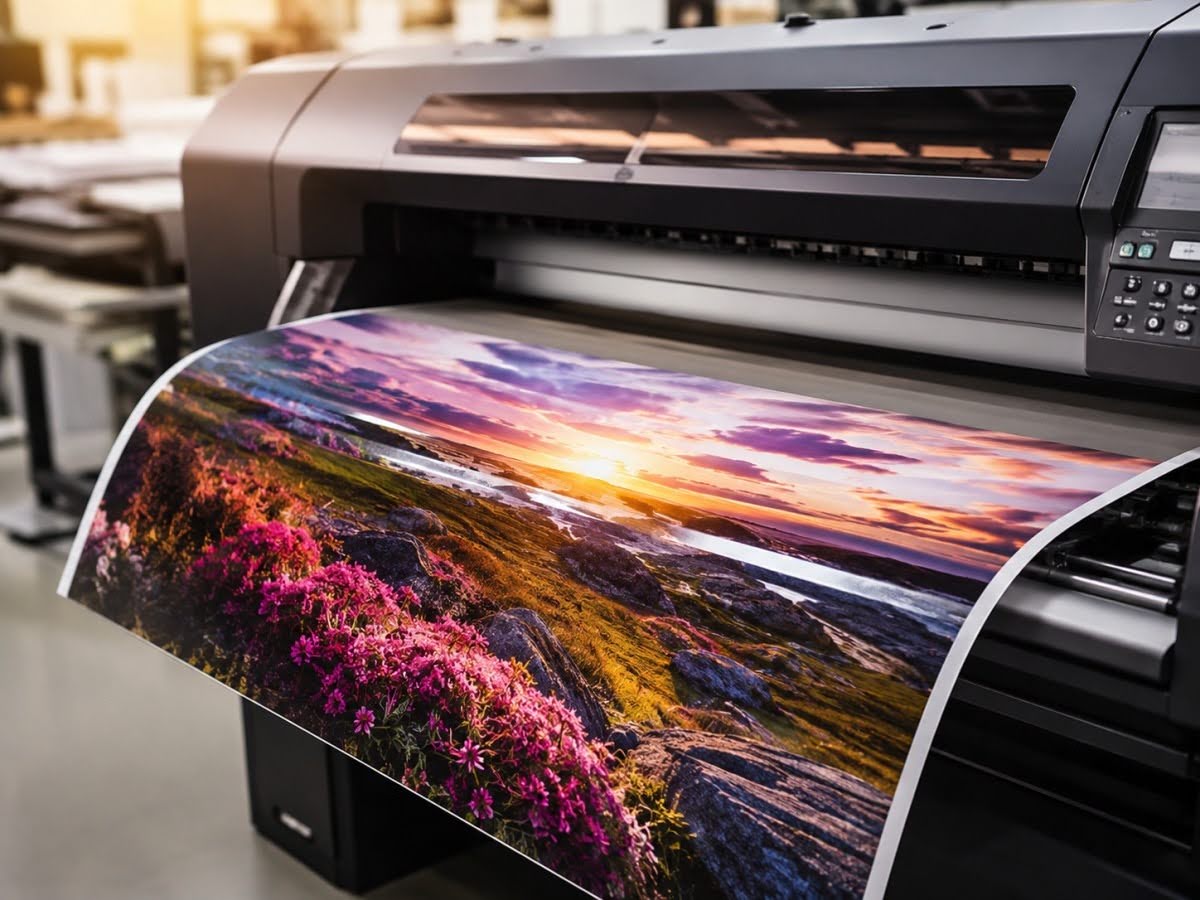
Digital printing transfers artwork directly from a digital file to the printing system without requiring conventional printing plates.
It is particularly useful for:
- Shorter production runs
- Multiple designs
- Detailed graphics
- Full-colour artwork
- Jobs requiring greater production flexibility
Digital printing can make it practical for businesses to order custom stickers in quantities suited to campaigns, product variations, or changing packaging requirements.
Offset Printing
Offset printing transfers ink through a plate and blanket system before the image reaches the final printing surface.
It is widely used in commercial printing where consistency and production volume are important.
Whether offset is appropriate for a particular sticker job depends on the material, quantity and production requirements.
Thermal Printing
Thermal technologies are commonly associated with operational labels containing variable information.
Examples include:
- Barcodes
- Shipping labels
- Inventory labels
- Serial numbers
Thermal-transfer printing uses a ribbon to transfer an image onto compatible label material and can provide durable variable information when the ribbon and label stock are correctly matched.
The best printing method is therefore determined by what the sticker needs to communicate and how it will be used.
Materials Used
Material selection is one of the most important decisions in sticker printing because the face material affects appearance, flexibility, and durability.
Paper
Paper is suitable for many indoor packaging and promotional applications. It offers a familiar printed appearance and can be produced with different surface characteristics.
It is most appropriate where significant exposure to moisture is unlikely.
Vinyl
Vinyl provides greater moisture resistance and flexibility than ordinary paper. Its ability to conform to curved surfaces makes it useful for bottles, containers, and selected equipment applications.
Polypropylene
Polypropylene is another synthetic material frequently used for product labels. It provides moisture resistance and can be suitable for food, beverage, cosmetic, and personal-care packaging.
Polyester and PET
Polyester-based materials such as PET can provide greater dimensional stability and durability.
They may be considered for:
- Equipment identification
- Electronics
- Asset labels
- Industrial applications
- Durable product labels
Material should always be matched to the actual conditions rather than chosen because one material is generally described as more durable.
Industries That Use Stickers
Sticker printing supports businesses across a wide range of sectors because almost every industry has products, assets, packaging, or information that needs to be identified.
Retail and E-Commerce
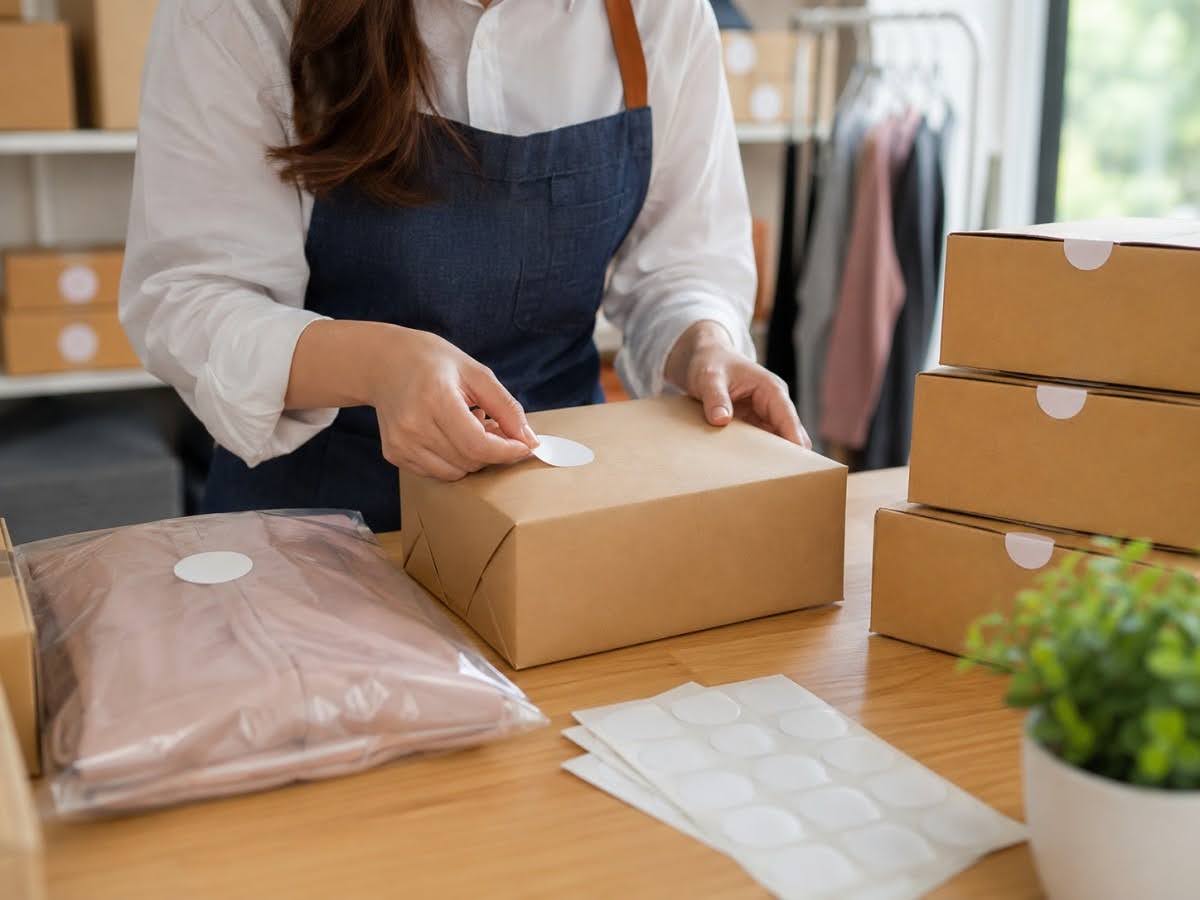
Retailers can use promotional stickers, packaging labels, product labels, and barcode stickers.
E-commerce businesses may also use branded stickers to turn plain delivery packaging into a more recognisable customer touchpoint.
Food and Beverage
Food and beverage businesses use labels for branding and product information on bottles, jars, boxes and other containers.
Chilled products may require materials capable of tolerating condensation and refrigeration.
Cosmetics and Personal Care
Cosmetic packaging frequently uses custom labels because product containers vary significantly in size, shape and material.
Moisture resistance can be particularly relevant for products used in bathrooms or other humid environments.
Manufacturing and Industrial Businesses
Manufacturing environments can require labels for equipment, assets, components, warnings and product identification.
These applications may require greater resistance to abrasion, moisture, chemicals or temperature changes than ordinary packaging stickers.
Logistics and Warehousing
Labels are essential for stock identification and tracking.
Barcode labels, warehouse labels and shipping identification can support more accurate handling throughout storage and distribution processes.
Choosing the Right Sticker
The right sticker is determined by its application rather than appearance alone.
Businesses should begin by answering several practical questions.
Where Will the Sticker Be Used?
An indoor cardboard box has very different requirements from an outdoor piece of equipment.
Determine whether the sticker will face:
- Moisture
- Sunlight
- Heat
- Refrigeration
- Chemicals
- Frequent handling
This helps establish the required level of durability.
What Surface Will It Be Applied To?
Adhesives perform differently on different surfaces.
Common substrates include:
- Glass
- Plastic
- Metal
- Paper
- Cardboard
Surface texture and curvature also matter. A rigid material that works on flat packaging may lift when wrapped around a narrow bottle.
How Long Does It Need to Last?
A promotional sticker needed for several days does not require the same construction as an equipment label expected to remain readable for years.
Defining the intended lifespan can prevent both under-specification and unnecessary over-specification.
Does It Need to Be Removable?
Not every sticker should use permanent adhesive.
Temporary promotions, window graphics or short-term labels may benefit from removable adhesive, while product and industrial labels may require stronger permanent bonding.
Does It Need Special Finishing?
Finishing can improve appearance or protection.
Options may include:
- Gloss lamination
- Matte lamination
- Protective film
- Custom die cutting
The finish should solve a real functional or visual requirement rather than being added automatically.
Why Work with a Professional Printing Company
Working with a professional printing company can help businesses translate a design concept into a sticker specification that works in practice.
Artwork is only one component of successful sticker production.
A printing provider can help businesses consider factors such as:
- Suitable material
- Adhesive requirements
- Printing method
- Colour preparation
- Finishing
- Die-cut shape
- Final dimensions
- Intended application
This becomes particularly important for specialised requirements such as transparent stickers, waterproof labels, barcodes or industrial identification.
Professional production also helps businesses maintain consistency across larger quantities. Colour differences, cutting, or label dimensions can become noticeable when hundreds or thousands of products are displayed together.
Before production, businesses should provide clear information about where the sticker will be applied and the conditions it is expected to withstand. A printer cannot select the most suitable construction if the intended environment is unknown.
Frequently Asked Questions (FAQs)
What is the best material for custom stickers?
There is no single best material. Paper is suitable for many dry indoor applications, while vinyl, polypropylene, or polyester may be more appropriate where moisture, durability, or environmental resistance is required.
Are vinyl stickers waterproof?
Vinyl itself provides useful moisture resistance, but complete waterproof performance also depends on the printing, adhesive and finishing. The expected level of water exposure should be specified before production.
What is the difference between permanent and removable sticker adhesive?
Permanent adhesive is intended to maintain a stronger long-term bond, while removable adhesive is designed to allow easier removal under suitable conditions. The correct option depends on the surface, required lifespan and intended use.
Can custom stickers be printed in any shape?
Custom die cutting allows stickers to be produced in many shapes, including logo outlines and other customised forms. The design still needs to account for cutting tolerances and minimum production requirements.
What file format should be used for sticker printing?
Print-ready PDF and suitable vector artwork are commonly used, although requirements vary by printer and production process. Artwork should also use appropriate resolution, bleed, colour settings, and cut paths where required.
Can stickers be used outdoors?
Yes, provided the material, adhesive, printing and finishing are suitable for outdoor conditions. Outdoor stickers may need to resist rain, UV exposure, heat, and humidity rather than simply being described as waterproof.
How do I choose between paper and vinyl stickers?
Paper is generally suitable for dry indoor packaging and temporary applications. Vinyl is more appropriate when flexibility, moisture resistance or increased durability is required.
Can sticker printing include barcodes or QR codes?
Yes. Stickers can include barcodes and QR codes provided the codes are printed at suitable dimensions with sufficient contrast and clear space for reliable scanning.
Are transparent stickers suitable for product packaging?
Yes. Transparent stickers can create a clean appearance on glass, plastic and other smooth packaging. White ink may be required behind selected artwork when stronger opacity or colour consistency is needed.
Making Sticker Printing Work for the Intended Application
Sticker printing gives businesses a versatile way to combine branding, product information, identification, and promotion. However, the effectiveness of a sticker depends on more than the printed design.
Paper stickers can provide a practical solution for dry indoor packaging, while vinyl and other synthetic materials can support applications involving moisture or increased durability. Printing technology, adhesive, finishing, surface compatibility and expected lifespan should all be considered before production.
For businesses comparing sticker printing options in Singapore, the most useful starting point is therefore not simply asking which sticker looks best. It is defining where the sticker will be applied, what it needs to communicate and what conditions it needs to withstand.
Once those requirements are clear, material, printing and finishing decisions can be made around the actual application.
Why Choose Printsys for Sticker Printing
Looking for a printing company in Singapore for your custom stickers? Printsys provides sticker printing solutions tailored to different business applications, from product packaging and promotional materials to product identification and labels. With years of printing experience, Printsys focuses on matching materials, printing methods, and finishes to the intended use.
- Quality materials: Suitable paper and synthetic materials can be selected based on durability and application requirements.
- Customisation: Choose from different materials, sizes, shapes, and finishing options to suit your requirements.
- Competitive pricing: Cost-effective printing solutions without compromising on the required specifications.
- Experience: Printsys has supplied printing solutions to clients including IBM, Iceman, and Suzuki.
- Efficient production: Streamlined processes help accommodate different quantities and project timelines.
- Customer support: Assistance is available when determining suitable materials, adhesives, printing methods, and finishes for specific applications.
Turn Your Sticker Requirements Into the Right Print Specification
Whether you require product labels, promotional stickers, vinyl stickers, or other custom printed labels, selecting the appropriate combination of material, adhesive, printing method, and finish can help achieve more consistent results.
Printsys Pte Ltd provides sticker and commercial printing solutions for businesses in Singapore. Businesses can explore the company’s printing services to determine an appropriate solution for their intended sticker application. Get in touch with Printsys today!